Al Mawasi strike Khan Younis
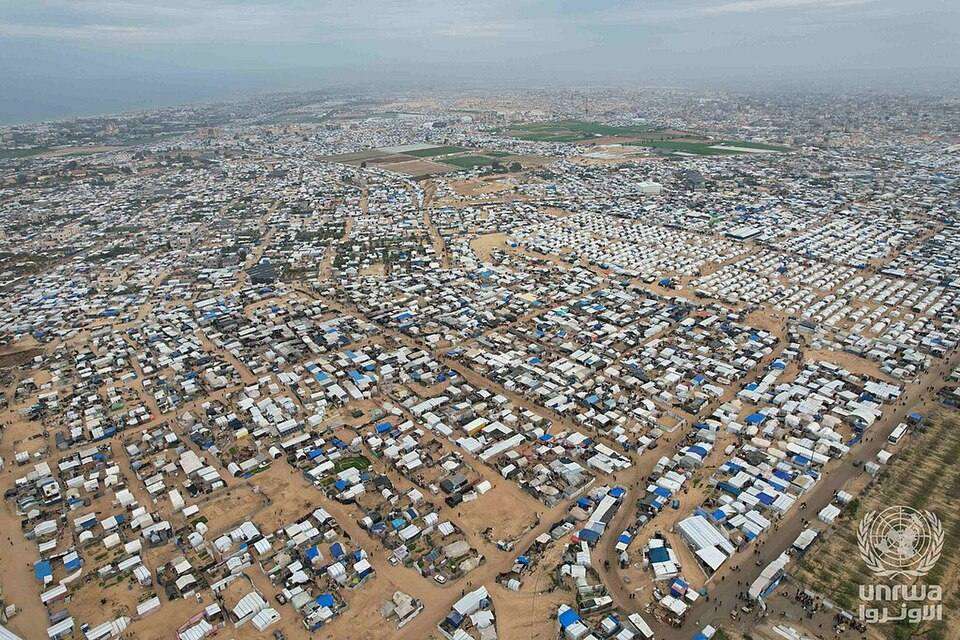
KHAN YOUNIS, Gaza Strip — An Israeli drone strike hit a gathering of residents in Al-Mawasi, west of Khan Younis in the southern Gaza Strip, on Sunday, September 27, killing one Palestinian. Early reports agreed on the death but differed on the number wounded: the Associated Press, citing Palestinian officials, reported three people wounded; Qatar News Agency, citing Palestinian medical sources, reported one wounded. Neither account identified the person killed in the reporting reviewed by Signal Post News.
Qatar News Agency also reported that several Palestinians were injured on Sunday in separate Israeli strikes on the Sheikh Radwan neighbourhood and the Al-Shati refugee camp in western Gaza City. The Israeli military had not issued a public account of the Al-Mawasi incident in the two reports reviewed for this article. That absence does not establish motive or target, and the available accounts do not say whether Israel alleged that a militant was present.
The casualty ledger gives the incident wider significance. Gaza's Health Ministry says 1,145 Palestinians have been killed since the U.S.-brokered ceasefire took effect on October 10, 2025. The ministry also reports 74,016 people killed and 175,068 wounded in Gaza since October 2023. The Associated Press reported that seven Israeli soldiers have been killed since the ceasefire. The Palestinian figures are attributed to Gaza's Health Ministry through AP and QNA and have not been independently verified by Signal Post News.
Why this matters: the strike site was designated as a humanitarian zone
Al-Mawasi matters because the Israeli military declared the coastal area a humanitarian zone in December 2023 and directed civilians there as combat spread through the enclave. The designation made Al-Mawasi a destination for families leaving homes, shelters and other neighbourhoods under evacuation orders. It also turned a narrow stretch of land into a vast landscape of tents whose residents depend on aid and have limited protection from weather or attack.
A strike there therefore carries meaning beyond the immediate casualty count. Palestinians and aid groups have repeatedly argued that a “humanitarian zone” cannot be understood as safe when military operations continue inside or around it. Israel has said that Hamas and other armed groups operate among civilians and that humanitarian designations do not give militants immunity. Those positions define the legal and political dispute, but neither changes the civilian reality: people directed toward Al-Mawasi have few realistic alternatives when violence reaches the zone itself.
The designation also creates a test of military precaution. If Israel says it struck a military target, the questions will be what intelligence supported that claim, what precautions were taken, and whether expected civilian harm was proportionate to the anticipated military advantage. If no military target is identified, scrutiny will intensify. In either case, the humanitarian label raises the standard of explanation because civilians were previously told to treat the area as a refuge.
The ceasefire stopped the heaviest fighting, not the killing
The U.S.-brokered ceasefire that began October 10 halted the heaviest phase of combat, created space for exchanges and aid, and reduced the daily death toll sharply. It did not produce a settled postwar order. Israeli forces still control more than half of Gaza. Hamas has not disarmed. No replacement Palestinian government has taken control. Large-scale reconstruction has not begun.
Those unresolved questions were meant to move into a second phase: further Israeli withdrawal, Hamas's disarmament, an agreed governing authority, security guarantees and a reconstruction framework. Instead, the process has stalled around a circular demand. Prime Minister Benjamin Netanyahu says Israel will not withdraw until Hamas disarms. Hamas has not accepted disarmament without political and security guarantees it considers credible. Each side treats the other's first move as the condition for its own.
The result is a frozen war rather than a completed peace. Front lines are quieter, but control remains divided and lethal incidents continue. Israeli officials argue that continued operations are necessary to prevent Hamas from rebuilding, respond to threats and protect troops. Palestinians say strikes and restrictions make the ceasefire indistinguishable from open-ended military control. The Al-Mawasi attack sits inside that unresolved space: below the scale of the earlier war, above the threshold of peace.
The numbers: a 97% reduction is not zero
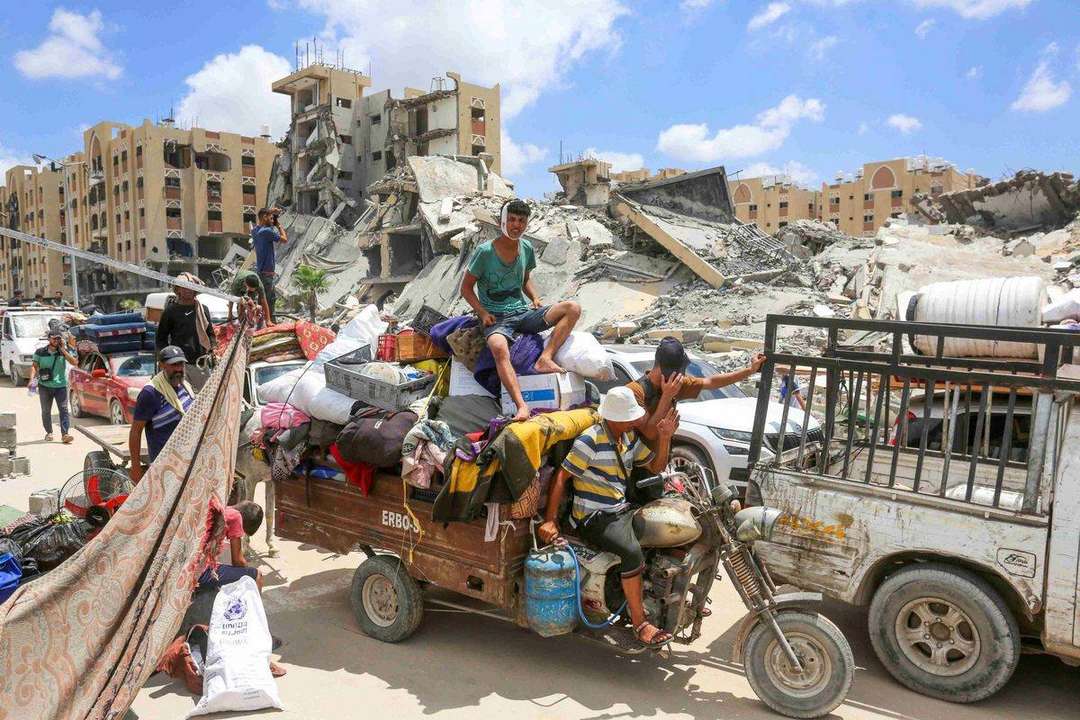
The ministry's totals describe two realities at once. The 1,145 people it says were killed after the ceasefire represent about 1.5% of the overall reported toll of 74,016. That proportion is small compared with the full war, yet it is more than a thousand lives during a period formally described as a truce.
The change in daily pace is even clearer. Before the October 10 ceasefire, the ministry's cumulative figures work out to roughly 99 reported deaths a day. Since the truce, the reported rate is about three a day — approximately a 97% reduction. That is evidence that the ceasefire saved lives on a large scale. It is also evidence that “ceasefire” has not meant zero deaths. A lower rate can be both a major humanitarian improvement and an unacceptable measure of unfinished peace.
The seven Israeli soldiers reported killed since the ceasefire are the other half of the fragility story. Their deaths show that the truce has not removed military risk for Israel or ended armed confrontation. Israeli critics of withdrawal argue that a security vacuum would let Hamas regroup and expose troops and border communities to renewed attack. Palestinian critics answer that indefinite military control, recurrent strikes and blocked reconstruction create the conditions for more violence rather than security.
Casualty comparisons also require caution. Gaza's Health Ministry does not distinguish in its headline total between civilians and combatants, and access constraints make independent verification difficult. Israel disputes aspects of the ministry's accounting and says it targets militants while taking steps to reduce civilian harm. AP and other international organizations have used the ministry's figures as the principal running count while identifying their source. The responsible conclusion is not that every number is independently proven; it is that the direction and scale of continuing harm require scrutiny even when precise categories remain contested.
Who benefits from the frozen war — and who pays
A frozen conflict can serve political and strategic interests even when no actor publicly describes it as the goal. Netanyahu's coalition avoids the immediate risk of a withdrawal that opponents could portray as leaving Hamas in place. Hamas avoids formally surrendering its weapons and preserves its claim to resistance. International mediators retain a ceasefire that prevents a return to full-scale war, even if they cannot deliver the second phase.
The costs fall most directly on civilians. Palestinians remain displaced in tents, under damaged infrastructure and without a reconstruction timetable. Israeli families and soldiers remain exposed to a security order that has not resolved who governs Gaza or how attacks will be prevented. Host communities and aid agencies carry an emergency that has become semi-permanent.
Critics on the Israeli side argue that the government is using an unresolved war to postpone strategic decisions while insisting on a disarmament outcome it has not shown how to achieve through negotiations or force. Critics on the Palestinian side accuse Hamas of preserving armed control at the expense of civilians and Israel of using security demands to make occupation open-ended. Both critiques point to the same structural failure: the current arrangement distributes veto power widely but responsibility narrowly.
An election turns battlefield ambiguity into domestic pressure
Israel votes next month in the first election since the Hamas-led attacks of October 7, 2023. The contest is widely seen as a referendum on the security failures that preceded those attacks and on Netanyahu's management of the war and ceasefire that followed.
Five opposition leaders — Gadi Eisenkot, Naftali Bennett, Yair Lapid, Yair Golan and Avigdor Lieberman — met Saturday and pledged to unite against Netanyahu's coalition. They do not share a single ideology or a settled plan for Gaza. Their common ground is electoral: presenting the government as exhausted, divided and unable to convert military operations into durable security.
The Al-Mawasi strike may enter that debate in opposite ways. Netanyahu's allies can cite continuing threats and soldier deaths as proof that withdrawal before disarmament would be reckless. Opponents can cite the same continuing violence as proof that the government has produced neither victory nor peace. Palestinian civilians do not vote in that election, but its outcome will shape whether the second phase advances, stalls or is replaced by a new military campaign.
What happens next: four scenarios
An election-driven opening. A new Israeli coalition, or a politically strengthened incumbent, could use the post-election period to accept a phased withdrawal tied to verified weapons arrangements, outside security guarantees and a Palestinian governing mechanism. That would require compromises neither side has yet made, but elections can create mandates as well as constraints.
The disarmament deadlock hardens. Israel could retain control over more than half of Gaza while conducting recurring strikes against suspected threats, and Hamas could preserve weapons and underground organization in the areas outside direct Israeli control. That is the current trajectory: fewer mass-casualty days than before the ceasefire, but no path to a final settlement.
Reconstruction remains frozen. Donors are unlikely to commit the scale of money required while governance, access and security remain unresolved. Rubble removal, housing, water networks, hospitals and schools then stay trapped behind political sequencing. The longer rebuilding waits, the more emergency aid becomes a substitute for a functioning economy.
Winter turns delay into another humanitarian crisis. Many displaced Palestinians remain in tents, including in Al-Mawasi. Rain, wind and cold will test shelters already worn by prolonged use. Flooding, disease and interrupted aid can raise the civilian cost even if the daily strike rate falls. A ceasefire measured only by munitions misses what happens when people cannot return home and winter arrives before reconstruction.
Conclusion: the gap between a truce and peace
The Al-Mawasi strike is one death in a war whose reported toll exceeds 74,000. That scale can make a single fatality look statistically small. It should instead clarify the central fact of Gaza's ceasefire: the agreement has dramatically reduced the rate of killing, but every unresolved issue that could restart the war remains in place.
The wounded-count discrepancy — three in the AP account, one in the QNA account — is a reminder that early reporting from Gaza must remain transparent about uncertainty. The shared fact is that one Palestinian was killed in an area civilians had been directed to treat as humanitarian space. Until the second phase resolves control, disarmament, government and reconstruction, such incidents will keep testing whether October 10 began a peace process or merely suspended the worst phase of the war.
Sources
Reporting basis: Published September 27, 2026. Casualty figures are attributed to Gaza's Health Ministry through AP and QNA and have not been independently verified by Signal Post News. The wounded-count discrepancy is preserved rather than reconciled without further evidence. Analysis is Signal Post News's.