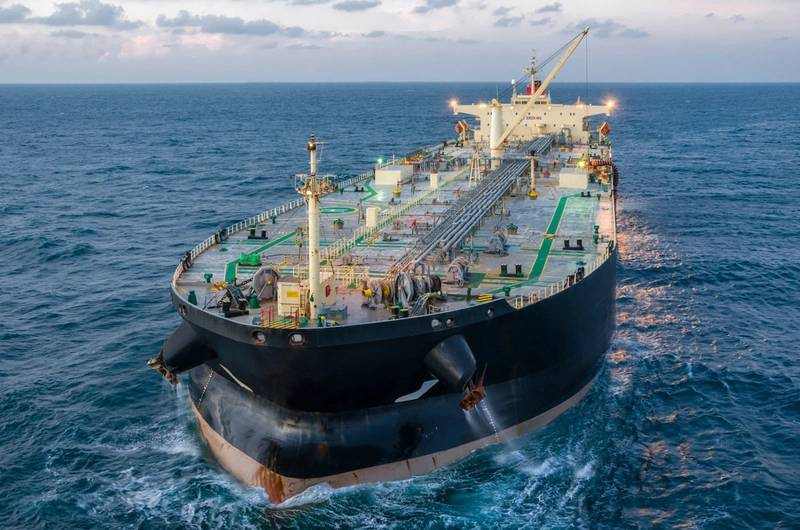
Multiple projectiles hit the Antigua and Barbuda-flagged oil and chemical tanker Acers north of Qatar, causing minor crew injuries and expanding a campaign that had been concentrated around the Strait of Hormuz.
A tanker attacked near Qatar has pushed the Iran-war shipping threat farther west into the Persian Gulf and sent a fresh shock through oil markets. The Acers, an Antigua and Barbuda-flagged oil and chemical tanker, was struck by multiple projectiles at about 1900 UTC on Wednesday, October 7, roughly 51 nautical miles — 94 kilometers — north of Madinat ash Shamal. UK Maritime Trade Operations reported casualties; Reuters, citing maritime security sources, said the crew injuries were minor.
The vessel's reported position matters as much as the physical damage. Recent attacks had clustered in and around the Strait of Hormuz. A strike north of Qatar places risk closer to routes serving Qatar, Bahrain, Saudi Arabia, Kuwait and Iraq, while testing shipping arrangements designed to keep cargo moving through or around the contested choke point.
No government or armed group had publicly claimed responsibility for the Acers strike in the reporting reviewed by Signal Post News. The Wall Street Journal said attribution was not confirmed, even as Iranian state-linked media have reported Iranian forces striking several ships around Hormuz in recent weeks. That distinction is essential: the regional pattern raises a question of responsibility, but it does not by itself establish who fired at this vessel.
Why this matters: the threat map moved west
UKMTO Qatar strike: what is confirmed
UKMTO's verified incident notice said a tanker reported being hit by multiple projectiles 51 nautical miles north of Madinat ash Shamal and that casualties were reported while authorities investigated. Vanguard identified the ship as the Acers. Reuters later reported minor crew injuries. Initial public reporting did not establish the weapon type, launch point or attacker, and did not provide a full damage assessment.
Maritime risk specialists told Reuters that the location could widen the operational danger beyond the narrow approaches to Hormuz. The significance is not that every Gulf route has become equally dangerous. It is that planners can no longer treat distance from the strait as a sufficient buffer.
Tanker casualties Gulf: why even minor injuries change the calculation
The Acers incident was the first reported strike with casualties since September 9 and the first reported attack this far west of Hormuz since that date, according to maritime analysts cited in the reporting. Minor injuries are not comparable to fatalities, but they sharpen the human-cost calculation for shipowners, captains and crews asked to transit a conflict zone.
Insurance can price hull damage and delay; it is harder to price the willingness of crews to sail after repeated projectile strikes. Higher war-risk premiums, hazard pay, extra security and longer routes all raise the delivered cost of energy even when a tanker remains afloat and its cargo is not lost.
How the confrontation reached the Acers
Iran tanker attacks October 2026: a record weekly tempo
The Acers strike followed the most intense week of tanker attacks since the Iran war began. Reuters reported that the preceding week produced the biggest number of attacks on tankers in the waterway during the conflict. The Wall Street Journal, citing Kpler, said 10 tankers were struck inside the strait from September 28 through October 4, above the previous weekly high of six this year.
The escalation came after Gulf producers developed routes and ship-to-ship transfer systems intended to preserve exports. Reuters reported that some movements hugged the Omani side of the strait before cargo was transferred in the Gulf of Oman with U.S. aerial support. Iranian officials then warned regional governments that routes not authorized by Tehran would be treated as hostile, according to regional officials and diplomats who spoke to Reuters.
From Tehran's perspective, control over Hormuz is one of the few levers capable of imposing visible economic costs while U.S. pressure constrains Iranian oil revenue. From Washington's perspective, protected shipping and alternative routes are meant to deny Iran that leverage. The Acers was hit inside the Gulf, where those competing strategies meet.
The oil-market math
Hormuz tanker attack oil prices: why $105 matters
Brent crude rose around 5% on Thursday to more than $105 a barrel after the attack, according to The Wall Street Journal. The move reflected a change in perceived probability rather than a confirmed loss of supply: traders were pricing a greater chance that violence could disrupt the routes and transfers that had helped exports recover.
Kpler's preliminary data, reported by the Journal, showed oil flows through Hormuz and associated transfers outside the strait fell 27% in the week ended October 4 from the previous week's wartime high. The figures may be revised, but the direction explains why another strike generated an outsized market reaction. Physical flows were already weakening when the risk zone expanded.
A 5% one-day rise above $105 does not mean gasoline prices increase by the same percentage immediately. Refining margins, inventories, taxes, currency moves and local competition all intervene. But sustained crude gains raise feedstock and freight costs, eventually reaching airlines, trucking, petrochemicals and consumers.
Is the Strait of Hormuz closed?
The phrase Strait of Hormuz closed describes the political and security struggle more cleanly than the traffic data. The route is severely constrained and dangerous, but it is not empty. The conflict has reduced crossings, redirected ships and encouraged transfers outside the strait rather than producing a simple on-or-off closure.
That distinction matters for policy and prices. A complete halt would remove a large volume of energy from the market quickly. A partial, unstable flow creates a different problem: supply continues, but every voyage carries a higher probability of delay, damage or cancellation. Markets must continuously reprice that uncertainty.
Who benefits, who loses and what critics say
Persian Gulf shipping winners and losers
Iran may gain leverage if repeated attacks keep oil prices elevated, strain U.S.-backed shipping plans and pressure Washington toward negotiations. But the strategy also risks renewed military action, deeper isolation and retaliation against Iranian assets. Any short-term bargaining advantage comes with the possibility of a much larger confrontation Tehran may not want.
Gulf exporters lose reliability even when they keep barrels moving. Qatar, Saudi Arabia, the United Arab Emirates, Kuwait, Bahrain and Iraq depend on predictable maritime access, and buyers can demand discounts or diversify when security deteriorates. Shipowners, seafarers and insurers absorb immediate operational risk. Consumers and energy-intensive businesses carry the delayed cost.
Alternative pipelines, Red Sea export capacity and ship-to-ship transfer providers can gain commercial value as Hormuz becomes less dependable. Producers outside the Gulf may also benefit from higher benchmark prices. Those gains, however, reflect scarcity and insecurity rather than a broader improvement in the world economy.
Critics of Washington's approach argue that the blockade and military pressure have strengthened Tehran's incentive to disrupt rivals' exports. Critics of Iran's approach argue that targeting or intimidating commercial shipping endangers civilians and global energy security without guaranteeing diplomatic relief. Both critiques point to the same strategic trap: each side's effort to improve leverage raises the other side's incentive to escalate.
What happens next
Oil prices today: three scenarios to watch
Containment: If the Acers remains an isolated strike west of Hormuz and escorted traffic stabilizes, part of the risk premium above $105 could unwind. Flows would still remain vulnerable, but traders would treat the incident as a warning rather than the start of a wider campaign.
Persistent disruption: If attacks continue around Hormuz while occasional strikes occur deeper in the Gulf, insurers and owners may reduce sailings further. That would keep oil prices volatile, raise freight costs and encourage more transfers and pipeline use without stopping exports entirely.
Regional escalation: A fatal attack, a disabled tanker carrying a major cargo, or strikes on terminals and pipelines could trigger U.S. or regional retaliation. That scenario would threaten both sides' infrastructure, tighten supply more sharply and push prices beyond the reaction seen after the Acers strike.
Diplomacy remains the only scenario that lowers risk structurally. Tactical escorts and rerouting can reduce exposure; they cannot eliminate the incentive to attack. A durable arrangement would need rules for commercial passage, enforcement mechanisms and a broader settlement of the U.S.-Iran confrontation.
What to watch
- Whether UKMTO or Qatari authorities identify the projectile type, damage and final casualty count.
- Whether the Acers proceeds under its own power and whether its cargo transfer or delivery schedule changes.
- Whether another vessel is struck west of Hormuz, which would turn a geographic outlier into a pattern.
- Whether Kpler's 27% weekly flow decline is revised and whether crossings recover.
- Whether Washington or Tehran ties the incident to negotiations, escorts or military retaliation.
Related coverage
- Hormuz tanker attack wave: six ships hit in a week of strikes
- On Peace tanker attack in Hormuz injures 12 crew members
- Iran war gas prices: why Hormuz risk reaches the pump
Sources
- Reuters — tanker risks, Iran's route warning and minor injuries aboard the Acers
- The Wall Street Journal — market reaction, shipping arrangements and Kpler flow data
- UK Maritime Trade Operations — verified incident notice for the strike north of Qatar
Attribution for the Acers strike had not been confirmed in the reviewed reporting. Casualty severity is reported from Reuters' maritime security sources; UKMTO's initial notice said casualties without giving details.
Reporting with attribution, uncertainty and the safety of civilian seafarers in view.