India Saudi Arabia travel advisory
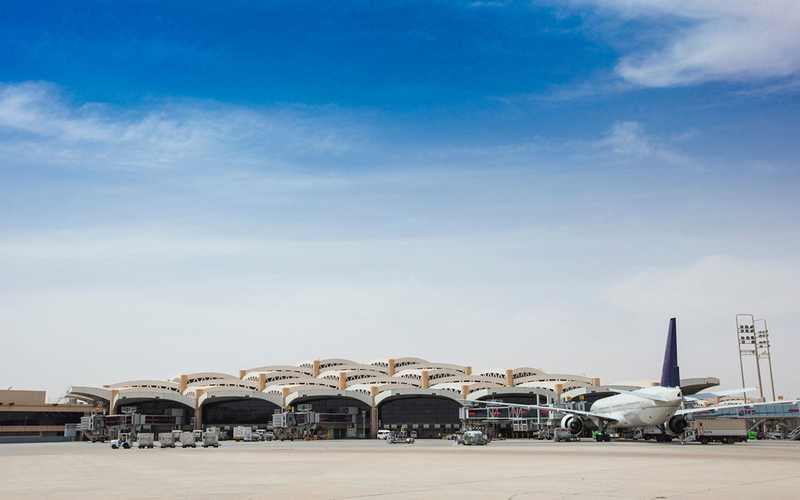
India has urged all of its nationals in Saudi Arabia to remain alert, stay indoors when necessary and follow Saudi authorities' official instructions after attacks on Abha International Airport and Riyadh's King Khalid International Airport killed three civilians and injured 36. The Embassy in Riyadh also told citizens not to circulate or repost videos or reports about continuing events, a caution aimed at both personal safety and the rapid spread of unverified material during an active security response.
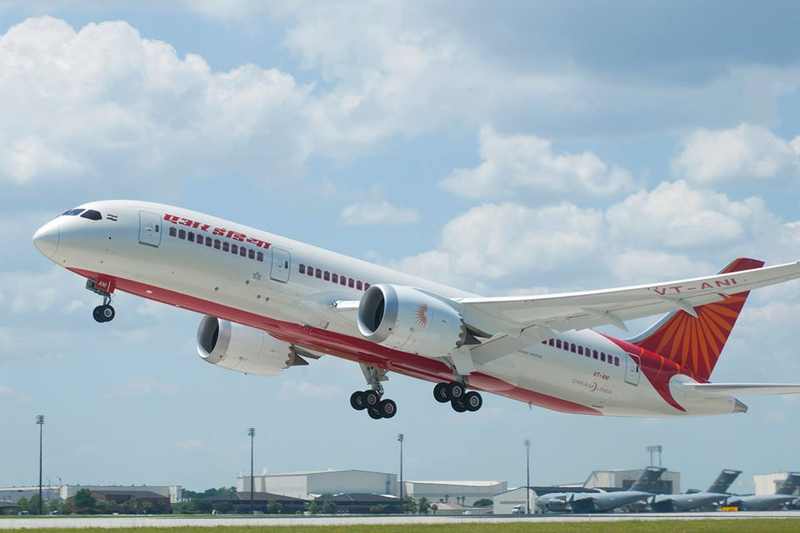
The advisory, issued October 8, came as Air India and Air India Express suspended flights to and from Riyadh through October 10. One Air India service from Delhi turned back on Thursday. India's Embassy in Riyadh, its Consulate in Jeddah and VFS services remain open, and the Pravasi Bharatiya Sahayata Kendra's toll-free helpline remains available around the clock at 8002471234.
India's Ministry of External Affairs condemned the attacks and said civilian infrastructure must not be targeted. The Houthis, meanwhile, claimed a new ballistic-missile operation against King Khalid airport on Thursday. Saudi authorities had not immediately confirmed a strike from that latest launch, while the Saudi-led coalition said it intercepted missiles directed toward Riyadh and Khamis Mushait. Those claims are not identical: a launch, an interception and a successful impact describe different events and should not be collapsed into one.
What the advisory tells Indian nationals to do
The Embassy's message has four parts: remain vigilant, limit movement when conditions require it, rely on official Saudi instructions and avoid amplifying videos or reports of military activity. For residents, that means treating alerts from local authorities and the Indian mission as the decision point—not social-media clips whose location, time and authenticity may be unclear.
The mission did not announce a closure or evacuation. Normal consular and outsourced visa operations are continuing. That distinction matters: the advisory raises personal precautions without telling millions of residents to leave or suggesting that all travel inside the Kingdom has stopped. Airline schedules, however, are already changing, so passengers should verify a specific flight directly with the carrier before setting out for an airport.
Air India group passengers affected by the Riyadh suspension were offered rescheduling or refunds, according to the airline statement reported by regional media. The Delhi turnaround shows why carriers can act before a government closes airspace: a route may remain legally open while the operational margin around destination airports becomes too uncertain.
Why this matters
This is not merely a diplomatic notice attached to a distant conflict. Saudi Arabia hosts one of the world's largest Indian expatriate communities. India has previously put that population at about three million people, spanning construction, health care, technology, retail, transport and professional services. A warning that reaches a community of that scale affects family travel, payrolls, remittances and daily commuting across both countries.
The airport targets deepen the risk because aviation infrastructure is simultaneously civilian, economic and strategic. King Khalid is the main gateway to the Saudi capital; Abha serves a southern region much closer to Yemen. Even when air defenses intercept an incoming missile, debris, temporary closures, inspections and crew-risk assessments can interrupt passenger networks. The economic effect therefore does not depend on a runway being destroyed.
The attacks also test Saudi Arabia's effort to present itself as a dependable hub for tourism, investment and global aviation. A small number of successful disruptions can impose costs out of proportion to the number of missiles involved. Airlines must plan for the possibility that the next warning arrives after an aircraft has departed, while travelers confront missed connections, visa problems and uncertain return dates.
How the Houthi campaign reached Saudi airports again
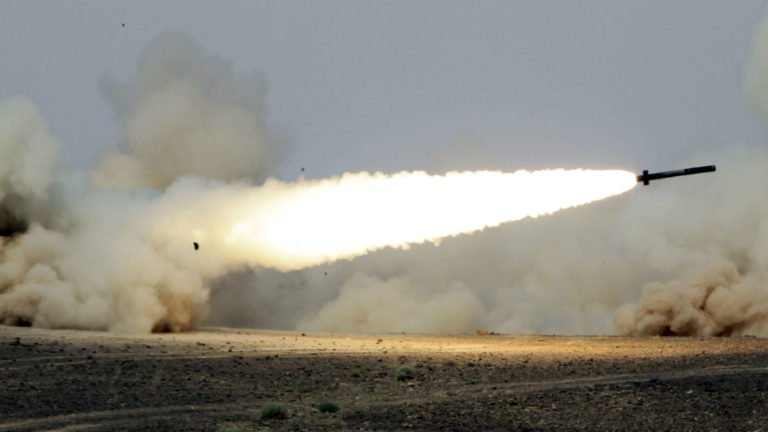
The Houthis developed a long-range missile and drone campaign during Yemen's war, repeatedly targeting Saudi airports, energy sites and cities while a Saudi-led coalition fought the movement inside Yemen. The intensity changed over time, particularly after the 2022 truce reduced cross-border attacks, but the underlying arsenals, grievances and deterrence contest did not disappear.
The current attacks sit inside a wider Iran-war backdrop. The Houthis are aligned with Iran and receive support from Tehran, while Saudi Arabia remains central to Gulf security and global energy supply. That does not mean every Houthi launch is directed in real time by Iran; the movement has its own leadership and objectives. It does mean that exchanges elsewhere in the region can alter the Houthis' incentives and Saudi threat calculations very quickly.
Our earlier reporting examines the Houthis' warning that the conflict could become prolonged and Saudi confirmation of the fatal Riyadh airport strike. The operational picture is a cycle: Houthi launches, Saudi interceptions and retaliatory coalition attacks can each be described as deterrence by the side conducting them, yet each also creates the next side's stated justification for escalation.
Saudi air defenses—and their limits
Saudi defenses combine ground-based interceptors, radar networks, allied intelligence and protective procedures at critical sites. Their task is more demanding than a simple hit-or-miss score suggests. Defenders must detect a launch, classify its trajectory, decide what is threatened and intercept at a point that reduces harm below. Even a successful intercept can scatter debris into urban areas or force an airport to suspend operations.
That helps explain the difference between the coalition's interception claim and continuing public caution. Interception reduces the probability of a direct hit; it does not make the airspace, airport approaches or surrounding neighborhoods risk-free. A layered defense can protect strategic targets while still leaving civilian systems vulnerable to disruption.
What the casualty numbers show
Saudi Arabia's General Authority of Civil Aviation reported that the October 6 and 7 attacks killed three people and injured 36. At Abha, two women—residents from Morocco and Algeria—were killed and 28 people were injured. At King Khalid airport, a Sudanese resident was killed and eight people were injured. The victims' nationalities underscore that attacks on Saudi aviation are international events even before flight networks carry the disruption abroad.
The arithmetic also reveals concentration. Abha accounted for two-thirds of the deaths and more than three-quarters of the reported injuries; Riyadh accounted for one death and eight injuries. Yet the Riyadh incident can generate broader aviation consequences because the capital airport is a larger hub with more connecting traffic and diplomatic visibility.
For India's roughly three-million-strong Saudi community, even a short suspension has a wide exposure base. If only one in a thousand residents had a Riyadh trip affected, that would still mean thousands of disrupted journeys. That is an illustration of scale, not a reported passenger count. The confirmed operational facts are the flight suspension through October 10 and the Delhi service that returned.
Who benefits, who loses
The Houthi calculation
The Houthis gain tactical leverage if a limited number of launches force airlines, governments and markets to treat Saudi infrastructure as exposed. Attention and disruption can be strategic outputs even when missiles are intercepted. But civilian casualties bring diplomatic costs, reinforce Saudi arguments for retaliation and make it harder for the movement to frame its campaign solely as pressure on military targets.
Saudi Arabia and the coalition
Riyadh can point to the airport casualties as evidence that the campaign threatens civilians and international transport, potentially strengthening support for defensive cooperation. The cost is reputational and economic: every cancellation cuts against the Kingdom's hub ambitions, and every retaliatory operation carries a risk of civilian harm in Yemen or further escalation.
Indian workers, families and airlines
Indian residents bear the most immediate practical burden. Shift workers may be unable to remain indoors for long; families may have time-sensitive travel; lower-income passengers can be hurt by hotel, connection and ground-transport costs even when an airline refunds the ticket. Carriers lose revenue and absorb rebooking, crew and aircraft-positioning costs. Competing airlines may receive displaced demand, but they also face the same security environment.
Oil markets and the wider economy
The struck airports are not oil facilities, so the incidents do not directly remove crude from the market. Their significance is what they imply about range and intent. Traders will watch whether future launches shift toward energy infrastructure or whether the confrontation touches Red Sea and Gulf shipping. Our analysis of the Iran conflict and oil-price risk explains why even a temporary political pause may not remove the underlying premium.
What critics say
Critics of the Houthi campaign argue that attacks affecting civilian airports cannot be justified by broader regional grievances and risk killing people with no role in the conflict. Critics of Saudi-led retaliation argue that large strike packages inside Yemen can deepen civilian suffering and perpetuate the same action-reaction cycle. The two criticisms are not mutually exclusive: international humanitarian rules protect civilians regardless of which side claims deterrence.
Some travelers may also find the Embassy's advice frustratingly broad because it does not specify neighborhoods, hours or a threshold for staying indoors. In a fast-moving missile threat, however, precision can become misleading. The more useful measure is whether the mission keeps updates timely, confirms service changes and coordinates emergency support for stranded nationals.
What happens next
Scenario one: escalation
More launches against Riyadh, Abha or Khamis Mushait would likely extend airline suspensions, increase interception activity and invite further coalition strikes in Yemen. The key escalation marker would be a shift from episodic attacks to a sustained tempo, especially if energy facilities or densely used terminal areas are hit.
Scenario two: contained disruption
The parties may continue trading limited attacks while trying to avoid a wider confrontation. Flights could resume after October 10 with schedule buffers, longer routings or rapid cancellations. This would keep the cost high for passengers and airlines without producing a formal airspace closure.
Scenario three: de-escalation
A pause in launches, quieter coalition operations or renewed mediation could allow normal schedules to return quickly. The test would not be one calm day but whether public warnings ease, carriers restore repeated rotations and both sides stop presenting retaliation as imminent.
What to watch next
- Whether Air India and Air India Express restore Riyadh services after October 10 or extend the suspension.
- Whether Saudi authorities publish damage assessments and a verified account of Thursday's claimed King Khalid airport attack.
- Whether the Indian Embassy changes its advice from vigilance to stronger movement or travel restrictions.
- Whether Houthi launches remain focused on airports or expand toward energy and shipping infrastructure.
- Whether Saudi-led retaliation produces a pause, or becomes the stated basis for another Houthi attack.
The near-term conclusion is narrower than either side's strategic claims: Indian nationals should rely on official alerts, passengers should verify flights before traveling, and every launch, interception and impact should be reported as a distinct event. That discipline will matter if the crisis worsens—and it will also prevent a temporary disruption from being mistaken for a nationwide shutdown.
Sources and reporting notes
- IANS, October 8, 2026 — Embassy advisory, MEA response and GACA casualty figures.
- The Standard Maldives, October 9, 2026 — Reuters reporting on the latest Houthi claim, coalition interception statement and airline disruption.
- Devdiscourse / ANI, October 9, 2026 — consular operations, helpline and flight-cancellation details.
- Official sources: Embassy of India in Riyadh (@IndianEmbRiyadh), India's Ministry of External Affairs and Saudi Arabia's General Authority of Civil Aviation, as cited in the reports above.
Casualty totals and operational claims are attributed to the authorities that issued them. Assessments of leverage, market risk and escalation pathways are analysis. The latest Houthi claim had not been independently confirmed by Saudi authorities at publication time.