Abhishek Sharma's 28-ball 61 and Tilak Varma's unbeaten 22-ball 51 lifted India to 211 for 6 — the highest total of the Aichi-Nagoya Games — before Hasan Nawaz's brilliant 96 off 51 balls fell 19 runs short of a famous Pakistan chase at Korogi Sports Park in Nisshin.

NISSHIN, Japan — India beat Pakistan by 19 runs in the India Pakistan Asian Games cricket final 2026 at Korogi Sports Park on Saturday, defending 211 for 6 to retain the men's cricket gold medal won at Hangzhou 2023 and completing a golden double for Indian cricket, eleven days after the women's team beat Sri Lanka by 147 runs for their own gold. It is back-to-back men's golds, a second straight final defeat of Pakistan after the Asia Cup 2025 decider, and another entry in a rivalry ledger that now reads 4-3 to India in the finals of major multi-team tournaments.
Pakistan, chasing 212, closed on 192 for 6. Hasan Nawaz carried his side to the brink of the most famous chase in Asian Games history — 96 off 51 balls, with five fours and seven sixes — before falling on the final delivery of the match, four runs short of a century and 19 short of gold.
Abhishek Sharma's 61 blows the final open
India captain Shreyas Iyer called correctly at the toss and chose to bat on a true Nisshin surface, and his openers made the decision look inspired within minutes. Abhishek Sharma, the most destructive powerplay batter in world cricket, needed only 20 balls to reach his fifty on the way to 61 off 28 balls, with seven sixes and three fours. He survived a run-out chance along the way; Pakistan did not survive him.
Pakistan opened with spin from both ends — a gamble that revealed exactly how much they feared pace on the ball against this line-up. It backfired in spectacular fashion. Saad Masood was withdrawn from the attack after his first over disappeared for 24 runs, with 15-year-old Vaibhav Sooryavanshi launching him for two sixes. The teenager's fairytale then curdled: attempting a reverse sweep against Saim Ayub, he was caught behind, and Ayub sent the 15-year-old back with a rocking-the-baby celebration that will be debated for weeks.
India were 81 for 2 after the powerplay and 114 for 3 at the halfway mark — a platform, not yet a winning total. Ishan Kishan made 20 before Arafat Minhas bowled him; Iyer himself made 21 before holing out off Abrar Ahmed. At 154 for 5 after 17 overs, Pakistan had a window. Tilak Varma and Shivam Dube slammed it shut.
Tilak Varma's fifty seals the Asian Games final
Tilak Varma's unbeaten 51 off 22 balls — a 21-ball fifty — was the innings of a player who has decided finals are his personal property. Thirteen months after his Player-of-the-Match 69 in the Asia Cup 2025 final against these same opponents, the 23-year-old again stood tallest when Pakistan needed him smallest. With Dube (27 off 15), he added 62 runs in the closing overs, 57 of them off the final three, dragging India from a competitive 154 for 5 to a commanding 211 for 6 — the highest total of the entire Aichi-Nagoya Games, men's or women's.
Arafat Minhas was Pakistan's best bowler with 3 for 25, Ahmed Daniyal took 2 for 43, Abrar Ahmed claimed 1 for 29, and Saim Ayub's three overs cost only 24. But 211 was 20 too many — or so it seemed, until Hasan Nawaz decided otherwise.
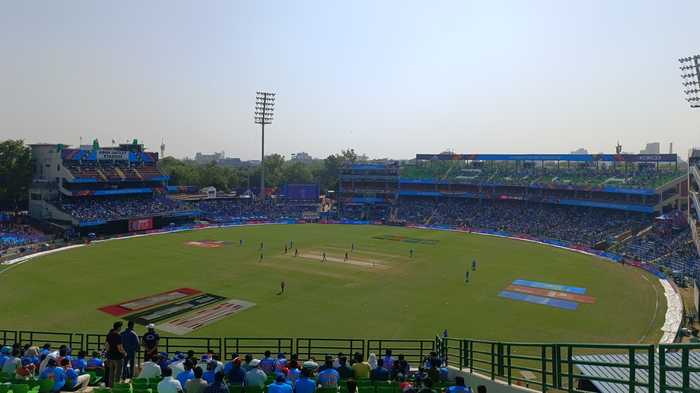
Hasan Nawaz's 96 — the innings that nearly changed everything
Pakistan's chase never looked like a chase. Jasprit Bumrah, wicketless but watertight with 4-0-33-0, strangled the powerplay, and Pakistan crawled to 39 for 2 after six overs — 42 runs behind India's 81 for 2 at the same stage — and 76 for 3 at halfway. Captain Sahibzada Farhan fell for 10, caught by Axar Patel off Washington Sundar; Saim Ayub made 29; Usman Khan managed 3 before Axar removed him; Maaz Sadaqat's 23 ended the same way, Axar again.
Then Hasan Nawaz happened. The 23-year-old, who owns Pakistan's fastest T20I century — 44 balls against New Zealand in 2025 — played an innings of astonishing ball-striking to drag a second-string Pakistan side to the edge of the unthinkable. With Abdul Samad (9) and Saad Masood (12 not out off five balls) offering cameos, Nawaz took the chase to the final delivery before falling four short of his hundred. Axar Patel (2 for 29) and Washington Sundar (2 for 29) held their nerve, Shivam Dube's 2 for 33 capped a fine all-round game, and Pakistan finished on 192 for 6 — 19 runs short of gold.
It was the finest losing innings in Asian Games cricket history, and it deserved a better result.
Why this matters — back-to-back golds and the golden double
This was never just about one T20 game. India beat Pakistan by 19 runs to win gold, making it back-to-back Asian Games men's cricket titles — Hangzhou 2023 and Aichi-Nagoya 2026 — a feat of sustained dominance in a format engineered to produce randomness. Add the women's gold from September 22 and Indian cricket has completed the golden double in Asian Games cricket: both T20 tournaments, both gold medals, one Games.
The deeper significance is structural. India arrived in Nisshin as T20 world champions with a full-strength squad; Pakistan arrived with a second string, their first-choice stars absent. That India still needed Nawaz's dismissal off the final ball to close out a 19-run win says two things at once: India's depth is frightening, and Pakistan's second tier has considerably more fight than the "second-string" label suggested.
India-Pakistan finals — now 4-3 to India
India now lead Pakistan 4-3 in the finals of major multi-team tournaments across formats, per ESPNcricinfo. This was the second India-Pakistan final in thirteen months — India took the Asia Cup 2025 decider as well, with Tilak Varma's 69 earning Player of the Match. The rivalry's centre of gravity has shifted decisively. Pakistan's last final victory over India in a major tournament is receding into history, and the psychological edge — the sense on both sides of who expects to win these games — now belongs to India by a distance.
Who benefits, who has questions to answer
The winners are obvious. Abhishek Sharma (61 off 28, strike rate 217.9) reinforced his standing as the most feared powerplay batter in world cricket. Tilak Varma (51 not out off 22, strike rate 231.8) now owns two final-defining innings against Pakistan in thirteen months — at 23, he is assembling a big-match résumé that invites comparison with the greats. Shreyas Iyer's captaincy — the toss, the batting order, the bowling changes — has been vindicated with gold. And the BCCI's policy of sending full-strength sides to multi-sport Games rather than treating them as development tours has now delivered consecutive golds.
For Pakistan, Hasan Nawaz is the find of the tournament. A 96 off 51 balls in a final, against the world champions' attack, at 23 — that is a career-making innings even in defeat. The questions are harder: the decision to open with spin from both ends, the handling of Saad Masood (one over, 24 runs, withdrawn), and the structural gap between Pakistan's best XI and its next tier. Critics will argue a full-strength Pakistan would have made this a classic; they will also note India's second tier would probably have won it too. Both things can be true.
Then there is the rocking-baby send-off. Ayub's celebration after dismissing a 15-year-old will be called gamesmanship by some and disrespect to a child by others. Expect the spirit-of-cricket debate to rumble on.
By the numbers — where the Korogi Sports Park final in Nisshin was won
Strike rates told the story: Abhishek Sharma 217.9 (61 off 28), Tilak Varma 231.8 (51 not out off 22), Hasan Nawaz 188.2 (96 off 51) — three innings above 185, two of them Indian. India cleared the ropes 15 times to Pakistan's 10, with Abhishek alone hitting seven sixes. The powerplay gap was decisive: India 81 for 2, Pakistan 39 for 2 — a 42-run deficit after six overs that Pakistan spent fourteen overs failing to close. The 211 for 6 stands as the highest total of the Aichi-Nagoya Games. And 4-3 is now India's lead in major multi-team tournament finals over Pakistan.
What happens next — World Cup rhythm, Olympic horizons, a Pakistan rebuild
For India, this gold is a staging post, not a summit. The T20 world champions used the Asian Games as a live-fire tune-up, and the form of Abhishek Sharma and Tilak Varma — plus the emergence of 15-year-old Sooryavanshi on a senior global stage — leaves the selectors with enviable problems. With cricket returning to the Olympics at Los Angeles 2028, every multi-sport gold carries added weight: India are building a medal-winning machine in both squads.
For Pakistan, the rebuild accelerates around Nawaz, who has announced himself as a cornerstone. The task is to build a first-choice XI with the same fearlessness the second string showed in Nisshin. The gap to India is real — full-strength versus second-string should not produce a 19-run final — but the fight in this defeat was real too.
Bronze went to Sri Lanka, 63-run winners over Bangladesh — a reminder that Asian cricket's depth now stretches well beyond its two giants.
India retain the Asian Games cricket gold. The golden double is complete. Hasan Nawaz's 96 will be remembered as the innings that nearly broke the script — but in this rivalry, the scripts are increasingly written in blue.
Sources
- Reuters — match result, innings totals and India's Asian Games cricket double.
- ESPNcricinfo — scorecard details, individual performances and India-Pakistan tournament-final context.