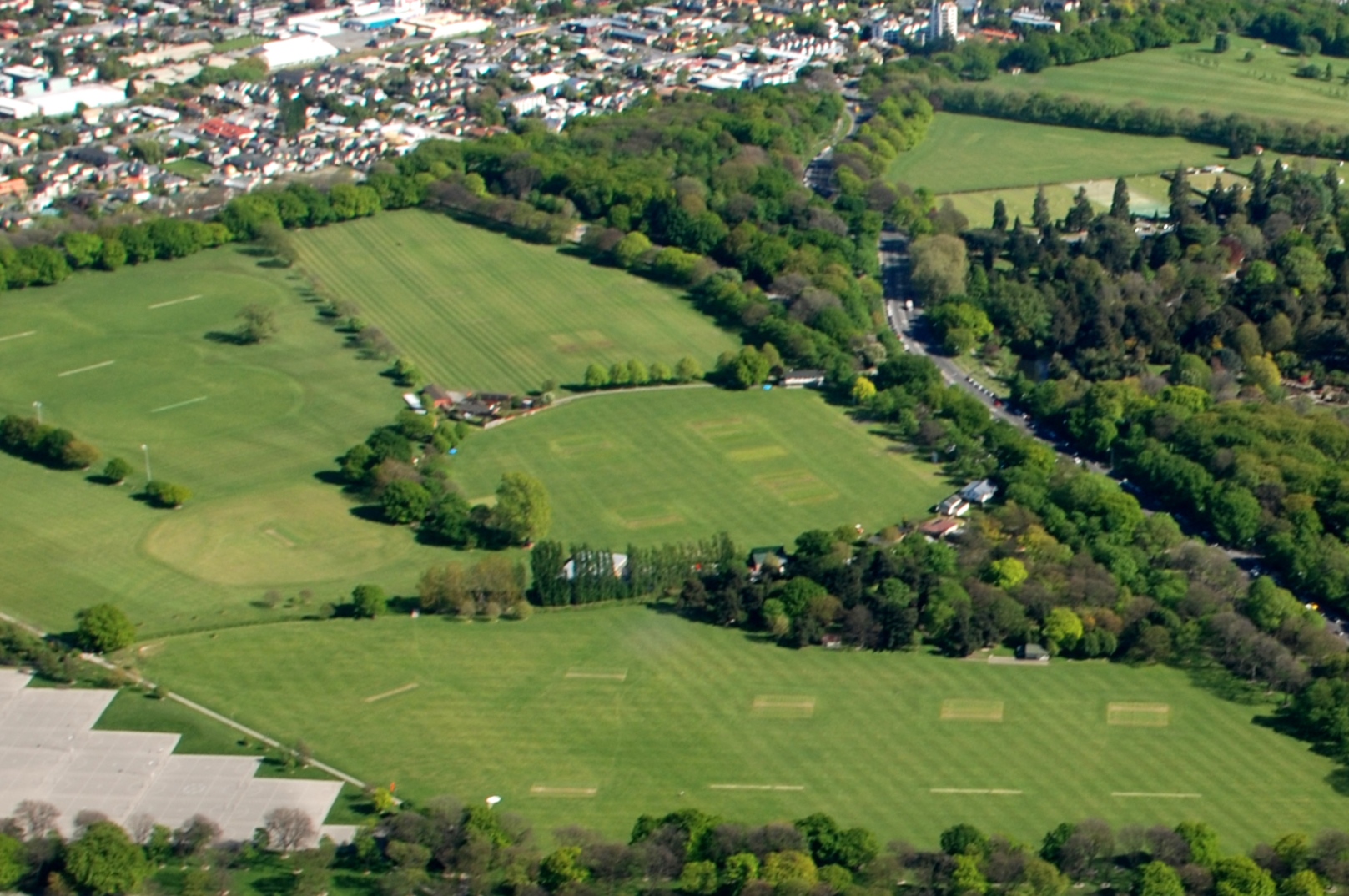
Sports / Christchurch, New Zealand — The India vs New Zealand 2nd T20I result — India 181 for 6, New Zealand 180 for 5, at Hagley Oval on Saturday — was a chase that looked lost twice. Mitchell Santner's 4 for 21 left India 70 for 5 and then 112 for 6, still needing 69 runs off 31 balls. Tilak Varma, unbeaten on 51 off 26, and Nitish Kumar Reddy, unbeaten on 26 off 13, added a record 69 off 30 balls for the seventh wicket and won it with one ball to spare, putting India 2-0 up in the five-match series.

The India vs New Zealand 2nd T20I result will be remembered less for the target — 181 is a routine T20 chase on most modern surfaces — than for how close India came to wasting it. On a Christchurch pitch that played slower than the one that produced 455 runs in Thursday's first match, India's bowlers first did the hard part, restricting New Zealand to 43 for 3 in the powerplay before Glenn Phillips and Bevon Jacobs rebuilt the innings. Then Santner, New Zealand's captain, produced a spell for the record books, and India needed their seventh-wicket pair to produce one too. Both got what they came for; only India got the win, and with it a 2-0 lead that leaves New Zealand needing to win all three remaining matches to take the series.
Phillips and Jacobs turn 43 for 3 into 180 for 5
India won the toss and chose to bowl, and for six overs the decision looked inspired. New Zealand's top order could not get the slower surface away, and the hosts were 43 for 3 at the end of the powerplay with their innings going nowhere. What followed was the partnership that defined New Zealand's innings: Phillips and Jacobs added 116 runs for the fourth wicket, methodically at first and then with increasing violence as the pitch's pace became familiar.
Phillips top-scored with 70 off 43 balls, with four fours and four sixes — his second straight fifty of the series — before Arshdeep Singh had him caught near the fence. Jacobs made 58 off 46 balls, with five fours and a six, in the innings that is fast becoming the making of him at this level. Michael Bracewell then struck 10 off just two balls at the death to lift New Zealand to 180 for 5. Arshdeep was India's most successful bowler with 2 for 33, while Bhuvneshwar Kumar, Prince Yadav and Nitish Kumar Reddy took one wicket each. A total of 180, on that surface and against that attack, was a recovery New Zealand had no right to expect at 43 for 3 — and for most of the chase, it looked like enough.

Santner's record spell leaves India 70 for 5
India's chase began at full speed — Sanju Samson and Abhishek Sharma put on 40 in 4.4 overs — and then Santner took the match by the throat. The left-arm spinner finished with 4 for 21 from his four overs, a spell that made him, according to ANI's reporting of the match records, the first bowler ever to take multiple four-wicket hauls against India in T20 internationals; his first, 4 for 11 at Nagpur in the 2016 T20 World Cup, skittled India for 79. The haul also moved Santner into the top ten T20I wicket-takers of all time, level with Arshdeep on 148 wickets.
The damage was sequential and ruthless. Vaibhav Sooryavanshi, the teenager batting at No. 3 on his return to the side, made just 4 off 8 balls. Captain Shreyas Iyer and Axar Patel fell within two balls of each other, and at 70 for 5 in the 11th over India were no longer chasing a target so much as serving a sentence. Naman Dhir — the finisher of Thursday's record 226 chase — briefly changed the mood again, striking three sixes in a 31 off 17 balls and adding 42 with Tilak. When Dhir fell in the 15th over, though, India were 112 for 6 and needed 69 runs from 31 balls, a required rate above 13 an over, with only the bowlers to come.
Why this matters: a record seventh-wicket stand, and a lesson about depth
What happened next is now in the record books. Tilak and Reddy's unbeaten 69 off 30 balls is India's highest seventh-wicket partnership in T20 internationals, breaking the 63 set by Dinesh Karthik and Krunal Pandya. Tilak finished on 51 not out off 26 balls — a half-century off 25 — with six fours and a six, and was named player of the match. Reddy, his fellow Hyderabadi, made 26 not out off 13 balls with a four and a six and, PTI reported, hit the winning runs. "The Hyderabadi boys were in play today," Tilak said afterwards. "What everyone believed, I have done it, so I'm really proud of myself."
The deeper significance is about how this India side is built. Two nights earlier in the first T20I on this same ground, India chased a record 226 with their top order firing. On Saturday the top order failed almost completely — the first five wickets produced a collapse from 40 for 0 to 70 for 5 — and India won anyway, because the batting runs to No. 7 and because a 23-year-old at the crease refused to treat a required rate of 13 as a verdict. Chases like this are the ones selection panels remember: they test temperament in a way a flat-track shootout never can, and Tilak's innings — acceleration without panic, 41 of his runs coming in that final unbroken stand — was a temperament innings as much as a power one.
New Zealand, meanwhile, will look at this match as the one that got away twice over. Santner's spell had the game won; Phillips and Jacobs had given it a total to defend. What cost the hosts, by multiple accounts of the chase, was their fielding: New Zealand reprieved four Indian batters during the innings, and a missed chance to dismiss Dhir — with India still needing 97 off 48 balls — proved especially expensive. On a slower pitch where Santner conceded just 5.25 an over, New Zealand's pace bowlers went at between 10 and 12 an over in the closing overs, and Tilak and Reddy aimed squarely at them in the final three. A side that drops four catches in a T20 chase of 181 is, in effect, bowling a second innings to the same batters — and India's lower order made them pay in full.
What happens next
India lead the five-match series 2-0 and need one more win to take it, with the third T20I in Wellington on October 27. For New Zealand, the equation is now absolute: win all three remaining matches or lose a home series, and do it against an India side that has now won at Hagley Oval in two entirely different ways — a record chase when everything clicked, and a rescue when almost nothing did. Santner's record night at least gives the hosts a template: on slower surfaces his four overs are worth a match on their own, provided the fielding behind him holds up. For India, the selection questions are pleasant ones — Dhir has finished one chase and rescued another inside three days, and the seventh-wicket record is an argument, written in runs, for keeping genuine batting depth all the way down the order. For more record-breaking T20 batting from this week, see our report on Lhuan-dre Pretorius's 188 breaking Chris Gayle's T20 record.
Sources
Reuters, "Varma leads India fightback in four-wicket victory over New Zealand" (October 24, 2026) — score, Phillips-Jacobs 116 stand, Santner 4-21, Tilak quote, 69 off 30 balls. ESPNcricinfo, New Zealand vs India 2nd T20I scorecard, Hagley Oval, Christchurch (October 24, 2026) — full batting and bowling figures, seventh-wicket partnership record. ANI via Asia Today and NewKerala (October 24, 2026) — Santner first bowler with multiple four-wicket hauls against India in T20Is, 148 career T20I wickets, innings details. PTI via NewsPlainly (October 24, 2026) — Reddy hit the winning runs, Dhir's 31 off 17, innings progression 40 for 0 to 112 for 6. Score conflicts handled: ANI's "70 in 46 balls" for Phillips and "41 for 3" powerplay figure were not used; the article follows Reuters and ESPNcricinfo (Phillips 70 off 43; New Zealand 43 for 3 in the powerplay).