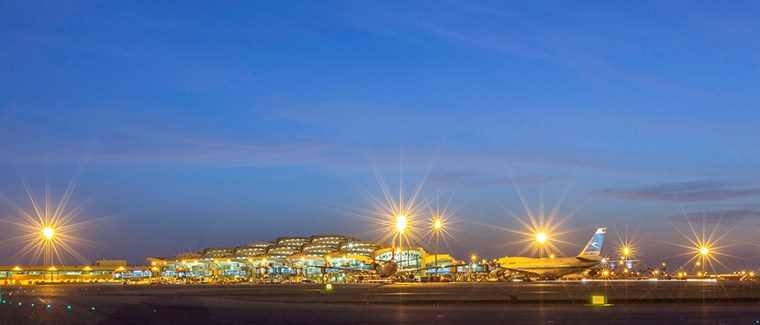
Houthi Riyadh airport attack
Two missile waves hit King Khalid International Airport on Thursday, killing three Saudi nationals including a Saudia pilot and setting a parked jet ablaze — as Riyadh bombs Sanaa overnight and airlines cancel flights.
RIYADH — The Houthi Riyadh airport attack on Thursday came in two waves, killed three Saudi nationals and turned a parked Saudia jet into a symbol of how quickly this war is moving from military confrontation to civilian disruption. Saudi authorities confirmed the toll Friday. Among the dead was Saudia pilot Captain Hamoud Ali Alkalthami. Several other people of different nationalities were injured, with conditions described from minor to serious.
This was not simply a restatement of the deadly airport attacks already reported from October 6 and 7. It was a second strike sequence on October 8: one attack targeted airport facilities; another hit an aircraft on the ground and set it ablaze. Saudi aviation officials said traffic returned to normal Friday, but the practical meaning of “normal” is now narrower. Lufthansa Group and Air India suspended Riyadh service, the U.S. Mission warned Americans that the conflict could escalate, and the capital is preparing to host global oil chiefs while Brent crude trades above $105 a barrel.
What we know about the Riyadh airport missile attack
Two waves, one airport and a line between claims and confirmed facts
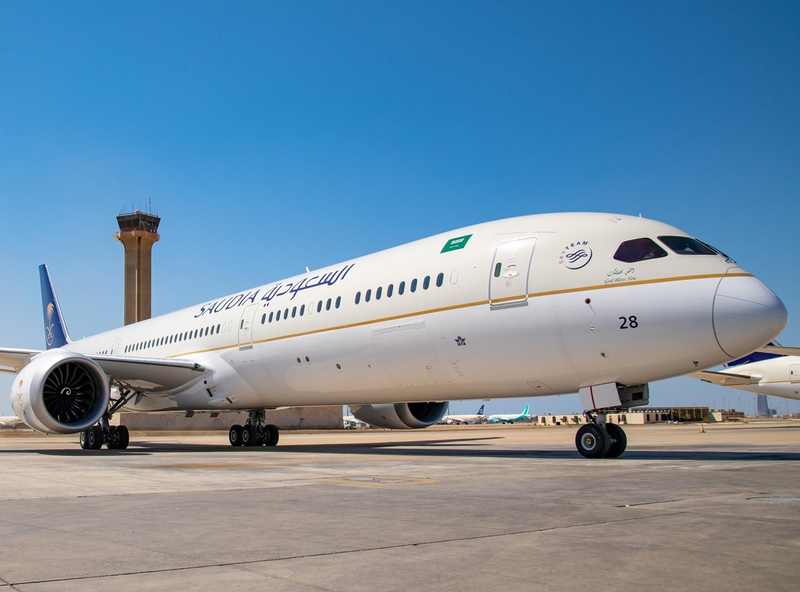
Saudi Arabia's General Authority of Civil Aviation said two attacks struck King Khalid International Airport on Thursday. The first targeted airport facilities. The second struck a parked Saudia aircraft, igniting it. GACA confirmed three Saudi deaths and several injuries Friday; Saudia identified Alkalthami as one of its pilots.
The Houthis claimed a broader operation against Riyadh and Najran airports and the Royal Saudi Air Force's King Khalid Air Base, saying cruise and ballistic missiles were used. The group had issued what it called a final warning to airlines. Those are claims by a belligerent, not independent findings. What Saudi authorities have separately confirmed is that air defenses intercepted and destroyed two ballistic missiles fired toward Riyadh and one toward Khamis Mushait. Falling debris damaged a kindergarten and a medical clinic.
That distinction matters. A launch claim does not prove every intended target was hit; an interception does not mean the ground below escaped damage; and a damaged airliner does not by itself establish which weapon caused the fire. Reuters and CNN reported the official findings and the competing claims, while CNN said images it verified showed smoke over the airport and damage to an aircraft.
The victims and the damaged Saudia jet
Captain Hamoud Ali Alkalthami and a human cost beyond the runway
Captain Hamoud Ali Alkalthami's death gives the casualty list a face and a profession central to the kingdom's global ambitions. He was not reported to have been flying the aircraft when it was hit. The plane was on the ground and carried no passengers, according to reporting drawing on Saudia and the Associated Press. The absence of passengers prevented a much larger disaster, but it does not make an attack on a staffed international airport a near miss.
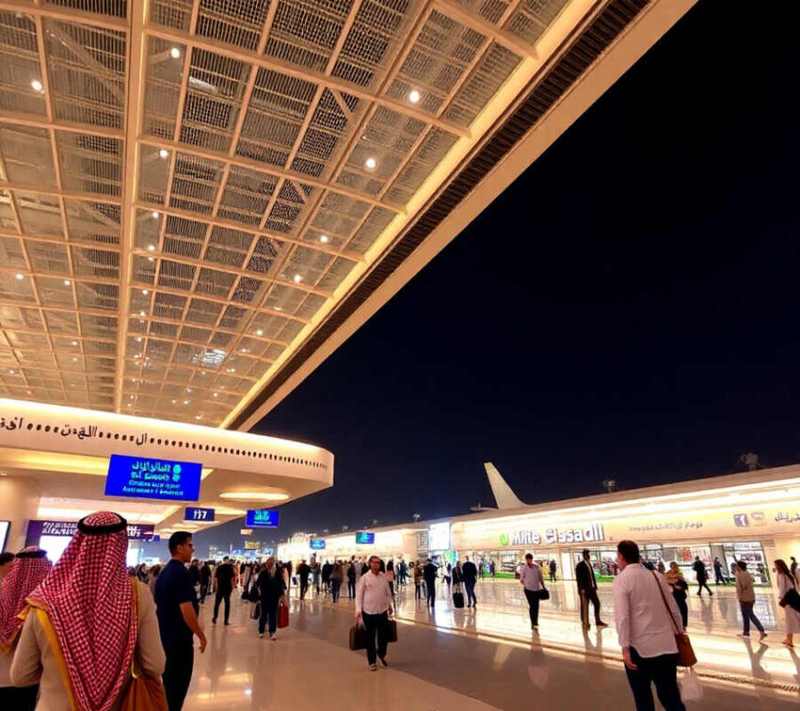
The other victims were also Saudi nationals. Several people of various nationalities were injured. Their presence underlines what an airport is: a civilian workplace and a border crossing where ground crews, pilots, travelers, security staff and foreign workers converge. A weapon aimed at airport infrastructure inevitably puts that mixed population at risk.
Aviation and oil-market fallout
King Khalid International Airport flights cancelled as risk desks take over
GACA said traffic returned to normal Friday, and Flightradar24 showed a gradual resumption. Yet airline schedules are governed as much by insurers and corporate security teams as by airport operating status. Lufthansa Group and Air India suspended Riyadh flights after the strikes. The U.S. Mission in Saudi Arabia told citizens to remain alert and said the conflict “has the potential to escalate.”
For carriers, the question is not whether one runway is open at one moment. It is whether the probability of another attack can be carried safely and insured economically. A suspension by one major airline can become a benchmark for others. That is how an airspace-denial campaign can achieve partial effects without formally closing the airspace.
Lufthansa suspends Riyadh flights before oil chiefs meet
The timing is unusually costly. Riyadh is due to host a major meeting of global oil chiefs within days. Executives who trade in supply risk are being asked to fly into a capital whose international airport has suffered two attacks in a day. Even if the meeting proceeds, arrival decisions become their own market signal.
Brent crude above $105 already contains a premium for the U.S.-Iran confrontation, pressure on the Strait of Hormuz and attacks on commercial shipping. The airport strike adds a different risk: confidence in the administrative and aviation hub from which Saudi Arabia manages its role in global energy markets. Our reporting on the tanker Acers attack north of Qatar shows how rapidly the security premium has spread from one choke point into the wider Gulf.
Saudi airstrikes hit Sanaa overnight
Riyadh promises the attacks “will not go unpunished”
Saudi aircraft struck Sanaa overnight after the airport attacks. The Saudi-led coalition said it destroyed three missile launch platforms and, across the broader campaign, struck 82 Houthi sites in Saada, Hodeida, Jawf and Marib. Coalition spokesman Turki al-Malki said attacks on civilians “will not go unpunished.”
The Houthis, for their part, said Saudi aircraft carried out 59 strikes across Sanaa and other provinces in 24 hours. Those numbers come from opposing parties and cannot be treated as independently reconciled tallies. They do establish the scale each side wants the other to see: Riyadh emphasizes degradation of launch capacity; the Houthis emphasize the breadth of Saudi bombardment.
Retaliation can destroy launch equipment and impose costs. It can also feed the Houthi argument that Saudi territory is part of the battlefield. Abdul Malik al-Houthi said in a televised address Thursday that Riyadh should prepare for a prolonged conflict. The strategic test is therefore not whether Saudi aircraft can hit more targets, but whether those strikes reduce launch capacity faster than they generate incentives and justification for more launches.
Why this matters: airports as strategic leverage
Airports are efficient pressure points. They are difficult to disperse, essential to business and tourism, and filled with civilian activity. A missile campaign does not have to close every runway to alter behavior. It needs only to make airlines, crews, insurers and passengers uncertain about the next flight.
That is the logic of airspace denial. The Houthis can translate a limited number of successful or even partially successful attacks into cancellations across a network much larger than the physical damage. Saudi Arabia must defend every major airport and air corridor; attackers choose the time and target. The imbalance is the leverage.
This was the third consecutive day of Houthi attacks on the kingdom. Repetition matters because risk models respond to patterns, not speeches. One strike can be treated as exceptional. A three-day sequence forces airlines and investors to price recurrence. Coming before the oil chiefs' meeting, the attacks signal that regional warfare can reach the venues where the global economy convenes.
How the Yemen war escalation reached Riyadh again
From the 2022 truce to the October 2026 escalation arc
The 2022 truce did not resolve Yemen's war, but it sharply reduced cross-border attacks and created a long period of comparative calm between Saudi Arabia and the Houthis. That restraint has now broken. The present cycle accelerated after the Houthis seized territory along the Red Sea coast in early September and the Saudi-backed “Dawn of Yemen” offensive widened fighting around Dhubab and Bab el-Mandeb. Taiz has come under renewed pressure.
The October sequence has been steep. Oil facilities were targeted on October 3. Saudi forces said they carried out roughly 1,000 strikes by October 5 during the wider campaign. The October 6–7 wave hit airports and killed three people — a Sudanese man at Riyadh airport and Moroccan and Algerian women at Abha — while 36 people were injured. That earlier episode is detailed in our report on the first deadly Riyadh and Abha attacks. Thursday's second Riyadh wave killed three more.
The U.S.-Iran conflict provides the regional backdrop. The Houthis are aligned with Iran, while Saudi Arabia is working with partners to protect its territory and shipping routes. Pakistan has confirmed troops stationed in Saudi Arabia. Turkey is assessing assistance under a defense pact. Washington's posture toward Tehran remains a crucial variable, explored in our analysis of President Trump's pre-midterm pause on a new Iran attack.
Multiple angles: leverage, coalition politics and civilian exposure
Who may benefit
The Houthis gain bargaining leverage if they can demonstrate that Riyadh's airports and oil-sector calendar are vulnerable. They also reinforce their claim to be a regional actor rather than only a Yemeni faction. Saudi leaders, meanwhile, may find it easier to rally coalition partners when civilians and a flagship airline are visibly attacked. Pakistan's deployed forces and Turkey's deliberations suggest the conflict is already testing defense relationships.
Who loses
Civilians lose first: those killed at Saudi airports, those injured by impacts or interception debris, and Yemenis under intensified airstrikes. More than 200,000 people have been displaced in recent fighting according to the International Organization for Migration, while recent United Nations coverage has cited more than 150,000 fleeing their homes. The difference reflects reporting periods and methodologies, not a reason to minimize either figure.
Airlines lose schedule reliability, crews face elevated risk, and passengers absorb cancellations and higher fares. Saudi Arabia's aviation ambitions face a reputational cost. Oil consumers lose when risk adds dollars to every barrel. Yemen loses again as military assets and civilian-adjacent areas share the same geography.
What critics say about both sides
Critics of the Houthis say attacks on civilian airports are inherently indiscriminate or place civilians at unacceptable risk, whatever military facilities may be nearby. Critics of the Saudi campaign say large-scale airstrikes in and around densely populated Yemeni areas create the same civilian-adjacent danger. Each side describes its attacks as necessary deterrence. Neither description erases the obligation to distinguish military targets from civilians.
The numbers: one week of accelerating costs
- 6 killed at Saudi airports this week: three in the October 6–7 wave and three in Thursday's second Riyadh sequence.
- 36 injured earlier in the week, followed by several more injuries Thursday ranging from minor to serious.
- 3 missiles intercepted Thursday: two toward Riyadh and one toward Khamis Mushait, according to Saudi authorities.
- 3 launch platforms destroyed, according to the Saudi-led coalition.
- 82 Houthi sites struck in the coalition's account, while the Houthis reported 59 Saudi strikes in 24 hours.
- 200,000-plus displaced in the IOM tally cited in reporting; recent UN coverage has used a figure above 150,000 for people fleeing their homes.
- Brent above $105 a barrel, reflecting the combined premium from Hormuz, shipping attacks and regional escalation.
The direction is more important than false precision. Deaths at Saudi airports doubled across two reported waves. The strike count is high enough to show an air war rather than a single retaliation. Displacement is measured in six figures. Oil has moved beyond a symbolic threshold. Every line points toward a conflict widening faster than diplomatic mechanisms are containing it.
What happens next
Four scenarios from sustained air war to regionalization
Sustained air war: The most immediate scenario is continued Houthi launches and Saudi strikes. Airports reopen between alerts, airlines make rolling decisions and each side claims deterrence while operating inside an escalating cycle.
Airspace closure risk: Another successful strike on a passenger terminal or aircraft could push more carriers to suspend service and force temporary restrictions across Saudi airspace. Formal closure is not required for commercial access to shrink sharply.
Energy infrastructure returns to the center: If airport pressure fails to change Saudi policy, oil facilities, pipelines, terminals and shipping may become more prominent targets. Brent above $105 shows how quickly that possibility reaches households and businesses far from the region.
Regionalization or peace-plan pressure: Pakistan and Turkey could deepen assistance, strengthening Saudi defenses but widening the number of states exposed to the conflict. The same danger may increase pressure on mediators to revive a peace framework. The question is whether outside partners become a shield for de-escalation or another rung on the escalation ladder.
The second Riyadh airport wave changes the baseline. Saudi authorities can restore traffic, but they cannot restore the assumption that Thursday was an isolated event. For Riyadh, the priority is to defend aviation without turning retaliation into an open-ended campaign. For the Houthis, the choice is whether leverage gained through civilian disruption is worth the military and political costs likely to follow. For everyone passing through the region's airports and airspace, the margin for error is narrowing.
Sources cited
- Reuters, October 9, 2026 — official death toll, damaged Saudia aircraft, airline suspensions, Sanaa strikes, oil-market context and coalition claims.
- CNN, October 8–9, 2026 — verified airport imagery, interceptions, Houthi claims, Abdul Malik al-Houthi's warning, U.S. Mission guidance and Associated Press witness reporting.
- Associated Press — witness account of explosions and reporting on the aircraft being on the ground without passengers, as cited in the reviewed coverage.
- Saudi General Authority of Civil Aviation (GACA) — Friday confirmation of two attacks, three Saudi deaths, injuries and the restoration of airport traffic.
- Saudia Group — confirmation that pilot Captain Hamoud Ali Alkalthami was among those killed.
Claims by the Houthis, Saudi officials and the Saudi-led coalition are attributed to those parties. Signal Post News has not independently verified contested weapons claims, strike counts or battlefield damage assessments.
War Desk analysis · Published October 9, 2026