Gaza children killed ceasefire: more than 340 children have been reported killed in Gaza since the ceasefire was announced a little over a year ago, UNICEF said in a new report on Friday — a toll the agency says has kept rising, in smaller numbers but without stopping, through twelve months that were supposed to be defined by guns falling silent.
340 Children Killed in a Year of 'Ceasefire'
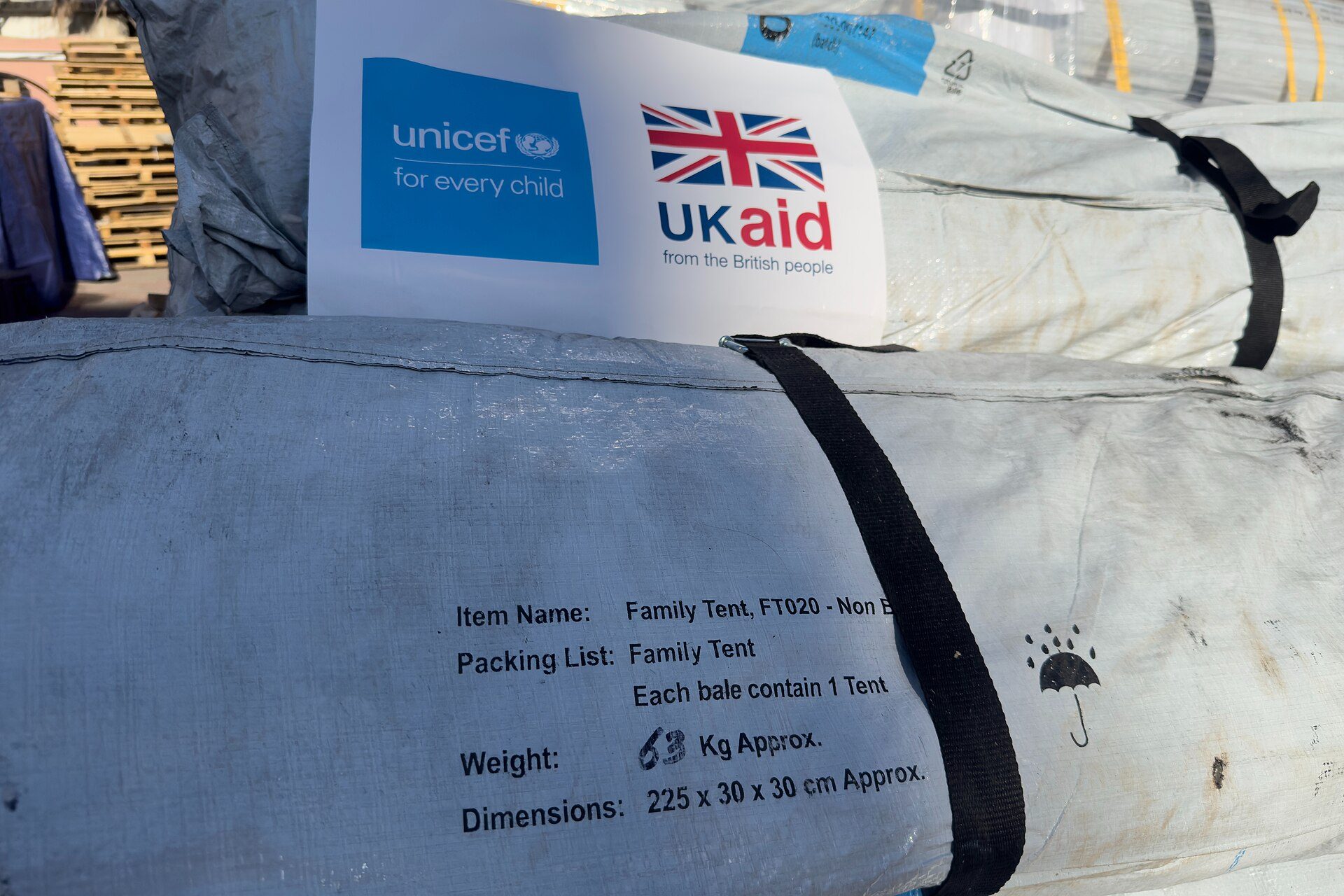
Track it live: Israel–Gaza war map — follow the conflict on the live map, and see all active conflicts on the live war tracker.
GENEVA — UNICEF released the report on Friday, a little over a year after the ceasefire was announced, and briefed journalists through its spokesperson Ricardo Pires. Its headline figure is stark in its simplicity: more than 340 children reported killed since the ceasefire announcement, and hundreds more injured, many with life-altering injuries. The agency is careful, and readers should be too, about what kind of number this is. It is a reported toll, compiled from the information available to the agency and its partners on the ground — not a per-incident verified count in which every death has been independently investigated. That distinction matters, and this article will return to it, because the argument over Gaza's numbers is itself one of the war's enduring fronts.
The most recent slice of the report is the hardest to file under any definition of peace. In the last two weeks alone, UNICEF reports, seven children were killed — five boys and two girls — in airstrikes, drone strikes and gunfire; at least 33 children were seriously injured; and two more boys died of injuries they had suffered earlier. A ceasefire that is working in the aggregate can still produce a fortnight like that. The question the report poses, without quite asking it, is how many such fortnights a ceasefire can contain before the word stops describing the reality for the people living inside it.
A count that kept moving
The new figure does not arrive in a vacuum. In August, UNICEF's accounting put the number of children reported killed since the ceasefire at roughly 300 across its first 300 days. Six to eight weeks later, the count stands above 340. Read one way, the increment confirms what the ceasefire's defenders say: the rate of killing is a small fraction of what it was during the war's height, when child deaths were counted in far larger numbers over far shorter periods. Read another way, the same increment is the report's whole argument — the line on the graph never reached zero. It flattened, and it kept climbing, week after week, through a year in which the agreement was supposed to consolidate into something more durable.
Both readings are arithmetically available from the same numbers, which is precisely why the numbers are fought over. What the before-and-after comparison does establish, on UNICEF's own reporting, is direction rather than magnitude: deaths continued to accumulate at a pace of roughly one child every day or two across the late summer and early autumn, and the most recent two weeks ran hotter than that average. As this site's review of the ceasefire's first year found, the agreement has held as a framework while much of what it promised — reconstruction, transitional governance, a settled security arrangement — remains unbuilt. The child toll is the human ledger of that gap.
The Yellow Line
One detail in UNICEF's companion one-year material deserves more attention than a single statistic usually gets. Nearly half of the children reported killed since the ceasefire died near the Yellow Line, the boundary of the area under Israel's current physical presence inside Gaza. UNICEF says the line has gradually expanded, that its movement keeps displacing families who had settled just outside it, and that it is not clearly marked on the ground. For a child, an unmarked line is not a line at all: it is a street that was safe last month and is not safe now, in a territory where families move constantly between shelters, aid points, relatives and the remains of homes.
Israel's position, stated consistently across the year, is that its forces inside Gaza operate against Hamas and Palestinian Islamic Jihad and respond to violations of the ceasefire, and that the retained zone is a security measure the agreement contemplates. Hamas and the Gaza authorities accuse Israel of undermining the ceasefire through exactly those operations and through the line's expansion. What can be said without taking either side's word is narrower: a boundary that one party patrols and the other disputes, drawn through a densely populated territory without clear marking, is a structural risk to civilians whoever is right about any individual incident — and UNICEF's reporting places a large share of the year's child deaths in its shadow.
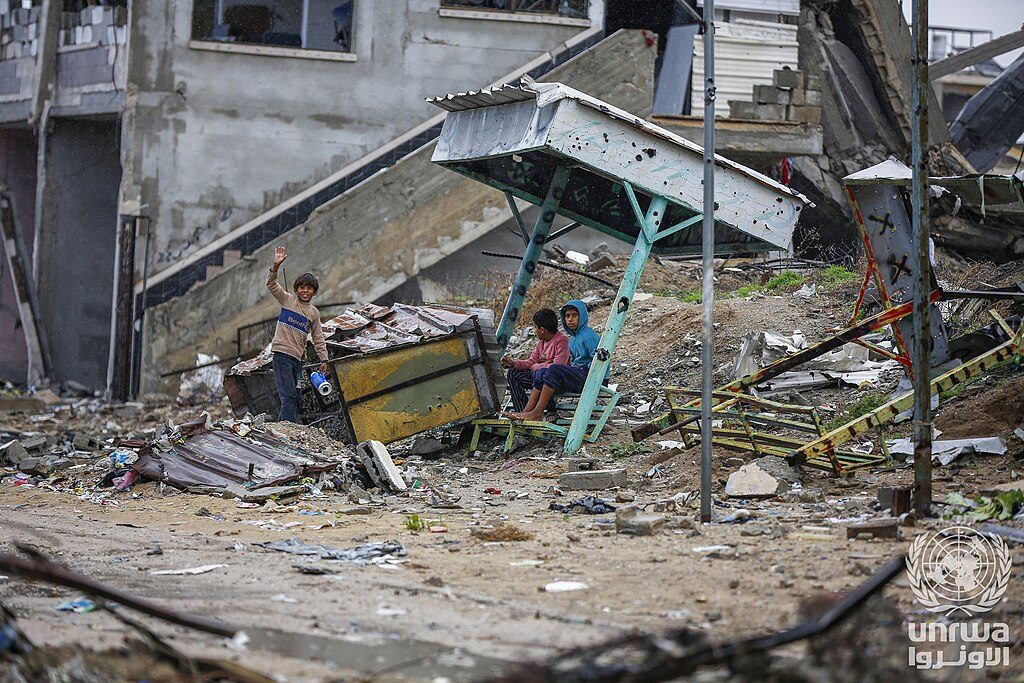
800,000 children without a settled home
The killing is the report's headline, but its bulk is about the living. About 800,000 children remain displaced, most of them in tents or damaged buildings. About 60,000 children have lost one or both parents, during the war or since the ceasefire. UNICEF assesses that nearly every child in Gaza needs mental-health support — a finding that, in a population where childhood has been organised for three years around bombardment, displacement and loss, reads less like a clinical estimate than a description of a generation's baseline.
The agency illustrates the aggregate with individual cases, and one is worth retelling briefly because it shows what the statistics are made of. Norhan is 16. Her mother died the day after giving birth, and Norhan now cares for her baby sister. Her father lives with a disability. Her siblings attend a UNICEF learning centre. She hopes to become a pharmacist. Every element of that short biography maps onto a line in the report — orphanhood, caregiving children, interrupted schooling, the learning centres the agency counts as its reach — which is the point: in Gaza at this scale, the representative case and the extreme case are no longer far apart.
Why this matters
Start with the definition problem. A ceasefire is usually judged by whether organised warfare has stopped, and by that measure this one has broadly held: there has been no return to the full-scale campaign of the war's first two years. But the report insists on a second measure — whether civilians, and children in particular, have stopped being killed — and by that measure the year looks different. The space between those two measures is where Gaza now lives, and it is where the politics of the next phase will be fought. If the peace plan's further stages are negotiated against the first measure, the second measure's numbers become an embarrassment to be disputed. If they are negotiated against the second, they become a deadline.
Then consider what the numbers are for. For UNICEF, the toll is an instrument: it is how an agency without an army or a vote argues for access, equipment and implementation. For Israel's government, disputing Gaza's tallies — a position it has held toward health-authority figures throughout the war — is partly an argument about method and partly about legitimacy, since the toll is the world's shorthand for the war's morality. For Hamas and the Gaza authorities, the same toll is evidence the ceasefire is a fiction Israel maintains for international cover. Readers should notice that all three uses are compatible with the underlying reported figures being broadly right in scale and wrong in any given detail — which is why the honest treatment is the one this report attempts: state the figures as reported, attribute them, and say plainly that per-incident independent verification of the year's child deaths does not exist.
Finally, the forward risk is not primarily military. It is calendrical. The report lands in mid-October, with Gaza's displaced population still overwhelmingly under canvas and tarpaulin, its sewage system broken, and its supply lines — as the territory's merchants discovered this week, when commercial trucks stopped entering and the territory's markets began to empty — subject to interruption by disputes that have nothing to do with the weather. Winter does not negotiate. The scenarios that follow from the report are therefore less about whether the ceasefire survives in name than about what it delivers before the rains.
What the response has reached — and what it has not
UNICEF's report is not only an indictment; it is also, in part, a progress account, and fairness requires holding both. Since the ceasefire, the agency says, more than 560,000 children have returned to some form of learning, including through more than 200 UNICEF-supported learning centres. Digital cash assistance has reached more than 380,000 people. Safe water has been provided to 1.2 million people. Waste removal and medical supply lines are operating. In a territory whose institutions were shattered, those are not trivial numbers, and they describe real days of real children's lives made materially better.
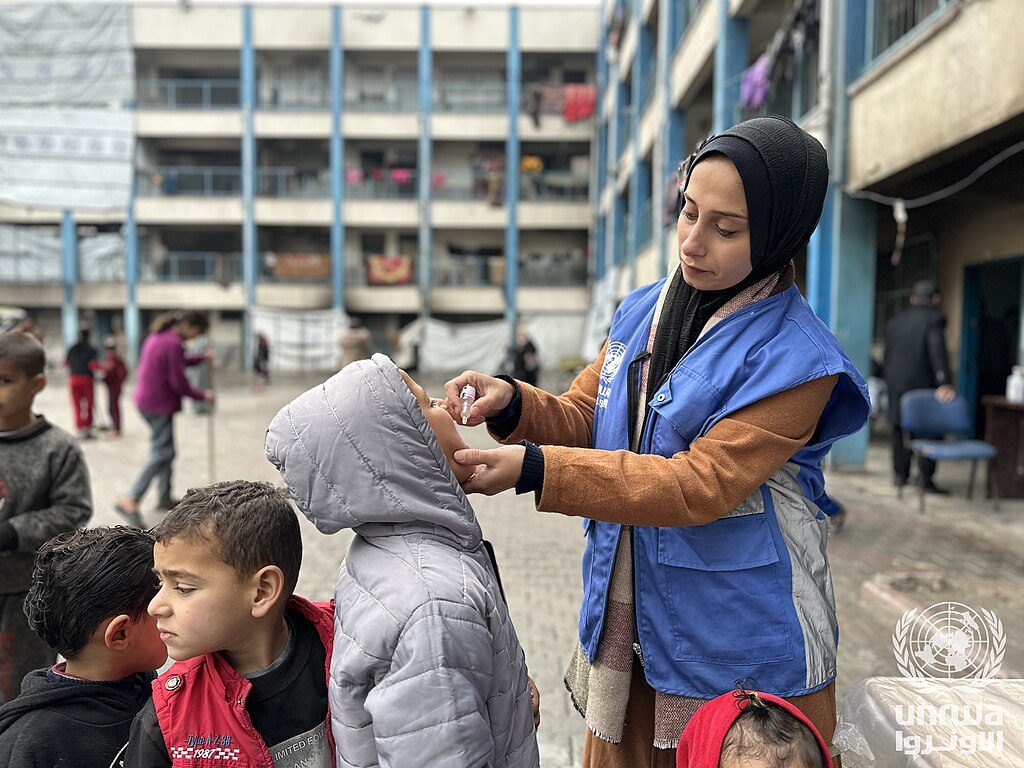
But the agency's own assessment sits directly beside its reach figures: what has been restored is far from a restoration of services. Learning resumed is not schooling rebuilt; a child in a tent classroom has a teacher and a roof of canvas, not a school. Cash assistance reaches hundreds of thousands in a population of millions. Water provided to 1.2 million people is water trucked and rationed, not water from a repaired network. The gap between the reach numbers and the need numbers is not a criticism of the agencies working in Gaza — it is the measurable size of the reconstruction that the ceasefire's second year is supposed to begin and has not.
Winter is the deadline
The report's most concrete warning is sanitary. All six of Gaza's wastewater treatment plants remain out of service, UNICEF says, and most raw sewage is pumped to the sea. In Gaza City, the Sheikh Radwan stormwater basin stands half-full. The agency warns that winter rain could push it over — sending contaminated water into residential areas — and notes that children have drowned in sewage-contaminated water before. UNICEF says the basin could be drained in about two weeks, but that the equipment needed has not yet been allowed into Gaza. That last claim is the agency's, and it is stated here as such; the disposition of equipment requests at the crossings is one of the many operational questions on which the parties' accounts routinely diverge.
The same fragility applies above ground. At the same Geneva briefing, Pires stressed that humanitarian and commercial supplies alike must keep flowing predictably, and a separate UNICEF assessment on Friday warned that the year's fragile gains against famine and malnutrition would not survive a sustained disruption of supplies. That warning acquired an immediate illustration this week in the commercial-goods halt — a reminder, as this site's explainer on why strikes and stoppages continue despite the ceasefire sets out, that in Gaza's current arrangement almost everything civilian depends on flows that any party to a dispute can interrupt. For a displaced child population entering winter in tents, the difference between a supply system that works and one that mostly works is measured in exactly the outcomes UNICEF counts: nutrition, disease, exposure, and the margin between injury and death.
The other accounts
Israel says its operations in Gaza target Hamas and Palestinian Islamic Jihad, respond to ceasefire violations, and are conducted under a security framework the ceasefire itself permits; it disputes the Gaza health authorities' tallies, from which much of the international counting ultimately derives. Hamas and the Gaza authorities say Israel is the party undermining the ceasefire — through strikes, through the Yellow Line's expansion, and through restrictions at the crossings. Critics of Israel argue that a toll accumulating in peacetime's name indicts the framework itself. Critics of Hamas argue that an armed authority embedded in a civilian population, which began this war and still governs Gaza's interior, bears responsibility for the conditions in which children remain at risk. None of those positions is verified or refuted by UNICEF's report, and per-incident claims by either side about who killed any individual child in the last two weeks are not independently verified here. What the report establishes is the reported aggregate and the conditions — displacement, sanitation, supply fragility — that are visible to any observer who looks.
What UNICEF is asking for, and what happens next
The agency's asks are specific: full implementation of the peace plan and UN Security Council Resolution 2803; entry of the infrastructure equipment and supplies needed to repair systems like wastewater; and all parties upholding the ceasefire and humanitarian law. Translated from the language of a Geneva briefing, that is a request to move the agreement from its first phase — the guns mostly stopped — to the phases that were announced with it and have largely waited: governance, reconstruction, and a security arrangement in which lines on maps are marked, agreed and stable.
Three near-term paths follow. In the first, the supply and equipment questions are treated as the technical problems they partly are: crossings run predictably, the Sheikh Radwan basin is drained before the heaviest rains, learning centres winterise, and the child toll's slow climb finally flattens to zero — the outcome against which every party claims to be working. In the second, drift continues: incidents accumulate around the Yellow Line, disputes interrupt flows, the basin overflows or the winter simply grinds through tent cities, and the second year's report reads like the first with larger numbers. In the third, a single incident — a strike with a heavy toll, a violation answered at scale — collapses the framework entirely, a possibility that has shadowed the agreement since its signing and that the report's figures, on their own, can neither predict nor prevent.
A year ago, the ceasefire was announced as the end of a war that had already taken more children's lives than any count could make comprehensible. UNICEF's report is, among other things, an argument about what endings are. By the agency's accounting, the war's tempo ended and its dying did not — 340 times over, in twelve months of supposed peace, for the population least able to bear any of it. Whether the second year closes that gap is now the test every party to the agreement will be marked against.
Sources: UNICEF press release and Geneva briefing, October 16, 2026 (figures for reported child deaths and injuries, displacement, orphanhood, learning, cash assistance and water reach, and the Sheikh Radwan basin warning, all stated as reported by the agency); UN News, October 16, 2026; Reuters coverage of the same Geneva briefing, October 16, 2026. Figures originating with Gaza's health authorities are disputed by Israel, whose stated position is that its operations target Hamas and Palestinian Islamic Jihad and respond to ceasefire violations; Hamas and Gaza authorities accuse Israel of undermining the ceasefire. Per-incident claims by any party were not independently verified for this article.