A vehicle obliterated in Tel al-Hawa, an apartment struck elsewhere in Gaza City — Wednesday's killings are the latest entries in a ceasefire ledger that no longer resembles a ceasefire.
What happened
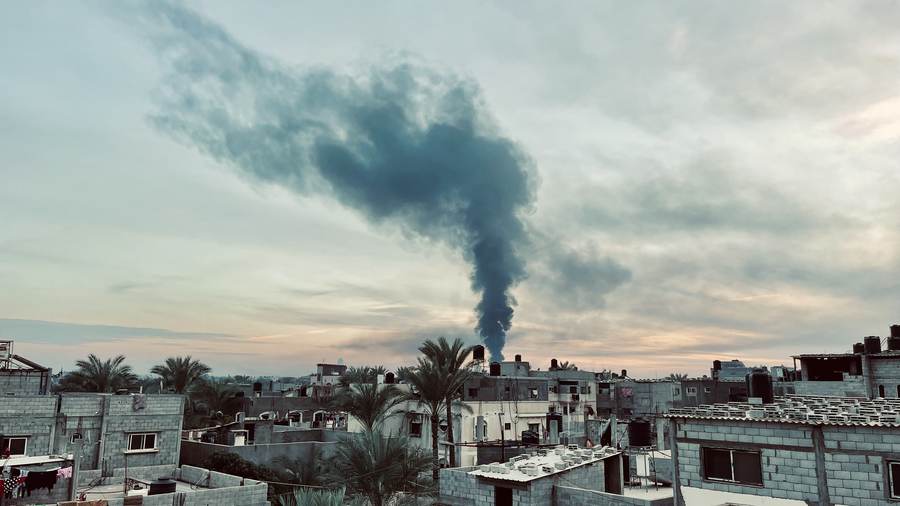
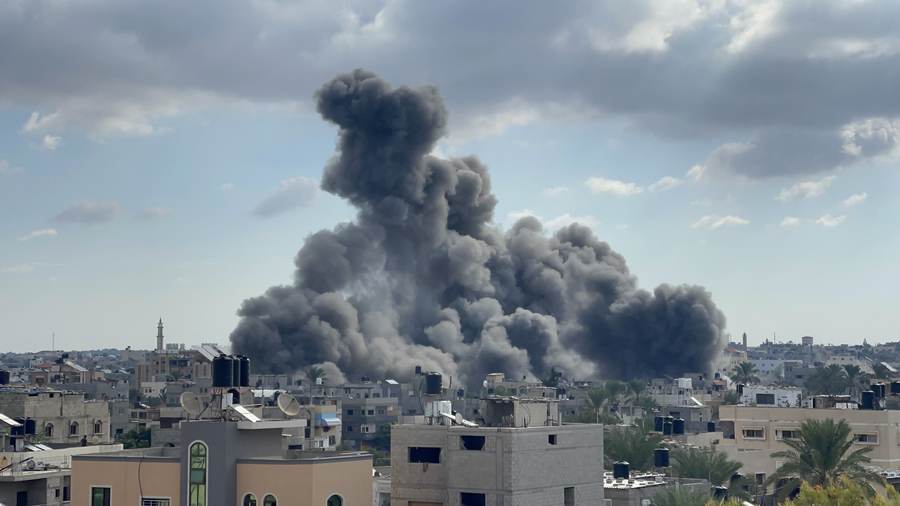
Israeli strikes killed at least five Palestinians in Gaza City on Wednesday, September 30, 2026, in two separate attacks, according to Gaza health officials and medics cited by Reuters. The Israeli strikes on Gaza City on September 30 began, per the reports, with an airstrike on an apartment elsewhere in the city that killed a woman, followed by an airstrike on a vehicle in the Tel al-Hawa neighbourhood that killed at least four people and wounded 14 others. The Israeli military did not immediately comment on either reported strike.
Jordan's official Petra news agency, via Fana News, corroborated the core of the account: five Palestinians killed and 13 others injured Wednesday in a strike on a vehicle in Gaza City's Tel al-Hawa neighbourhood, with Al-Shifa Medical Complex receiving the bodies and the wounded. Petra's tally of the post-ceasefire toll now stands at 1,431 Palestinians killed and 5,026 injured since the truce took effect on October 11, 2025.
Reuters adds the wider frame: Israel says Hamas has been rearming and launching attacks in violation of the October ceasefire, and has stepped up strikes on the group in recent weeks. Hamas denies trying to carry out attacks or rebuild its arsenal and accuses Israel of undermining the Gaza peace deal. Little progress has been made toward the ceasefire's promised next steps, as negotiators have failed to agree terms for Hamas to disarm and for Israel to withdraw its troops.
A note on sourcing: casualty figures in Gaza remain contested and fast-moving. Reuters reports at least five killed (four in the vehicle strike, one woman in the apartment strike) with 14 wounded; Petra reports five killed and 13 injured. The two accounts agree on the day, the city, and the vehicle strike in Tel al-Hawa; the wounded figures differ slightly. The Israeli military has not commented, so the intended targets of the strikes are unconfirmed. This article reports each outlet's account with attribution and does not assert a single toll as fact.
Why this matters
Three things make Wednesday's killings significant beyond the immediate toll.
First, the back-to-back pattern. Wednesday's strikes landed one day after Tuesday's strike wave across Gaza — the Halawa displaced-persons camp in Jabalia, al-Tuffah, Deir al-Balah, Rafah — which this desk covered separately. Two consecutive days of lethal strikes, in multiple locations, nearly a year into a ceasefire: this is no longer a truce interrupted by incidents. It is a pattern, and patterns are policy even when nobody calls them that.
Second, the truce-era toll has crossed a threshold. Petra's figure — 1,431 killed since October 11, 2025 — works out to roughly four deaths a day across the life of the "ceasefire." Gaza's Government Media Office separately claims 5,147 Israeli ceasefire violations in the same period, with 1,421 killed and 4,983 wounded (its figures; carried as claims). Whatever one makes of the exact numbers, the order of magnitude is the story: the October 2025 truce has not stopped the killing, only reclassified it.
Third, the silence of the striker. The Israeli military did not immediately comment on either Wednesday strike. In earlier strikes this month — including the killing of Hamas commander Izz al-Din al-Beik — Israel named its targets publicly and quickly. The absence of a statement here leaves open whether Wednesday's victims were intended targets or collateral, and in Gaza's information vacuum, each side fills that silence with its own certainty. Uncertainty, here, is not neutral: it becomes ammunition for both ledgers.
Background: a truce that never took hold
The October 2025 ceasefire was supposed to freeze the Gaza war in place. It never fully did. From the first weeks, both sides traded accusations: Israel citing Hamas rearmament, hostage-accounting disputes, and attacks on its forces; Hamas and Gaza authorities citing continued strikes, demolitions, detentions, and restrictions on aid and movement. The truce's second phase — Israeli withdrawal, a transitional authority, a multinational security force, Hamas disarmament, reconstruction — exists mostly on paper; negotiators have made little progress on any of it, per Reuters.
September has been the bloodiest month of the truce's erosion. Israel's targeted-killing campaign removed senior Hamas figures — Israel says 20 this month, including al-Beik, whom Hamas itself confirmed had co-led the October 7, 2023 attack. Each killing degrades Hamas's leadership while hardening its posture and giving it fresh grievance. The broader strike tempo — Tuesday's wave, Wednesday's vehicle and apartment hits — shows the violence spreading beyond named targets into Gaza's streets, where the dead are increasingly unnamed.
Who gains, who pays — and what the critics say
Israel's calculation is that sustained pressure degrades Hamas faster than diplomacy restrains it. The monthly tally of killed operatives is presented as evidence of precision and progress — leadership attrition without a ground offensive. Critics, including humanitarian organizations, argue that strikes on vehicles and apartments in dense Gaza City neighborhoods carry civilian costs that outweigh the tactical gains and erode whatever remains of the truce framework.
Hamas's position is that the violation ledger — 5,147 alleged breaches — proves Israel never honored the truce, justifying both its rhetoric and whatever retaliation it chooses. Skeptics note that Hamas's own casualty and violation figures serve its information war as much as its diplomacy — and that the movement's refusal to disarm or account for its fighters gives Israel the pretext it needs.
The civilians pay in both ledgers. The four dead in the Tel al-Hawa vehicle, the woman killed in the apartment strike, the 13 or 14 wounded — none appear in the strategic calculus except as numbers. That is the constant of this war: the people with the least power absorb the most violence, whatever the communiqués say.
The mediators' dilemma deepens with every such day. Egypt, Qatar, and the United States brokered the October 2025 truce; each new day of strikes tests whether the framework can survive its own violations. A truce under which civilians die daily is worse than no truce at all, because it discredits the very idea that agreements can hold — and makes the next negotiation start from a deeper hole.
The numbers in context
Set Wednesday's toll against the claimed truce-era totals: 1,431 killed since the ceasefire, per Petra's Al-Shifa-sourced count — roughly four deaths per day across nearly a year of "ceasefire." Against the full-war toll: more than 74,000 Palestinians killed since October 2023, per Gaza health authorities cited by Reuters, after Hamas-led fighters killed about 1,200 people in southern Israel in October 2023. Israel says four of its soldiers have been killed in Gaza since the ceasefire took effect.
Compare the two Wednesday tolls — at least five killed with 14 wounded (Reuters), five killed with 13 injured (Petra). The near-convergence is itself informative: unlike Tuesday's wave, where outlets ranged from 3 to 8, Wednesday's accounts line up closely. The consensus across both: five dead in Gaza City, in two strikes, on a single Wednesday, nearly a year into a ceasefire. That consensus is the story; the single-wounded discrepancy is the footnote.
And consider the 5,147 alleged violations against the diplomatic record. A truce generating thousands of claimed violations and 1,400+ deaths is not a peace process with problems — it is a low-intensity war wearing a truce's clothes. Both sides are now fighting a war of attrition inside a ceasefire, a contradiction that holds only until one side decides the paper is worth less than the escalation.
What happens next
Three scenarios are worth watching. The most likely: more of the same — weekly strike waves, competing tolls, and a truce that exists mainly in diplomats' statements. The pattern of the last eleven months gives no reason to expect a break; Tuesday's wave followed by Wednesday's killings may simply be the new tempo. The diplomatic track: the mediators face a choice between renegotiating terms both sides will actually observe and watching the framework hollow out entirely. A truce nobody enforces is worse than no truce, because it discredits the next one. The wildcard: an incident with undeniable civilian casualties captured on video — a burning vehicle in Tel al-Hawa, an apartment strike's aftermath — could force the kind of international pressure that spreadsheets of violation counts never do. Gaza's wars have repeatedly turned on single images; the next one may already have been filmed.
For the families burying Wednesday's dead in Gaza City, the analysis is secondary. They are living inside a ceasefire that does not cease and a peace process that does not proceed. Until that changes, the toll will keep being counted in competing ledgers, and the truth will keep lying somewhere in the overlap.
Related coverage
Sources
- Reuters — "Israeli strikes kill five people in Gaza, medics say" (September 30, 2026)
- Fana News (Petra) — "Five Palestinians Killed in Gaza in Israeli Strike" (September 30, 2026)
- ABNA — "Gaza Reports 5,147 Israeli Ceasefire Violations Since October 2025" (September 30, 2026)