Gaza health and civil defence officials say at least five people died when an Israeli strike hit a Gaza City apartment building; the Israeli military did not immediately comment, and the deaths raise the truce-era toll to at least 1,436.
What happened
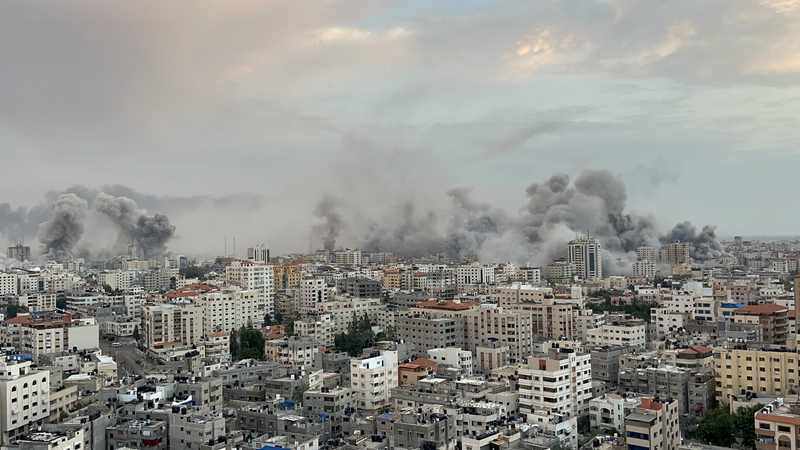
An Israeli airstrike killed at least five Palestinians in an apartment building in Gaza City early on Saturday, according to Gaza health and civil defence officials cited by Reuters. The strike landed in the pre-dawn hours. The Israeli military did not immediately comment on the strike. Reuters' October 3 update revised the original toll of four upward to at least five.
A note on sourcing: the casualty figures come from Gaza's health officials and medics on the ground. The health ministry operates under Hamas authority, so its figures — the standard citation for Gaza death tolls in international reporting — cannot be independently verified in real time, and Israel has disputed some Hamas-attributed counts. The IDF's silence means the strike's intended target, if any, is unknown. This is a developing story; the toll may change as more information emerges.
Why this matters
Three things make Saturday's killings significant beyond the immediate toll.
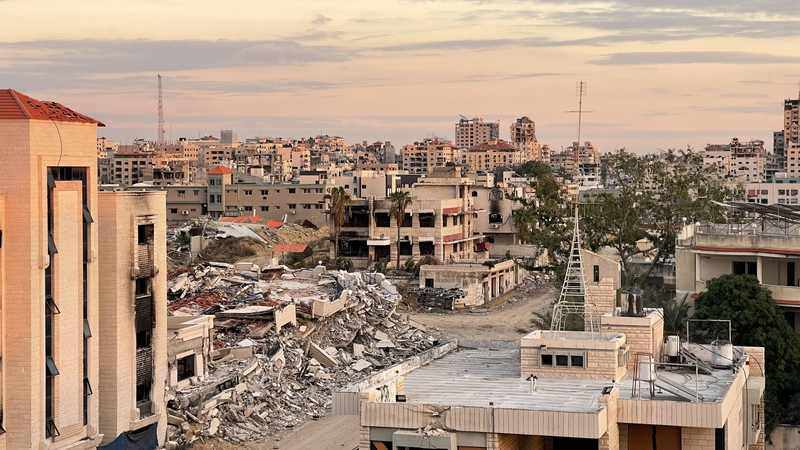
First, the apartment is becoming the unit of measurement. Wednesday's Gaza City strikes included an apartment hit that killed a woman; three days later, another apartment building, at least five more dead. The targets of this week's strikes are no longer vehicles on open roads or compounds on the fringes — they are residential buildings in the middle of Gaza's densest city, where the dead are neighbors, not names on a target list.
Second, the timing exploits the news cycle. A strike in the pre-dawn hours in Gaza lands on a Friday evening in Washington — after the week's press briefings have closed and before Sunday's shows convene. Whether by design or habit, weekend-morning strikes in Gaza consistently receive less scrutiny in the capitals whose diplomacy is supposed to be restraining them.
Third, the week has established a tempo. Tuesday's strike wave across Jabalia, al-Tuffah, Deir al-Balah and Rafah; Wednesday's seven killed across Gaza City, Khan Younis and Qarara; Saturday's apartment strike. Three lethal episodes in five days is not a truce with incidents — it is an escalation with a schedule.
Background: a truce that froze — and never thawed
The October 2025 ceasefire, brokered by the United States with Egypt and Qatar, was supposed to freeze the Gaza war in place. It never fully did. From the first weeks, both sides traded accusations: Israel citing Hamas rearmament and attacks on its forces; Hamas and Gaza authorities citing continued strikes, demolitions, detentions and restrictions on aid and movement.
The truce's second phase — Israeli withdrawal, a transitional authority, Hamas disarmament — exists mostly on paper. Negotiators have made little progress on any of it, Reuters reports, because the two core demands are mirror images: Israel insists Hamas disarm; Hamas insists Israel withdraw. Neither will move first, so neither moves at all.
Israel says Hamas has been rearming and launching attacks in violation of the ceasefire, and has stepped up strikes in recent weeks — including, earlier this week, the killing of the head of Hamas's armed wing in northern Gaza. Hamas denies trying to rebuild its arsenal or carry out attacks, and accuses Israel of undermining the deal. With no neutral arbiter both sides accept, each strike becomes evidence for whichever narrative you already hold.
Who gains, who pays — and what the critics say
Israel's calculation is that sustained pressure degrades Hamas faster than diplomacy restrains it — the week's tempo of strikes is presented as evidence of reach and resolve. Critics, including humanitarian organizations, argue that strikes on apartment buildings in Gaza City carry civilian costs that outweigh tactical gains, and that each unclaimed strike hands Hamas the narrative of an aggressor unrestrained by the truce.
Hamas's position is that the violation ledger — thousands of claimed breaches and 1,400-plus dead since the truce — proves Israel never honored the ceasefire. Skeptics note that Hamas's own figures serve its information war as much as its diplomacy, and that its refusal to disarm or account for its fighters gives Israel the pretext it needs to keep striking.
The civilians pay in both ledgers. The at least five people reported dead in the Gaza City apartment join the woman killed in Wednesday's apartment strike and the unnamed dead of Tuesday's wave — none appear in the strategic calculus except as numbers. That is the constant of this war: the people with the least power absorb the most violence, whatever the communiqués say.
The mediators' dilemma deepens with every such week. A truce under which at least five people die in their apartment on a Saturday morning is worse than no truce at all, because it discredits the very idea that agreements can hold — and makes the next negotiation start from a deeper hole.
The numbers in context
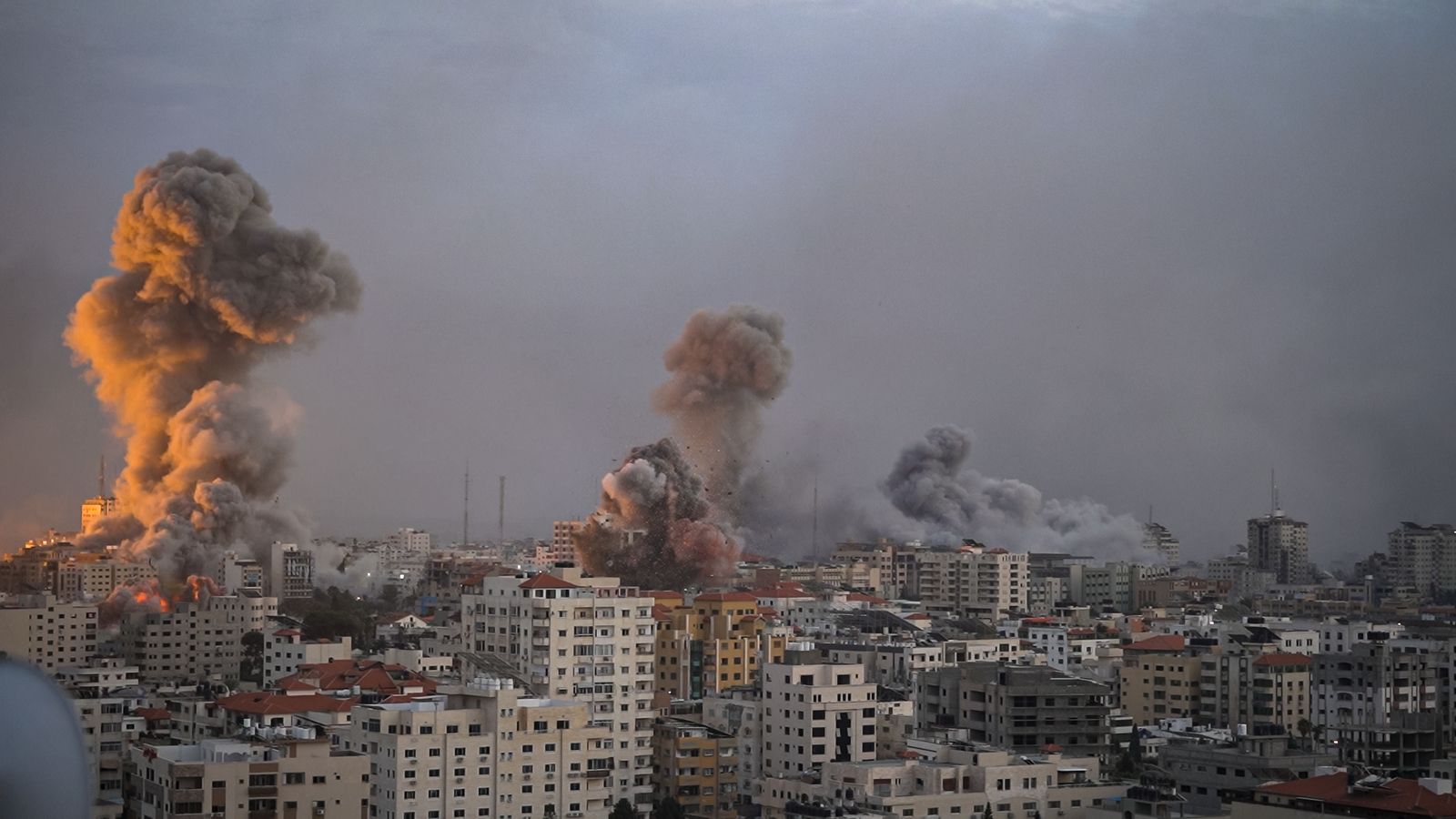
Set Saturday's at least five reported deaths against the truce-era totals. Jordan's Petra news agency, citing Al-Shifa hospital figures, counted 1,431 Palestinians killed since the ceasefire took effect on October 11, 2025 — as of September 30. Adding at least five from Saturday's strike brings that running figure to at least 1,436: roughly four deaths a day across nearly a year of ceasefire. Against the full-war toll: more than 74,000 Palestinians killed since October 2023, per Gaza health authorities cited by Reuters, after Hamas-led fighters killed about 1,200 people in southern Israel in October 2023. Israel says four of its soldiers have been killed by militants since the ceasefire took effect.
The asymmetry — at least 1,436 Palestinian deaths reported since the ceasefire, compared with four Israeli soldiers killed by militants — is the argument in miniature. Israel reads its column as prevention: strikes that preempt rearmament and revenge. Gaza's authorities read theirs as proof of a one-sided war. Both readings are selective; the numbers themselves remain attributed to the cited authorities.
And consider the week's arc. September's targeted-killing campaign removed senior Hamas figures — Israel claims about 20 this month, including al-Beik, whom Hamas confirmed had co-led the October 7, 2023 attack. October is opening differently: not named commanders but apartment buildings. The shift from decapitation strikes to street-level ones is the pattern to watch.
What happens next
Three scenarios are worth watching. The most likely: more of the same — the tempo of the last week becomes the tempo of the autumn: strike waves, competing tolls, and a truce that exists mainly in diplomats' statements. Nothing in the last eleven months suggests a break. The diplomatic track: the mediators face a choice between renegotiating terms both sides will actually observe and watching the framework hollow out entirely — a truce nobody enforces is worse than no truce, because it discredits the next one. The wildcard: a strike with undeniable civilian casualties captured on video could force the kind of international pressure that spreadsheets of violation counts never do. Gaza's wars have repeatedly turned on single images; the next one may already have been filmed.
For the families in the Gaza City apartment building, the analysis is secondary. They are living inside a ceasefire that does not cease and a peace process that does not proceed. Until that changes, the toll will keep being counted in competing ledgers, and the truth will keep lying somewhere in the overlap.
Related coverage
Sources
- Reuters via TBS News — "Israeli strike kills five in Gaza, health officials say" (October 3, 2026) — updated toll attributed to Gaza health and civil defence officials.
- Reuters — "Israeli strike kills four people in Gaza, medics say" (October 2, 2026) — original report.