War · Ukraine · France
French soldiers have been rotating into Ukraine since at least the summer of 2026 on a confidential mission codenamed “Volia” — training Ukrainian troops and maintaining the CAESAR howitzers, Mirage 2000 jets and precision-guided missiles France has supplied — according to an investigation published Monday by Radio France Internationale. Le Monde, citing its own source, confirmed that a small core of French conventional forces has regularly rotated into Ukraine and that their numbers were recently reinforced. Paris has issued no comment, the mission’s size has not been disclosed, and French lawmakers say they were never formally informed.
Track it live: Ukraine war map tracker
KYIV, November 16, 2026 — The question of whether Western soldiers are on the ground in Ukraine has been asked, in one form or another, since the first weeks of Russia’s full-scale invasion — and every Western government has answered it the same way: weapons, money and training, yes; troops in Ukraine, no. On Monday, that answer developed a documented exception. Radio France Internationale (RFI), France’s state-owned international broadcaster, published an investigation reporting that French military personnel have been operating inside Ukraine for several months on a confidential mission codenamed “Volia” — a Ukrainian word that carries the sense of both freedom and will. The mission, RFI reported, is led by a French general, works in small teams on short rotations, and is devoted to two tasks: training Ukrainian soldiers, and maintaining and repairing the French-supplied equipment that Ukrainian forces cannot service alone.
Two cautions belong at the top of this story, and they are the same cautions RFI itself built into its reporting. The first is confirmation. The Volia account rests on unnamed sources speaking to RFI, a separate anonymous source confirming the presence to Agence France-Presse (AFP), and a further source confirming the essentials to Le Monde. No French government, armed forces or Ukrainian official has confirmed the mission on the record, and French authorities issued no comment on Monday. The second is scope. Every account agrees on what the reported mission is not: it is not a combat deployment. The AFP source put it in the plainest terms available — French personnel being “occasionally in Ukraine is a reality,” but “this is not a military operation,” and there is “absolutely no intention of engaging in coercive actions.” What is reported is a training and maintenance presence. It is nonetheless a presence — uniformed personnel of a NATO member state, working inside an active war zone, unannounced — and that is what makes Monday’s reporting a significant development rather than a footnote.
What RFI says the Volia mission does
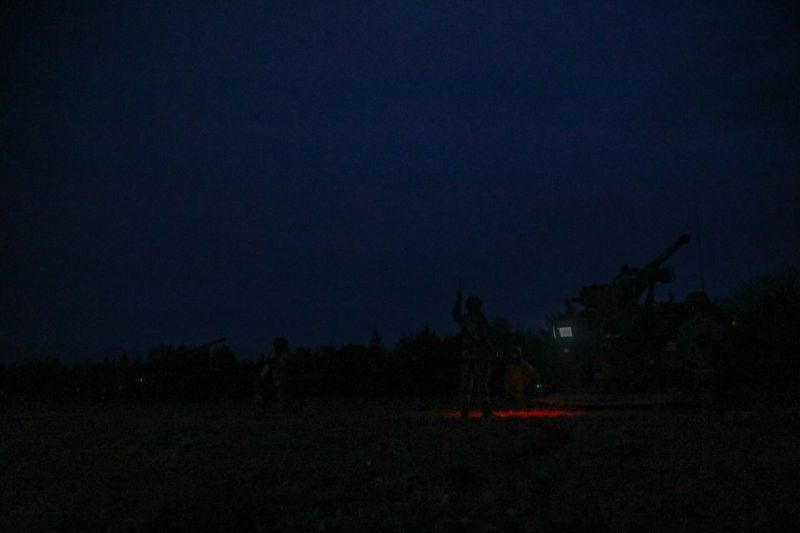
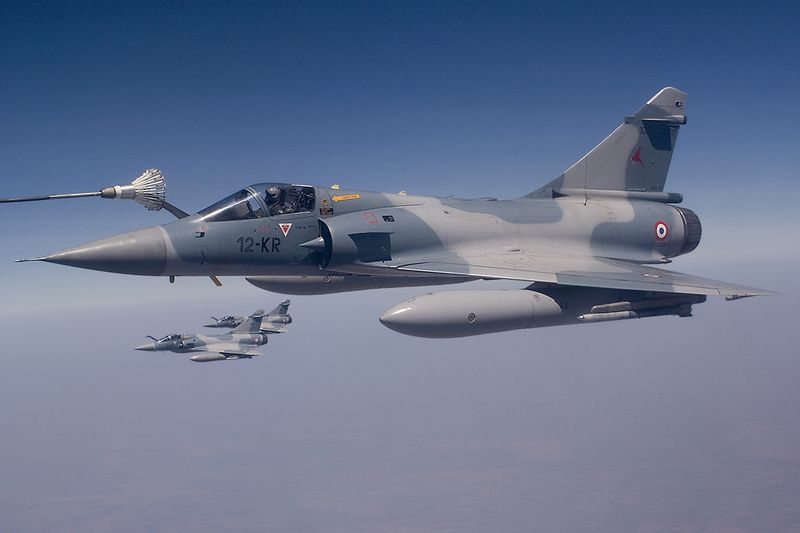
RFI’s investigation, published on November 16, describes Volia as a “light and flexible” structure: small teams of French specialists deployed for short periods, overseen by a general, present in Ukraine since at least the summer of 2026. Their work, according to the broadcaster’s sources, is the unglamorous kind that decides whether sophisticated Western weapons keep firing. France has supplied Ukraine with CAESAR self-propelled howitzers, Mirage 2000 fighter jets and precision-guided missiles — systems whose engines, avionics and guidance packages require expertise that cannot be transferred in a classroom course in Poland. RFI reported that the option of using civilian technicians was considered and ruled out precisely because Ukraine is an active war zone, which is why the work falls to serving soldiers. The broadcaster did not disclose how many personnel are involved, which units they come from, or where inside Ukraine they work, and it said the details were withheld for security reasons.
The second task is training — of a particular kind. Under the acknowledged French framework in Poland, French personnel train Ukrainian officers and non-commissioned officers who will themselves command units. RFI’s sources describe the in-Ukraine work as an extension of that logic onto Ukrainian soil: short, specific engagements with the units actually operating French equipment, rather than a standing school. Fox News Digital, summarising Le Monde’s reporting, added that French personnel had also worked alongside Ukrainian intelligence units on observation missions closer to the front lines — a detail attributed here to Le Monde’s account, which goes further than RFI’s training-and-maintenance description and has not been separately confirmed. It is carried in this article as a reported detail, not an established one, and the distinction matters for everything that follows about where the line between support and participation actually sits.
Le Monde’s confirmation — and the Kyiv coordination unit
What elevates Monday’s story above a single-outlet investigation is that France’s newspaper of record reached the same place by its own road. Le Monde reported on November 16 that France “has maintained a small core of conventional forces that have regularly rotated into Ukraine to conduct training and equipment repair missions,” and that “these numbers were recently reinforced,” a source familiar with the matter confirmed to the newspaper. Le Monde’s framing is notably precise about what the presence is and is not. At this stage, it reported, the arrangement “does not constitute a military deployment as such,” but rather a strengthening of the coordination unit led by the defence attaché at the French embassy in Kyiv — a three-star general. The heaviest work still leaves the country: the most extensive repairs, Le Monde noted, require equipment to be transferred to Polish territory. And it added a sentence that cuts against any reading of Volia as a sudden 2026 invention: the presence of French personnel in Ukraine “has, in any case, fluctuated over time since the start of the war.”
Le Monde also supplied the date that may explain the timing. The reinforcement of the French unit in Kyiv is linked, the newspaper reported, to the European Council’s formal announcement on November 9 that the EU Military Assistance Mission in support of Ukraine — EUMAM Ukraine — will deploy into Ukraine itself, under a mandate the Council extended for a further two years, through November 15, 2028, with nearly €300 million allocated. Until now, EUMAM has trained Ukrainians — roughly 100,000 of them across the programme, by the EU’s accounting — exclusively on the territory of EU member states. The November 9 decision moves the mission’s presence onto Ukrainian soil to coordinate directly with Ukraine’s military authorities. In other words, the institutional direction of travel was announced in Brussels a week ago. What RFI and Le Monde reported on Monday is that France, under a national codename and without announcement, appears to have been travelling in that direction since the summer.
The Gerfaut gateway
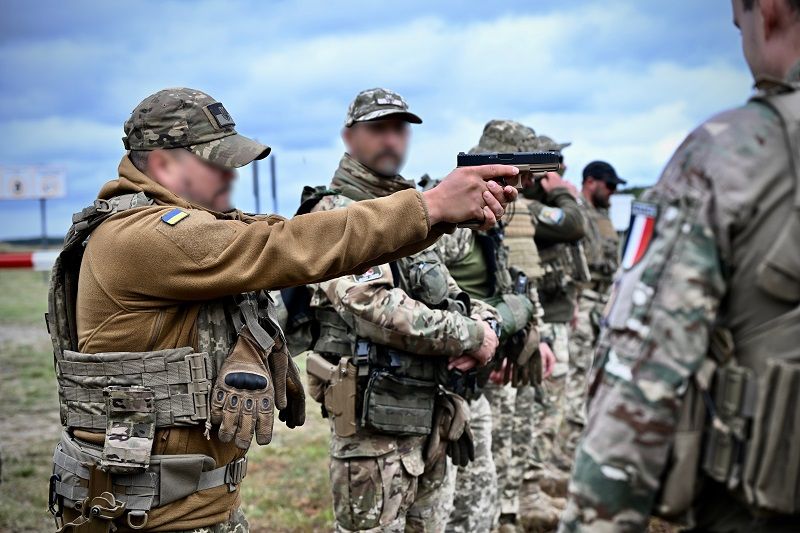
The hinge between the acknowledged mission and the reported one is a name: Gerfaut. Operation Gerfaut is France’s contribution to EUMAM — a French military detachment based at Wędrzyn in Poland since 2023, training Ukrainian personnel on Polish soil. Since 2023, the French army has trained some 25,000 Ukrainian soldiers in France and Poland. Several sources familiar with the mission told RFI that Gerfaut serves as both cover and gateway for the Volia work: the route by which French personnel travel toward Ukraine, and the official destination their paperwork describes. Reporting summarising RFI’s investigation adds that personnel are issued travel documents for Poland and instructed to describe Poland as their destination. Those mechanics are attributed to RFI’s sources and have not been confirmed by the French armed forces, which declined to comment. But the structure they describe is coherent: a large, public, allied training mission in a neighbouring country is the one place from which small teams crossing into Ukraine would attract the least attention — because thousands of legitimate movements in exactly that direction happen every month.
Why this matters
The first reason is the line itself. For nearly five years, the Western coalition’s public doctrine has rested on a distinction between supplying a war and joining it — a distinction Moscow has always rejected rhetorically and NATO governments have always maintained operationally, by keeping uniformed personnel outside Ukraine’s borders. A confirmed French training-and-maintenance presence inside Ukraine does not erase that distinction; trainers and technicians are not combat troops, and every source in Monday’s reporting insists on the point. But it relocates the distinction from geography to function — from “our soldiers are not there” to “our soldiers are there, but not fighting” — and that is a materially different doctrine, adopted, if the reporting is accurate, without a public decision ever being announced.
The second reason is mechanical, and it is the one the generals would give. Modern weapons are not delivered; they are sustained. A CAESAR gun’s fire-control system, a Mirage’s avionics, a precision missile’s guidance checks — each failure either gets fixed near the front, by the people who built the system, or the equipment travels hundreds of kilometres to Poland and back while its unit fights without it. The reported Volia structure — small teams, short rotations, a general’s oversight, an embassy coordination unit — is what a military builds when the maintenance tail has become the binding constraint on the weapons it has already sent. Read that way, Monday’s story is less about escalation than about logistics catching up with generosity: France sent systems Ukraine could not fully sustain alone, and the sustaining followed the systems.
The third reason is timing, and it is diplomatic. The reporting landed in the middle of the most consequential week of the war’s diplomacy this autumn: three days before Donald Trump, Xi Jinping and Vladimir Putin meet in Shenzhen, in a trilateral at which Ukraine is pointedly not the focus, and a week after the EU voted to put its own training mission inside Ukraine. It also landed as the planned Multinational Force for Ukraine — the “Coalition of the Willing” force intended to train and repair in Ukraine under a future settlement — completes its first exercise, named “Koalicja,” in Poland on November 22, with French Defence Minister Catherine Vautrin expected in Poland on November 20. Le Monde explicitly connected the reinforced Kyiv presence to lending that future force credibility. A mission reported this week is therefore also a signal addressed to Thursday’s table: at least one European power is not waiting for a settlement to put its people where its weapons already are.
Context: how the line moved
France’s president, Emmanuel Macron, has been moving this line in public for years, one rhetorical step at a time. In February 2024 he refused to rule out Western ground troops in Ukraine — a remark allies rushed to disown at the time. France then became one of Ukraine’s most consequential suppliers: CAESAR guns from 2022, precision missiles, and, in February 2025, the first Mirage 2000 fighters, with Ukrainian pilots trained in France. The training architecture grew in parallel — EUMAM from October 2022, Gerfaut in Poland from 2023, some 25,000 Ukrainians trained by France in France and Poland. Each step was announced. The step RFI describes — the same trainers and technicians, on the other side of the border — is, on the reporting, the first that was not. That asymmetry is the heart of the political problem now arriving in Paris: not necessarily what the soldiers are doing, but that parliament and the public learned of it from an investigation.
The constitutional argument was not slow to form. Under Article 35 of the French Constitution, the government must inform parliament of a military intervention abroad within days, and an intervention’s continuation beyond four months requires parliamentary authorisation. Cédric Perrin, who chairs the Senate’s foreign affairs and defence commission, demanded on Monday that the mission be formally notified to parliament, insisting in remarks carried by Ukrainian and French reporting that it “cannot remain a state secret.” The government’s reported position, per RFI, is that no such obligation was triggered because the presence is not a combat operation — the same functional distinction on which the mission’s public defence will rest. Whether a court, a commission or a debate in the National Assembly tests that reading is now a French domestic question with alliance-wide consequences, because every other capital that has quietly considered the same step will be watching how much it costs Paris.
Who gains, who pays, what critics say
Ukraine gains the most tangible benefit: French systems kept in action by the people who know them best, training delivered where the trainees actually fight, and — perhaps as valuable — a precedent. If France’s presence is absorbed without crisis, the path widens for the EUMAM deployment the EU has now formally approved and for the Multinational Force planning under way in Poland. France gains influence of a specific kind: it becomes, on this reporting, the Western power whose commitment to Kyiv is measured not only in equipment delivered but in personnel present, a claim no other ally can currently match in public. Former NATO Supreme Allied Commander Philip Breedlove made the supportive case to Fox News Digital on Monday, praising the assertiveness of the move and arguing that a French presence sends a powerful message to Vladimir Putin at a critical moment for Europe.
The costs are equally specific. For the personnel themselves, the risk is physical and uninsurable by wording: Russia has repeatedly stated that European troops in Ukraine would be treated as legitimate targets, and a technician’s workshop is not made safer by being described as non-combat. For Macron’s government, the cost is constitutional and political — an Article 35 fight it did not schedule, in a parliament where the deployment’s secrecy, rather than its substance, is the opposition’s strongest ground. For the alliance, the cost is precedent in both directions: critics of the mission warn that each unannounced step normalises the next, and that the distance between maintaining a missile system and advising the unit that fires it is shorter in practice than in communiqués; critics of the critics reply that the distinction between training in Poland and training across the border was always a cartographic comfort rather than a military one. Both arguments are honestly available on Monday’s evidence. What is not available, yet, is the French government’s own account — and until Paris speaks, the mission’s size, rules and legal basis remain exactly what unnamed sources say they are.
What the numbers actually mean
Three numbers frame the story’s real scale. The first is 25,000 — the Ukrainians France says it has trained in France and Poland since 2023 — which is the acknowledged enterprise from which the reported in-Ukraine teams are drawn: Volia, on every account, is a small detachment at the edge of a large programme, not a parallel army. The second is the number nobody gave: the mission’s strength. RFI did not report it, Le Monde described a “small core” recently “reinforced,” and no official figure exists. In a story about presence, that absence is itself the datum — the deployment was sized to be deniable in scale even as it became undeniable in fact. The third number is 100,000, the EUMAM programme’s approximate total of trained Ukrainians, against the two years and nearly €300 million the Council committed on November 9 to take that mission inside Ukraine. Set side by side, the figures describe a ratchet, not a leap: a programme that trained a hundred thousand soldiers outside Ukraine is being authorised to work inside it, and its largest national contributor, on Monday’s reporting, has quietly been there since the summer.
What happens next
The immediate test is in Paris. Perrin’s demand for formal notification sets a clock the government did not choose: a statement to parliament, a defence-ministry briefing, or a continued silence that becomes its own story. Watch, specifically, for the French armed forces’ first on-record words — confirmation, denial, or the narrower acknowledgement that personnel “occasionally” work in Ukraine, which the AFP source’s phrasing suggests is available. The second test is geographic: whether other EUMAM contributors acknowledge similar arrangements, now that the EU’s own mission is authorised to enter Ukraine and France’s national precedent is in print. The third is in Poland this week, where the Koalicja exercise completes on November 22 and Minister Vautrin’s November 20 visit will be the first occasion on which a French minister faces questions in the country that has served as the mission’s gateway.
And then there is Moscow, whose response will calibrate the risk every capital is actually running. Russia’s stated position — European personnel in Ukraine are legitimate targets — predates Monday’s reporting and was framed for exactly this contingency. Whether the Kremlin treats the RFI and Le Monde accounts as a provocation requiring an answer, or as a confirmation of what it has long claimed and therefore as propaganda already spent, will tell other governments how much room the ratchet has left. What Monday changed is not the war’s order of battle. It is the war’s public map of who is in it — and maps, once redrawn in print by two of a country’s most authoritative newsrooms, are not easily redrawn back.
Related reading: Ukraine Launches Biggest Drone Attack of the War as Crimea Bridge Is Struck, Russia Says · Zelenskyy: US Floated Donbas Withdrawal for NATO Membership · Track it live: Ukraine war map tracker
Sources
Radio France Internationale (RFI), November 16, 2026 — “France’s covert military operation in Ukraine revealed by RFI investigation” (https://www.rfi.fr/en/international/20261116-france-s-covert-military-operation-in-ukraine-revealed-by-rfi-investigation): the Volia codename; presence since at least summer 2026; leadership by a French general; small teams on short rotations; training and equipment-maintenance tasks; the Gerfaut gateway; lawmakers not formally informed; no official French confirmation. Agence France-Presse (AFP), November 16, 2026, via AFP syndication: a source familiar with the matter separately confirmed French personnel operate in Ukraine with no combat role — “occasionally in Ukraine is a reality”; “this is not a military operation”; 25,000 Ukrainians trained by France in France and Poland since 2023. Le Monde, November 16, 2026 — “French troops are now operating in Ukraine” (https://www.lemonde.fr/en/international/article/2026/11/16/french-troops-are-now-operating-in-ukraine_6782174_4.html): a small core of conventional forces regularly rotating into Ukraine for training and repair, recently reinforced; the Kyiv embassy coordination unit led by the defence attaché, a three-star general; heaviest repairs still done in Poland; link to the Council’s November 9 EUMAM decision and the Multinational Force for Ukraine; the Koalicja exercise completing November 22 and Minister Catherine Vautrin’s expected November 20 Poland visit. European Council press release, November 9, 2026 (https://www.consilium.europa.eu/en/press/press-releases/2026/11/09/ukraine-council-extends-eu-military-assistance-mission-mandate-for-two-years/): EUMAM Ukraine mandate extended two years, to November 15, 2028. Fox News Digital, November 16, 2026 (https://foxnews.com/world/french-troops-secretly-deployed-ukraine-ex-nato-chief-praises-macrons-guts): equipment focus on CAESAR howitzers, Mirage 2000 jets and precision-guided missiles; Gen. Philip Breedlove’s reaction. Reporting on Senator Cédric Perrin’s Article 35 notification demand via 112.ua and Particle News summaries of RFI/AFP/WELT coverage, November 16, 2026. Note: rfi.fr is blocked to this newsroom’s automated reader; RFI’s findings are cited here as carried and independently summarised by AFP, Le Monde, Fox News Digital and other outlets, and the mission remains officially unconfirmed by France.