US · Travel · Breaking
The FAA closed Dallas Love Field to every arrival and departure from 8:29 p.m. CT on Saturday after a bomb threat was reported. The official notice gives no reason and runs until 6 a.m. CT — a nine-and-a-half-hour hole in Southwest's home-base operation.
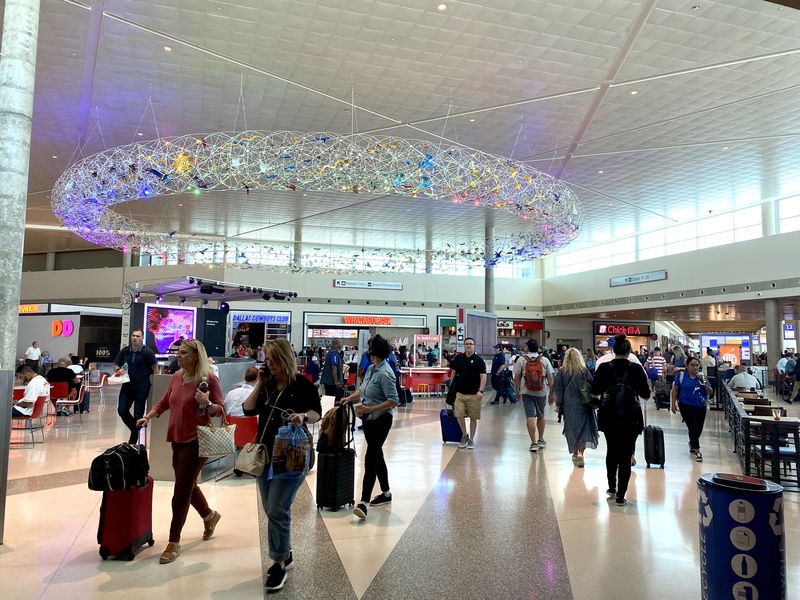
DALLAS, November 14, 2026 — A Dallas Love Field bomb threat report closed Dallas Love Field (DAL) to all arriving and departing flights from 8:29 p.m. Central Time on Saturday, November 14, 2026. The closure is recorded in FAA NOTAM !DAL 11/044 on the FAA National Airspace System status feed: closed from 02:29 UTC on Sunday, November 15 until 12:00 UTC — 6:00 a.m. CT — though it may be lifted sooner if the airport is cleared. Inbound flights were diverted to other Dallas-area airports, and local, state and federal law enforcement were reported to be responding. No device has been reported found, and Dallas police, the airport and the City of Dallas had issued no official statement explaining the closure as of late Saturday night.
The only public explanation came not from a press release but from a controller working inbound traffic, who told pilots on the DFW Approach (North) frequency that Love Tower was closing the airport because, he believed, there had been a bomb threat. The FAA's own notice states no reason at all — a gap this article preserves rather than fills: what is documented is a reported, possible threat, a closed airport and a law-enforcement response, not a confirmed device.
What we know — and what we don't know
What we know
- Dallas Love Field closed to all arriving and departing flights from 8:29 p.m. CT on Saturday, November 14, 2026, per FAA NOTAM !DAL 11/044 ("DAL AD AP CLSD 2611150229-2611151200").
- The closure window runs until 12:00 UTC Sunday, November 15 — 6:00 a.m. CT — nine hours and 31 minutes, though it may be lifted sooner if officials clear the airport.
- On the DFW Approach (North) frequency, a controller told inbound pilots Love Tower was closing the airport: "I believe there was a bomb threat or something like that." Approach clearances were cancelled for Southwest 3824, 4019 and 8577.
- Inbound flights were diverted to other Dallas-area airports, and local, state and federal law enforcement were responding, as reported by OSINTdefender and Breaking911.
- Love Field is City of Dallas-owned and is Southwest's home base and hub, so the closure reaches far beyond Dallas.
What we don't know
- The FAA feed states no reason for the closure. The bomb-threat account rests on the controller's statement and later reporting; no Dallas police, airport or city statement had confirmed it.
- No device has been reported found. Nothing cited here establishes that any explosive device exists.
- No evacuation of the terminal and no injuries had been confirmed as of late Saturday night.
- How the threat was received, who is investigating and when the airport reopens were all unanswered at publication.
Timeline: the Love Field closure in Central and UTC
- Saturday, November 14, 8:29 p.m. CT (Sunday, November 15, 02:29 UTC) — NOTAM !DAL 11/044 takes effect: Love Field closed to all arriving and departing flights.
- Saturday evening CT (early Sunday UTC) — A DFW Approach (North) controller tells inbound aircraft Love Tower is closing the airport, citing a possible bomb threat, and cancels approach clearances, including for Southwest 3824, 4019 and 8577.
- Saturday night CT — Inbound flights divert to other Dallas-area airports. OSINTdefender and Breaking911 report local, state and federal law enforcement responding. Dallas police, the airport and the City of Dallas issue no public statement on the reason.
- Sunday, November 15, 6:00 a.m. CT (12:00 UTC) — The NOTAM window ends. Reopening sooner is possible if the airport is cleared; reopening then is not guaranteed if officials extend it.
"Love Tower is closing the airport": the ATC moment
Airport closures usually arrive as paperwork first and explanation later, if at all. On Saturday night the order was reversed: the explanation — tentative, hedged, human — came over the radio before any agency had said a word in public. The DFW Approach (North) recording captures a controller breaking the news to airliners already pointed at Love Field.
"Attention all aircraft inbound to Love — Love Tower is closing the airport. I believe there was a bomb threat or something like that, so standby."
are not a confirmed finding; they are a controller relaying the reason he had been given, uncertainty intact. It is the strongest primary-source account of why DAL closed, and it describes a
What followed was the mechanical consequence. Approach clearances — the permissions that let an inbound aircraft descend and line up for Love Field's runways — were cancelled. Southwest 3824 was told present heading, maintain 3,000 feet; Southwest 4019, present heading, 5,000 feet; Southwest 8577, heading 040, 5,000 feet. Arrivals became holding traffic, then diversions. Audio: DFW Approach (North) ATC recording, Saturday night, November 14, 2026.
Not Friday's ground stop: a separate event
This closure is a separate event from Friday, November 13's FAA nationwide telecommunications ground stop, and the two should not be conflated. Friday's stop was a network failure: an air-traffic telecommunications failure halted departures nationwide for more than four hours — the longest nationwide ground stop since September 11, 2001. Saturday's closure involves one airport, one local cause — a reported bomb threat — and a security response, not an equipment failure. The connection is timing and strain, not cause. Signal Post News covered the nationwide ground stop as it lifted on Friday and the Saturday recovery, as cancellations climbed into the thousands — the recovery Saturday night's closure now lands on.
Why this matters: a hub goes dark on a Saturday night
Analysis — separated from the confirmed facts above — starts with the calendar. A hub closing at 8:29 p.m. on a Saturday does not merely cancel that night's remaining flights; it breaks the choreography Sunday morning depends on. Each night, airlines position aircraft and crews for the next day's schedule: the late-evening arrival bank is, in effect, Sunday's first departure bank, parked overnight. Close the airport for nine hours and 31 minutes and those aircraft never arrive; they sit at diversion airports, with crews' rest clocks running against the wrong cities.
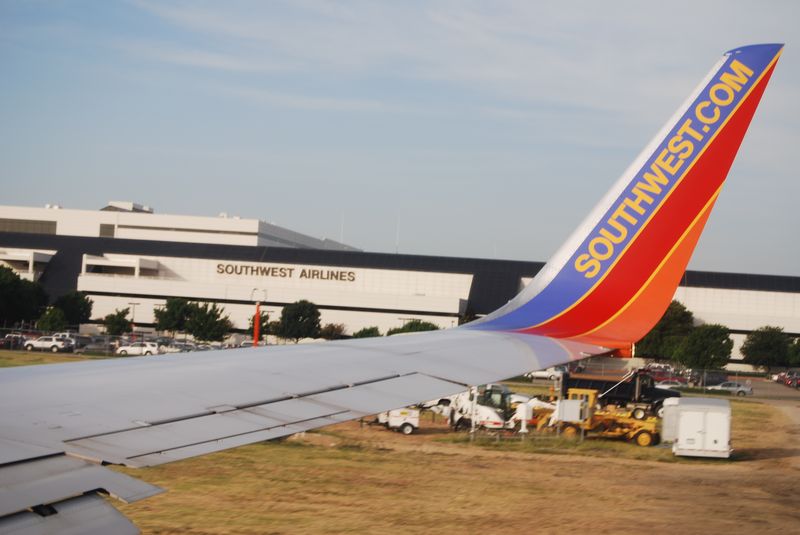
At most airports that is a local problem. At Love Field it is a network problem, because DAL is not simply an airport Southwest serves — it is the airline's home. Southwest's headquarters sits at Love Field, its Dallas operation is among the largest in its system, and its point-to-point network means a jet that fails to reach Dallas on Saturday night is missing from a Sunday departure in Dallas and from every city that departure was meant to feed. Travellers in Houston, Phoenix or Nashville can wake on Sunday to cancellations whose cause is a security sweep in Dallas — which is why a single-airport NOTAM can matter nationally.
The timing compounds it: this is the second consecutive night of extraordinary disruption for US aviation, after Friday's ground stop cancelled more than 9,000 flights and left Saturday's recovery fragile. A system with slack absorbs a one-airport closure; one still reassembling itself from the longest ground stop since 9/11 has far less to give. None of that changes what is known about the threat — a report, not a finding — but it explains why the stakes are out of proportion to the closure's geography.
Background: Love Field, Southwest and how bomb-threat closures work
Love Field is Dallas's original airport, close to downtown, owned by the City of Dallas and long shaped by federal law — the Wright Amendment restricted its routes for decades, and its gate count remains capped since those restrictions were lifted in 2014. Its dominant tenant is Southwest Airlines, founded in Dallas, headquartered at the field and treating DAL as both hub and symbol. A closure there is, in practical terms, a closure of Southwest's home.
How does an airport bomb-threat closure normally work? The sequence is conservative by design. A threat is received or a suspicious item reported; airport and local police secure the area; federal partners, typically the FBI and TSA, are notified; and explosive-ordnance or K-9 teams sweep the terminal, garages, aircraft or airfield areas in question. Air traffic control stops movements — as Love Tower did on Saturday — because aircraft cannot arrive at, or depart across, an uncleared area. The airport reopens in stages after the all-clear, and the NOTAM is cancelled or expires.
Duration varies with scope: a threat against a single aircraft or bag can be resolved in one to three hours, while sweeping a whole terminal, its garages and curbs can consume most of a night — the shape of the window the FAA notice describes here. A long window says nothing by itself about credibility. Most reported US airport bomb threats ultimately resolve with nothing found — context, not a conclusion about this one, which investigators had not publicly characterised as of late Saturday night.
Four angles on a closed airport
Passengers: a Saturday night unravels
For travellers, the closure arrived at the worst hour of the week: late enough that Saturday rebooking options were nearly exhausted, early enough to strand people far from home and destination alike. Diverted passengers landed at other Dallas-area airports and faced ground transport across the metroplex; departing passengers faced cancellations with hotels, rental cars and Sunday plans attached. Their information, for hours, was the same fragment the pilots got — a reported threat, an official silence.
Southwest operations: the home-base problem
For Southwest, Saturday night was a positioning crisis layered onto a recovery day: every diverted arrival is an aircraft out of place for Sunday, and every cancelled departure strands a crew. The overnight task is triage — which Sunday departures can still be flown, which to cancel early so passengers are rebooked rather than stranded, and how to reroute aircraft once DAL reopens. Expect Sunday's Love Field schedule to bear the cost.
Law enforcement: caution versus disruption
For police and federal investigators, the trade-off runs the other way. Closing a major airport on an unconfirmed report is disruptive and expensive — and not closing it, on the small chance the report is real, is indefensible. Practice therefore treats every threat as credible until a sweep proves otherwise, and public detail as a risk while a search is live. Saturday night's silence from Dallas police, the airport and the city is consistent with that practice; it is not evidence about the threat either way.
The credibility question, stated fairly
Critics of threat-driven closures make a point worth recording, without endorsing any conclusion about this case: hoax threats impose real costs — a closed hub, thousands of disrupted journeys — at trivial cost to whoever makes them, and a system that must respond maximally to every report can be disrupted on demand. Investigators will treat the threat's origin as a serious question: how it was communicated, and whether it was specific. As of Saturday night, no authority had called this threat a hoax or anything else. It remains under investigation.
By the numbers: the closure window and the evening bank
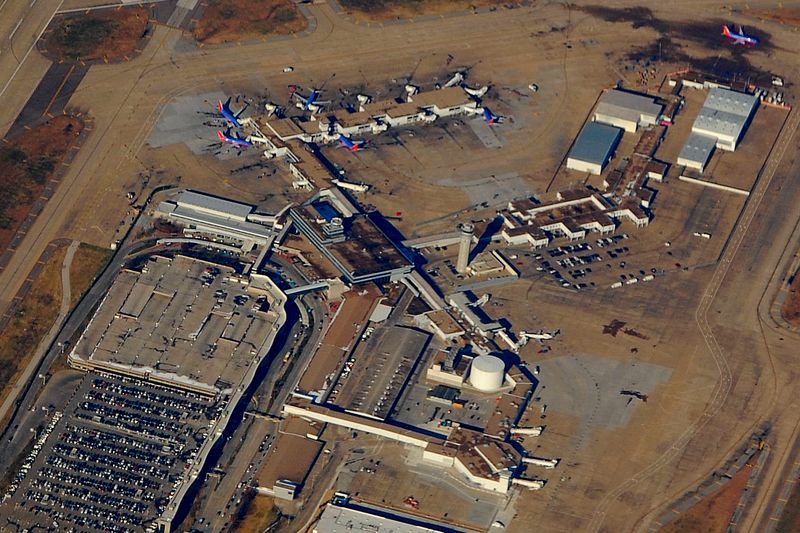
The documented numbers are few but telling. The window in NOTAM !DAL 11/044 runs nine hours and 31 minutes, from 8:29 p.m. CT Saturday to 6:00 a.m. CT Sunday (02:29–12:00 UTC), covering Love Field's whole late-evening arrival bank and ending as Sunday's first departure wave begins. At least three inbound Southwest flights are documented on the ATC recording with approach clearances cancelled — 3824, 4019 and 8577 — and OSINTdefender and Breaking911 report inbound flights diverting to other Dallas-area airports, with Dallas/Fort Worth International the natural principal diversion field. No official count of Saturday night's DAL cancellations and diversions had been published as of late Saturday night.
Reopening watch: 6 a.m. CT Sunday, and what an all-clear requires
The next fact in this story will be a time: when the NOTAM is cancelled or expires, and whether Southwest flies its first Sunday bank. An all-clear requires completed sweeps and the responsible authorities — airport and city officials, Dallas police and their federal partners — judging the airport safe to reopen. Reopening can be staged; the FAA feed is where a cancellation of !DAL 11/044 shows first.
Investigators' questions will run on a separate track: how was the threat communicated, and to whom? Was it specific — a place, a time, a flight — or general? Can its origin be traced to someone who can be charged, since a false airport bomb threat is a serious federal and state offence? None had public answers on Saturday night; any account supplying them before officials do is speculation.
If you are travelling: practical guidance
- Use the Southwest app or website for live status; airport status lags individual cancellations.
- Do not go to Love Field for a cancelled flight. Rebooking is faster in the app or by phone than at a counter in a disrupted terminal — and if the airport stays closed, there may be no counter to reach.
- Know your rights. On a cancelled US flight you are entitled to a refund if you choose not to travel, whatever the cause. Rebooking is free; meals and hotels depend on the airline's commitments and whether the disruption is judged within its control.
- Diverted passengers: if your flight landed at another Dallas-area airport, follow crew instructions on ground transport and baggage, and keep your original itinerary — your rebooking and refund rights attach to it.
- check again early Sunday even if your flight shows on time tonight; overnight repositioning changes first-wave departures.
Signal Post News will update this article when officials issue a statement, when the closure notice is cancelled or extended, and when Southwest publishes its Sunday Love Field cancellations.
Sources
- FAA National Airspace System status feed — closure NOTAM !DAL 11/044: "DAL AD AP CLSD 2611150229-2611151200" (closed from 02:29 UTC November 15, notice to 12:00 UTC). The feed states no reason for the closure.
- Audio: DFW Approach (North) ATC recording, Saturday night, November 14, 2026 — the controller's statement to inbound aircraft and the cancelled approach clearances for Southwest 3824, Southwest 4019 and Southwest 8577.
- OSINTdefender, November 14, 2026 — report of local, state and federal law enforcement responding and of inbound flights diverting (attributed as a report).
- Breaking911, November 14, 2026 — report of the law-enforcement response and diversions (attributed as a report).
- J News Network, November 14, 2026, "FAA closes Dallas Love Field until 6 a.m.; controller cites a reported bomb threat" — account based on the FAA feed and ATC recordings.