Climate · World · Türkiye
Eighteen pages, published on Monday in Antalya, now hold the whole argument of COP31: whether the world will merely repeat its 2023 promise to transition away from fossil fuels or finally agree to phase them out — and whether adaptation finance will triple to at least $120 billion a year by 2035, on the road to a need the United Nations puts at some $305 billion a year.
ANTALYA, November 16, 2026 — Negotiators at COP31 published the first draft of a deal on Monday, an 18-page text intended to narrow the gaps on the two questions that have defined this summit from the start — fossil fuels and climate finance — ahead of the official deadline on Friday, November 20. The talks, which opened on November 9 with almost 200 nations represented, now have four days to turn a document that deliberately contains almost everything into one that almost everyone can sign. That is not a criticism of the draft. At this stage of a COP, a first text is a map of the disagreements, drawn as completely as its authors dare. Monday’s map is unusually honest about how much ground is still contested.
The man holding the pen is Australia’s Chris Bowen, who leads the negotiations under COP31’s split presidency with Türkiye — the first shared presidency in COP history, with Türkiye’s Murat Kurum presiding over the summit while Bowen runs the negotiating process. Bowen made no attempt to pretend the draft was close to consensus. He acknowledged that it contains clauses some nations have already rejected, and he defended including the contested fossil-fuel language rather than quietly dropping it before the argument had even happened. The logic is the classic one of COP drafting: text that is in can be traded, softened or sacrificed; text that was never tabled cannot be fought for at all. For the background to the shared presidency and the stakes delegates carried into Antalya, see our COP31 Antalya climate summit guide.
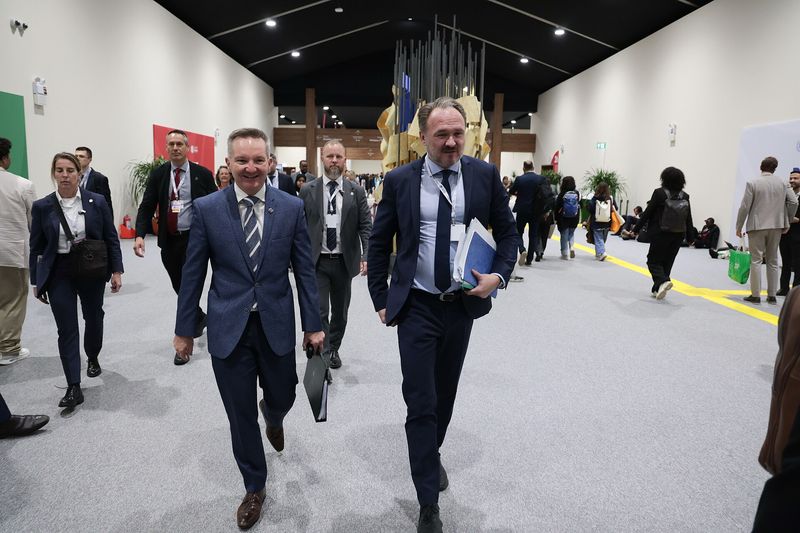
Two fossil-fuel futures, side by side in one text
The draft’s most consequential pages offer two options on fossil fuels, and the distance between them is the distance between the last three years of climate diplomacy and the next thirty. The first option reiterates the wording agreed in 2023, when countries committed to “transitioning away” from fossil fuels in energy systems — a direction of travel, historic at the time, but one with no endpoint, no timetable and no obligation that any particular government has ever been held to. The second option is stronger: an explicit “phase out” clause, language that names an end to the fossil-fuel era rather than a drift away from it. Producer economies have resisted phase-out wording at every summit where it has been proposed, arguing that it pre-judges their development paths and their energy security; climate-vulnerable states and the European Union have pressed for it with equal consistency, arguing that “transitioning away” without an end point is a promise designed never to come due.
Both options, it should be said plainly, could still be dropped from the final deal. Draft options at a COP are not a shortlist from which one must survive; they are positions staked out for negotiation, and the history of these texts is that the most ambitious language is often the first casualty of the final night’s trade-offs. That is why the analysts who read these documents for a living sounded more intrigued than celebratory on Monday. Cosima Cassel of the think tank E3G described a very long draft built on a “put it all in and let parties fight for the trade-offs” approach — everything contested left in, in brackets and options, so that the real negotiation of the next four days is about what gets exchanged for what. A phase-out clause, in that economy, is currency: it can be kept, or it can be sold — for finance, for adaptation language, for something else entirely. Which of those fates it meets will say more about the balance of power in Antalya than any speech this week.
$120 billion for adaptation — measured against $305 billion of need
If the fossil-fuel options are the draft’s headline, the adaptation number is its ledger. The text proposes raising adaptation finance to at least $120 billion by 2035 — a tripling of current flows — and, significantly, it wraps the number in a roadmap with milestones rather than leaving it as a bare aspiration. Milestones matter in climate finance because they are checkable: a promise for 2035 with waypoints can be audited along the way, while a promise for 2035 without them can only be mourned afterwards. For the countries that flood, burn and dry first, adaptation money is not an abstraction. It is sea walls, early-warning systems, drought-resistant seed, relocated water infrastructure — the difference between a climate impact and a climate disaster.
Now set the number against the need, because the draft’s own context does. Citing the UN Environment Programme’s 2026 Adaptation Gap Report, developing countries’ adaptation needs run to roughly $305 billion a year by 2035. Against that, international public adaptation finance in 2024 was only some $28–32 billion. Do the arithmetic the negotiators are doing: a straightforward tripling of today’s flows covers no more than about 29 percent of estimated needs — and even the draft’s $120 billion floor, if it survives and is actually delivered, would still leave well over half the estimated bill unpaid. That gap is the moral centre of the Antalya talks. The vulnerable states’ argument is not that $120 billion is nothing; it is that a summit which triples finance and still funds barely a third of the need has managed the politics of adaptation better than the problem of it. The counter-argument, heard from donor capitals, is that public money was never going to fill a $305 billion hole alone, and that the roadmap’s real purpose is to pull private and multilateral finance in behind the public floor. Both things can be true. Neither closes the gap on its own.
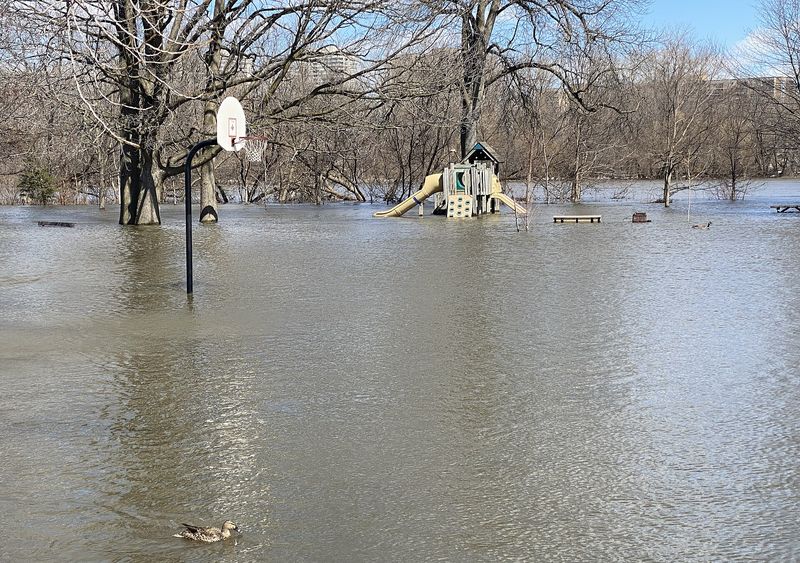
The temperature arithmetic sitting behind the text
None of this bargaining happens in a scientific vacuum, and the draft does not pretend otherwise. A UN report last month concluded that the world is on course to exceed 1.5°C of warming — the Paris Agreement’s most ambitious guardrail — and the draft text itself records that full implementation of countries’ current national climate plans points to warming of about 2.6°C. Hold those two numbers together and the week’s argument comes into focus. The plans governments have already submitted, delivered in full and on time, do not deliver the goal those same governments have repeatedly endorsed. The fossil-fuel clause and the adaptation floor are, in effect, the two halves of a response to that admission: mitigate faster, and pay to protect people from the warming that mitigation has already failed to prevent.
The overshoot question — how far past 1.5°C the world goes, for how long, and on what promise of coming back down — now shadows every paragraph. It is the same arithmetic Signal Post News has traced in the impacts reporting from the Himalayas, where a warming climate is repricing flood risk, to the adaptation fights at earlier summits: the longer the phase-out is deferred, the larger the adaptation bill grows, and the more the finance argument and the fossil-fuel argument become the same argument held in two different rooms.
The contested extras: electrification and an AI pledge
Beyond the two headline fights, the draft carries the host country’s fingerprints. Türkiye’s target of raising electricity’s share of global final energy consumption to 35 percent by 2035 is in the text — and is already flagged as contested, a reminder that even the apparently technical goals of a COP carry industrial winners and losers: electrification at that pace implies grids, storage, minerals and manufacturing capacity on a scale that not every delegation is ready to underwrite. Antalya has also produced the summit’s most modern side-initiative: a voluntary AI sustainability pledge, the Antalya Commitment on AI, launched by the Turkish presidency. So far, only 9 of the roughly 200 countries at the talks have signed it — a number that captures both the novelty of putting artificial intelligence on a climate agenda and the difficulty of building a coalition around it in a week. COP31 President Murat Kurum has argued that AI needs to be part of the solution — its energy appetite managed, its modelling and forecasting power put to work on the transition — rather than treated purely as a new source of demand. Whether the pledge grows beyond its first nine signatories will be a small but telling measure of the presidency’s convening power.
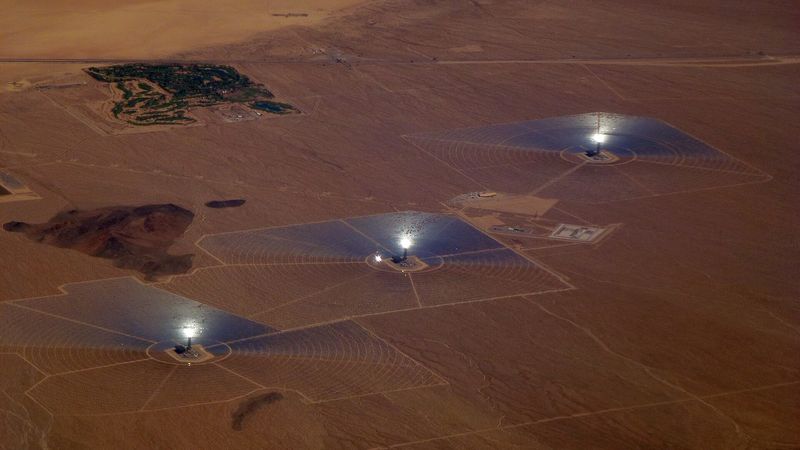
Welcome for the number, warnings about its terms
The first reactions from the campaign groups who police these texts fell into a pattern that will be familiar to anyone who has watched a COP’s second week: welcome the headline figure, interrogate its terms. Bareesh Hasan Chowdhury and Lise Masson of Friends of the Earth International, and Harjeet Singh of the Fill the Fund campaign, were among those who welcomed the $120 billion figure while warning that the form of the money matters as much as its size — that adaptation finance must arrive as public grants, not loans that deepen the debts of the countries least responsible for the crisis. A loan to rebuild after a flood is a different instrument from a grant to prevent the flood damage in the first place, and conflating the two has been one of the longest-running grievances in climate finance.
Their second warning reaches further, into the temperature politics described above: against normalising the overshoot of 1.5°C by leaning on future carbon removal — the assumption that technologies not yet deployed at scale will one day pull the excess carbon back out of the sky and return the planet to the guardrail. Treat overshoot as a plan, the campaigners argue, and the urgency drains out of both halves of the Antalya draft: the phase-out can slip because removal will compensate, and adaptation can be underfunded because the models assume a cooler future than the one being negotiated. It is a critique with a constituency well beyond the campaign halls — the same public pressure that has filled streets from France’s climate protests to the summit fences in Antalya — and Bowen’s negotiators will hear it in the corridors all week.
Why this matters
A phase-out clause would be a first — which is why it may not survive
Thirty years into the COP process, no final deal has ever told the world to phase out fossil fuels in so many words. The 2023 “transitioning away” formula was celebrated precisely because it was the closest the process had come. If the stronger option survives Antalya, it becomes the new floor for every future text — language, once agreed, is almost never un-agreed at a COP. That ratchet is exactly why producer economies fight the wording so hard, and why its presence in Monday’s draft, defended publicly by the man running the negotiations, is significant even if the clause is ultimately traded away. A text is also a record of what was sayable. On Monday, in Antalya, a phase-out was sayable.
Adaptation is where the trust is kept or lost
Mitigation arguments are about the future; adaptation arguments are about the present tense of other people’s weather. The $120 billion proposal, its roadmap and its milestones will be read in the vulnerable states as the test of whether the “implementation COP” branding means anything — and the grants-versus-loans argument will decide whether the number, if agreed, is experienced as solidarity or as a new line of credit extended to the drowning. The comparison that will follow this summit into every future one is already fixed: $120 billion promised, $305 billion needed, $28–32 billion delivered in the last measured year. Closing even part of the distance between the third figure and the first is the single most concrete thing Antalya can do.
The draft’s length is the strategy
Cassel’s “put it all in” observation deserves to be taken seriously as a description of method, not just of page count. An 18-page draft that keeps rejected clauses in does two jobs at once: it gives every delegation something in the text worth defending, and it creates the inventory from which the final package can be assembled. The risk is symmetrical — a text in which everything is contested can collapse into a final night in which everything is traded at once, and the strongest language dies in the general exchange. The next four days will reveal which of those dynamics Bowen’s method has actually produced.
What happens next
COP31 is scheduled to end on Friday, November 20 — and the honest answer to “when does COP31 end” is that COPs end when the gavel falls, which in recent years has usually meant overrun into the weekend. Between now and then, the draft goes through the machinery: technical negotiators will try to collapse the options, ministers arriving for the final stretch will take the political decisions their officials cannot, and Bowen and Kurum’s split presidency will face its defining test — producing a cover text that the producer economies, the European Union, the vulnerable states and the big emerging economies can all, however grudgingly, accept. The tells to watch are specific. Does any fossil-fuel option survive, and in which wording? Does the $120 billion adaptation floor hold, and does its roadmap keep dated milestones? Does the electrification target stay at 35 percent? And does the AI pledge climb meaningfully beyond nine signatories, or remain a presidency initiative that the summit politely noted?
Signal Post News will follow the Antalya texts as they narrow. For the summit’s full background — the shared presidency, the emissions gap and the host city itself — start with our complete COP31 Antalya guide.
What do you think — should a final deal keep the words “phase out,” or is 2023’s “transitioning away” the strongest language almost 200 countries can honestly sign? Follow Signal Post News for updates from Antalya, and share your thoughts below.
Sources
Reuters, November 16, 2026 — “First draft of COP31 deal signals tough negotiations to come” (reuters.com): publication of the 18-page first draft on Monday, November 16; Chris Bowen’s leadership of the negotiations under the split presidency with Türkiye, his acknowledgment that the draft contains clauses some nations have already rejected and his defence of the contested fossil-fuel language; the two fossil-fuel options (reiterating the 2023 “transitioning away” wording, or a stronger “phase out” clause, either of which could be dropped); the proposal to raise adaptation finance to at least $120 billion by 2035 with a roadmap and milestones; the UNEP 2026 Adaptation Gap Report figures ($305 billion a year of developing-country adaptation needs by 2035; $28–32 billion of international public adaptation finance in 2024); the draft’s ~2.6°C full-implementation figure and the UN finding that the world is on course to exceed 1.5°C; the contested 35-percent electrification target; the Antalya Commitment on AI and its nine signatories, with COP31 President Murat Kurum on AI as part of the solution; E3G’s Cosima Cassel on the draft’s length and trade-off approach; and the campaigners’ response (Friends of the Earth International’s Bareesh Hasan Chowdhury and Lise Masson; Fill the Fund’s Harjeet Singh) welcoming the $120 billion while insisting on public grants over loans and warning against normalising 1.5°C overshoot through future carbon removal. The Business Standard, November 16, 2026 — “COP31 draft calls for fossil fuel phaseout, at least $120bn adaptation finance” (tbsnews.net): corroborating report of the draft’s fossil-fuel phase-out call and the $120 billion adaptation finance floor. DW reporting on the Antalya talks was also consulted. Photographs are via Wikimedia Commons, as credited in the captions; the lead photograph shows COP31’s President of Negotiations in Antalya on November 10, 2026, and the remaining photographs are file photos, captioned as such.