France climate protests September 2026
From Brittany to Lille, a citizens' movement that did not exist three months ago is turning France's hottest summer since 1900 — and nearly 8,000 deaths — into the country's biggest climate mobilization in years.
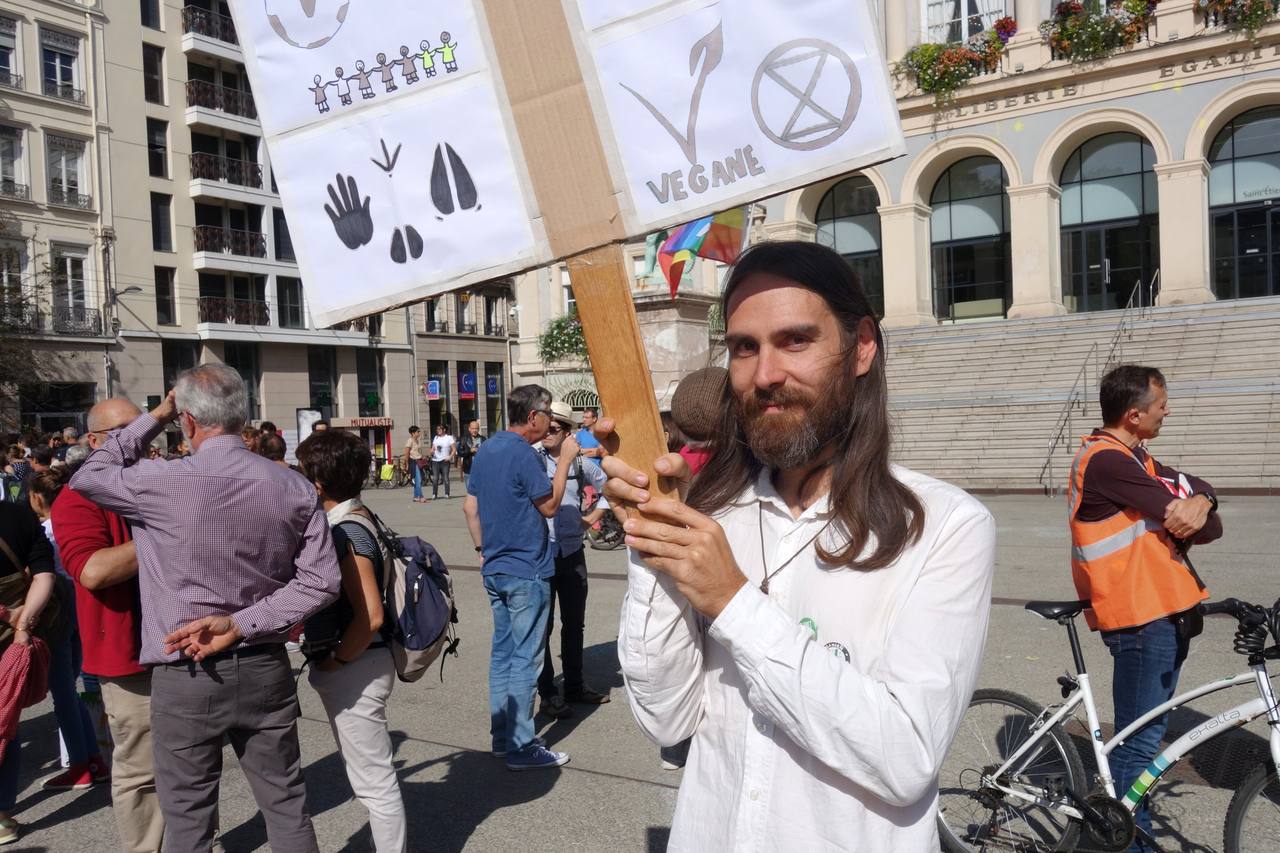
More than 260 climate rallies are taking place across France on Saturday, September 26, 2026, as the 26 September Movement — a citizens' collective born from the ashes of the country's deadliest summer on record — attempts what a decade of marches never quite managed: to make the climate crisis politically unavoidable in France.
The mobilization stretches from Brittany in the west to Lille in the north and Clermont-Ferrand in the center, according to Le Monde. In Paris, Pope Leo XIV's visit has forced organizers to reshape the day's plans: the capital's march becomes a static gathering at Place de la République, held later in the day. It is a logistical compromise, but the organizers — the small non-profit Bio Consom'acteurs, which initiated the call — say the response has exceeded anything they imagined. More than 150 national organizations and 600 local ones have joined, unions and political parties alongside environmental groups.
Two days before the marches, Greta Thunberg lent the movement her voice in a video shared on the organizers' channels: "After the extreme weather that ravaged the world this summer, people are taking it to the streets and demanding real climate action," she said. "The planet can no longer wait, and inaction is not an option."
Why this matters
This is not another routine Saturday demonstration, and treating it as one misses the point. The 26 September Movement is the first French climate mobilization organized entirely in the shadow of a quantified national trauma: the hottest summer since national records began in 1900, 53 days of official heatwave conditions, wildfires that burned six times the 20-year average, and a preliminary death toll approaching 8,000. The marchers are not warning about a hypothetical future. They are responding to a body count.
That distinction is what gives today its political charge. For years, French climate politics has been trapped in a strange paralysis: broad public concern, sophisticated policy debate, and almost no electoral reward for action. As Jean-François Julliard, director general of France Nature Environnement, the country's largest federation of environmental groups, put it bluntly last month: "Many candidates still think there are more risks than votes to gain. It's not a vote-winning issue." Today's rallies are a direct test of that assumption — an attempt to prove, in the streets, that the summer of 2026 changed the political arithmetic.
The timing sharpens the test. France is drifting toward the 2027 presidential election with a government consumed by a €54 billion budget crisis and a prime minister, Sébastien Lecornu, whose climate posture has consisted largely of commissioning reports. The marchers' central demand — an "emergency, adaptation and mitigation plan" — lands as a direct indictment of a political class that, as Le Monde documented in August, had offered effectively no climate response at all to the unfolding catastrophe.
The numbers behind the anger
The figures the movement carries into the streets are worth stating precisely, because they are the foundation of its moral claim:
France's public health authority, Santé publique France, recorded 7,919 excess deaths between late May and August 20 — a preliminary figure expected to rise as late-summer death certificates are processed. The toll breaks down as 5,764 excess deaths between June 17 and July 2, another 1,243 between July 3 and July 20, 817 between July 27 and August 20, and 95 during a shorter May heat episode. Authorities caution that not every excess death can be directly attributed to heat, but the correlation with the heatwave calendar is stark.
The full-summer toll now stands above 7,300 excess deaths — roughly half of the catastrophic 15,000 who died in the 2003 heatwave. That comparison cuts two ways, and both matter. On one hand, it is evidence that France's national heat response plan, built in the trauma of 2003, saved lives at scale. On the other, as analysts have noted, it is a warning that the plan itself may not be built for the climate France now has: this summer ran nearly 1°C hotter than 2003 on a seasonal average basis.
Perhaps the most unsettling finding comes from France's National Institute of Health and Medical Research (Inserm). Researcher Basile Chaix found that during the June 17–July 2 wave, excess mortality among 15-to-64-year-olds ran roughly 35% above baseline — matching the rate in the 65-to-84 bracket. For the first time since France began monitoring heat mortality in 2004, excess deaths were recorded across every age group from 15 upward. Extreme heat, in other words, is no longer a hazard confined to the physiologically fragile. It is killing working-age adults at rates previously seen only a generation older.
The meteorological records are equally stark. Météo-France counted 53 days of heatwave conditions over the summer — a number the agency itself called "completely unprecedented." A late-June heatwave set a new national intensity record; a second, stretching from late July into August, lasted 23 days, matching the longest ever recorded in 1983. Environment Minister Monique Barbut confirmed what the thermometers said: "We have just lived through the hottest summer ever recorded since measurements began in 1900."
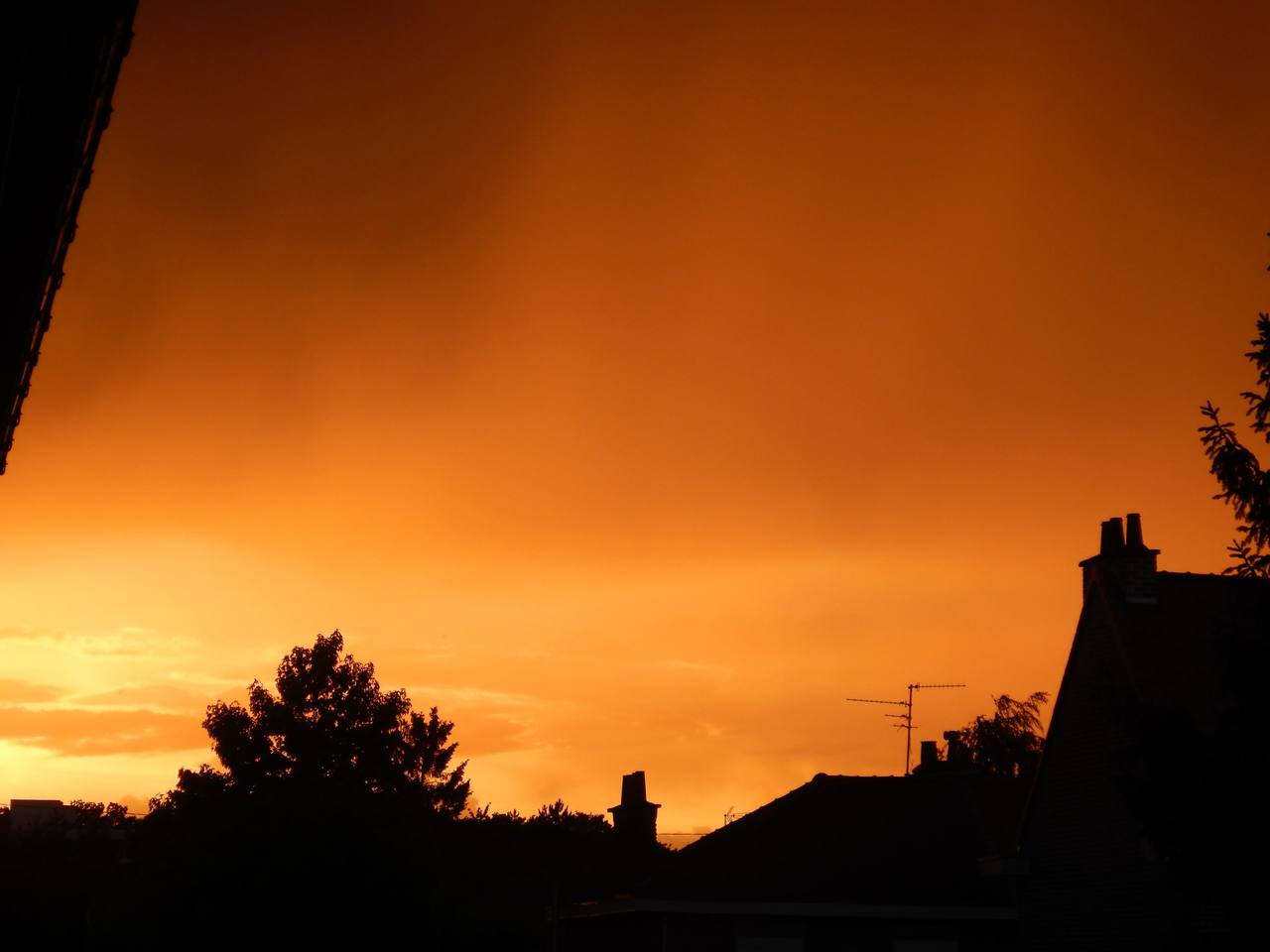
And the attribution science has moved past debate. A rapid study by World Weather Attribution found that the record-breaking heat and humidity would have been virtually impossible five decades ago and is 200 times more likely today than it was 20 years ago. The head of the World Health Organization has warned that Europe is the fastest-warming continent on Earth. France's summer was not bad luck. It was the invoice.
Born in a burned summer
The 26 September Movement did not emerge from the established green NGOs. It began, by its own account, with grief. Benjamin Ball, 42, a member of the Popular Greens who helped organize, told Le Monde what pushed him: "My director lost his father because of the heat, two homeless people died in my city of Argenteuil, and two-thirds of the trees in my sister's orchard died. I was scared, and I couldn't just sit and do nothing."
That personal register — loss, fear, the refusal to sit still — explains the movement's unusual breadth. This is not only the traditional climate constituency. Firefighters are holding their own "static demonstration" in Paris today. A Rocha France, a Christian environmental network, issued its own call to join the marches. The coalition spans the familiar (Greenpeace veterans, Attac, Friends of the Earth networks) and the unexpected, which is precisely why organizers speak of "the beginning of a popular movement" rather than another activist set-piece.
The historical parallel the movement wants to evoke is 2019, when some 4 million people joined global climate strikes and an estimated 40,000 marched in France. The parallel it wants to avoid is what followed: the Covid-19 pandemic halted the movement cold, and a subsequent environmental backlash pushed climate down the agenda for years. "People do not want the emotion experienced this summer to fade away like a soufflé," said Julliard, the former Greenpeace France director. "Something is happening that we haven't seen since 2020."
The politics: who gains, who stalls, who fears the issue
The winners and losers of today's mobilization are already taking shape — and they reveal why French climate politics has been stuck.
On the radical left, La France Insoumise (LFI) has moved fastest to convert the summer into program. In August it published a detailed policy paper on "tackling megafires," and its leader Jean-Luc Mélenchon received an unexpected endorsement from Environment Minister Barbut herself, who told Libération he "is the candidate who incorporates the issue of climate change most thoroughly into his economic and social proposals." For a movement born outside party structures, that kind of capture is both an opportunity and a risk: it brings parliamentary muscle, but it also lets the government dismiss the marches as a left-wing operation.
The government, for its part, is performing concern while deferring decisions. Lecornu tasked Barbut in late July with accelerating France's national climate adaptation plan; she has promised conclusions "by the end of September," including a five-year funding plan. That deadline — days away — means today's marches will be read in Paris as a down payment on judgment day: either the plan is serious, or the streets will say so.
The deeper obstacle is the one Julliard named: the durable belief across the political spectrum that climate is "not a vote-winning issue." That belief survived 2019's marches, survived the 2022 heatwaves, and survived a summer that killed thousands. It is the assumption under the entire French political class's feet — and it is exactly what 260 simultaneous rallies are designed to shake. If turnout today rivals or exceeds 2019's French numbers, the "no votes in climate" consensus becomes much harder to sustain into the 2027 campaign. If it doesn't, the skeptics will feel vindicated, and the issue will slide back down the agenda the moment temperatures drop.
There is a precedent for heat reshaping French politics, and it should worry the government. The 2003 heatwave's 15,000 deaths politically wounded Jacques Chirac's government and produced the very heat plan now straining at its limits. Governments that look unmoved by mass-casualty summers do not get the benefit of the doubt twice.
What happens next
Three scenarios branch from today's streets:
1. The surge. Turnout meaningfully exceeds 2019's French figures, sustained by the summer's rawness and the coalition's breadth. Climate becomes a mandatory 2027 campaign topic; Barbut's end-of-September adaptation plan is received as a political document, not a technocratic one; and the Lecornu government's budget-first framing starts to look like an evasion. This is the outcome the organizers are betting the summer bought them.
2. The plateau. Respectable crowds, broad coverage, no breakthrough. The movement banks organizational infrastructure — the 600 local groups, the cross-sectoral alliances — and waits for the next heatwave to do what argument cannot. Given the trajectory of European summers, the wait is unlikely to be long, but a movement that must rely on future disasters is a movement on borrowed time.
3. The fade. Thin crowds, rain or no rain, and Julliard's warning proves prophetic: the emotion of the summer dissipates "like a soufflé," the adaptation plan lands as a press release, and 2027 is fought on purchasing power and immigration while the death toll becomes a statistic. This remains the historical default — it is what happened after every previous French climate summer.
The honest assessment is that today's rallies cannot, by themselves, resolve which future arrives. Demonstrations measure the depth of feeling; they do not write adaptation plans or fund them. But they do one thing that matters: they deny the political class the comfort of believing nobody is watching. After a summer that killed nearly 8,000 people, 260 rallies are France's way of saying the invoice has been received — and that the payment is now overdue.
Sources: Le Monde (English), September 26, September 15 and August 21, 2026; Agence France-Presse via Central News; The Associated Press; Berliner Tageblatt; TechTimes; A Rocha France; Scoop. Mortality figures are Santé publique France preliminary estimates via AFP; meteorological records via Météo-France as reported by Environment Minister Monique Barbut; attribution findings via World Weather Attribution; mortality-distribution research via Inserm researcher Basile Chaix.
Related Signal Post News coverage
- France's €54 billion budget crisis and the pressure on Lecornu
- Europe's record marine heatwave is remaking fisheries