U.S. News · New York · Brooklyn
A 96-year-old building on one of Brooklyn’s busiest avenues fell into the construction pit beside it on Wednesday afternoon. Eight people are dead, two of them children. The rescue is over. The question that remains — how a building full of people came down next to an open excavation in the city with the country’s strongest rules for exactly that situation — has not been answered.
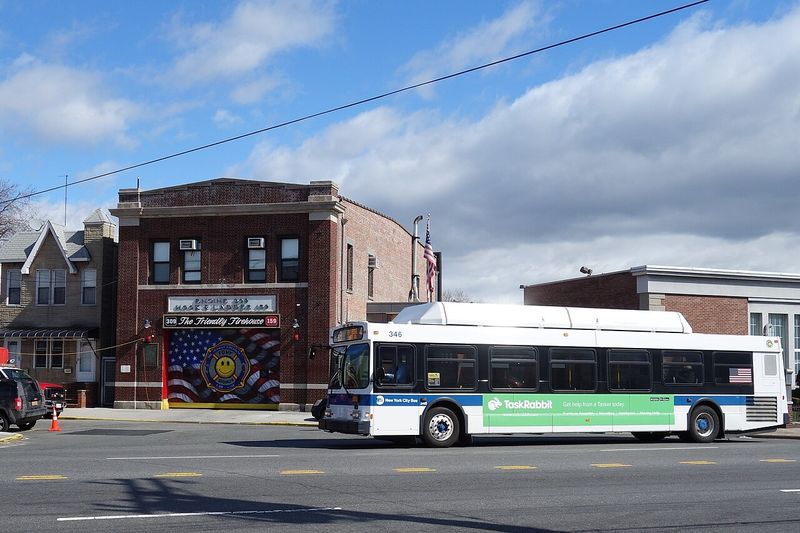
NEW YORK, November 13, 2026 — Shortly after 4 p.m. on Wednesday, November 11, 2026 — the first 911 call came in at 4:01 p.m. — the three-story mixed-use building at 1321 Flatbush Avenue in Flatbush, Brooklyn, collapsed into the open excavation pit next door, at 2625 Bedford Avenue, where foundation work was underway. Eight people were killed and 18 were injured. The dead include two children, ages 9 and 10, and two construction workers. It is among the deadliest building collapses in New York City in years, and as of Friday its cause had not been determined.
What follows separates, as carefully as the record allows, what officials have confirmed from what remains under investigation. The confirmed facts are stark enough. A building that had stood since 1930, with a shop at street level and four apartments above it, came down in the middle of a weekday afternoon, on a commercial avenue, beside an active construction site. The rest — why it fell, whether the work next door undermined it, and who, if anyone, bears criminal responsibility — is the work of an investigation that city officials on Friday promised would be thorough, and that they warned could end in severe penalties.
What happened at 1321 Flatbush Avenue
The building at 1321 Flatbush Avenue dated to 1930. Like thousands of structures along Brooklyn’s older commercial avenues, it combined retail at the sidewalk with homes above: a shop at street level and four apartments on the floors over it. On Wednesday afternoon it failed, and it fell toward the lot next door — into the open excavation at 2625 Bedford Avenue, where crews had been digging out the empty lot and foundation work was underway.
The first 911 call was placed at 4:01 p.m. The response was immediate and large. More than 250 firefighters and EMS personnel converged on the avenue and worked through the night in heavy rain, searching the debris with the help of search dogs, in the disciplined, dangerous rhythm of a structural-collapse rescue: listening for voices, shoring unstable material, removing rubble piece by piece where a survivor might be underneath it. Fire Commissioner Lillian Bonsignore and Chief of Department John Esposito led the FDNY response.
The search lasted nearly a full day. FDNY rescue operations concluded on Thursday, November 12, at 3:37 p.m. Eastern Time, with no more victims found, and the site was turned over to the Department of Buildings and the NYPD. By then the toll was final: eight people dead, 18 injured.
The victims
On Thursday evening, the NYPD named the eight people killed. Six were adults — among them two construction workers — and two were children:
- Nicole Daniela Salvada Rodriguez, 9
- Kevin Santiago Reyes Gonzalez, 10
- Gabriel Siguencia, 22
- Barry Mamadou, 23
- Jose Luis Caguana Cosquillo, 26
- Edgar Sapon, 26
- Ndiaye Mamadou, 31
- Juan Daniel Salvada Guzman, 31
The injured numbered 18: 14 civilians and four firefighters. In later updates, one person remained in critical condition. For families still trying to confirm the whereabouts of someone who may have been in or near the building, the city activated its Unified Victim Identification System: call 311 within New York City, or 212-639-9675 from outside the city. A reception center for affected families and residents opened at the Flatbush YMCA, at 1401 Flatbush Avenue — a short walk from the collapse site. The Department of Buildings also issued full vacate orders for the neighboring buildings at 1323 and 1325 Flatbush Avenue, displacing their residents while the stability of what remains standing is assessed.
The investigation: what is known, and what is not
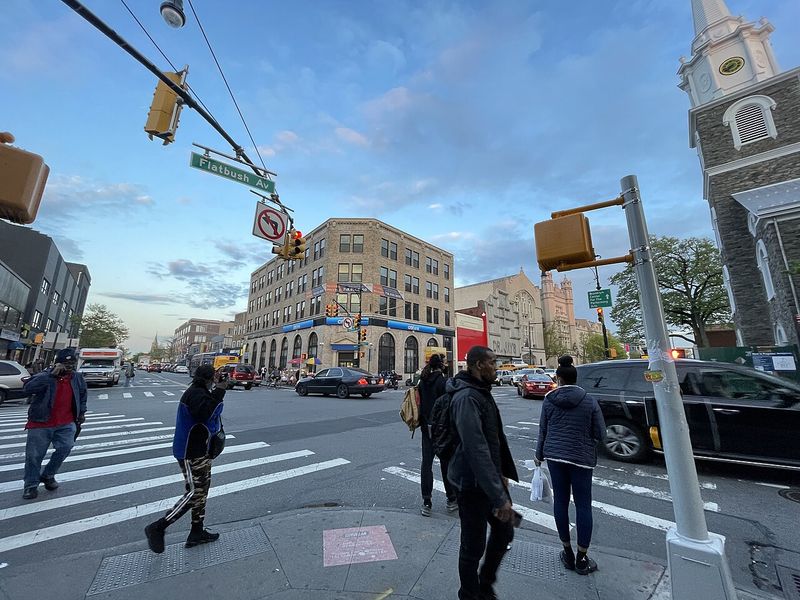
The most important fact about the cause of the Brooklyn building collapse is that, officially, there isn’t one yet. The cause has not been determined. The Department of Buildings and law enforcement are investigating, and the excavation on the adjacent lot is a focus of that investigation — a focus, not a finding. Nothing in the official record released so far establishes that the digging caused the building to fall, and this report does not state otherwise.
What the record does contain is a sequence that investigators will have to explain. A DOB vacate order initially stated that the collapse was due to “unsafe construction operations at the adjacent property, 2625 Bedford Avenue.” That language was later removed from the department’s website. Buildings Commissioner Ahmed Tigani has said that workers had been excavating the empty lot next door to the collapsed building. Why the department’s first written characterization said what it said, and why it was withdrawn, are open questions — the language may have been an early field assessment later judged premature, but the department has not, in the reporting available Friday, explained the change.
On Friday, November 13, city and state officials moved in public. They pledged a thorough investigation and severe criminal penalties for anyone found responsible. Mayor Zohran Mamdani said the Department of Buildings had identified five entities associated with the construction site, and that those entities are linked to about 100 other construction sites across the city; sweeps of those sites had begun. Attorney General Letitia James said officials would support hiring more building inspectors if needed, and that workers must be able to raise safety concerns without being disciplined for doing so. Those are enforcement commitments, not conclusions about Wednesday: the sweeps examine other sites run by the same entities, and their results will say something about those entities’ practices — but they cannot, by themselves, establish what happened at 1321 Flatbush Avenue.
One expert assessment frames the stakes of the inquiry. Anthony Piderit, a structural engineer, told USA TODAY that New York’s building code governing construction next to existing buildings is likely the strongest in the country — which makes a collapse like this one, in his word, “unacceptable.” If the rules are the strongest in America, then either the rules were not followed, or they were not enforced, or something happened that the rules did not anticipate. The investigation exists to find out which.
Why this matters
Building beside century-old housing
Flatbush Avenue is not an edge case; it is the normal condition of building in New York. The city’s housing stock is old — the building that fell was 96 years old — and its growth happens in the gaps: empty lots and teardowns wedged between structures that were standing before modern codes existed. Every excavation beside an old building is a negotiation with that building’s foundations, which were designed for the loads of 1930 and the soil as it then sat, not for a pit opening beside them. The engineering for doing this safely exists, and the city’s code demands it. Wednesday’s collapse is what it looks like when, somewhere in the chain between code, contractor and inspection, the negotiation fails — even though which link failed is precisely what has not yet been established.
Strong codes, thin inspection
The second lesson is about the gap between the law on paper and the state’s capacity to watch it being obeyed. A code, however strong, is a promise enforced by inspectors — by people who visit sites, read filings, and can stop work. Attorney General James’s remark about supporting more inspectors, made within two days of the collapse, points at the known constraint: New York writes demanding rules for adjacent construction and then fields an inspection workforce that officials themselves suggest may be too small for the volume of work underway. Five entities tied to one site being linked to roughly 100 other sites is the scale problem in miniature. A sweep can visit 100 sites. What it cannot do is retroactively supply the supervision those sites did or did not receive before Wednesday — or prove, about any one of them, that the same failure was waiting there.
Who bears the risk
The third point is about who was exposed. The people in the four apartments above the shop at 1321 Flatbush Avenue did not choose the construction next door, were not parties to its permits, and had no say in how the excavation beside their home was carried out. Construction risk in a dense city is routinely described as a matter between builders, regulators and insurers. A collapse like this one reassigns it: the gravest risk of the pit at 2625 Bedford Avenue was carried, without their knowledge or consent, by a 9-year-old and a 10-year-old in the building beside it. Two of the dead were construction workers — the other population that bears this risk directly, and the one James’s comment about raising safety concerns without discipline was addressed to.
A familiar pattern, and slow answers
New York has been here before, and the parallels are instructive less for their causes than for their timelines. In 2023, a parking garage collapsed in Manhattan, killing one person and injuring seven; a city report issued in 2025 blamed the unauthorized demolition of a load-bearing pier and called the collapse preventable — two years between the failure and the authoritative account of it. The same year, a partial collapse in the Bronx displaced more than 140 residents but killed no one; the investigation found that an engineer had failed to identify a load-bearing pier. In 2025, a public-housing chimney collapsed in the Bronx; no one died. Each case turned, in the end, on the unglamorous anatomy of load-bearing structures and the people paid to know where the loads run. Each also took far longer to explain than to happen. Families in Flatbush should expect the same asymmetry: the collapse took seconds, the rescue a day, and the answers — if the recent record is the guide — will take months to years, through reports, possible criminal proceedings and civil litigation that move on institutional time, not on the time of grief.
What happens next
Three processes now run in parallel, and they should not be confused with one another. The first is the investigation itself: the Department of Buildings and the NYPD hold the site, and their work — engineering analysis, records of the excavation, interviews — will determine whether there are criminal referrals, and against whom. City officials have promised severe criminal penalties for anyone found responsible; whether anyone is found responsible, and for what, is a question the evidence has not yet answered in public. The second is the sweep: inspectors are visiting the roughly 100 other construction sites linked to the five entities associated with 2625 Bedford Avenue, and what they find — stop-work orders, violations, or clean bills — will shape the city’s account of whether Wednesday was an anomaly or a pattern. The third is the human remainder: the injured, one of them critical in the latest updates; the residents of 1323 and 1325 Flatbush Avenue under full vacate orders, whose return depends on the stability of buildings they did not damage; and the families using the reception center at the Flatbush YMCA and the Unified Victim Identification System (311, or 212-639-9675 from outside New York City) to account for the people they love.
The open questions are specific, and they deserve to be stated plainly. What were the excavation crews at 2625 Bedford Avenue doing on Wednesday afternoon, and in the days before? What did the Department of Buildings know about the work, and what does the removal of the “unsafe construction operations” language from its vacate order mean — correction, caution, or something else? And when will a cause be announced? Until officials answer them, the honest summary of the Brooklyn building collapse is the one the record supports: a 96-year-old building fell into the pit beside it, eight people are dead, the digging next door is a focus of the investigation, and the cause has not been determined. Signal Post News will update this coverage as the investigation produces findings.
Related coverage: Nairobi Building Collapse in Eastleigh: Seven People Missing as Rescuers Search the Rubble Through the Night · Delhi Building Collapse October 2026: 3 Dead in Seemapuri
Sources
Sources: Associated Press reporting on the Brooklyn building collapse (via Lohud), November 12, 2026; USA TODAY, “Brooklyn building collapse prompts familiar scrutiny” (November 13, 2026); USA TODAY explainer on the Brooklyn apartment building collapse (November 12, 2026); NYC311, official information on the Flatbush building collapse response. The cause of the collapse has not been determined; statements about the adjacent excavation are attributed to the officials and documents cited. Photos: Wikimedia Commons, as credited in the captions — file photos of Flatbush Avenue, not images of the collapse scene.