World · War · Black Sea
Three commercial ships were struck by drones inside Romanian territorial waters near the Sulina canal late on Saturday, in the most serious Black Sea ship drone attack yet on the waters of a NATO member state. Fires broke out aboard the vessels and were brought under control by their crews. Nobody was killed or injured — the fact that may matter most in what happens next — but Romania scrambled fighter jets twice over the weekend, and its defence minister is taking the incident to Brussels this week.
Track it live: Live Global Trackers — Wars & Conflicts · Ukraine war map
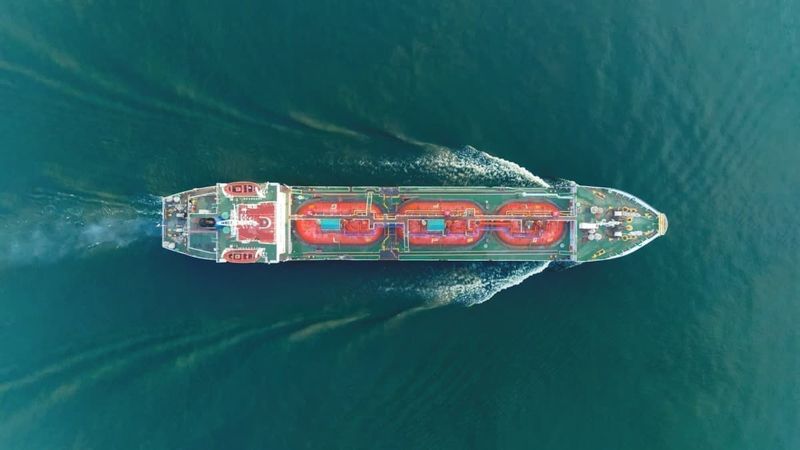
BUCHAREST, November 15, 2026 — Drones struck three commercial ships near Romania’s Sulina canal late on Saturday in a Black Sea ship drone attack that crossed a line the war at sea had approached for months but not yet so plainly breached: two of the vessels were hit inside Romanian territorial waters, four and five nautical miles southeast of the canal, according to Romania’s defence ministry. Fires broke out after the strikes and were controlled by the ships’ crews, and there were no casualties, Defence Minister Stefan Radu Oprea said. Prime Minister Luca Niculescu confirmed the attacks on Sunday, and the Romanian armed forces scrambled fighter jets twice in response to the weekend’s incidents. Romanian officials did not identify who launched the drones. They said the strikes were a direct consequence of Russia’s war in Ukraine — a formulation that assigns the cause without naming the hand, and one that frames every argument now heading to Brussels.
The three ships were the Greek-flagged oil and chemical tanker Evia Petrol V, the bulk carrier Marsol and the oil products tanker Ali Najafov, the latter two sailing under the flag of Saint Kitts and Nevis. The Evia Petrol V and the Marsol were the two vessels struck inside territorial waters, at four and five nautical miles southeast of the Sulina canal respectively. That geography is the heart of the story. These were not hits in a contested war zone, in an exclusive economic zone, or in waters whose status lawyers can argue about. On Romania’s account, they were explosions aboard merchant ships inside the sovereign waters of a NATO member, close enough to shore that the canal pilots, port workers and fishing boats of the Danube delta work those same miles every day.
What happened on Saturday night
The sequence, as Romanian officials have set it out, is stark in its simplicity. Late on Saturday, November 14, drones reached the shipping lanes off the Sulina canal and struck three vessels in a single night. The Evia Petrol V drone attack and the strikes on the other two ships started fires that the crews themselves fought and controlled — a detail that speaks to both the limited size of the weapons involved and the professionalism of merchant seafarers who have spent three years sailing a war zone as a condition of employment. With the Marsol Ali Najafov ships hit alongside the Greek tanker, the night’s tally was three hulls, three fires, and — by what officials and shipowners alike will regard as fortune as much as design — zero casualties.
Bucharest’s public response came in two voices. Prime Minister Luca Niculescu confirmed the strikes on Sunday, putting the government’s authority behind the account. Defence Minister Stefan Radu Oprea supplied the operational detail: the fires, the absence of casualties, and the locations inside territorial waters. The armed forces, meanwhile, supplied the soundtrack: Romanian jets were scrambled twice over the weekend. A scramble is not a shot fired, and Romania has been careful before about the difference. But two scrambles in one weekend, answering attacks on shipping in home waters, is the sound of an air force being pulled steadily from deterrence posture toward something closer to a standing combat watch.
The Friday strike: the Larissa 1 cargo ship drone hit
Saturday was not the weekend’s first incident. A separate general cargo ship was struck late on Friday, also without casualties, in what now reads as either a prelude or a parallel track. Romanian broadcaster Digi24 identified the Friday vessel as the Palau-flagged Larissa 1. Officials have released fewer details about that strike, and this article does not fill the gap with inference: what is confirmed is a fourth ship, a fourth drone strike, and a second night in a row on which merchant crews off Romania went to their fire stations. Counted together, the weekend produced four struck ships in roughly twenty-four hours. Counted separately, each can be described as an incident. The argument of this article is that the count is the story.
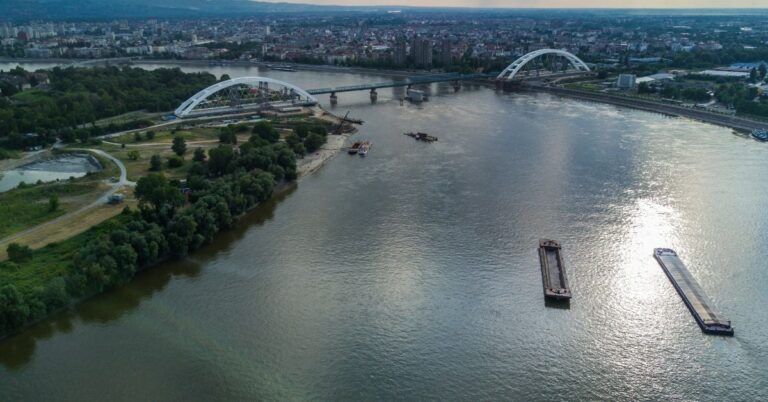
The corridor at stake: Sulina, the Danube and Ukraine’s exports
To understand why drones keep arriving at this particular stretch of water, start with a map of Ukraine’s trade. The Sulina canal is the deep-draught arm of the Danube delta, the channel through which river traffic reaches the Black Sea. When Russia’s full-scale invasion closed, blockaded or made uninsurable Ukraine’s great deep-water ports in turn, the Danube route — river barges down to the delta ports, then out through Sulina — became one of the lifelines through which Ukrainian grain and other exports still reached world markets. A Ukraine exports Sulina canal attack is therefore never only an attack on the ships present. It is pressure on the corridor itself: on the insurers who price it, the crews who sail it, and the farmers and traders whose goods move along it.
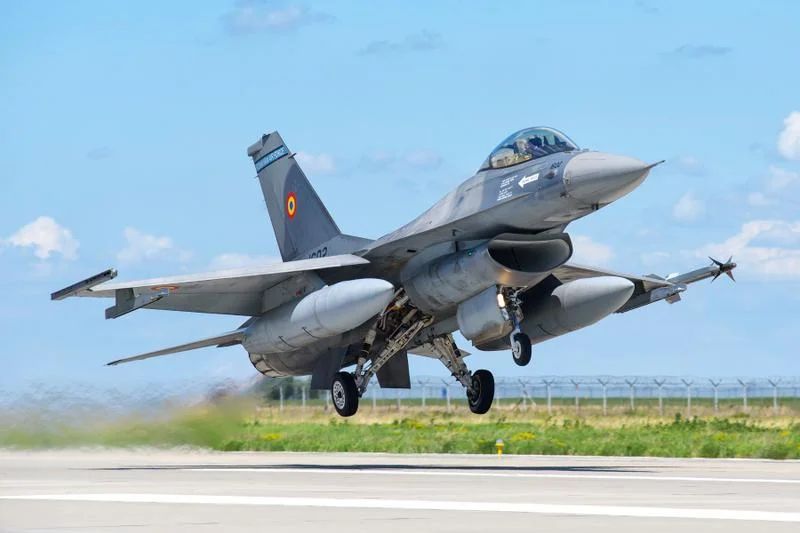
That is also why the canal’s approaches have drawn danger before. In October, Romanian F-16s fired on drones over these same waters, an incident Signal Post News covered as the moment the air war over the delta stopped being theoretical. The pattern since has been one of approach by increments: drones in Romanian airspace, debris on Romanian soil in earlier phases of the war, strikes on Ukrainian Danube ports close enough to the border to be watched from Romanian villages, and now strikes on ships inside Romanian waters. Each step was deniable as an aberration. Together they describe a direction of travel.
A pattern, not an accident
The strongest evidence that Saturday night was not an accident of navigation or a stray weapon is arithmetic. One drone hitting one ship can be an error. Three ships struck in one night near one canal, preceded by a fourth ship the night before, in a season that has already seen merchant vessels attacked and sunk near Bulgaria, is a pattern with a geography and a tempo. Through October and into November, the strikes on shipping near the alliance’s Black Sea coast have come closer, grown more frequent, and moved from the economic zones of NATO members into, now, the territorial sea of one. The Bulgaria sinkings of October — ships struck and sunk with crews missing — showed what the lethal end of this pattern looks like. Saturday night off Sulina showed its most politically pointed form yet: inside sovereign waters, without a single death.
That combination — unmistakably deliberate in location, mercifully bloodless in outcome — is precisely what makes the incident so difficult for NATO. An attack that killed Greek, Filipino or Ukrainian sailors inside Romanian waters would force decisions at alliance speed. An attack that damages three ships and kills no one forces a slower, more corrosive question: how many bloodless strikes inside a member’s waters can the alliance absorb before the credibility of its territorial guarantee becomes the real casualty? Whoever planned Saturday night’s strikes — and Romanian officials, it must be repeated, have not publicly identified the planner — could hardly have calibrated that dilemma more exactly if they had tried. Whether they did try is a question the evidence made public so far cannot answer.
Black Sea drones in Romanian territorial waters: what is confirmed, and what is not
Because this story will be fought over, the confirmed core deserves to be stated plainly and kept separate from everything around it. Confirmed by Romanian officials on the record: three ships struck late Saturday near the Sulina canal; two of them, the Evia Petrol V and the Marsol, hit four and five nautical miles southeast of the canal, inside Romanian territorial waters; fires controlled by the crews; no casualties in any of the weekend’s strikes, including Friday’s attack on the vessel Digi24 named as the Larissa 1; fighter jets scrambled twice; and a fourth data point of context, that the canal is a key export route for Ukraine. Not confirmed: the origin of the drones. Bucharest said the strikes were a direct consequence of Russia’s war in Ukraine. It did not say Russia launched them, and this article does not either. In prior incidents of this kind, secondary reporting has recorded Russia denying that it targets neighbouring states. Attribution, in other words, is an open file — and the alliance’s problem is that its dilemma does not wait for the file to close.
Why this matters
Three reasons lift this weekend above the long ledger of Black Sea incidents. The first is legal and territorial. The territorial sea is not a buffer or a grey zone; it is sovereign space in which the coastal state’s authority is, in principle, complete. Strikes there are categorically different from strikes on the high seas or in an economic zone, and everyone involved in this war knows the chart well enough to know exactly where four and five nautical miles fall. The second reason is economic. The Sulina corridor carries a meaningful share of what Ukraine still sells to the world. Every strike reprices that trade: war-risk premiums, crew bonuses, charterers’ willingness to send hulls into the delta at all. A campaign that never sinks a ship can still close a corridor, if it makes the corridor uninsurable or uncrewable. The third reason is precedential. NATO’s Black Sea shipping attacks in November 2026 are now a series, and series create baselines. Each unanswered step redefines what the next step will be measured against.
Romania’s position inside that triangle is unenviable. Bucharest has been among Ukraine’s steadiest supporters, hosts allied forces, and guards the delta through which Ukrainian exports sail. It is also the state now absorbing strikes in its own waters, with its own jets scrambling and its own coastline in the frame. Solidarity and self-protection, for Romania, are no longer two policies. They are the same policy, priced in the same currency, and Saturday night raised the price.
Who gains, who loses
The immediate losers are the people with the least say in the matter: merchant crews. The seafarers aboard the Evia Petrol V, the Marsol and the Ali Najafov spent Saturday night fighting fires started by weapons aimed, in every meaningful sense, at their workplace. Shipping’s labour force is global, often poorly protected, and already stretched thin across the Red Sea and Black Sea danger zones; each new strike inside territorial waters tells crews that even the safest category of water on the chart is not safe. Shipowners and insurers lose in a different register: hulls damaged, schedules broken, and a risk map of the western Black Sea that must now be redrawn with the alliance’s own coastline inside the red shading. Ukraine loses if the corridor’s costs climb toward the point at which exports stall. Romania loses calm, money and the assumption that its NATO membership keeps the war on the far side of a line.
Who gains is a harder and more speculative question, and it should be labelled as such. A campaign of bloodless strikes on shipping near NATO coasts — whoever wages it — gains leverage cheaply: it raises the alliance’s costs, tests its thresholds, and advertises to every capital watching that pressure can be applied to Ukraine’s lifeline without crossing the one line, mass casualties, most likely to trigger a collective response. That is an analytical judgement about incentives, not an attribution of Saturday’s drones, and the distinction matters precisely because the political fight over this incident will try to blur it.
The argument NATO is about to have
The alliance’s internal debate now has two honest poles, and Brussels will hear both this week. At one pole are the critics who say NATO’s response to the maritime war’s westward creep has been too passive: incident statements, scrambles after the fact, and a visible reluctance to treat attacks on shipping near — and now in — allied waters as the strategic challenge they plainly are. On this view, deterrence is a reputation that must be defended at the cheap end of the ladder, with air policing that intercepts rather than observes, mine-countermeasure and escort arrangements for the delta approaches, and a declared policy that strikes inside territorial waters will bring consequences whether or not anyone dies. At the other pole are those who warn, with the memory of every escalation ladder since 2022 behind them, that the absence of casualties is a reason for deliberation rather than a detail to be waved past: that a confrontation at sea with a nuclear-armed belligerent, entered over unattributed drones, is a risk out of proportion to three damaged hulls. Both arguments are serious. What is no longer serious is the pretence that the question can be deferred indefinitely, because the pattern is setting the agenda faster than the alliance is.
What happens next
The first test comes quickly. Defence Minister Oprea told Reuters he will be in Brussels on Tuesday and Wednesday for a meeting with fellow defence ministers. Expect Romania to arrive with the chart of Saturday night in hand: four and five nautical miles, three ships, one weekend, two scrambles. What Bucharest asks for will signal how it reads its own dilemma — a request for enhanced allied air policing over the delta and the western Black Sea, for mine-hunting and escort coordination around the Sulina approaches, or for a formal alliance statement attaching consequences to further strikes would each point a different way. Watch, too, the insurance market, which often moves before ministries do: if war-risk premiums for the Danube corridor jump, or if owners begin refusing delta voyages, the corridor will feel Saturday night long after the fires are out. And hold in mind the scenario every planner in Brussels is gaming in private: the same strike pattern, the same waters, and a crew that is not lucky. The political calculus that held this weekend — condemn, scramble, deliberate — rests entirely on the words “no casualties.” The alliance is one unlucky night away from having to decide what it actually believes about its own coastline.
For now, the ships are repaired or repairing, the crews are unhurt, and the canal is open. Grain and goods will move down the Danube and out through Sulina this week, past the miles of water where drones found three hulls in the dark. That ordinariness is, in its way, the point of the corridor’s defenders — and the target of whoever keeps testing it. The Black Sea’s war has spent three years moving toward NATO’s shore in increments small enough to argue about. Saturday night, four miles off Sulina, the argument got harder to have.
Related coverage: Romania Shoots Down Two Drones Over Black Sea Waters as F-16s Fire off Sulina · Bulgaria Black Sea Drone Attack: Two Ships Struck, One Sunk, Crew Missing · Drones Strike Two Ships Inside Bulgaria’s Black Sea Zone — One Sinks, Crew Missing, NATO on Alert
Sources
Reuters — reporting of November 15, 2026: three ships struck by drones in the Black Sea near the Romanian shipping canal; Defence Minister Stefan Radu Oprea on the fires, the absence of casualties and the locations inside territorial waters; Prime Minister Luca Niculescu’s confirmation; the two jet scrambles; and Oprea’s Brussels travel for the defence ministers’ meeting. Splash247 — reporting of the Black Sea drone attacks and the Romanian fighter-jet scramble. gCaptain — reporting of the three ships struck near the Romanian shipping canal. Digi24 (identification of the Palau-flagged Larissa 1 as the vessel struck late Friday), as reported. Photographs are file photos: OilPrice.com (tanker at sea); Financial Ports (Danube–Sulina waterway); Romanian Air Force via Comunicate de Presa (F-16). No photograph from Saturday night’s strikes was available at publication.