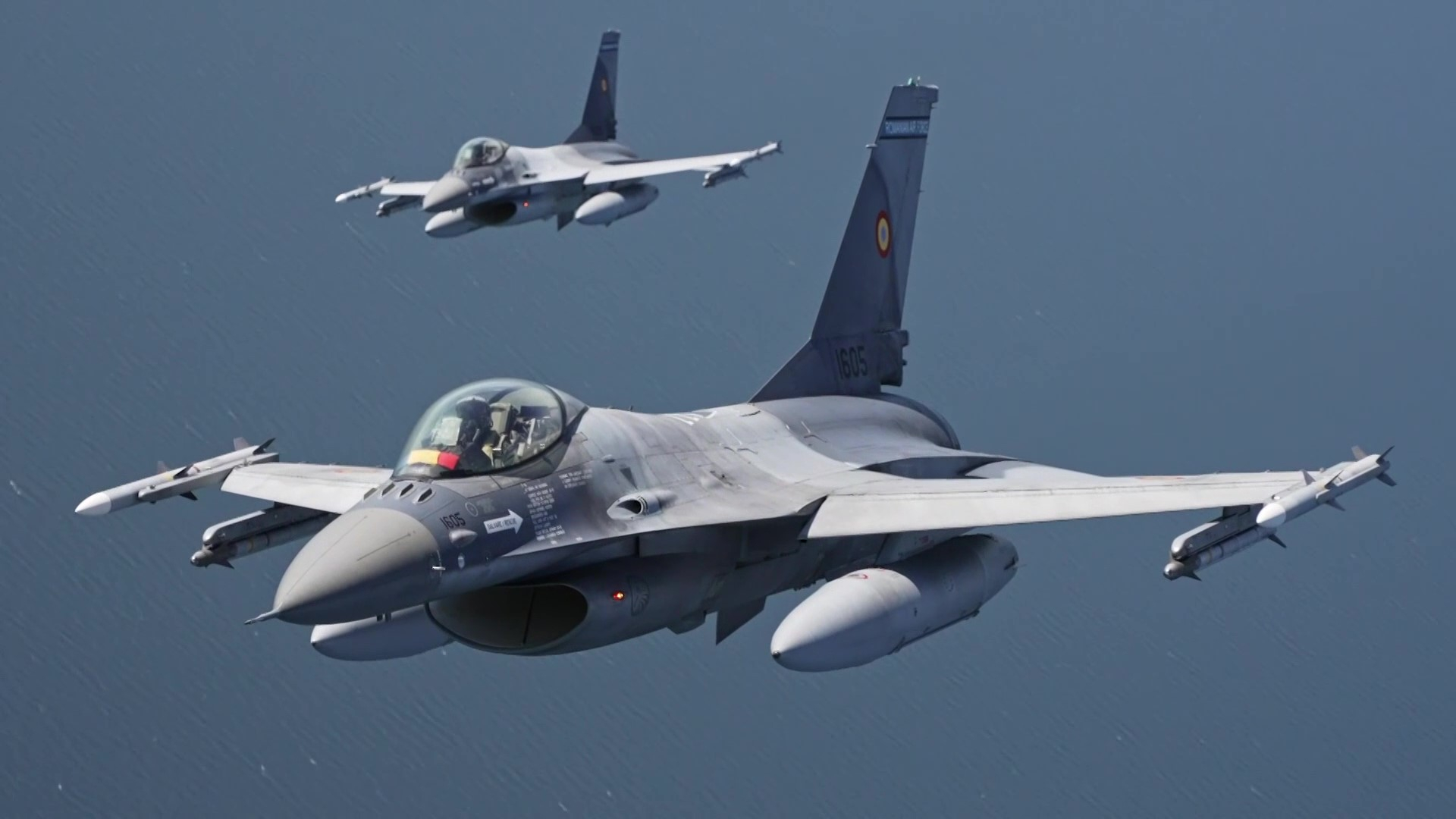
Romania shoots down drones: two Romanian Air Force F-16s on NATO air-policing duty destroyed two drones over Romania's Black Sea territorial waters off Sulina on Saturday, October 17 — the first in two minutes, the second in five — days after drone strikes on chemical tankers anchored by the Danube's mouth left seven sailors missing.
Sulina / Two minutes for the first drone, five for the second — a NATO ally stops just watching them cross and starts shooting them down
Track it live: follow this conflict and the wider Black Sea front on the Signal Post News Live Global Wars Tracker and the Ukraine war map.
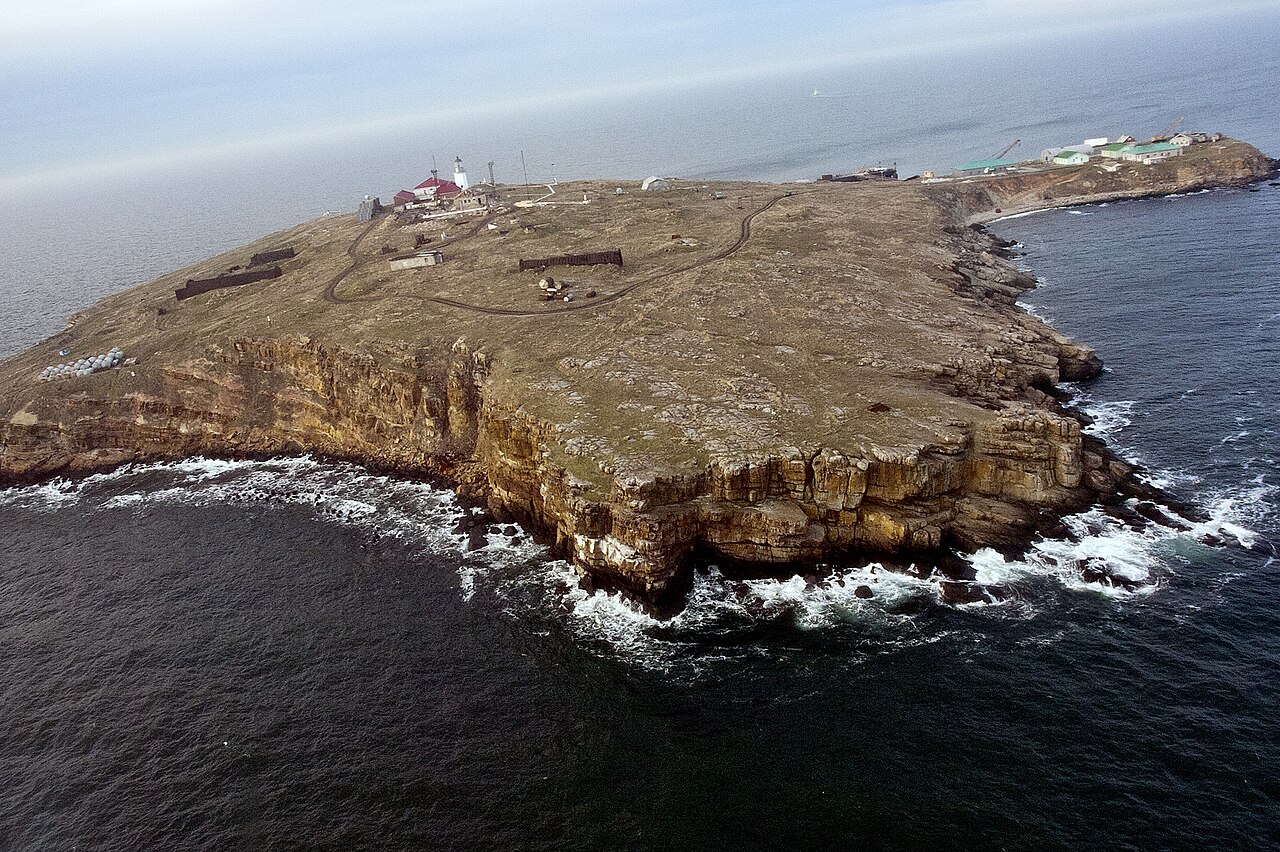
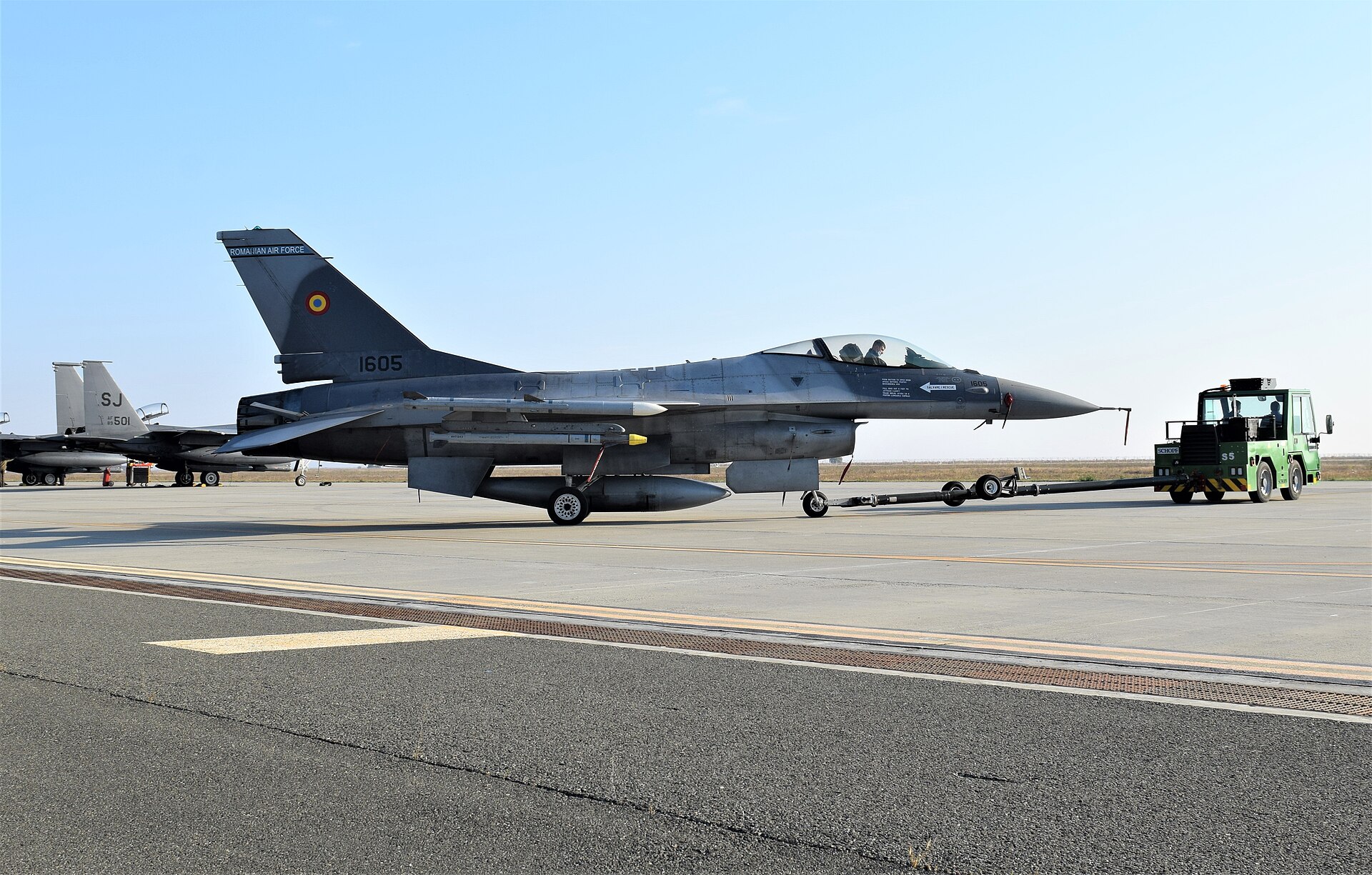
SULINA, Romania — The timeline the Defence Ministry published is short enough to read as a stopwatch. At 17:43 local time on Saturday, radar surveillance detected a group of aerial targets about 120 kilometres east of Snake Island, heading southwest toward Romania's coast, and two F-16s on air-policing duty scrambled from Borcea. At 17:59 the first target entered Romanian airspace; at 18:01 one of the F-16s shot it down, about 25 kilometres southeast of Sulina. At 18:01 a second target crossed in; at 18:05 the other F-16 destroyed it, about 20 kilometres east of Sulina. Both kills were over Romanian territorial waters. Defence Minister Radu Miruță announced the interceptions on Facebook — "the first drone was shot down within 2 minutes," he wrote, adding: "Nothing we have worked for so far is in vain!" The ministry said the pilots identified both targets as drones before engaging, and that further details would follow once the mission was complete. It did not say which weapons were used.
What the ministry said — and what it did not say
The attribution needs care, because the official statements came in two steps. In its first account, carried by Reuters, the ministry confirmed the two shootdowns and the entry times — 14:59 and 15:01 GMT — but did not specify the drones' origin. In a later update, reported by defence trade coverage of the ministry's statement, the targets were identified as jet-powered attack drones of the Geran family. Geran is the name under which Russia produces its Iranian-designed Shahed-type one-way attack drones, including the faster jet-powered variants now used in large numbers against Ukrainian cities and energy sites — so the identification points toward Russia without the ministry, in the statements reviewed, saying the word. Moscow had issued no response to the shootdowns in the reporting available on Saturday night. That gap matters: Romania is a NATO member, the drones were destroyed inside its airspace over its own waters, and how Bucharest and the alliance choose to characterise the incident — spillover, probing, or attack — will shape what happens next.
The week that led to live fire
Saturday's interceptions did not come out of a clear sky. Earlier in the week, two chemical tankers anchored near the Sulina Canal — the dredged Danube outlet that carries much of Ukraine's seaborne export trade — were hit by drones; a NATO military source told Reuters the tankers were struck by Russian drones, and Romanian officials were still searching for seven missing crew members on Saturday. Signal Post News covered the opening of that sequence on October 14, when the Comoros-flagged tanker Yara J caught fire at anchor off Sulina and F-16s scrambled twice in a single day as drones breached Romanian airspace. The pattern extends well beyond Romania: Reuters reported at least five other cargo ships hit near the coasts of Romania and neighbouring Bulgaria in the past ten days, with 23 sailors reported dead or missing — most of those incidents outside NATO territorial waters. Romanian surveillance had also tracked aerial targets near the border repeatedly during the week; one summary of the ministry's reporting counted eight occasions on which targets were tracked in Ukrainian airspace near the frontier, with drones briefly crossing into Romanian airspace in four of them without being engaged. Saturday was the day the crossing drones were engaged.
Moldova, the neighbour without fighters
The same spillover is landing on the other side of Romania's northeastern border, on a country with no comparable way to answer it. Reuters reported that a new drone crashed in a northern district of Moldova on Saturday, near the Ukrainian border — no casualties and no damage, with specialists still working to determine its origin. That followed an extraordinary Thursday and Friday in which five drones Moldovan authorities identified as Russian fell on Moldovan territory in a little more than 17 hours, lightly injuring one person and causing minor damage. Moldova's foreign ministry condemned the incidents as a threat to citizens' safety and a direct consequence of Russia's war against Ukraine, and summoned Russia's ambassador, Oleg Ozerov, again. Russia's side of that argument is also on record: the Kremlin accuses President Maia Sandu's pro-European government of pursuing hostile policies, and spokesman Dmitry Peskov said this week that better ties were possible only if Chisinau abandoned what he called policies based on "Russophobia." Two small states on Ukraine's western border are thus absorbing the same drone traffic — one shooting it down with NATO-standard fighters, the other documenting the wreckage and summoning an ambassador.
Why this matters
The significance is not the two drones — it is the threshold. Romania shares a 614-kilometre border with Ukraine, much of it along the Danube, and has recorded drone incursions since the first year of the full-scale invasion; as of early October, officials counted 84 Russian drone attacks on targets in Ukraine near the border this year and 30 unauthorised incursions into Romanian airspace or maritime territory. For most of that period the response was procedural: scramble, monitor, issue a RO-ALERT warning to border residents, recover fragments, protest. Romania began shooting down intruding drones earlier this year, and the first engagements over Romanian territory were reported in July. Saturday's pair of kills is different in kind, not just degree, for three reasons. First, timing: the jets fired in the middle of an active maritime crisis, days after tankers burned at anchor in Romanian waters — this was air defence of a coastline under pressure, not tidying up a stray. Second, the target type: jet-powered Geran-family drones are faster and give defenders minutes, not tens of minutes; destroying both within two and five minutes of entry shows the alert posture at Borcea is built for exactly that compressed problem. Third, geography: Sulina is not an empty stretch of sea. It is the hinge between the Danube and the Black Sea, the route Ukrainian grain and cargo must use while Odesa operates under attack — which is why drones near Sulina are simultaneously a sovereignty problem for Romania, a trade problem for Ukraine, and an insurance problem for every shipowner deciding whether the route is still worth sailing.
Both sides: deterrence, or escalation by increments?
The case for firing. Bucharest's argument, voiced by Miruță's "nothing we have worked for is in vain," is that an airspace that is never defended stops being defended in any meaningful sense: each unanswered crossing teaches the sender that NATO's border is a reporting line rather than a line. Shooting down unmanned intruders over your own territorial waters is, on this view, the minimum credible act of sovereignty — proportionate, defensive, and aimed at machines, not people. It also protects the shipping the drones are plausibly hunting: with seven sailors still missing from the tanker strikes, the cost of another unengaged drone is not abstract.
The case for caution. The counter-argument is about accumulation, not this single engagement. Every shootdown normalises live fire by a NATO state against Russian-produced weapons a few dozen kilometres from an active war; wreckage, a misjudged target, or a drone that turns out to be something else could convert a defensive act into a crisis neither side scripted. Sceptics also note the asymmetry Saturday exposed rather than solved: fighters costing tens of thousands of dollars per flying hour, firing missiles worth far more than their targets, are a workable answer for two drones and an unworkable one for two hundred. And the attribution gap in the ministry's first statement cuts both ways — Bucharest identified a Russian-produced drone family while stopping short, in that statement, of accusing Moscow outright, leaving room for the diplomatic track that incidents like this usually travel in parallel.
What is established, and what is not. Established, by the ministry and Reuters: two drones entered Romanian airspace over the Black Sea on Saturday evening and two Romanian F-16s destroyed them over territorial waters, at the times and places above. Reported, with attribution: that the drones were jet-powered Geran-family aircraft (the ministry's later identification, per defence trade coverage). Not established: who launched them, what their target was, and whether Moscow will acknowledge, deny or ignore them. This article reports each element at the level of evidence available.
What happens next
The immediate watchpoints are institutional. Reporting on Saturday indicated the Black Sea drone incidents will be taken up at NATO level — the North Atlantic Council is the alliance's standing forum for exactly this class of problem, and Romania's experience is now the sharpest version of a question every eastern-flank ally faces: how many alert fighters, radars and missiles does it take to police a border against cheap, fast, expendable drones? The second watchpoint is maritime: whether shipowners keep sending tankers and bulk carriers to anchor off Sulina while seven of their colleagues are missing, and at what insurance price, will measure the shipping crisis more honestly than any communiqué. The third is repetition. Romania tracked targets near its border eight times in the week before it fired. If the crossings continue at that tempo, Saturday will not be remembered as an incident but as a policy — the point at which the war's western edge acquired a standing air battle, fought two minutes at a time.
Sources: Reuters via gCaptain, Oct. 17, 2026 (shootdowns, GMT entry times, tanker strikes and seven missing crew, five other ships hit / 23 sailors dead or missing in ten days, Moldova drone crash, 614-km border, Romania began shooting down drones earlier this year); Romanian Ministry of National Defence statement via Defence Industry Europe, Oct. 17, 2026 (17:43 Borcea scramble, 120 km east of Snake Island, 17:59/18:01 entries, 18:01/18:05 shootdowns, Geran-family identification in the ministry's later update); LaPresse, Oct. 17, 2026 (Defence Minister Radu Miruță's Facebook announcement; 25 km southeast and 20 km east of Sulina); Reuters, Oct. 16, 2026 (five drones in 17 hours in Moldova, one lightly injured, foreign ministry statement, Ozerov summons, Peskov remarks); Ukrinform via Bytes Europe, Oct. 14, 2026 (84 near-border drone attacks and 30 incursions counted as of Oct. 3; Oct. 14 Sulina scramble). Verification note: the core shootdown facts are carried by Reuters and by the Romanian Defence Ministry's own published timeline, and the minister announced the interceptions publicly the same evening; the Geran-family identification is attributed to the ministry's later update as reported by defence trade coverage, and no Russian response had been reported at publication. Related on Signal Post News: Romania tanker fire: Yara J burns off Sulina as officials probe possible drone strike · Two ships hit on the Sulina route off Bulgaria · Ukraine War, Day 1697 briefing.