Bulgaria Black Sea drone attack
War / Black Sea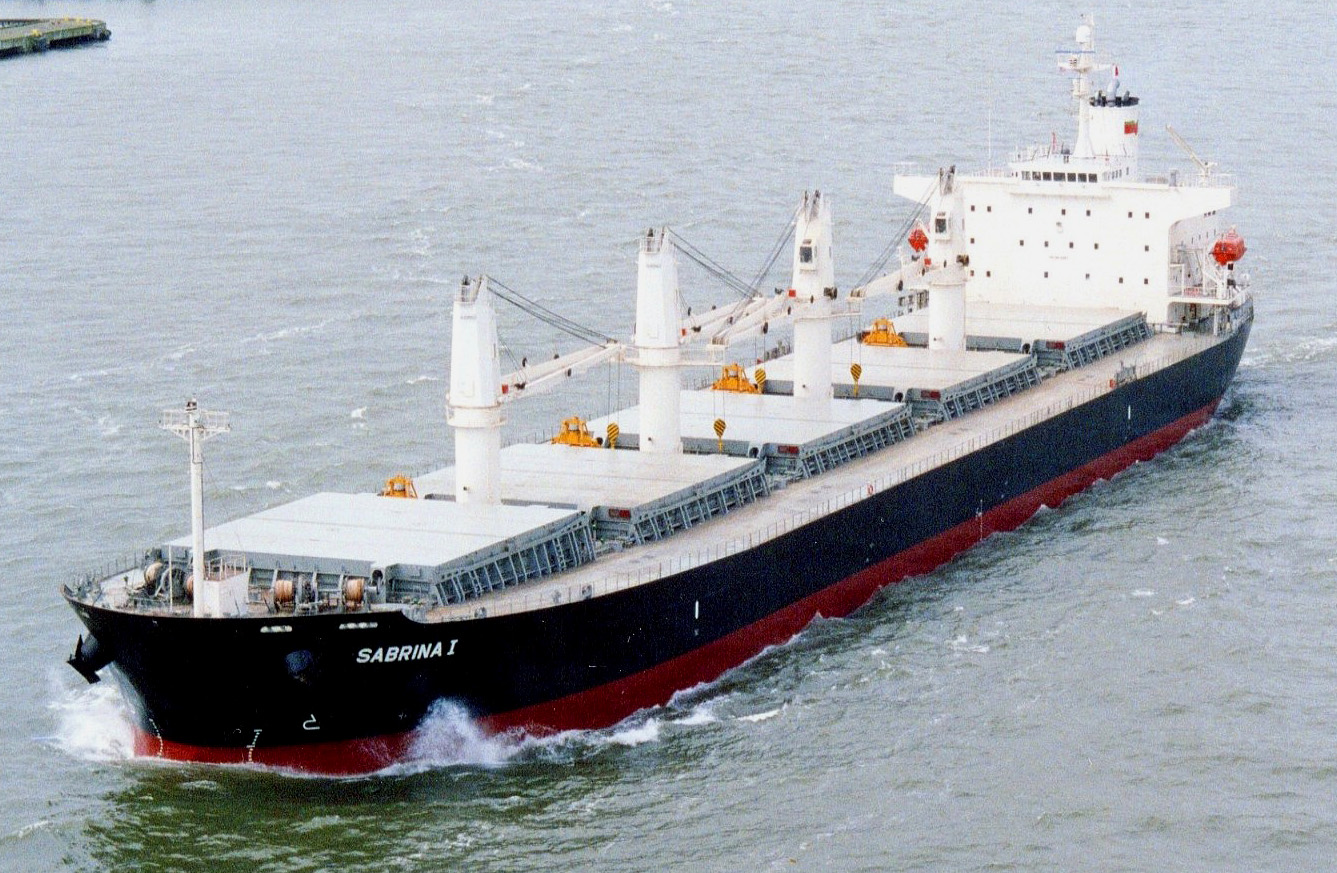
A Bulgaria Black Sea drone attack in the early hours of Tuesday, October 6, 2026, struck two commercial vessels inside Bulgaria's exclusive economic zone, sinking one ship and setting another ablaze. The Togo-flagged Alfa Watan went down with its crew missing; the 18 sailors aboard the Palau-flagged Able were pulled from the water by a passing ferry, two with severe injuries. Shipping sources called it the first such attack in Bulgarian waters — a line that had held through more than four years of war, until this morning.
What happened off Byala
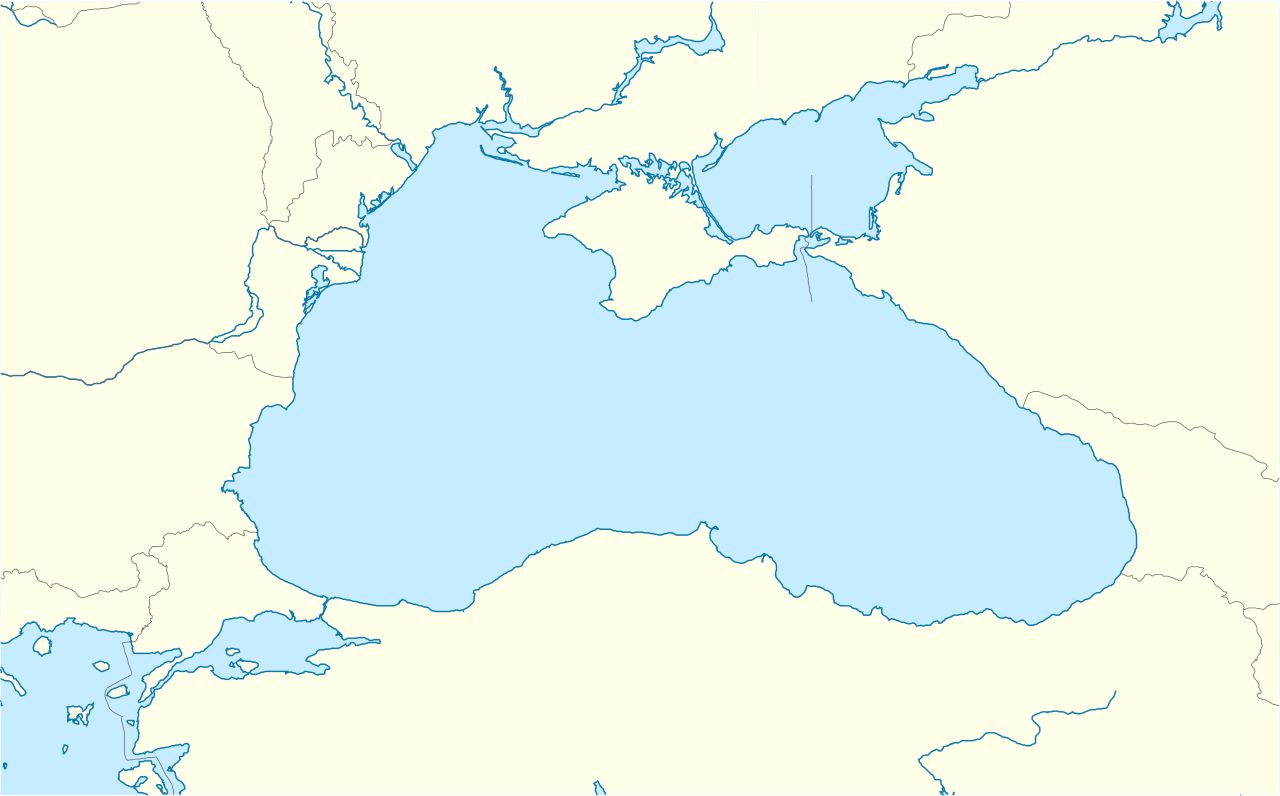
The distress signals went out at around 4:00 AM local time. Two vessels, roughly 112 kilometers — about 70 miles — off the coastal town of Byala and east of Cape St. Athanasius, reported they had been struck by drones, both aerial and naval, according to Prime Minister Rumen Radev. Bulgaria's Maritime Rescue Coordination Center in Varna scrambled a large-scale search-and-rescue operation.
By around 9:00 AM, the Togo-flagged general cargo vessel Alfa Watan had vanished from the Border Police's radar. Rescue teams reaching its last known position found overturned life rafts and floating life jackets — and no survivors. The crew's fate remained unknown as the search continued through the day.
The second vessel, the Palau-flagged Able, caught fire after the strike and was abandoned. Its 18 crew members — 11 Turkish and 7 Indian nationals — were rescued by the Bulgarian ferry Dioscuria, which diverted from its Constanta-to-Varna route to reach them. Two of the rescued sailors suffered severe injuries, including burns, and were flown to hospital; the others received first aid aboard the ferry before being transferred to Border Police vessels and taken ashore at Varna.
Radev convened an emergency meeting of state institutions and gave a televised statement, calling the attack "absolutely unacceptable" and "a flagrant violation of maritime law." Bulgarian authorities also began checking for any environmental threat from the sunken vessel.
Why this matters
Start with the blunt fact: this is the first drone strike on commercial shipping inside the waters of a NATO member state. The Black Sea war has been fought for years with naval drones, sea mines, and strikes on ports — but always, until now, outside the jurisdiction of NATO allies. An exclusive economic zone is not sovereign territory, but it is a zone where the coastal state holds jurisdiction, and an attack on civilian vessels inside it is, as Radev put it, a gross violation of international law.
Three things make this more than another incident report. First, the target set: civilian merchant crews, not warships. The men in the water this morning were Turkish, Indian, and other civilian sailors moving grain and cargo — not combatants. Second, the geography: the strikes happened deep inside the western Black Sea, far from the fighting around Ukraine's coast, in waters used by Romanian, Bulgarian, and Turkish commercial traffic every day. Third, the timing: it came barely a day after a separate deadly ship fire off Romania. Two attacks on civilian shipping in 48 hours looks less like coincidence and more like a campaign. For NATO, the question is now unavoidable: at what point does the war's spillover demand an allied answer at sea? Bulgaria's opposition was already asking it by midday.
The night before: a deadly prelude off Romania
On Monday, October 5, Romanian authorities reported a fire aboard a commercial ship in the Black Sea outside Romania's territorial waters. Two people died; eleven crew were rescued. Ukrainian President Volodymyr Zelenskyy publicly blamed Russian drones for the incident. Russian authorities issued no immediate comment.
The vessel was the Turkish-owned Royad Mammadov, loaded with grain and bound for Italy when it was hit near Romania's offshore platforms — a story Signal Post News covered on October 5. Read together, the two incidents describe a 48-hour pattern: civilian grain carriers, struck by drones, in the western Black Sea, just outside — and now just inside — NATO members' waters. Whether they share an author is unproven. That they share a method is now hard to dispute.
What we know — and don't — about who did it
Radev did not name an attacker. In his televised statement he made a pointed reference to Russia's war in Ukraine: "If this war is not brought to an end in time, it will continue to expand its geographical scope and increase the risk of even a global conflict," he said. "We are seeing the war intensify, with all the rules of international law now being violated and civilian vessels being attacked at sea." A maritime security source told Reuters that initial assessments suggested the strike had "probably" been a Russian attack. Zelenskyy, for his part, has already blamed Russian drones for Monday's Romania incident. Russia has not commented on either.
Here is where a serious reader should slow down. "Probably" is not proof, and the sea keeps its secrets: no drone debris has been publicly recovered, no radar tracks published, no group or government has claimed responsibility. The circumstantial case — the pattern of Russian drone operations in the Black Sea, the timing, the target profile — is real and worth reporting. It is not the same as an established fact, and Bulgaria's own prime minister chose his words with visible care. The honest position this morning: the evidence points in a direction, but the investigation has barely begun. Anything more certain would be speculation dressed as reporting.

Who gains, who loses
Start with who gains. If the strikes were deliberate — and two ships hit within minutes of each other, at 4 AM, by air and sea drones, does not read as an accident — the beneficiary is whoever wants deniable pressure on NATO's southeastern flank. A campaign against civilian shipping achieves several things at once: it raises the cost and risk of using the western Black Sea, it tests how NATO responds when the provocation stops just short of an armed attack on a member state, and it injects fear into the grain trade without a single missile landing on allied soil. Deniability is the point: below the threshold of Article 5, above the threshold of ignorable.
Now who loses. The most immediate losers are the crews and their families — civilian sailors from Turkey, India, and elsewhere who signed on to move cargo, not to be targets. Then the shipowners: both vessels were Turkish-owned, and Turkish operators now face the sharpest risk calculation in the Black Sea. Then the insurers: war-risk premiums for the western Black Sea will be repriced within days, and those costs flow straight into freight rates. Then the grain importers — Egypt, the Middle East, and North Africa among them — who depend on Black Sea wheat and corn moving reliably. And then Bulgaria itself, which must now police an economic zone that has become a shooting gallery, with a tourist coast at Varna and an EU/NATO reputation as a safe corridor suddenly in question.
The critics' case writes itself too. Bulgaria's opposition accused Radev of pulling his punches: Ivaylo Mirchev, co-leader of the Yes, Bulgaria party, charged that when intelligence pointed at Russia, "suddenly the source of the attack disappears from his statement" — while Radev speaks loudly when a drone is Ukrainian. Opposition parties demanded the Consultative Council for National Security be convened and a formal NATO Article 4 consultation requested. The counter-argument, and it deserves air: a prime minister who names Russia before the forensics are in risks escalating a crisis on the basis of an assessment, not evidence. Both positions are defensible; neither is costless.
What the numbers actually mean
A few figures deserve a closer look. 112 kilometers. That's how far offshore the strikes occurred — comfortably inside Bulgaria's 200-nautical-mile exclusive economic zone, but well outside its 12-nautical-mile territorial sea. The legal distinction matters: Bulgaria doesn't hold sovereignty in the EEZ the way it does in territorial waters, but it does hold jurisdiction, and merchant vessels of any flag enjoy freedom of navigation there. An attack on them is unlawful regardless of the zone. The political distinction matters more: this happened under a NATO ally's watch, not in contested waters.
Five hours. Distress signals at around 4 AM; the Alfa Watan gone from radar by around 9 AM. A modern cargo ship does not vanish in five hours from a minor incident — whatever hit it was catastrophic.
18 rescued, 2 severely injured, and an undisclosed number missing. The Able's full complement survived thanks to a ferry that happened to be nearby. The Alfa Watan's crew — Bulgarian authorities have not said how many were aboard — may not have been so fortunate. When rescuers find only life jackets, hope narrows fast.
Two attacks in 48 hours, the first ever in Bulgarian waters. The Red Sea offers the closest parallel: the Houthi campaign against shipping drove war-risk premiums to multiples of their peacetime levels and forced rerouting around Africa. The Black Sea has no Cape of Good Hope alternative — cargo either transits the Bosphorus or it doesn't move. That chokepoint geography is exactly what makes even a small drone campaign disproportionately powerful here.
Three scenarios for what happens next
Scenario one: containment. The search concludes, the investigation produces no public attribution, NATO issues a statement of concern, insurers add a temporary surcharge, and shipping continues — warier, better escorted, but moving. This is the outcome everyone in Brussels and Sofia will be working for.
Scenario two: the Article 4 path. Bulgaria requests NATO consultations — a formal step short of collective defense that says "we consider our security threatened." NATO responds with stepped-up maritime surveillance: more patrol aircraft over the western Black Sea, possibly a standing naval presence, intelligence-sharing on drone launches. Insurers reprice the whole western basin. This scenario already has domestic momentum in Sofia, and a second strike within days makes it hard for the alliance to answer with words alone.
Scenario three: escalation. Repeat strikes convince owners to avoid the western Black Sea altogether; Ukrainian and Romanian grain exports squeeze through an ever-narrower corridor; wheat and corn prices jump; and each new incident raises the odds of a miscalculation — a NATO warship or aircraft encountering the drones' operators in a live environment. Nobody wants this scenario. Nobody can rule it out either.
Our read: scenario two is the near-term base case. The political logic in Sofia points toward Article 4 consultations within days, and NATO has every incentive to show — to Moscow, to shippers, to its own publics — that an attack inside an ally's economic zone draws a visible allied response. The open question is whether that response deters the next strike or merely relocates it.
What to watch in the coming days
- The search-and-rescue outcome: whether any of the Alfa Watan's crew are found, and the confirmed casualty count.
- Forensics: whether Bulgaria recovers drone debris — the single fastest route from "probably" to proven.
- Sofia's next move: the emergency institutional meeting's conclusions, and whether the Article 4 demand gains traction.
- NATO's answer: statements are cheap; patrols are the signal to watch.
- Brussels: whether Ursula von der Leyen's condemnation — "commercial ships and innocent crews are being targeted, with lives already lost at sea" — turns into EU action on maritime security or sanctions.
- Moscow: Russia's eventual comment, or continued silence, will itself be informative.
- Markets: war-risk premiums and grain futures will price this faster than any communiqué.
The Black Sea has been a war zone for more than four years. This morning, for the first time, it became a war zone inside NATO's waters. Everything that follows — the investigation, the alliance politics, the insurance math — flows from that single, stubborn fact.
Sources
- Reuters, “Drones strike two ships in Bulgaria's Black Sea zone” (October 6, 2026)
- Reuters, “Attacks on civilian shipping in Black Sea are unacceptable, EU's von der Leyen says” (October 6, 2026)
- Radio Bulgaria (BNR), “Drones hit two ships 80 nautical miles off the Bulgarian coast” (October 6, 2026)
- AFP, “Bulgarian PM calls drone attack on ships 'absolutely unacceptable'” (October 6, 2026)
Reporting note: Attribution remains unproven. Confirmed events, official statements and Signal Post News analysis are distinguished throughout the report.