Economy · Markets · Business
The Berkshire Hathaway Q3 earnings 2026 report is two stories at once: a soft quarter, in which insurance dragged operating earnings down 5.8% and net earnings fell 28% as investment gains halved — and a loud statement of intent from new CEO Greg Abel, who more than doubled share buybacks to $9.6 billion in a single quarter after Berkshire repurchased nothing in all of 2025.
Track it live: Live markets tracker
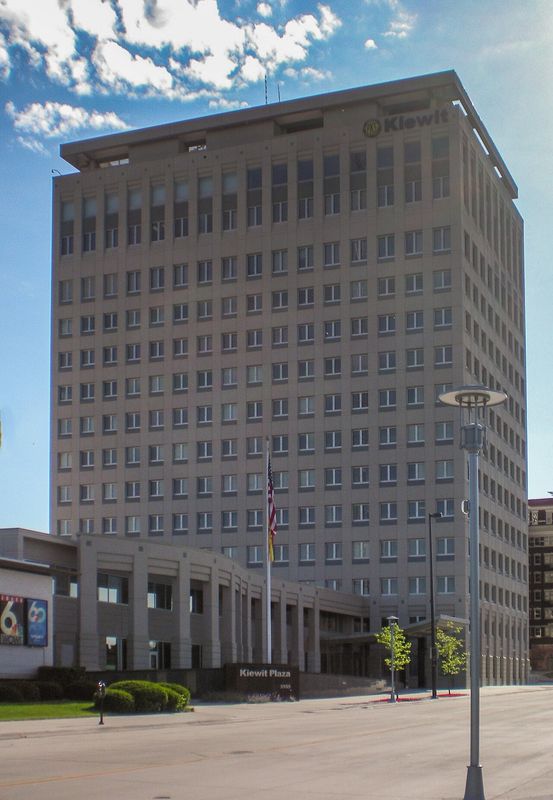
OMAHA, November 8, 2026 — Berkshire Hathaway reported third-quarter results on Saturday, November 7, that would have looked unremarkable in any other year and look significant in this one, because of whose signature is effectively on them. Operating earnings fell 5.8% to $12.71 billion, from $13.49 billion a year earlier — about $8,954 per Class A share. Net earnings fell 28% to $22.11 billion, as investment gains halved to $9.4 billion from $17.3 billion. Revenue, the number that measures the sprawl of the underlying businesses rather than the mood of the stock market, rose 11% to $105.65 billion — a second straight quarter of double-digit growth.
The quarter is Greg Abel’s third as chief executive, and the first earnings report since the September 18 succession formalised the post-Buffett era: Warren Buffett as chairman emeritus, his son Howard G. Buffett as chairman, and Abel, 64, running the company. What Abel did with the cash is the report’s clearest signal. Share repurchases accelerated to $9.6 billion in the third quarter — more than double the second quarter’s $4.5 billion — with roughly $2 billion more in October, taking buybacks for the first nine months to $14.4 billion, after zero buybacks in 2025. The cash and Treasury-bill pile still stands at about $377 billion.
Inside the quarter: insurance down, railroad up
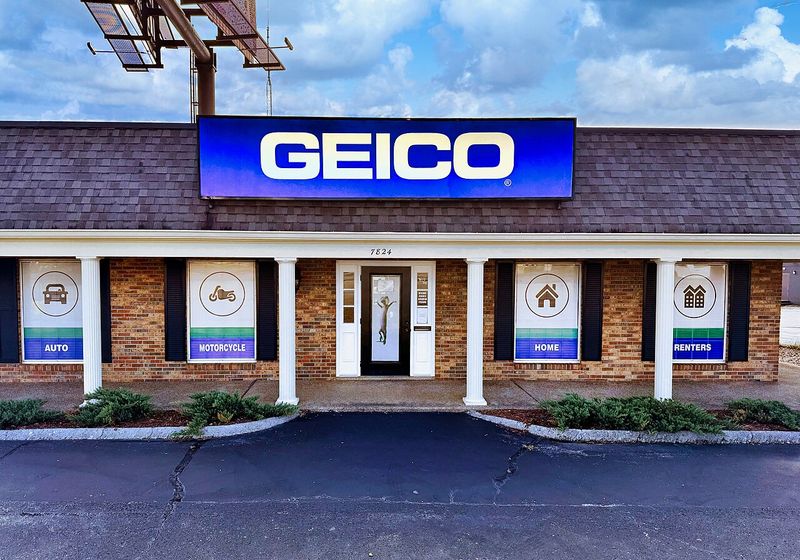
The operating decline has one main address. Insurance profit fell 26%, and underwriting profit fell 43% to $1.35 billion, as the pricing tailwinds that flattered recent years faded and claims costs bit. GEICO, the group’s car-insurance flagship, saw pretax profit fall 45%, with a loss ratio of 76.6% — the share of premiums paid out in claims — signalling that the margin repair job of the past two years is not finished. Insurance has historically been Berkshire’s engine, supplying both profit and the float that funds everything else; a quarter in which it contracts this sharply pulls the whole operating line with it.
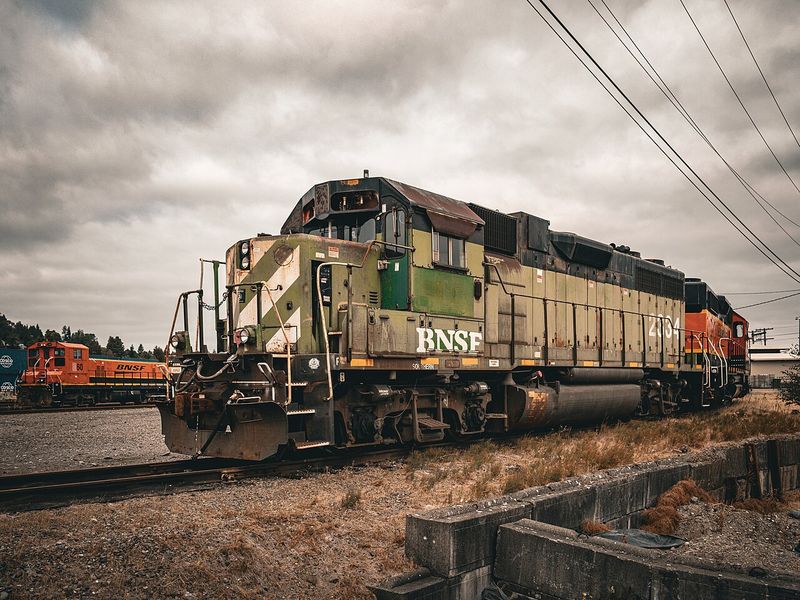
The offset came from the industrial side. BNSF, the railroad Berkshire bought outright in 2010, lifted earnings by about 19%, a reminder that the conglomerate’s non-insurance businesses — rail, energy, manufacturing, retail — can carry a quarter when the underwriters cannot. The mixed picture extends to the consumer names: Berkshire noted declines at businesses such as Fruit of the Loom and Forest River even as group revenue grew at a double-digit pace for a second consecutive quarter. And the nine-month view softens the quarterly one: operating earnings for the first nine months are still up 8% year on year, at $37.03 billion.
Background: the succession this report belongs to
Berkshire’s earnings used to be read as a proxy for Warren Buffett’s judgment. Since January, they are read as a proxy for his successor’s. Abel, a Berkshire insider of more than two decades who ran the non-insurance businesses, inherited three questions no quarterly number can dodge: what to do with a cash pile approaching $377 billion, whether the buyback — suspended through 2025 while Buffett judged the shares fully priced — would return, and whether an operator rather than an investor would run the conglomerate differently. As Signal Post News reported when the repurchase programme restarted, the buyback’s return was itself the first answer; Q3’s acceleration is the second.
The comparative data frames the shift. In 2025 Berkshire bought back no shares at all — a full calendar year of restraint that was itself a valuation statement. In 2026 the taps have opened progressively: $4.8 billion across the first half on the company’s disclosures, $4.5 billion of that in Q2, then $9.6 billion in Q3 and about $2 billion more in October. Meanwhile the earnings mix rotated the other way: investment gains, $17.3 billion in last year’s third quarter, contributed $9.4 billion this time — the mechanical reason net earnings fell 28% even as revenue grew 11%. Berkshire has warned for decades that net earnings, swollen or shrunk by unrealised portfolio moves, are the least informative line in its accounts; this quarter is the textbook case.
Who gains, who loses, who is sceptical
Shareholders who stayed gain twice over: a shrinking share count lifts each remaining holder’s claim on the same earnings, and the buyback pace sets a soft floor of demand under the stock. Sellers — including, in effect, anyone who exited during the 2025 freeze — sold into a market without Berkshire’s bid, and now watch the company buy aggressively at prices its previous management let pass.
Insurance management owns the quarter’s problem. A 43% fall in underwriting profit and GEICO’s 76.6% loss ratio will sharpen questions about pricing discipline across US auto insurance, where competitors face the same claims inflation. Abel himself gains room: nine-month operating earnings up 8% give him a respectable first-year ledger, and decisive capital deployment answers the “operator or caretaker” question in the way markets most easily price.
The sceptics make two points. Buybacks at this scale are also an admission: with $377 billion in cash and T-bills, the opportunity Abel ranks highest is Berkshire itself, which says something unflattering about the price of everything else. And a conglomerate whose net earnings can fall 28% on portfolio marks remains, for critics, a leveraged bet on US equities wearing an industrial costume. Both readings are available in the same 10-Q — which is rather the point of Berkshire’s disclosure philosophy.
Why this matters
The buyback is the succession’s first real policy
Personnel changes are announced; policies are revealed in cash flows. Abel’s acceleration from $4.5 billion to $9.6 billion a quarter — $14.4 billion in nine months against zero in the whole of Buffett’s final full year — is the earliest hard evidence of how the new regime prices Berkshire’s own shares and how it intends to shrink the cash mountain: steadily, and into its own stock, rather than in one headline acquisition. For a company whose annual meeting has turned into a referendum on succession, that is the datum long-term holders will quote.
Insurance is the swing factor for 2027
Berkshire can buy back stock through an insurance downturn, but it cannot out-buy one forever. Underwriting profit down 43% and a GEICO loss ratio of 76.6% point to an industry-wide repricing still working through auto lines. If Q4 and the 2027 renewal season restore underwriting margins, the operating line recovers mechanically; if they do not, the market will start asking whether the float machine’s best years were a pricing cycle rather than a permanent edge.
Revenue is quietly contradicting the profit headline
An 11% revenue rise — the second straight double-digit quarter — inside a report headlined by falling earnings is the conglomerate in miniature: dozens of businesses growing into a soft claims year and a quieter stock portfolio. Readers who stop at net earnings will misread this quarter in both directions at once, which is precisely the trap Berkshire’s own release, pointing investors to the full Form 10-Q, exists to warn against. The week’s broader market picture, tracked in Signal Post News’ market coverage, puts the same tension on display index-wide.
What happens next
Three markers will show whether Q3 was a tone-setter or a one-off. First, the buyback pace in the fourth quarter and any disclosure of October-style follow-through: another near-$10 billion quarter would confirm a standing policy rather than a burst. Second, GEICO’s loss ratio and the group’s underwriting result in Q4 — the numbers that decide whether insurance is a drag or a driver in Abel’s first full-year report. Third, the cash line: at roughly $377 billion, even $14.4 billion of buybacks barely dents it, so the acquisition question follows Abel into 2027 whether he invites it or not. Berkshire’s full-year results, due in February, will be the first annual verdict on the succession — and the first set of accounts in six decades that Buffett did not lead.
What do you think — is Abel right to spend the cash pile on Berkshire’s own shares, or should he be hunting a big acquisition? Follow Signal Post News for the Q4 numbers, and share your thoughts below.
Sources
Sources: Berkshire Hathaway Inc., third-quarter 2026 earnings release and Form 10-Q (November 7, 2026); Reuters, “Berkshire Hathaway speeds up stock buybacks, though profit falls” (November 7, 2026), via SRN News. Photos: Wikimedia Commons, as credited in the captions.