Markets · Business · Investing
The two halves of Berkshire Hathaway’s third quarter point in opposite directions, and the contrast is the story. Operating profit fell 5.8 percent, dragged down by the insurance business that has powered the conglomerate for half a century. And in the same three months, Berkshire Hathaway stock buybacks surged to $9.6 billion — more than double what the company spent repurchasing its own shares in the entire first half of the year, with about $2 billion more in the first four weeks of October. Greg Abel, ten months into the chief executive’s job he inherited from Warren Buffett, is putting the most famous cash pile in corporate America to work in the most direct way available to him: buying Berkshire itself.
Track it live: Live markets tracker
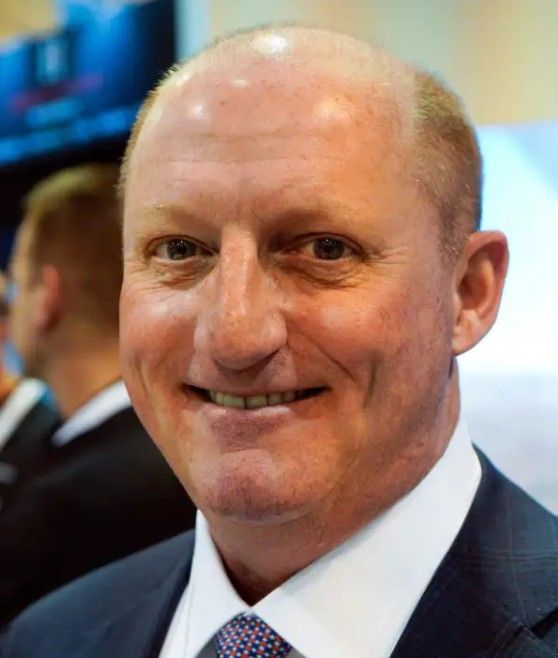
OMAHA, November 7, 2026 — Berkshire Hathaway reported lower third-quarter profit on Saturday, with operating earnings down 5.8 percent to $12.705 billion from $13.485 billion a year earlier, and net earnings down 28 percent to $22.11 billion from $30.796 billion. Revenue, by contrast, rose 11 percent to $105.65 billion. But the figures that will define the quarter in the market’s memory are not the earnings lines. They are the repurchases: $9.6 billion of Berkshire stock bought back between July and September, roughly $14.4 billion across the first nine months of the year, and about $2 billion more in October’s first four weeks. Reuters, reporting the results, put the change plainly: Abel has demonstrated a greater willingness than his predecessor to put the conglomerate’s enormous cash hoard to use.
The quarter in numbers
- Operating earnings: $12.705 billion, down 5.8 percent from $13.485 billion in Q3 2025 — the figure Berkshire itself treats as the truest read on its businesses, since it strips out investment gains and losses.
- Net earnings: $22.11 billion, down 28 percent from $30.796 billion — a decline driven largely by the mark-to-market swings in Berkshire’s huge equity portfolio, which is why the company steers readers to the operating line.
- Revenue: $105.65 billion, up 11 percent year on year.
- Share repurchases: $9.6 billion in Q3 alone, against just over $4.8 billion in the whole first half; about $14.4 billion for the nine months, plus roughly $2 billion more in the first four weeks of October.
- Cash and equivalents: $356.9 billion at the end of September, down from $380.2 billion six months earlier — the hoard is shrinking, deliberately.
- Nine-month operating earnings: $37.03 billion, up 8.0 percent — a reminder that the full year, so far, is stronger than the quarter.
The buyback is the story
To understand why $9.6 billion matters, start with the policy it was spent under. Berkshire’s repurchase programme has no fixed cap and no expiry; it authorises buybacks whenever the chief executive, after consulting the chairman, believes the share price sits below a conservatively determined estimate of intrinsic value. Under Buffett, that test was applied with legendary reluctance — Berkshire went more than a year without repurchasing a share before buybacks resumed in the first quarter of 2026, even as cash climbed past $380 billion and shareholders openly wondered what the pile was for. Under Abel, the same test is producing the opposite answer at scale: the stock, in the new CEO’s judgement, is cheap, and the proof is $16 billion or so of buying in seven months.
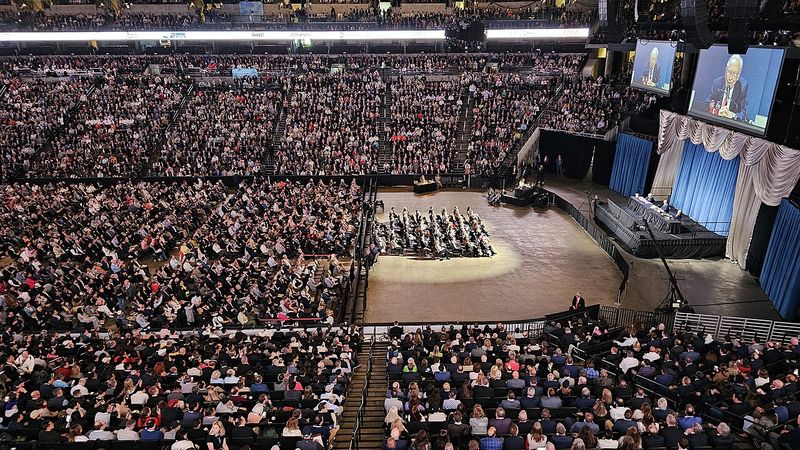
There is an arithmetic elegance to it that Buffett himself taught two generations of investors. Every share retired raises the ownership stake of every remaining shareholder in businesses that throw off enormous cash; at prices below intrinsic value, the buyback is, in effect, Berkshire acquiring a diversified portfolio of companies it knows intimately — its own — at a discount. Abel’s acceleration also carries a signalling weight no press release could match. Chief executives talk about undervaluation constantly. Berkshire’s has now spent $9.6 billion in a single quarter acting on it, and kept buying into October.
Insurance: where the profit went
The earnings decline has a precise address. Insurance underwriting profit fell about 43 percent to $1.352 billion, led by GEICO, where claims costs rose against the premiums coming in — the classic squeeze of an auto insurer whose loss costs outrun its pricing. Insurance investment income, the return on the float that Buffett turned into Berkshire’s acquisition war chest, fell 14 percent to $2.734 billion. Together, the two insurance lines explain most of the operating decline, and they matter beyond the quarter: insurance is the engine that funds everything else at Berkshire, and a 43 percent underwriting drop in a quarter without a landmark catastrophe is a reminder that the engine’s weakest cylinder is currently the one named GEICO. Management’s task into 2027 is the unglamorous one of pricing, claims discipline and repair-cost control — the business Abel’s predecessor spent decades insisting was won or lost on exactly those details.
BNSF cushions the fall
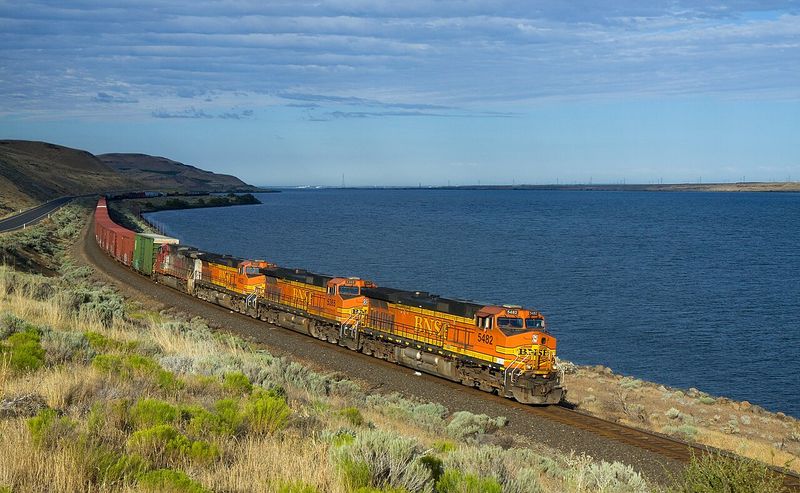
The conglomerate’s breadth did what it is designed to do. BNSF, the railroad that is among Berkshire’s largest operating businesses, lifted its earnings 19.3 percent — a performance that, alongside the rest of the non-insurance portfolio, kept the operating decline to single digits despite the insurance slump. That is the structural argument for Berkshire in one quarter’s data: when underwriting has its worst quarter in some time, a freight railroad’s best efforts can still hold the group line to within 6 percent of a strong prior year, while nine-month operating earnings remain 8 percent ahead. It is also why the buyback signal cuts both ways, as the critics below note: the same diversification that cushions earnings makes Berkshire’s intrinsic value genuinely hard to mark from outside — which is precisely why the CEO’s own buying is watched so closely as a tell.
Winners, losers and critics
Continuing shareholders are the buyback’s intended winners: fewer shares outstanding, a larger claim per share on the same earnings stream, and a management team publicly marking its own stock as undervalued with cash rather than words. Sellers into the buyback got liquidity at prices the CEO judged too low — the permanent transfer at the heart of every repurchase programme. GEICO’s policyholders and rivals sit on the other side of the insurance story: claims costs rising faster than premiums usually end in higher prices across the market, and competitors will read Berkshire’s quarter as permission — or warning — for their own rate filings.
The critics divide into two camps. The first argues deployment discipline: that $9.6 billion a quarter, sustained, still retires the cash pile at a pace of decades, and that Abel has yet to show the elephant-sized acquisition the hoard was supposedly built for. The second argues the opposite — that buying back stock at all, rather than waiting for the dislocations that made Buffett’s reputation, concedes that the opportunity set has shrunk, and that a Berkshire which cannot find better uses for $356.9 billion has answered the growth question by shrinking the denominator. Both camps will claim Monday’s price action as evidence.
Why this matters
Abel’s fingerprint, at last
Succession at Berkshire was designed to be boring, and for two quarters it was. Q3 is the first report in which the new regime is visible in the numbers rather than the org chart: the same policy, the same chairman consulted, the same intrinsic-value test — and a radically different tempo of action. Reuters’ observation that Abel is more willing than Buffett to deploy cash is now a documented fact pattern: buybacks resumed in Q1 after a pause of more than a year, doubled and redoubled by Q3, and continued into October. Whatever else the Abel era becomes, it will not be accused of letting the pile grow by default.
The undervaluation signal
A buyback of this size is also a valuation opinion with money behind it, issued by the one person who sees every Berkshire subsidiary’s books. The policy’s condition — price below conservatively determined intrinsic value — means Q3’s spending is, in substance, a statement that Berkshire’s shares changed hands all quarter at prices its own chief executive considered too cheap. In a market that has spent the year repricing everything from AI capex to insurance risk — the turbulence Signal Post News tracked through the November Wall Street rout and the chips-led rebound that followed — the signal lands with unusual force precisely because Berkshire so rarely sends it.
The $356.9 billion question
And still, the pile. Even after a record deployment quarter, Berkshire ended September holding $356.9 billion in cash and equivalents — down $23.3 billion in six months, yet larger than the market value of most companies in the S&P 500, and earning its keep in Treasury bills while it waits. The strategic question of the Abel era is unchanged by Q3, only sharpened by it: is the cash an option on a future crisis, a permanent liquidity doctrine, or an inheritance Abel intends to spend down toward something merely enormous? The buybacks say he is willing to spend. The remaining $356.9 billion says the spending has barely started.
The numbers in context
Set the quarter against its own year and the picture softens: nine-month operating earnings of $37.03 billion are up 8.0 percent, revenue growth of 11 percent is real, and the net-earnings decline of 28 percent says more about the prior year’s investment gains than about 2026’s operations — which is why Berkshire has spent decades training its readers to watch the operating line. Set it against the market’s year — record highs, an AI-driven concentration, and periodic violent rotations of the kind seen in the Fed’s October decision week — and Berkshire’s quarter reads as what it is: a defensive, cash-generative conglomerate having a mediocre insurance quarter while its CEO buys its stock. The drama is not in the P&L. It is in the treasury.
What happens next
Because Berkshire reports on a Saturday, the market’s verdict arrives on Monday, when Berkshire’s shares trade for the first time since the release — and when investors will judge whether Abel’s undervaluation call is one they share. Later in November comes the quarter’s second document: Berkshire’s 13F filing, disclosing the listed-equity portfolio as of September 30, which will show what else the treasury did in Q3 besides buy Berkshire. Then the questions compound into the new year: whether the buyback pace holds near $9.6 billion a quarter or was a one-quarter statement; whether GEICO’s claims costs bend before pricing catches up; and whether the cash line, having fallen from $380.2 billion to $356.9 billion in six months, keeps falling at that slope — which would still leave Berkshire, at the end of 2027, holding more cash than almost any institution on earth. The succession question that dominated Berkshire for a decade has been answered. Q3 opened the next one: not who runs the pile, but what it is finally for.
What do you think — is Abel right that Berkshire’s own stock is the best bargain available to Berkshire, or should the $356.9 billion wait for a bigger prize? Like, follow Signal Post News for Monday’s market reaction and the 13F when it lands, and share your thoughts in the comments below.
Sources
Sources: Berkshire Hathaway third-quarter 2026 earnings release and Form 10-Q (November 7, 2026); Reuters, “Berkshire Hathaway speeds up stock buybacks, though profit falls” (November 7, 2026); and reporting by CNBC, Bloomberg and the Associated Press on the Q3 results and the Abel succession. Photos: Wikimedia Commons, as credited in the captions.