Economy · Markets · Wall Street
The Nasdaq Composite plunged 5.52% on Thursday — a record 1,422-point loss and its worst day since April 2025 — as the Dow Jones shed 1,833 points, chip stocks fell 12% and trillions in value vanished. One day after celebrating a post-election rally, investors looked at a Democratic sweep of Congress and abruptly repriced the AI data-center boom. By Friday morning, the selling had reached Tokyo and Seoul.
Track it live: Live markets tracker
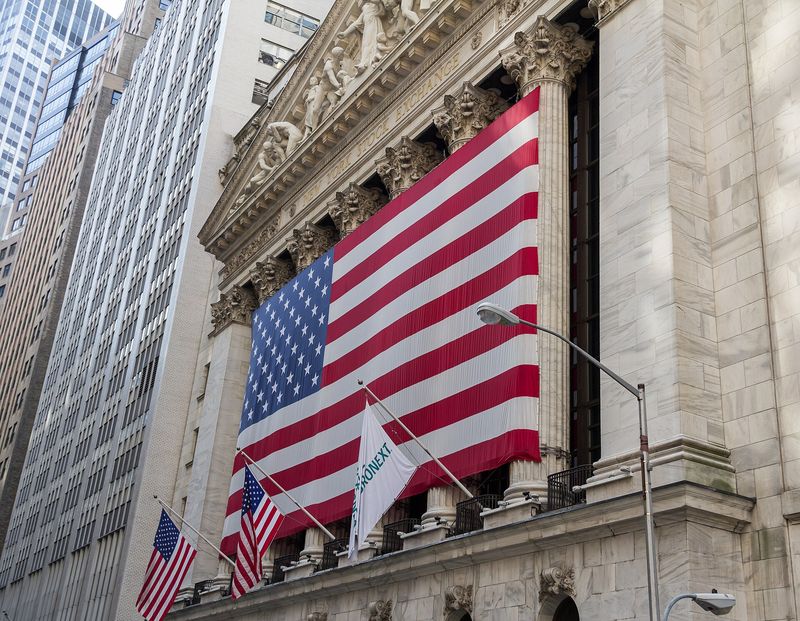
NEW YORK, November 6, 2026 — The Nasdaq correction November 2026 arrived in a single session. On Thursday the Nasdaq Composite plunged 5.52 percent — down 1,422 points, a record point loss — to close at 24,315.00, its worst day in 18 months and the sharpest break yet in the artificial-intelligence rally that carried Wall Street to record highs in October. The S&P 500 falls 4.36 percent on the day to 7,353.73, and the Dow Jones down 1,833 points — 1,833.06, a 3.44 percent fall to 51,523.06 — completed a rout that erased, in roughly six and a half hours, the entire post-election rally investors had cheered the day before. Reuters put the damage to the Nasdaq alone at roughly $2 trillion of market value wiped out; by the New York Post’s tally, S&P 500 companies shed about $2.9 trillion and Nasdaq-listed companies about $2.5 trillion.
The trigger, according to Reuters and the analysts it surveyed, was political as much as financial. Democrats’ sweeping midterm victories on Tuesday — retaking both chambers of Congress — forced investors to reassess the AI data-center buildout at the heart of the bull market: the permitting, the power, the policy support and the valuations. What had been priced as an unstoppable, government-blessed construction boom suddenly had to be priced as a contested one. The result was the Nasdaq worst day since April 2025, when tariff turmoil last produced a selloff of this scale — and a reminder that the market’s most crowded trade is also its most fragile.
The day in numbers
Stock market today, November 5, 2026: the closing tape
Every major measure of the U.S. market fell, and the falls steepened as the session wore on. The Nasdaq Composite’s 5.52 percent decline — the Nasdaq falls 5.5 percent and then some — took 1,422 points off the index, the largest single-day point loss in its history, closing at 24,315.00. The S&P 500 lost 4.36 percent to finish at 7,353.73. The Dow Jones Industrial Average fell 3.44 percent, down 1,833.06 points to 51,523.06. The selling was heaviest exactly where the year’s gains had been richest: the technology sector dropped 7.3 percent, the worst of any sector, as money came out of the AI complex first and asked questions later. At its intraday low, the Nasdaq was down as much as 14 percent from the all-time high it set about a month earlier — deep inside correction territory, and two-thirds of the way to the 20 percent decline that defines a bear market. The VIX, Wall Street’s volatility gauge, jumped into the 27–28 range, a level that says options traders were paying up for protection rather than betting on a quick bounce.
Philadelphia semiconductor index down 12 percent: the chip wreck
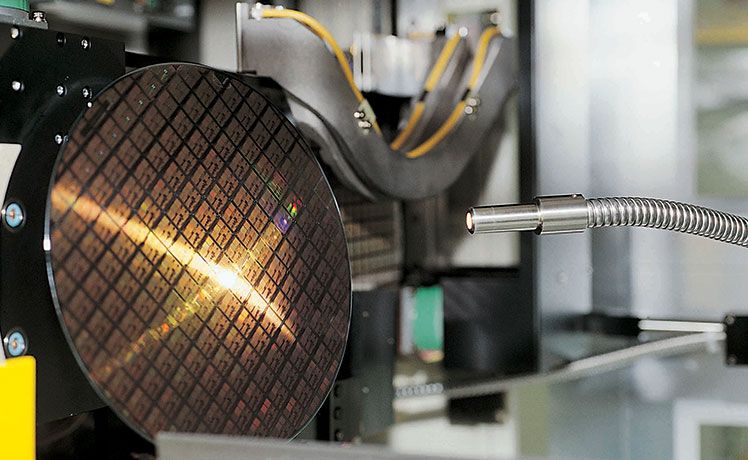
If the indexes tell the story of the day, the chip stocks tell its cause. The Philadelphia semiconductor index fell 12 percent — its second-biggest fall on record — as investors dumped the companies that build the AI buildout. SanDisk plunged 22 percent. Micron, AMD and Marvell each fell about 17 percent. And Nvidia stock falls 9 percent on the day: a single-session decline that, in the market’s largest AI name, would headline almost any other week. The pattern matters. The hardest-hit stocks were not the software names that merely use AI, but the hardware chain that supplies it — memory, processors, networking silicon — the companies whose order books depend most directly on data centers being approved, financed and built on schedule. A selloff that starts in the picks and shovels is a selloff about the digging, not the gold.
From +1,569 to −1,833: the 24-hour reversal
The whiplash is the other essential fact. On Wednesday, November 4, the Dow rallied 1,569.40 points, up 3.03 percent, in a broad post-election rally, as investors initially read the midterm results as market-friendly clarity. Thursday’s 1,833.06-point Dow decline did not merely give that back; it exceeded it by more than 260 points, leaving the index below where it had closed before a single midterm vote was counted. The two sessions together are a study in how a market changes its mind: the same election result was, within 24 hours, first a reason to buy and then the reason to sell. Our stock market report from Tuesday, November 3, when the Nasdaq rebounded and chip stocks rallied as America voted, now reads like a dispatch from a different era — it was three days ago.

Why is the stock market down today? The trigger, as analysts describe it
A Democratic sweep changed the data-center math
The explanation offered by Reuters and by the strategists quoted across Thursday’s coverage is specific, and it is important to attribute it as explanation rather than fact: the election changed the politics of the AI buildout. Democrats’ midterm wins — a sweep that retook both chambers of Congress — landed on an industry already facing growing signs of curbs and permitting pressure on data centers: local fights over power and water, state-level scrutiny of the electricity costs that giant server farms push onto other customers, and a incoming congressional majority with members who campaigned on exactly those questions. None of that stops a single server from being installed. What it changes is the certainty investors had attached to the buildout’s pace — and the AI trade, priced for years of uninterrupted, policy-friendly expansion, is unusually sensitive to certainty. The midterm result was the subject of our earlier coverage of the White House’s plans to govern if Democrats won the midterms; Thursday was the day Wall Street priced the same prospectus.
Stretched valuations met a crowded exit
The second half of the explanation is older than the election. The AI rally that peaked with the Nasdaq’s all-time high about a month ago had carried chip and data-center valuations to levels that assumed the boom would compound for years without a political, financing or demand hiccup. Crowded trades do not need a catastrophe to fall; they need a reason for everyone to head for the same exit at once, and a change of congressional control over the industry’s regulatory future supplied one. That is why strategists describe the day less as a verdict that AI is finished than as a repricing of how smooth its path will be — slower permits, harder questions, more conditions — applied, all at once, to stocks that had priced in none of those frictions.
Why this matters
What a correction means — and what it does not
A correction has a precise definition: a decline of 10 percent or more from a recent peak. The Nasdaq has now satisfied it, with an intraday drawdown of as much as 14 percent from its October high. Statistically, corrections are the normal price of a bull market — the index has passed through them regularly on its way up — and most do not become bear markets, which require a 20 percent fall. But two features of this one deserve weight. First, the speed: a 14 percent drawdown assembled in weeks, capped by the worst single day in 18 months, is not an orderly release of pressure; it is a break, and breaks tend to have aftershocks as leveraged and momentum-driven holders finish exiting. Second, the level it broke from: corrections that begin at all-time highs, in the market’s most valuable sector, reach balance sheets — retirement accounts, pension funds, corporate treasuries — far beyond the traders who started them.
Trillions erased is not just a headline number
The day’s arithmetic of loss — roughly $2 trillion off the Nasdaq on Reuters’ estimate, about $2.9 trillion from S&P 500 companies and $2.5 trillion from Nasdaq-listed firms on the New York Post’s tally — needs one honest caveat and one honest consequence. The caveat: figures like these measure paper wealth at Thursday’s closing prices, and they move if prices recover; the tallies also differ because they measure different universes of companies, which is why this article keeps them attributed rather than merged into one bigger number. The consequence: paper wealth is what 401(k) balances, pension funding ratios and index-fund statements are made of. A 4.36 percent one-day fall in the S&P 500 is the kind of move ordinary savers feel in their quarterly statements even if they never read a market headline — and a 12 percent fall in the semiconductor index signals something paper wealth does not: that investors now doubt the near-term order books of the industry building the AI economy.
The AI buildout now has a political price
The deepest reason Thursday matters is that it repriced a political assumption, not a product. The data-center boom ran on a stack of expectations: cheap and available power, fast permitting, supportive policy in Washington and a Congress content to let construction proceed. The midterm result puts a question mark over the last two, and the market’s answer — the AI stocks selloff, data center names and their suppliers at the front of it — is that the boom’s timeline is now a policy variable. That cuts in both directions, and both are priced into what happens next: if the incoming Congress treats data centers as infrastructure to be conditioned rather than an enemy to be stopped, Thursday may look like a panic spike; if permitting fights and oversight harden into delay, the valuations that returned to Earth on Thursday still have further to fall.
The selloff goes global: Asia follows Wall Street down
The rout did not stop at the U.S. close. On Friday, November 6, Japan’s Nikkei 225 fell more than 7 percent as Tokyo absorbed Wall Street’s losses, The Japan Times reported — the kind of one-day fall that turns a U.S. correction into a global event. In South Korea, the KOSPI plunged 5.28 percent to 5,383.80, with the country’s two chip giants at the centre of the damage: Samsung Electronics fell 7.57 percent and SK hynix fell 9.46 percent, and a sell-side sidecar — a temporary trading curb designed to slow panic selling — was triggered. The Asian tape is the cross-country confirmation of the U.S. story: the epicentre in Seoul and Tokyo was the same semiconductor supply chain that led New York down, because the same question — how fast, and under what political conditions, will the world keep building AI data centers — is now being asked of every market that supplies it.
Who loses, who gains
The losers are easy to list because they are Thursday’s tape. Chipmakers lost most: SanDisk down 22 percent, Micron, AMD and Marvell around 17 percent, Nvidia down 9 percent, and the index that tracks them down 12 percent. Data-center developers and the utilities and landlords contracted to the buildout face the slower, larger loss — a political environment in which projects take longer and cost more to defend. Pension and 401(k) holders lost quietly and broadly: anyone whose retirement savings ride the S&P 500 or the Nasdaq in an index fund took the full index fall, whether or not they own a single AI stock. The incoming Democratic Congress loses something subtler: it inherits a falling market and a shaken growth story on the eve of taking power, which complicates any claim that its victories caused the rout — and gives its opponents that argument ready-made. The Trump administration’s AI agenda loses momentum: a buildout strategy built on speed and scale now has to be negotiated with a Congress that ran against parts of it. The gainers are fewer and mostly relative: investors holding cash or defensive sectors lost less; short sellers and volatility holders profited from the VIX’s jump into the high 20s; and every buyer who believed the AI story but not its prices got the first serious discount since the rally began.
Bulls and bears: healthy reset, or a real risk?
Both readings of Thursday were on the record by the close, and they disagree about the same facts. The bullish case — the reset argument — holds that nothing about AI demand itself was repudiated on Thursday: data centers are still being built, chips are still being bought, and what fell was the price of certainty, not the volume of orders. On this view, a crowded, stretched trade met a political headline, the weakest holders were shaken out in a single session, and a 10–14 percent correction after a run to all-time highs is the market’s normal hygiene — the April 2025 tariff selloff, the last comparable day, was followed by recovery rather than collapse. The bearish case — the policy-risk argument — holds that the repricing is rational and incomplete: if permitting curbs, power fights and congressional oversight genuinely slow the buildout, then the earnings paths capitalised into chip and data-center stocks are wrong, not merely expensive, and a 12 percent one-day fall in the semiconductor index is the market beginning, not finishing, that adjustment. The honest summary is that Thursday’s tape cannot settle the argument, because the argument is about decisions — in Congress, in statehouses, in permitting offices — that have not been taken yet. What the tape does settle is that investors no longer treat those decisions as a formality.
What happens next: Friday’s jobs report and the Federal Reserve
The next test arrives within hours: the U.S. jobs report on Friday. Its role in this story is mechanical as much as economic. A strong report would tell investors the economy underneath the selloff is intact, supporting the reset case and the argument that Thursday was positioning, not prophecy. A weak report would fuse two fears into one — a slowing economy and a politically constrained AI buildout — and invite the question corrections always eventually ask: whether the Federal Reserve will ride to the rescue. The Fed’s likely read cuts against quick comfort. A central bank watching a sector-specific, politically triggered selloff in an economy still generating jobs has little reason to treat a stock-market correction — even a $2 trillion one — as a monetary emergency; its mandate is employment and prices, not the Nasdaq’s distance from its October high. That sets up three scenarios for the sessions ahead. In the first, a solid jobs report and a quiet weekend of political signalling let dip-buyers treat Thursday as the reset, and the indexes reclaim part of the fall. In the second, a soft report or fresh data-center policy headlines extend the correction toward the 20 percent bear-market line, with chips leading down again. In the third — the one strategists quietly consider most likely — the market chops sideways at damaged levels while it waits for evidence: from Congress, from company guidance, and from the next data-center permit fight, about which of Thursday’s two stories was true. Either way, the Wall Street rout after midterms has already done its main work: the AI trade no longer gets to assume Washington. It has to ask.
Related coverage: Stock Market Today, November 3, 2026: Nasdaq Rebounds as Chip Stocks Rally, Dow Slips as America Votes and Trump Says He’ll Become ‘Mr. Veto’ If Democrats Win the Midterms.
Sources
Reuters, November 5, 2026, market wrap — Reuters Markets — the closing index levels and percentage falls, the technology sector’s 7.3 percent decline, the Philadelphia semiconductor index’s 12 percent fall, the roughly $2 trillion wiped off the Nasdaq’s market value, and the analyst account attributing the selloff to a post-midterm reassessment of the AI data-center buildout and stretched valuations.
The Japan Times, November 6, 2026 — The Japan Times — the Nikkei 225’s fall of more than 7 percent on Friday as Asian markets followed Wall Street down.
CNBC, November 5, 2026 — CNBC Markets — corroborating market coverage of the session, including the Nasdaq’s record point loss, the VIX’s rise into the 27–28 range and the reversal of Wednesday’s 1,569.40-point post-election Dow rally.
Fox Business, November 5, 2026 — Fox Business Markets — corroborating coverage of the Dow Jones down 1,833.06 points close at 51,523.06, the individual chip-stock falls (SanDisk, Micron, AMD, Marvell and Nvidia) and the South Korean market follow-through, including the KOSPI’s 5.28 percent fall to 5,383.80, Samsung Electronics and SK hynix, and the sell-side sidecar.
New York Post, November 5, 2026 — the tally of about $2.9 trillion shed by S&P 500 companies and about $2.5 trillion by Nasdaq-listed companies, as cited and attributed in the text above.