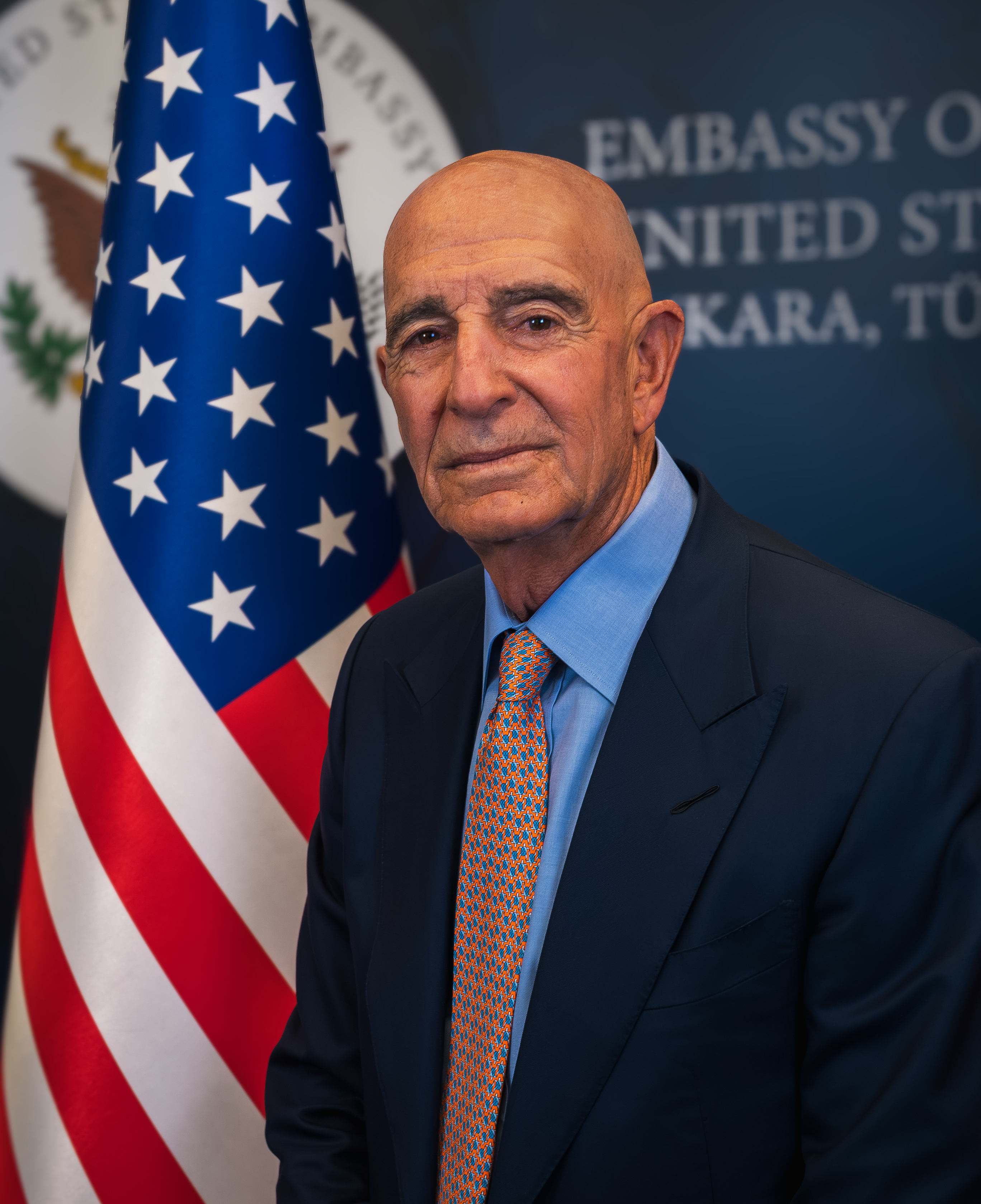
World — Tom Barrack, the US ambassador to Türkiye and Washington’s special envoy for Syria, said on Friday, October 23, 2026, that a US strike on Iran could come as early as this weekend. Hours later, President Donald Trump, asked about his envoy’s words, said he knew nothing about them — on the same day eight foreign ministers meeting in Istanbul warned that any renewed attack on Iran would expand the war, and Trump himself told a Florida rally the US might run “another little Epic Fury.”
Track it live: Iran war tracker, live — Signal Post News
ANKARA — It landed on a podcast, not at a podium. Tom Barrack, the United States ambassador to Türkiye and Washington’s point man on Syria, was visiting the Gulf on Friday when online host Mario Nawfal put the endgame question to him directly: could there be a strike on Iran this weekend? Barrack did not hesitate. “Could there be a strike this weekend? Absolutely,” he said, in an interview a snippet of which aired on Israeli army radio before the full exchange circulated, and which Agence France-Presse then moved from Jerusalem to newsrooms worldwide.
Barrack paired the warning with an open door. “The president is very clear. He’s open and available and accessible to a deal, and we’ve been at the table for months and months and months,” he said, describing the remaining disputes over Iran’s nuclear programme — proliferation and enrichment — as “details, the punctuation in the chapter that needs to be finished.” He also drew a line that separates Washington’s stated position from Jerusalem’s: if Iran keeps threatening the Gulf and US allies, he said, “there will be a consequence. The consequence won’t be regime change.” Iran had issued no direct response to Barrack’s remarks by Friday evening.
The president’s answer: “I don’t know anything about it”
Asked about his ambassador’s comments as he arrived in Florida on Friday, Trump distanced himself from the timetable in a single breath. “He is a powerful man, I guess,” the president told reporters. “If that’s the case, I don’t know anything about it.” The exchange, captured on video and carried by multiple outlets, left the administration’s public position describing two different wars at once: an envoy in the Gulf saying strikes could begin within days, and a president saying the idea was news to him.
The same afternoon, at a rally in Fort Myers, Trump supplied a third version. “We may do another little Epic Fury,” he said, using the US military’s name for its war against Iran, while also musing on the South Lawn earlier Friday that Washington could end the war quickly or simply let it “wither” — a choice he pointedly left open, as Signal Post News reported in its account of Trump’s finish-it-or-wither remarks. What none of Friday’s versions matched was the position Trump himself set out earlier this month, reported by Reuters: that the United States would not launch an attack on Iran before the November 3 midterm elections, while Washington and Tehran held what he called productive talks.
Why this matters
An ambassador’s podcast answer would normally be a footnote. This one matters because of everything stacked around it. First, the calendar: a strike “this weekend” means October 24–25, four days before Israelis vote on Tuesday in their first election since the October 7, 2023 Hamas attacks, and ten days before the US midterms that Trump has repeatedly tied to the price of fuel. Second, the contradiction itself is information. When the envoy, the president and the White House’s earlier no-strike-before-the-midterms line all describe different timelines on the same day, allies, adversaries and markets have to price every version at once — and on Friday, markets did: Brent crude pushed to $117.45 a barrel in New York trading, its highest since April, before settling at $116.72, according to Guardian market reporting, with analysts tying the rise to fears of a renewed US–Israeli campaign and thinning global inventories.
Third, Barrack’s caveat cuts both ways. He is a longtime friend and business partner of the president, which is why his words moved wires and oil — but he holds no direct role on the Iran file, which is why the White House could disown the timing without disowning the man. A signal that can be denied is a classic instrument of pressure: Tehran hears the threat, Washington keeps the deniability, and the deal Barrack described — months at the table, only “punctuation” left — stays on offer as the alternative. Whether Friday was choreography or improvisation is precisely what Tehran, Jerusalem and the Gulf capitals now have to guess, at the worst possible moment to guess wrong.
The military backdrop: rehearsals, tankers and a carrier
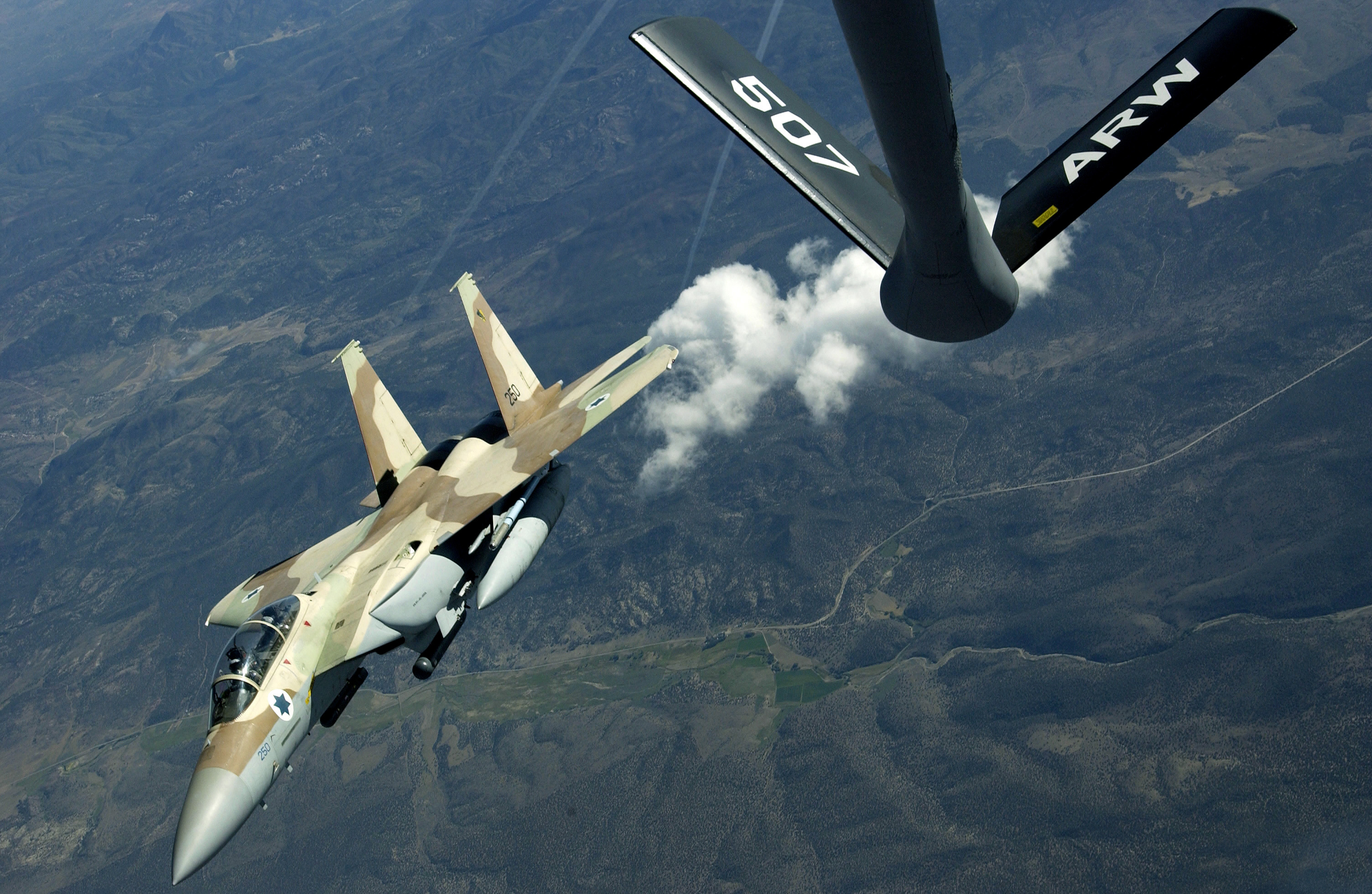
The rhetoric is arriving on top of visible movement. Axios reported on Wednesday that dozens of Israeli fighter jets and refuelling aircraft flew through Syrian and Iraqi airspace on Monday, extending some 800 miles from Israel toward Iran’s border, in what Israel described to Washington in advance as a training exercise for “power projection” and deterrence ahead of Israel’s elections. The sorties followed a surprise trip to Israel earlier in the week by US Defense Secretary Pete Hegseth, who met Prime Minister Benjamin Netanyahu to discuss new plans to attack Iran, according to the New York Times. The Times reported on Wednesday that the US and Israeli militaries have developed specific plans for renewed strikes after the US midterms — a short, intensive operation of three to five days against Iran’s energy infrastructure, nuclear facilities and missile and drone arsenal.
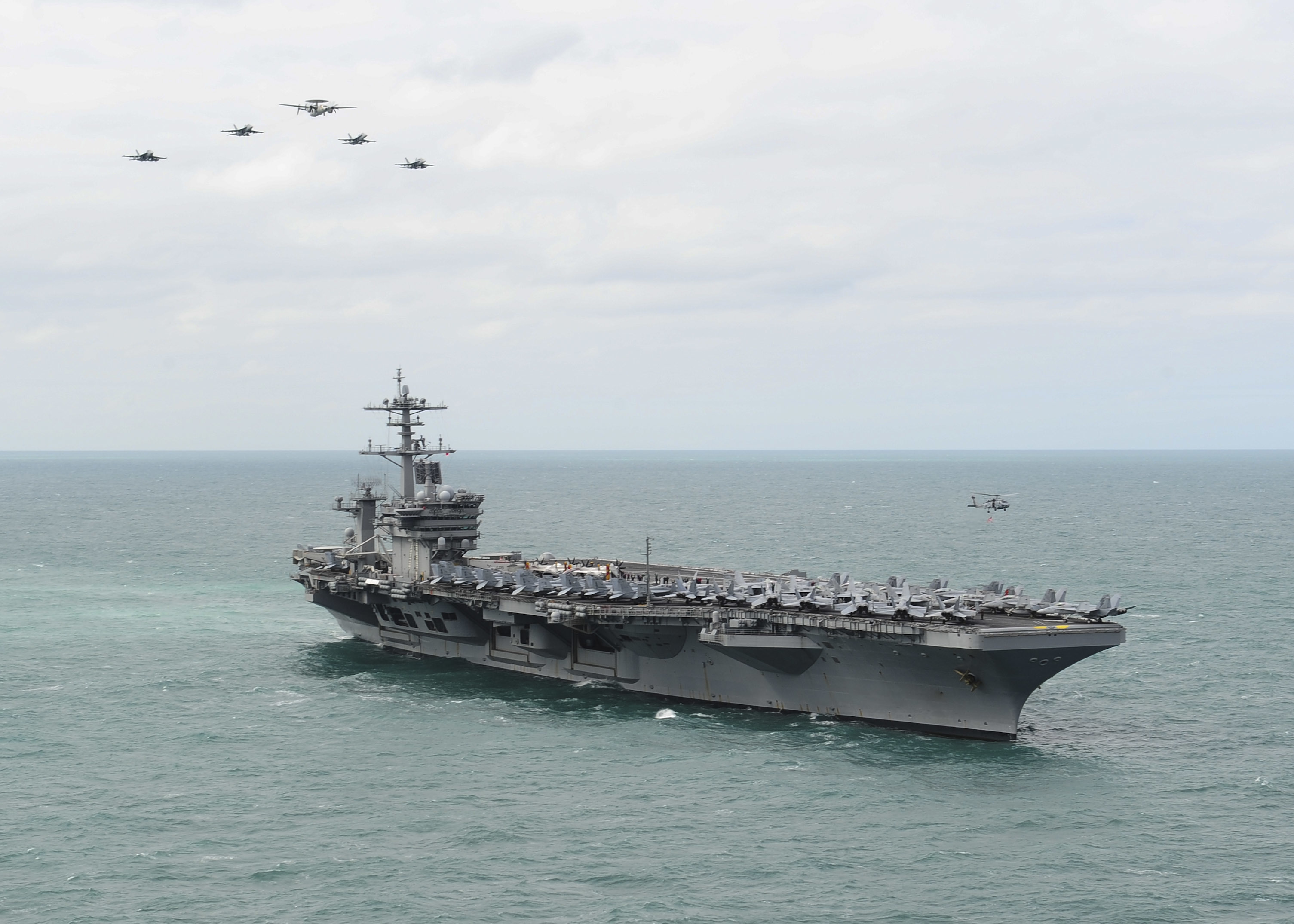
Open-source trackers have logged a significant influx of US aerial refuelling tankers to bases in the region and in Europe, with the combined fleet across CENTCOM and Europe back at roughly 190–195 aircraft, the level seen at the start of September; tankers are the enabling asset any long-range strike package needs first. Fox News reported this week, citing US officials, that the carrier USS Theodore Roosevelt and its strike group, together with the Makin Island Amphibious Ready Group carrying the 13th Marine Expeditionary Unit, are heading to the Middle East — some 10,000 additional sailors and Marines, arriving by the end of November. Israel’s own military leadership has been publicly cooler than the speculation. IDF Chief of Staff Lt. Gen. Eyal Zamir said in a recent closed-door meeting, according to Israeli media: “We do not see any indications of a need to strike Iran before the election” — adding, in the same breath, “if we determine that a strike on Iran is necessary, we will carry it out.” A senior IDF official who spoke to The War Zone struck the same double note: the situation is “increasingly tense, with a real risk of renewed escalation,” but readiness and planning “do not necessarily mean that a final political decision to launch another campaign has been made.”
The other room: eight ministers in Istanbul say no
While Barrack spoke in the Gulf, the region’s diplomats were delivering the opposite message an hour’s flight away. Turkish Foreign Minister Hakan Fidan hosted his counterparts from Egypt, Pakistan and Saudi Arabia — the Regional Four — alongside the E3 of Britain, France and Germany, plus Italy, in Istanbul on Friday, the first collective meeting in that format. “We are all in agreement that a new attack on Iran would expand the war in the region,” Fidan told a press conference afterwards. “A military intervention on Iran is not in any way a solution. Nobody approves this at the moment.” France’s Jean-Noël Barrot said a renewed US–Iran escalation would “only have losers” and would raise oil prices — the full outcome of the meeting is in Signal Post News’s report on the Istanbul R4+E3 Hormuz talks. No minister in the room publicly backed military action.
Tehran’s side of the ledger
Iran has spent the week publishing its own deterrent arithmetic. Two senior Iranian security officials told Reuters that Tehran has drawn up detailed plans to strike undersea communications cables in the Gulf if the United States and Israel attack again, aiming also to prevent repairs and prolong the disruption — “from undersea cables to military bases, including covert ones,” one official said; Signal Post News covered those plans in its report on Iran’s undersea-cable plans. At sea, attacks on commercial shipping in and around the Strait of Hormuz have hit a record high this month — 28 confirmed and reported attacks in October and 113 since the war began on February 28, according to Washington Institute tracking that broadly matches the International Maritime Organization’s tally — keeping the waterway, and the oil price, on a hair trigger, as detailed in the Hormuz ship-attacks record. Tehran’s position, restated through the week, is that any renewed attack ends its remaining red lines; Washington’s stated position is that it seeks a deal, not regime change; Israel’s prime minister, by contrast, has repeated this week that his directive to the defence establishment is to overthrow Iran’s clerical leadership, according to the Jerusalem Post. Those three positions cannot all survive contact with a strike order.
What happens next
Three readings of Friday are available, and the weekend will discriminate between them. The first is signalling: Barrack’s “absolutely,” Trump’s “another little Epic Fury” and the visible rehearsals are coordinated pressure, meant to move Tehran to close the “punctuation” of a deal before November — in which case the weekend passes loudly and quietly at once, with statements, not strikes. The second is genuine preparation on a longer fuse: the carrier group arrives at the end of November, the reported US–Israeli plan is built for after the midterms, and the weekend talk is the sound of a timetable being socialised early — in which case the telltales to watch are tanker deployments staying elevated and further long-range rehearsals over Iraq. The third is drift: an envoy freelancing beyond his portfolio, a president improvising at a rally, and two governments discovering each other’s positions from the news — the reading Trump’s own “I don’t know anything about it” most supports, and historically the most dangerous one, because it is the version in which nobody fully controls the escalation ladder. What is not in dispute is the arithmetic underneath: an eight-month-old war, a record month of attacks on Gulf shipping, oil at $117, an Israeli election on Tuesday and a US midterm ten days later. Whether the first bombs of a new round fall this weekend or after November 3, Friday was the day Washington’s own envoy put the shortest possible fuse on the question — and his president, on camera, declined either to light it or to cut it.
Sources: Agence France-Presse wire report on Barrack’s remarks (Oct 23, 2026); The War Zone, “On the Brink of Epic Fury Round Two?” (Oct 23, 2026), including Axios, New York Times and Fox News reporting it cites; Reuters, “Turkey says renewed attack on Iran would expand conflict, diplomacy only way,” “Trump says US may do another military operation against Iran” and “Iran has detailed plans to hit Gulf undersea cables if war resumes” (all Oct 23, 2026); The Times of Israel via syndication; Guardian market reporting on Brent crude, Oct 23, 2026.