Politics / Twelve days before the November 3 midterms, Attorney General Todd Blanche was asked a simple question in Norfolk, Virginia: could the Justice Department try to block a state from certifying its election results? He would not say no. Blanche insisted the department has no intention of improperly interfering and no plan to stop any certification — but he refused to rule out federal action in what he called a hypothetical “doomsday scenario.” States and Congress run American elections, and no federal law specifically authorizes the DOJ to challenge ballots or delay a state’s certification. That gap — between the answer Blanche gave and the authority his department actually has — is now the central election-law fight of the final stretch.
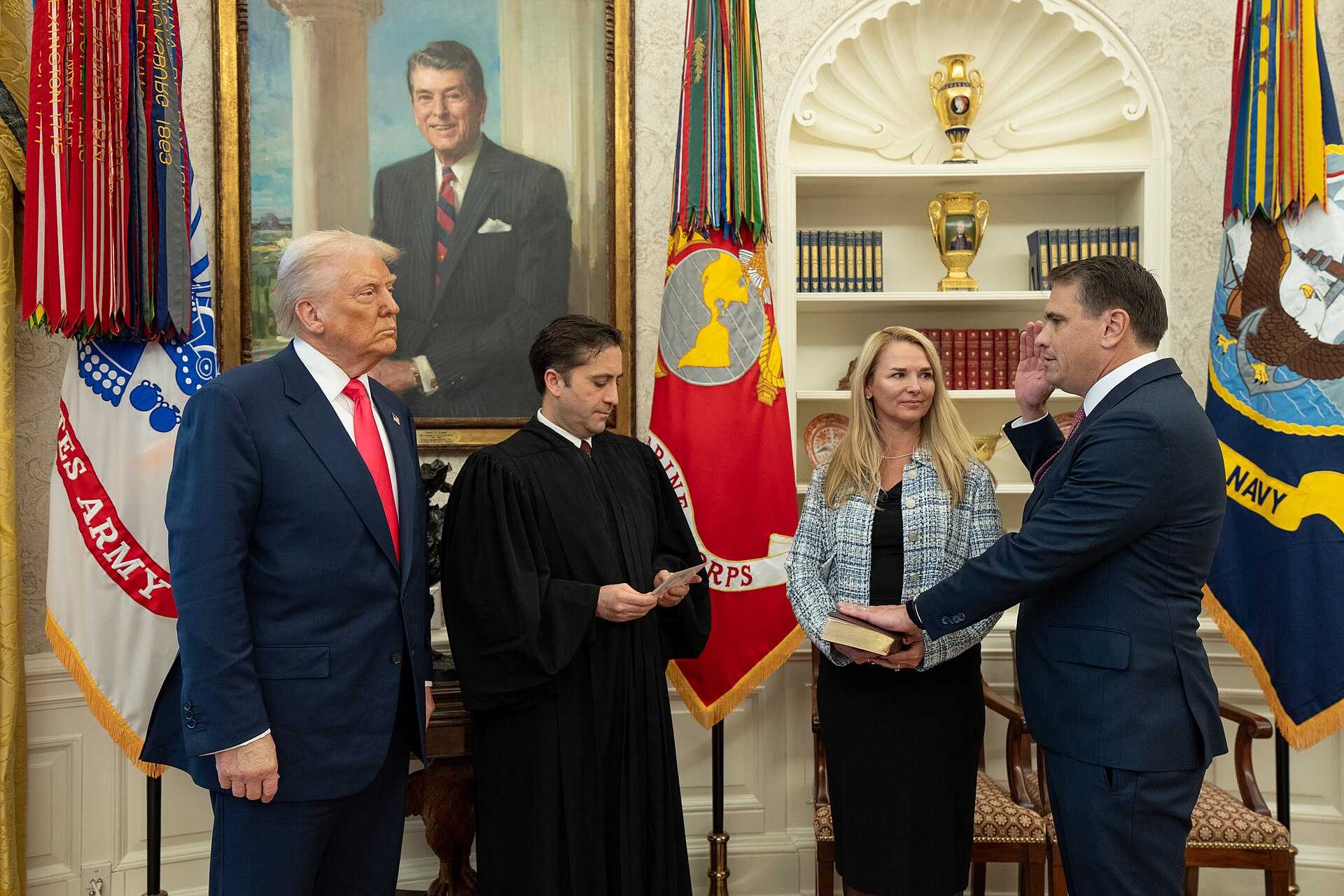
The question of whether there could ever be a DOJ block election certification move stopped being theoretical on Thursday, October 22, when Attorney General Todd Blanche declined to rule one out. Speaking with reporters in Norfolk, Virginia, after the press conference announcing the indictment of Virginia state Sen. Louise Lucas, Blanche was asked — by an NBC reporter, according to Democracy Docket — whether the Justice Department might try to block a state from certifying its midterm election results, on a basis similar to the claims the department is pressing in California. “Yes. Of course there are scenarios that we could all come up with hypothetically — some doomsday scenario, for example,” he answered.
What Blanche actually said in Norfolk
The exchange matters because of how carefully it was worded on both sides. The question was not whether the department might sue over voter rolls — it already has. The question was whether it might move against certification itself: the formal step by which a state declares its results final. Blanche’s answer paired a refusal to rule that out with an equally explicit statement that nothing of the kind is planned. “So I don’t think it’s proper to make any kind of conclusory statements about what’s going to happen in the future because I don’t know what’s going to happen in the future,” he said. “It is not DOJ’s intention — and it’s never our intention — to improperly interfere with elections or the state certification process, but to say that there’s no circumstances that we would ever do that — of course I’m not going to say that.”
Pressed on whether he was preparing any such move, he was blunt in the other direction. “Am I planning my days around the election to be somewhere to not certify? Of course not, no,” he said. “I’m not trying to not have an election certified. Of course not. What we’re trying to do is guarantee to the American people that the only people that are voting are people that are eligible to vote.” He added that the department was “not trying to create chaos,” but wanted to alert officials to potential problems. Read whole, the gaggle produced two statements that are both true at once: the attorney general says there is no plan and no intention to interfere improperly — and the attorney general will not promise that no circumstance exists in which his department would act against a state’s certification. Everything in the reaction that followed turns on which of those two statements a listener chooses to weight more heavily.
Nor was certification the only door Blanche left open in Norfolk. In a second remark at the same gaggle, he said the department might launch more California-style lawsuits aimed at blocking states from counting ballots. “There’s a number of states that we’re looking at,” he said. “Whether we’re going to do something before the election, I don’t want to get too ahead of the civil lawyers working on those cases.” That sentence converts the certification answer from an abstract hypothetical into part of a live litigation strategy: the California case is the template, other states are being examined, and the only question Blanche presented as open was timing.
The California template: 20,000 names, 48 hours, and a race to the appeals court
To understand why a question about certification landed so hard, start with what the department has already done in California — a fight Signal Post News has covered step by step, from the original federal demand through the DOJ lawsuit to block 20,000 California ballots. Last week, the department sent California state officials and Los Angeles County officials a thumb drive carrying a list of 20,000 alleged noncitizens said to be unlawfully registered to vote. Two days later, after the state and county refused the department’s demand to set those voters’ ballots aside until their citizenship could be confirmed, the DOJ sued both. The suit asked a federal judge to block California from tabulating ballots cast by voters on the list. According to reporting on the case, the names were culled from unverified sources. The secretary of state’s office said it was given only 48 hours to review roughly 20,000 names.
The human end of the list arrived on Monday, when federal law enforcement arrested 11 people named on it and charged 28, alleging illegal registration to vote. California’s lawyers, responding in court, called the suit one that “borders on the absurd” and “threatens to disenfranchise thousands.” The case is before U.S. District Judge David O. Carter. And the procedural posture is as significant as the merits: before Judge Carter had ruled on the department’s request for a temporary restraining order, the DOJ appealed to the 9th U.S. Circuit Court of Appeals late Thursday — the same day Blanche spoke in Norfolk. At the very moment the attorney general was declining to rule out action against certification, his department was already asking an appeals court to intervene in how the largest state in the country counts its ballots, before the trial judge had even decided the first motion.
Both sides of the California case deserve to be stated in their strongest form. The department’s position is the one Blanche articulated: only eligible citizens may vote, eligibility is the foundation of every legitimate result, and a federal government that identifies people it believes are unlawfully registered is enforcing the law that makes the election meaningful, not interfering with it. California’s position is that a list drawn from unverified sources, delivered on a thumb drive with a 48-hour review window, is not a reliable basis on which to set aside the ballots of 20,000 people — most of whom, on the state’s account, are exactly what the department says it is protecting: eligible voters. The arrests and charges against 28 people show the list was not empty. The state’s “borders on the absurd” filing argues, in effect, that 28 charges do not justify segregating 20,000 ballots. Those are the two poles between which every court now hearing these cases has to steer.
Why this matters
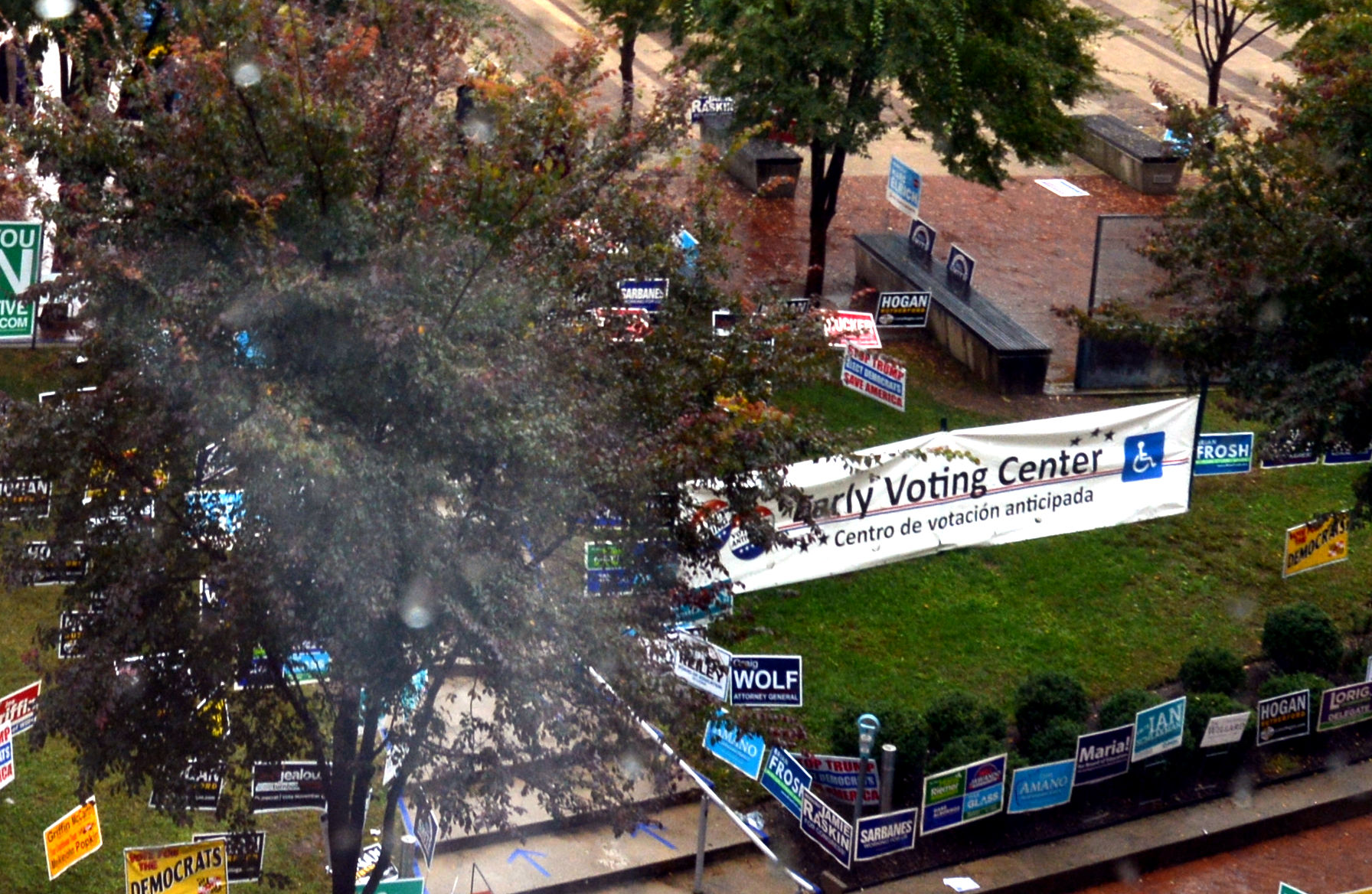
Certification sounds like bookkeeping, and for most of American history it has been: a ministerial step in which state and local officials confirm the count that their own canvass produced. Its very dullness is the point. A system in which certification is automatic is a system in which the argument ends when the counting ends. The moment certification becomes a contested arena — a step that can be delayed, challenged, or blocked by an outside actor — every close election acquires a second campaign, fought in courtrooms after the voters have gone home. That is why a refusal to rule out federal involvement, even in a scenario the attorney general himself framed as a doomsday hypothetical, is news in a way that a routine statement of enforcement intent would not be. Blanche did not announce a plan. He declined, on the record, to close a door that most of his predecessors would have described as one the federal government does not possess a key to.
The legal frame is the reason. Under the Constitution and federal law, elections are run by the states and by Congress, which sets the rules of the road; the federal government has no role in a state’s certification of its own results. The Justice Department’s established election functions are real but narrower: safeguarding civil rights — protecting voters from intimidation and discrimination — and prosecuting violations of election law by individuals. Federal law does not specifically authorize the department to challenge ballots wholesale or to delay a state’s certification. Against that landscape the California lawsuit is already an outlier: it does not prosecute individual voters in the first instance, it asks a court to stop a state from counting a category of ballots. A move against certification would be one step further along the same line — from the ballots, to the result itself.
There is, however, a fair version of the administration’s argument, and it should not be caricatured. It runs like this: a certification is only worth what the underlying count is worth; if a state were certifying results that included ballots cast by ineligible voters in numbers large enough to matter, a federal government that simply watched would be ratifying a defective result. On that logic, reserving the theoretical possibility of action in an extreme case is not a threat — it is the same refusal any law-enforcement official gives when asked to promise, in advance and forever, that no conceivable circumstance would move them to act. Blanche’s framing leaned on exactly this: he presented the question as a hypothetical about an unknown future, paired with repeated, specific denials of present intent. “It is not DOJ’s intention — and it’s never our intention — to improperly interfere,” is a sentence that contains its own qualifier: improperly. The entire dispute is over who decides what proper interference looks like — and the constitutional answer, for two centuries, has been that the states decide in the first instance, with courts, not departments, as the referees.
The reaction was instant — and split along the same line
Senate Minority Leader Chuck Schumer responded on X by treating the remarks as confirmation of a plan Democrats say they have been preparing to resist. Senate Democrats, he wrote, “have been preparing for this for months and will be ready.” “As Trump and his cronies attempt to steal this election, we are fighting them at every turn. Our elections must always belong to the voters — not Donald Trump.” That reading treats the refusal to rule out a hypothetical as the operative fact and the denials of intent as decoration. The administration’s supporters will read the same transcript in precisely the opposite order: the denials are the substance — no plan, no intention, no chaos — and the hypothetical is a lawyer declining to issue an absolute promise about scenarios nobody can foresee. Readers do not have to choose between those readings on trust. They can test both against the department’s observable behavior — whether new California-style suits are filed, in which states, and whether any filing anywhere uses the word certification.
Context: a campaign season of escalating federal moves
The Norfolk gaggle did not happen in isolation, and it should not be read in isolation. This week alone, a federal judge restricted the Department of Homeland Security’s election-related field operations and interviews in nine states through Election Day — an order whose effect is stayed until 5 p.m. on Friday, October 23, to allow a possible appeal, in a case Signal Post News covered as the ruling that a judge blocked DHS noncitizen voter investigations in nine states. Earlier this week, Democratic leaders and election groups sued the administration, accusing it of “threats and intimidation” in its election operations. Earlier this month, Blanche said the Justice Department plans to send 1,000 election monitors to polling places in every state on Election Day — a deployment states have been bracing for, as covered in Signal Post News’ reporting on how U.S. states are preparing for the DOJ election-monitors surge. Monitors, note, observe; they do not certify. But each step — data demands, lawsuits over ballots, field operations, monitors — has moved the federal footprint one increment closer to the machinery of the count, which is why a question about the last step in that sequence, certification, no longer sounded hypothetical to the reporter who asked it.
The longer runway matters too. At his confirmation hearing in July, Blanche avoided committing not to deploy immigration agents at polling places, saying he would “follow the law.” In September, Homeland Security Secretary Markwayne Mullin similarly left open the possibility of ICE arrests at the polls. A dozen Democratic senators warned Mullin, Blanche and Defense Secretary Pete Hegseth that such deployments are illegal. Set those exchanges beside Thursday’s, and a pattern emerges that is more precise than either party’s slogan: at every stage — agents near polling places, monitors inside them, ballots challenged by category, and now certification itself — the administration’s officials have consistently declined to rule options out, while consistently denying that the feared option is the plan. Whether that pattern is prudent flexibility or deliberate pressure is the argument now consuming the final twelve days. Blanche was in Norfolk for another reason — the gaggle followed the press conference announcing the federal indictment of Virginia state Sen. Louise Lucas, covered separately in Signal Post News’ report on the Louise Lucas indictment. The election answers were an aside to that announcement. Asides from attorneys general, twelve days before an election, have a way of becoming the story.
What the numbers actually say
Strip the rhetoric from both sides and the dispute rests on a small set of figures. The California list named 20,000 voters. The state says it was given 48 hours to review those names. The enforcement yield so far is 11 arrests and 28 people charged with illegally registering. The department’s planned Election Day presence is 1,000 monitors across every state. The judicial counterweight so far covers nine states under the DHS order. And the clock reads twelve days from the gaggle to Election Day on November 3 — eleven days from today. President Trump has repeatedly said noncitizen voting is a serious threat to American elections. The empirical record, across studies and prosecutions over multiple cycles, is that noncitizen voting in federal elections is extremely rare — rare enough that its documented scale has never approached the margin of a statewide federal race. Those two facts do not refute each other; they define the argument. If ineligible voting is rare, a remedy that touches 20,000 registrations to reach 28 charged cases will strike most observers as disproportionate. If it is, as the administration maintains, a serious threat that lax enforcement has hidden rather than prevented, the same numbers look like the visible tip of an unmeasured problem, and the burden of proof flips. The honest summary is that the list’s own yield — 28 charges from 20,000 names — is the figure the department’s critics will quote back in every courtroom between now and November 3.
What happens next: four scenarios for the final eleven days
The first and most likely scenario is litigation without certification. The department files one or more of the additional California-style suits Blanche previewed, aimed at ballot counting in states it is “looking at”; states respond as California did; judges sort the disputes on emergency timetables; and certification proceeds on schedule everywhere, because no filing asks a court to stop it. In that world, Thursday’s gaggle is remembered as the high-water mark of a pressure campaign — loud, litigated, and ultimately confined to the boundaries courts have already drawn. The second scenario runs through the 9th Circuit: if the appeals court intervenes in the California case before Judge Carter rules, the legal theory behind segregating ballots gets an early appellate test, and its outcome — either way — becomes the template every other state’s lawyers read over the weekend.
The third scenario is the one Schumer’s statement anticipates: some filing, somewhere, crosses the line from ballots to results — a request to delay, condition, or block a state’s certification on the basis of the same eligibility claims. Nothing in the record says that filing exists or is drafted, and Blanche said the opposite is his intention. But his refusal to rule it out means that if it comes, it will not contradict anything he said in Norfolk — which is precisely why the answer drew the reaction it did. Such a filing would trigger the fastest and most consequential election litigation in American history, because certification deadlines are fixed, unforgiving, and chained to the congressional calendar for seating the new House and Senate. The fourth scenario is political rather than legal: no new filing materializes, the monitors deploy, the count proceeds — and the certification fight happens anyway, in public argument, with Thursday’s quotes replayed in every close race where a losing candidate reaches for a reason the result should not be final.
What would actually test the doomsday hypothetical is a fact pattern nobody has described: a state preparing to certify results that a court had already found to include unlawful ballots in decisive numbers, and refusing to correct them. Blanche did not describe that scenario, and no current case resembles it. Until or unless one does, the accurate way to report Thursday is the narrow one: the attorney general of the United States, asked whether his department might try to block a state from certifying its election, said he would not rule it out, said he has no such intention or plan, and said his department may sue more states over which ballots get counted. Eleven days remain for events to show which clause of that sentence history will quote.
Sources
Democracy Docket, “Todd Blanche won’t rule out trying to block states from certifying election results” (October 22, 2026) — the gaggle exchange, including the NBC reporter’s question and Blanche’s full certification answers. Democracy Docket, “Blanche threatens ‘a number of states’ with California-style voting lawsuits” (October 22, 2026) — the second gaggle remark and the California case record (thumb drive, 20,000 names, 48-hour review window, 11 arrests and 28 charged, California’s “borders on the absurd” response, Judge David O. Carter, and the late-Thursday appeal to the 9th Circuit). Fox News, “Blanche won’t rule out DOJ blocking election certification in ‘doomsday’ scenario” (October 22, 2026), also via The Hill — the legal frame (states and Congress run elections; no federal role in state certification; federal law does not specifically authorize DOJ ballot challenges or certification delays) and Schumer’s response on X. Signal Post News coverage of the underlying California case: DOJ sues California to block 20,000 ballots. Verbatim quotes are as reported by Democracy Docket and Fox News/The Hill, which agree on the wording.