War / Iran — Iran has drawn up detailed plans to target the undersea communications cables beneath the Gulf if the United States and Israel attack it again, two senior Iranian security officials told Reuters on Friday, October 23, 2026 — and Tehran says it would try to stop the cables being repaired, so the damage outlasts the strike. The threat moves the Strait of Hormuz fight from oil tankers to the internet itself. The honest numbers cut both ways: cables carry about 99 percent of global internet traffic, but less than 1 percent of international bandwidth passes through Hormuz.
Track it live: Iran war tracker
Tehran has drawn up detailed plans to target undersea communications cables in the Gulf if the United States and Israel attack Iran again, two senior Iranian security officials told Reuters on Friday. The officials, speaking on condition of anonymity, gave few details and did not say how or exactly where such attacks would be carried out. But one of them set out the element that makes this threat different from a warning shot: Iran would aim to prevent repairs after any attacks, to prolong the disruption to communications, including internet connections.
“If Iran is attacked, there will be no more red lines … from undersea cables to military bases, including covert ones,” one of the officials said. The official warned Washington not to “play with fire,” and said Iran had full access to the undersea cables and could easily destroy them. Those are claims by Iranian security officials, made to a news agency, in a week when Tehran is trying to deter exactly the attack it describes — and they should be read that way. The United States Department of State and Iran’s Foreign Ministry did not respond to Reuters’ requests for comment on the remarks, and there was no immediate comment from Gulf states.
Seven cables under the strait
The officials’ comments followed a week of escalating, on-the-record warnings from named Iranian figures. Yadollah Javani, the deputy head of political affairs for Iran’s Revolutionary Guards (IRGC), said on Wednesday that Iran could target seven major internet cables beneath the Strait of Hormuz if Iranian infrastructure came under attack. The Wall Street Journal independently reported Javani’s cable warning the same week, in its account of Tehran threatening wider strikes on economic and civilian targets if the United States attacks. And on Monday, IRGC spokesman Hossein Mohebbi drew attention to the same seven cables at a ceremony at Tehran’s Sacred Defense Museum, according to Anadolu Agency, citing Iranian state broadcaster IRIB: “Seven major internet cables run beneath the Strait of Hormuz. We just want them to know that new targets will be unveiled. New weapons will be unveiled.”
Earlier this month, top security official Mohsen Rezaei warned that US-linked digital infrastructure across the Gulf, including data centres and artificial-intelligence facilities, could be targeted in a renewed conflict, and Reuters reported that the second security official said Washington’s Gulf allies — which have invested heavily in such infrastructure — “should hold Washington, not Tehran, responsible for any damage to undersea cables.” Foreign Minister Abbas Araghchi, in an opinion piece in the Financial Times reported by the Journal, wrote that new attacks “will put civilian lives and the well-being of all regional states and the global economy at great risk.” The sequence matters: spokesman, then a named IRGC political chief, then the foreign minister, then two senior security officials describing finished plans to Reuters. That is a ladder, climbed deliberately, in public.
What the numbers actually say
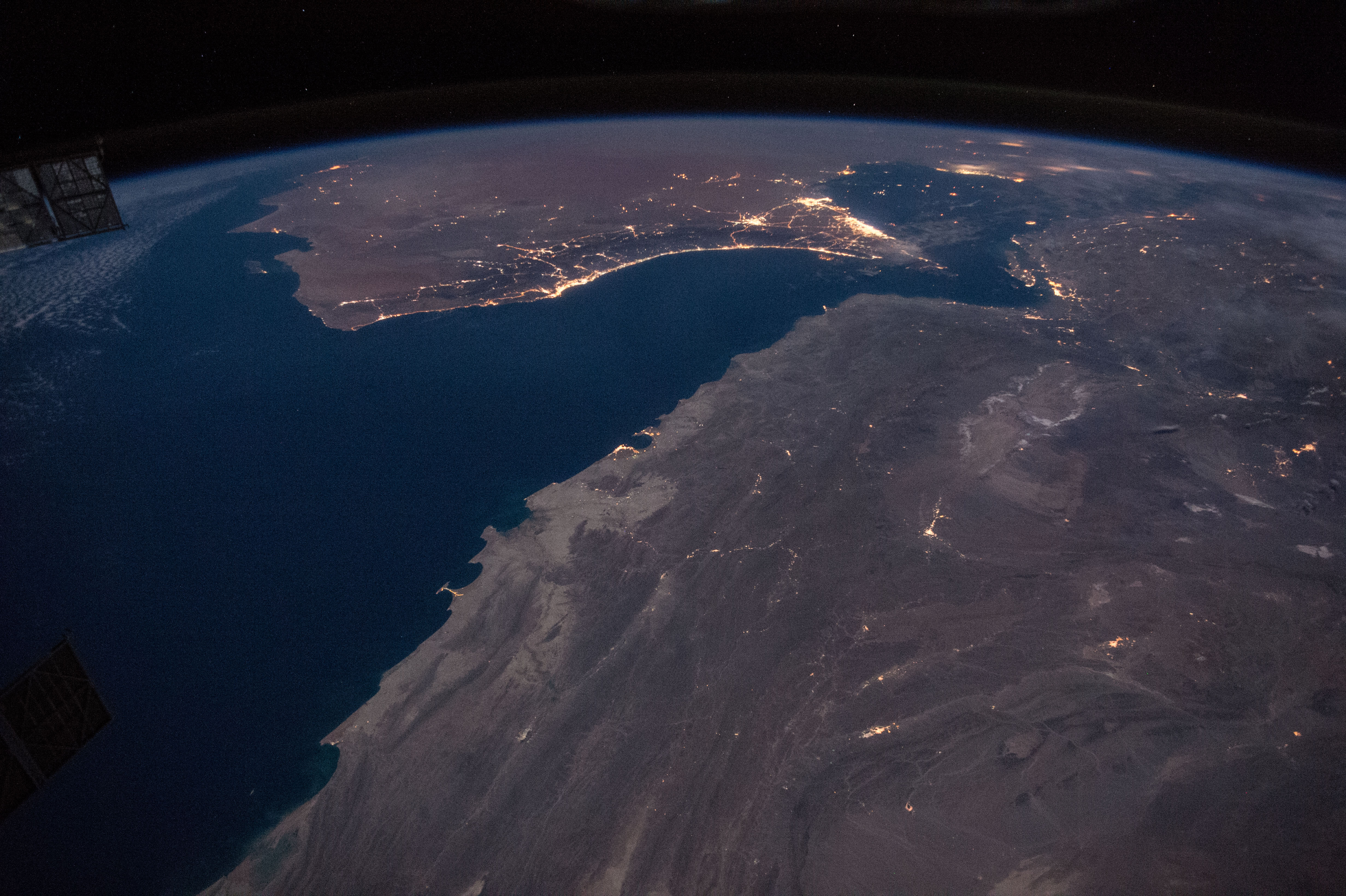
Start with the two statistics that frame every argument about this threat, because both are true and they point in opposite directions. Undersea cables carry around 99 percent of global internet traffic, according to the International Telecommunication Union, a United Nations agency. But the global impact of attacks in Hormuz could be limited, because less than 1 percent of international bandwidth passes through the Strait of Hormuz, said Alan Mauldin, research director at the telecommunications research firm TeleGeography. The strait — which separates Iran and Oman and links the Gulf to the Gulf of Oman and the Arabian Sea — is a chokepoint for oil. For data, it is a regional artery, not the world’s aorta.
That distinction exposes the gap inside Tehran’s own messaging. Mohebbi claimed this week that all internet and commercial data traffic passed through the seven Hormuz cables. TeleGeography’s figure says otherwise: under 1 percent of international bandwidth transits the strait. Both statements cannot be right, and the independent industry figure is the one with a methodology behind it. What multiple cable cuts in the Gulf would actually do, analysts told Reuters, is slow internet services and disrupt financial transactions, e-commerce and cloud computing — with the impact depending on how operators rerouted traffic and what capacity existed on alternative connections. For the Gulf states themselves, whose traffic is concentrated on those routes, the disruption would be far sharper than the global average suggests. The pain would be regional and financial first, global and general second.
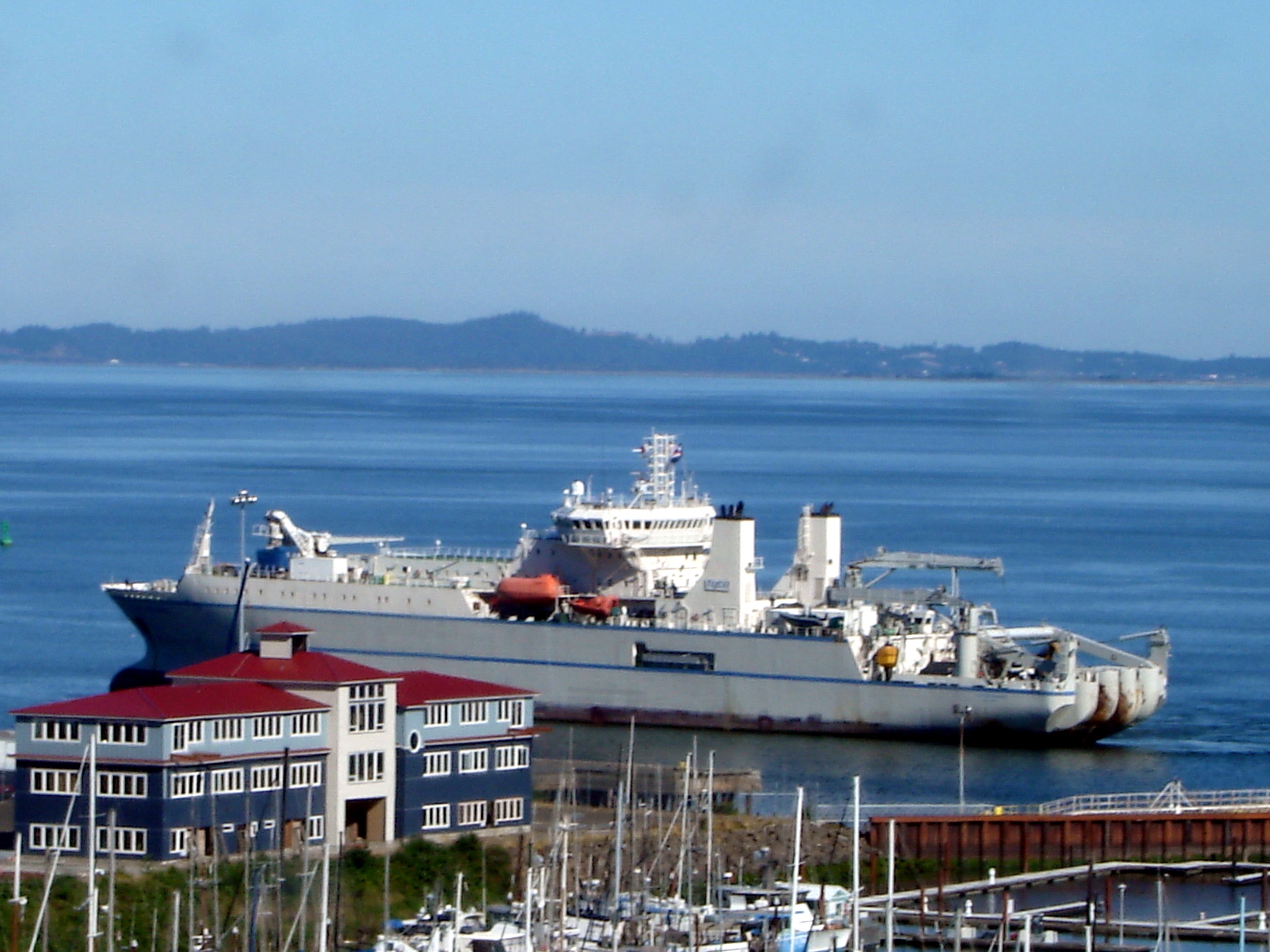
The repair problem is where the threat gains weight. Restoring connections during wartime could be difficult, experts said, and higher insurance costs and delays in obtaining permits to enter territorial waters could further complicate repairs — before any Iranian effort to prevent repairs at all. The world’s cable-repair fleet is small, its ships are unarmed commercial vessels, and they work slowly, on the surface, in fixed positions. A threat against repair is, in effect, a threat to turn a cut measured in days into an outage measured in weeks. And the more consequential geography may not be Hormuz at all: the Red Sea carries data between Europe, East Africa and Asia, accounting for about 3 percent of global international demand and around 10 percent of traffic travelling between regions, Mauldin said — and it is the route where Iran’s Houthi allies in Yemen operate. Tehran has made no public statement indicating it plans to target cables there, Reuters noted, and this article does not claim otherwise. It is the obvious next question, not a reported plan.
Why this matters
The cable plans reflect a conviction in Iran’s leadership, Reuters reported, that a renewed US military campaign would have to be met with a stronger response than before. The logic is deterrence by raising the price list. Iran’s conventional position has deteriorated; its asymmetric options have not. “They certainly have the capability to inflict major damage to the region’s energy and internet infrastructure,” Farzin Nadimi, an Iran-focused senior fellow at the Washington Institute, told the Journal. “But if Iranians do that they’ll most likely lose their own in reciprocal attacks.” Saeid Golkar, an expert on the Revolutionary Guard at the University of Tennessee at Chattanooga, warned that Iran runs the risk of overreaching if it tries to make good on all its threats, and that it needs to manage carefully a shrinking stockpile of missiles.
The audience for the threat is not only, or even mainly, Washington. Alex Vatanka, director of the Iran programme at the Middle East Institute in Washington, told Reuters the threats were intended to deter renewed conflict and to put pressure on Washington by making Gulf governments and US companies fear for their investments in the region. “Tehran wants Gulf states and corporate executives to press (US President Donald) Trump over the risks his policies pose to their investment plans,” Vatanka said. That reading fits the target list. Gulf governments have been investing heavily in technology to diversify beyond oil and become global artificial-intelligence hubs, deepening their ties with US technology firms. Iranian strikes directly hit two Amazon Web Services facilities in the United Arab Emirates in March and damaged infrastructure near one of its facilities in Bahrain, Reuters reported, and the IRGC named US tech companies including Microsoft, Google, Apple and Nvidia as legitimate targets at the height of the war in March. The cables are the seabed extension of a target set Tehran has already struck on land.
Who gains, who loses, and what happens next
If the threat works as deterrence, Tehran gains time without firing anything: every week Washington weighs a renewed campaign, Gulf capitals and the technology companies building data centres worth billions in the region now have a specific, insurable, board-reportable risk to raise with the White House. If it fails and war resumes, the losers are concentrated and identifiable — Gulf financial centres whose transactions run on those cables, cloud customers across the region, and the Gulf governments whose diversification strategies are the hostage. Iran itself would not be spared: its own connectivity runs through the same regional infrastructure, a point Nadimi’s reciprocity warning makes plain, and land-based connections — which Gulf states and US firms are already funding, including Microsoft’s plan to invest more than $400 million in subsea and terrestrial connectivity across the Middle East by 2030 — exist precisely to route around seabed cuts.
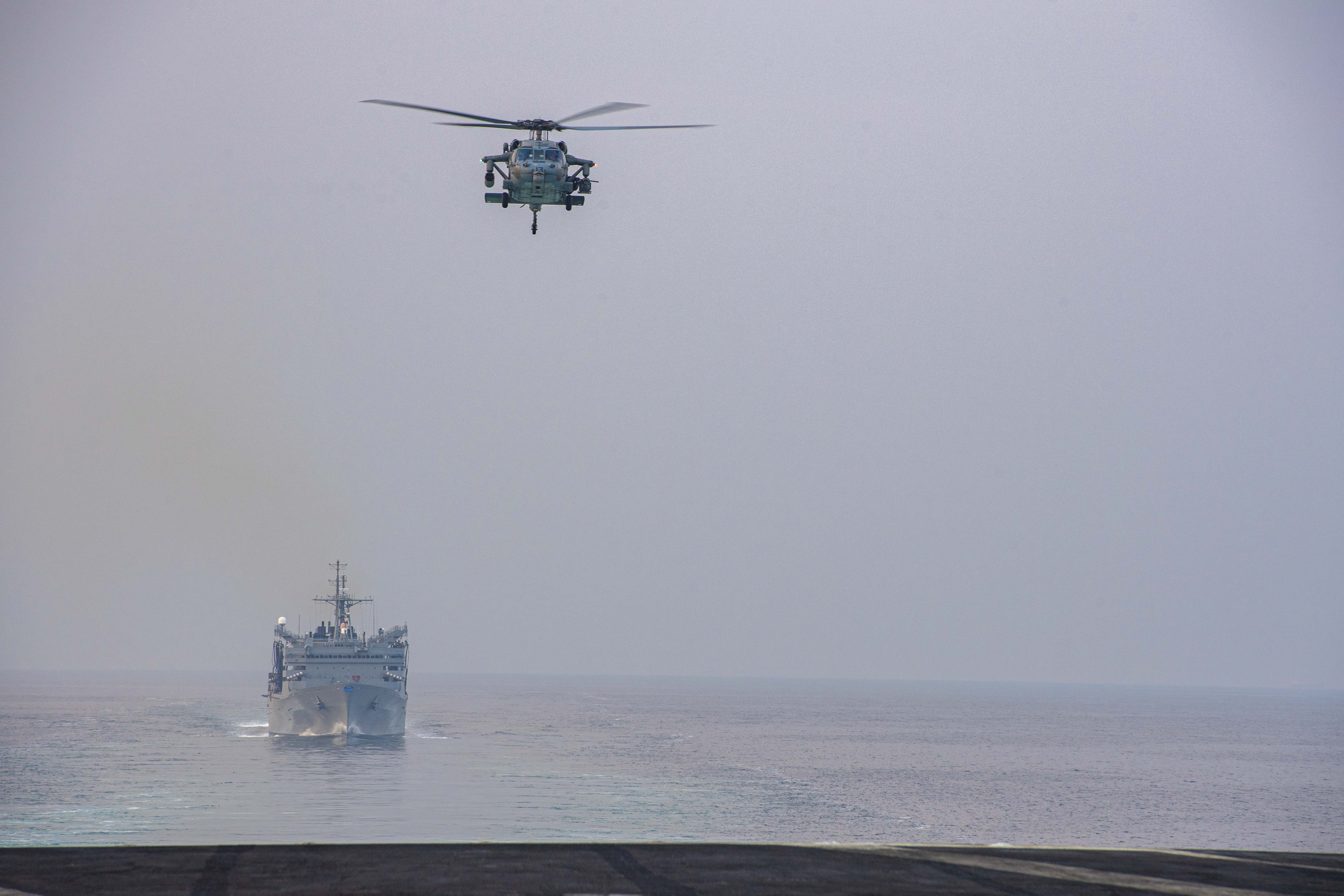
The wider pattern, reported by the Journal, is of a Tehran widening its declared target set in steps: stepped-up strikes on vessels in the Gulf since the beginning of the month, with two ships sunk last week; missiles that came close to American warships in September; a July strike on the Muwaffaq Salti Air Base in Jordan that killed three US servicemembers. US officials are also concerned Iran may be receiving help from Chinese entities with satellite imagery and tracking of American warships, the Journal reported — a claim China rejects as a smear. Against that backdrop, Friday’s cable plans read less as a new invention than as the formal addition of the digital seabed to an escalation ladder Tehran is already climbing, rung by announced rung.
What happens next depends on a question the reporting cannot yet answer: whether “detailed plans” is a description of staff work or a deterrent phrase. The officials gave Reuters no method, no location and no timeline, and no cable has been cut. Three tests will show which it is. First, whether Gulf states — silent on Friday — respond publicly or quietly accelerate the land-route and redundancy investments already under way. Second, whether cable-repair and insurance markets price the Gulf as a war-risk zone for data as they already do for oil, which would make Tehran’s threat economically real before it is physically real. Third, whether Washington answers the threat in kind — a declared consequence for cable attacks would raise the cost of carrying them out, but also confirm to Tehran that the leverage is valued. For now, the story is a set of statements, made in sequence, by a government that has struck the shore-side version of this target set before. The cables are still intact. The plans, Tehran wants everyone to know, are drawn.
Our earlier coverage follows the military track this threat sits alongside: US military prepares to resume Iran strikes, Trump rules out an Iran attack before the midterms, and the tanker struck off Qatar in the Hormuz escalation. Track it live: Iran war tracker.
Sources
- Reuters (October 23, 2026): Iran has detailed plans to hit Gulf undersea cables if war resumes, officials say — the two senior Iranian security officials, the prevent-repairs detail, the “no more red lines” and “play with fire” quotes, Javani’s seven-cables warning, the ITU 99 percent figure, TeleGeography’s Alan Mauldin on the under-1-percent Hormuz share and the Red Sea comparison, Rezaei’s data-centre warning, Alex Vatanka’s analysis, the March AWS strikes, and the absence of US, Iranian Foreign Ministry and Gulf-state comment.
- Wall Street Journal (October 23, 2026): Iran Threatens Wider Strikes on Economic and Civilian Targets if U.S. Attacks — independent reporting of Javani’s cable warning, Araghchi’s Financial Times opinion piece, Saeid Golkar and Farzin Nadimi analysis, the vessel strikes and the Jordan air-base strike context.
- Anadolu Agency via IRIB (October 20, 2026): IRGC spokesman Hossein Mohebbi’s remarks at Tehran’s Sacred Defense Museum — the seven cables, “new targets will be unveiled,” and Rezaei’s earlier Press TV warning on cables, data centres and AI facilities.
- International Telecommunication Union figure (cables carry around 99 percent of global internet traffic) and TeleGeography research (under 1 percent of international bandwidth via Hormuz; Red Sea about 3 percent of global international demand), both as reported by Reuters.
Statements by Iranian officials are reported as their claims throughout; no undersea cable attack in the Gulf has taken place or been independently confirmed, and the capability and intent described are Tehran’s own account, as reported by the outlets above.