War · Middle East · Bahrain
Bahrain said its air defences intercepted Iranian air attacks on Tuesday — the third Iranian drone attack on the kingdom in five days — while the Revolutionary Guards said they had targeted a US military radar system at Sheikh Isa Air Base. The claimed targeting is Tehran’s assertion alone: no hit has been independently confirmed, and Bahrain says the mission was prevented.
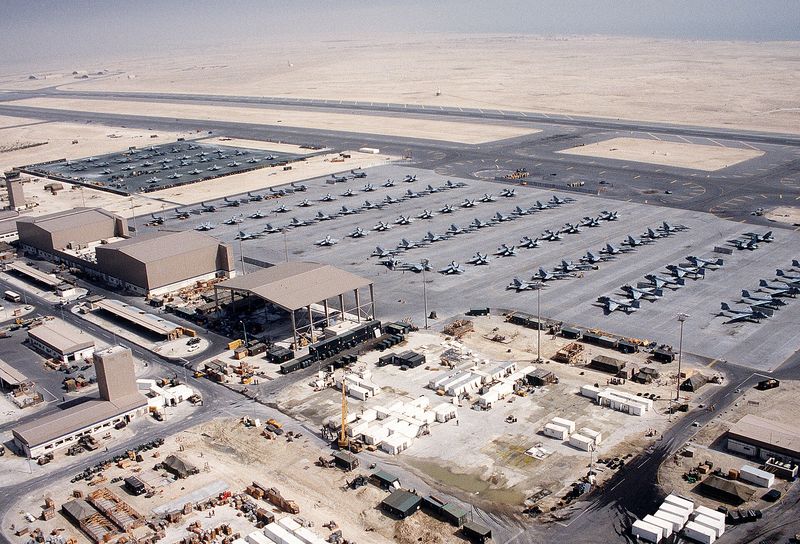
MANAMA, November 17, 2026 — Bahrain intercepts Iranian drones over the kingdom for the third time in five days: Bahrain said on Tuesday that its air defences had intercepted Iranian air attacks, after Iran’s Islamic Revolutionary Guard Corps (IRGC) said it had targeted a United States military radar system at Sheikh Isa Air Base with drones, in response to what the Guards described as continued violations of Iranian airspace by US military drones, Reuters reported. The Bahrain Defence Force said its air defences intercepted the attacks and prevented Tehran’s mission. No casualties or damage have been reported. What Tehran claims beyond the launch — that a US radar at one of the Gulf’s most important air bases was its target, let alone that anything was struck — remains exactly that: a claim, unaccompanied in Tuesday’s reporting by any independent confirmation, and with no comment from the US military on the Tuesday incident in the sources available at publication.
The sequence of the day, as Bahrain’s own statements and the wire reporting establish it, ran in the now-familiar order of this five-day crisis. Earlier on Tuesday, Bahrain warned of an unspecified threat and urged citizens and residents to head to the nearest safe location. Explosions were heard in Manama, the capital, an AFP journalist reported. Bahrain’s Defence Force then announced that its air defences had intercepted the Iranian attacks, and the Interior Ministry later issued an all-clear. This article states the explosions as AFP reported them — heard in Manama — and does not characterise them as either impacts or interceptions, because Tuesday’s reporting does not establish which they were. The confirmed ledger of Tuesday is therefore short and should be kept short: a warning, explosions heard, interceptions Bahrain asserts, an all-clear, and an Iranian claim about a radar that no one else has confirmed.
Track it live: Iran war tracker — https://signalpostnews.com/tracker/iran-war — and the wars tracker — https://signalpostnews.com/tracker/wars — for the Bahrain interceptions, the Hormuz shipping war and the wider US–Iran confrontation as they develop.
What Bahrain says happened
Bahrain’s account comes from the two institutions that have carried the kingdom’s public voice through all three attacks: the Bahrain Defence Force (BDF) and the Interior Ministry. The Defence Force said its air defences intercepted the Iranian attacks and prevented Tehran’s mission — a formulation that concedes the launches, claims the interceptions, and denies the outcome Tehran asserts, all in one sentence. The Interior Ministry’s part of the sequence was civilian-facing: the earlier warning of an unspecified threat, with its instruction to proceed to the nearest safe location, and then, once the Defence Force had announced the interceptions, the all-clear that stood the kingdom back down. Reuters carried both halves of that account, and Al Jazeera’s live coverage of the war recorded the same Bahraini announcements through the day.
Two absences in Bahrain’s account deserve the same weight as its assertions. The first is any report of damage or casualties: none has been reported, by Manama or by any other source in Tuesday’s coverage. A radar installation struck on a major allied air base would be expected to produce, at minimum, a damage assessment, a fire, a visible response — some artefact in the record. Tuesday’s record contains none. The second absence is a count. Bahrain did not publish a number for the incoming weapons on Tuesday, and neither, in the reporting available, did the IRGC attach a number to its Sheikh Isa claim. This article therefore states no Tuesday drone count, because none exists in the sources. Readers who encounter one elsewhere should ask where it came from: the only drone count in this five-day sequence that any claimant has published belongs to Sunday, and it is addressed, in its proper place, below.

What Tehran claims — and what is not confirmed
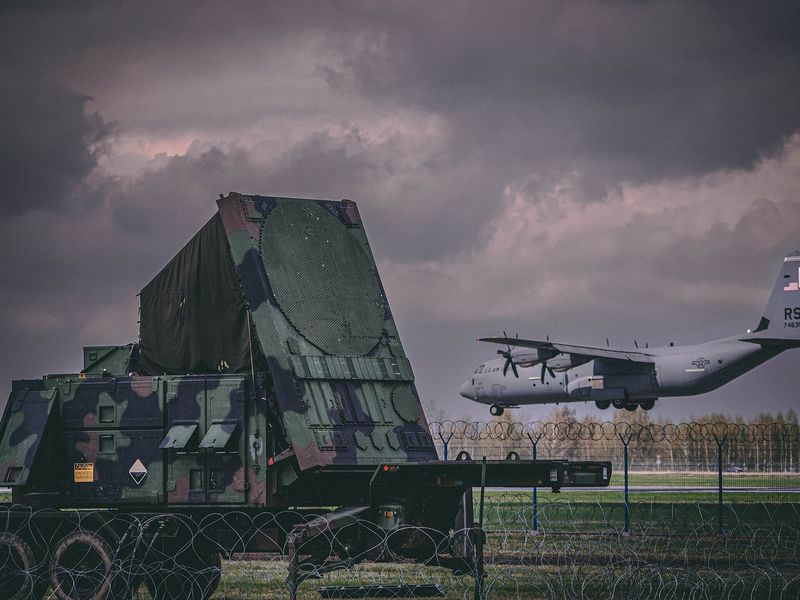
Tehran’s account, as Reuters reported it, is that the Revolutionary Guards targeted a US military radar system at Sheikh Isa Air Base with drones, and that they did so in response to what the Guards described as continued violations of Iranian airspace by US military drones. Every element of that sentence needs its attribution kept attached. The targeting is what the Guards said they did. The motive is what the Guards described. And the outcome — the question on which the whole claim turns — is something the Guards’ statement, as reported, asserts by implication rather than demonstrates: to say a radar was targeted is not to say it was hit, and nothing in Tuesday’s reporting from any independent source establishes that it was. There is no US or CENTCOM comment on the Tuesday incident in the sources, no Bahraini acknowledgement of any hit, and no imagery, damage report or casualty report that would corroborate one. Bahrain’s statement asserts the opposite outcome: interception, and a mission prevented.
That evidentiary posture will be familiar to readers of this newsroom’s Sunday coverage, because Tuesday is the third time in five days that Tehran has paired a real launch at Bahrain with a radar claim that outruns its proof. The pattern is now regular enough to be described as a method. A launch is real: Bahrain’s warnings, interceptions and all-clears are public acts that a government does not perform for theatre, and AFP’s explosions in Manama are independently witnessed. A radar is then named: an early-warning radar on Friday, an air-defence radar at Al-Rifaa on Sunday, a radar system at Sheikh Isa on Tuesday. And the claim is left to circulate at the level of the naming, in the gap between what was launched and what can be shown to have landed. Filling that gap with fact in either direction — asserting a hit Tehran has not proven, or asserting a clean sheet beyond what Bahrain’s interception statement supports — would be a disservice. The honest sentence is the narrow one: Iran launched, Bahrain says it intercepted, Tehran says it targeted a US radar, and no hit is confirmed.
Three attacks in five days
The five-day sequence is the context that turns Tuesday from an incident into a campaign. On Friday, November 13, the IRGC claimed it had attacked a US early-warning radar facility in Bahrain. The US military answered that claim directly and specifically: US Central Command said it had intercepted two Iranian drones, with no damage. Friday thus established the template and its rebuttal in a single exchange — a radar claim from Tehran, a denial with numbers from Washington. On Sunday, November 15, Bahrain said its air defences intercepted several Iranian aerial attacks, and the IRGC claimed six drones had targeted a US air-defence radar at the Al-Rifaa helicopter base. Sunday’s count — six — belongs to Sunday’s claim alone; it is not a figure for Tuesday, and this article does not lend it to Tuesday. Signal Post News covered Sunday’s interceptions and the Al-Rifaa claim in full: Bahrain Intercepts Iranian Drones as Tehran Claims US Radar Hit.
Between Sunday and Tuesday came the diplomatic marker that now frames the week. On Monday, US Secretary of State Marco Rubio condemned Iranian strikes on Bahrain in a call with Bahrain’s foreign minister, Abdullatif bin Rashid Al Zayani, the State Department said, in reporting by Reuters. The timing matters and this article states it precisely: the Rubio call preceded Tuesday’s attack and concerned the strikes that had already happened — Friday’s and Sunday’s. It was not a US response to Tuesday, and it should not be read as one. What it establishes is the diplomatic temperature into which Tuesday’s launch arrived: Washington had already, publicly and at secretary-of-state level, condemned the pattern of strikes on its Gulf host within the previous twenty-four hours. Tehran launched anyway. Whether that sequencing was defiance, indifference or a launch decision taken on its own timetable, the effect is the same: the condemnation did not interrupt the pattern, and the pattern has now repeated under the condemnation’s full glare.
Why this matters
Analysis. Start with the target selection, because it is the most deliberate thing in the story. Three attacks in five days, and three times the named target is a radar. That is not a coincidence of aim; it is a theory of the war expressed in target folders. Radars are the sensors on which the entire Gulf air-defence architecture depends: they find the incoming weapons, cue the interceptors and build the air picture that lets a small state like Bahrain defend a sky it shares with the US Fifth Fleet. A campaign that talks, three times in five days, about radars is a campaign advertising an intention to blind — to degrade the seeing on which interception depends, or at least to make the defenders spend their attention, their interceptors and their public credibility on the sensors’ behalf. Even unproven, the claims do work: every radar claim obliges the defending side to account for its sensors, and accounting for sensors in public is itself a small intelligence gift to the other side.
Deterrence runs through the same gap between claim and proof. Bahrain’s deterrent message on Tuesday was interception: the attacks were stopped, the mission prevented, the all-clear issued. Tehran’s counter-message was reach: a named base, a named system, a stated grievance about US drones over Iran. Neither message requires the radar to have been hit. Both are aimed at audiences beyond the flight path — at Washington, weighing what its protection of Gulf hosts is worth; at the other Gulf capitals, watching whether hosting American power brings American protection or Iranian attention; and at the markets and shipping desks that price the strait a few dozen miles north, where this newsroom’s parallel coverage on Tuesday recorded a tanker struck twice off Khasab with its crew unaccounted for: Hormuz Tanker Struck Twice, Crew Unaccounted For After Second Hit Off Khasab. A war fought simultaneously against a host state’s sky and the sea lanes at its doorstep is a war about the whole American position in the Gulf, prosecuted at the points where that position is most exposed and least able to answer claims with proof.
The hosts’ exposure is the third strand, and Bahrain embodies it most completely. The kingdom is a small island state whose capital’s residents heard explosions on Tuesday morning because their country hosts the headquarters of the US Navy’s Fifth Fleet and an air base at Sheikh Isa that American aircraft have used for decades. Hosting is the foundation of Bahrain’s security and, in this war, the source of its danger: Tehran’s stated grievance on Tuesday was not with anything Bahrain did, but with US drones it says violated Iranian airspace — and the drones it launched in answer were launched at Bahrain. That is the host’s dilemma in its purest form, and every Gulf capital is reading Tuesday’s news with its own bases in mind. The warning-and-all-clear cycle, repeated now three times in five days after a lull that had lasted since September, is what that dilemma feels like from street level: sirens as a recurring feature of ordinary life, priced into insurance, staffing and the decisions of the financial and logistics firms Manama’s economy runs on.
Finally, escalation amid stalled diplomacy. The war began on February 28, and the diplomatic efforts to end it are, in Reuters’ word, stalled. Into that stall, the week has inserted a rhythm: launch, claim, condemnation, launch again. Rhythms of that kind are dangerous precisely because each iteration feels smaller than the last — no casualties, no reported damage, an all-clear by the end of the morning — while the underlying exposure compounds. The side launching learns what the defences do; the side defending spends interceptors and public calm; the side claiming learns that claims are answered, when they are answered, a cycle late. Friday’s claim got a same-cycle American denial. Sunday’s and Tuesday’s radar claims, in the sources available, have had no equivalent American accounting. The longer the gap between claim and accounting, the more the claim does the work of a hit without the escalatory cost of achieving one — and the more tempting the method becomes to repeat a fourth time.
Sheikh Isa and the Fifth Fleet
Sheikh Isa Air Base, in the south of Bahrain’s main island, is the kingdom’s principal military airfield, home to the Royal Bahraini Air Force and a long-standing operating location for US aircraft in the Gulf. Its runways have hosted American fighters, tankers and surveillance aircraft across decades of regional crises, which is precisely why a radar there carries the weight Tehran’s claim assigns it: a US radar system at Sheikh Isa would sit inside the sensor web that watches the southern Gulf, the approaches to the Strait of Hormuz and the airspace through which every one of this week’s attacks has flown. To name Sheikh Isa is to name a node, not a building. It is also, for the same reason, a name whose associated claims demand the strictest proof — and proof, on Tuesday, is what the claim does not have.
Thirty kilometres north, in Manama itself, Naval Support Activity Bahrain hosts the headquarters of the US Navy’s Fifth Fleet, the command responsible for American naval operations across the Gulf, the Red Sea and parts of the Indian Ocean. The Fifth Fleet’s presence is the strategic fact underneath every Bahrain story this newsroom publishes: it is why Iranian weapons aimed at Bahrain are never only aimed at Bahrain, why a secretary of state takes a Monday call with Bahrain’s foreign minister, and why three drone attacks in five days on a kingdom of well under two million people command wire-service attention around the world. Bahrain’s air defences do not defend an island; they defend the shore station of American sea power in the Gulf, and Tehran’s target selection — radars, repeatedly, by name — shows that it understands the geography exactly.
Diplomacy in Oman, war in the air
The same Tuesday that brought drones to Bahrain’s sky brought Iran’s foreign minister to Oman. Abbas Araghchi was in Oman on Tuesday discussing maritime corridors in the Strait of Hormuz, Reuters reported — the waterway whose northern shore Iran holds, whose southern shore Oman holds, and through which the energy trade of half the world is currently being fought over, tanker by tanker. The juxtaposition is the war’s method in a single day’s diary: pressure applied by air against the Fifth Fleet’s host, process pursued by diplomats on the strait’s far shore. Oman has served as the region’s indispensable intermediary before, and a foreign minister’s presence in Muscat on the subject of Hormuz corridors is not nothing. But set against the week’s rhythm — three attacks in five days, a condemnation from Washington on Monday, a third launch on Tuesday — the Muscat track is, at best, running behind the military one. Diplomacy that is stalled does not restrain a campaign that is not.
Nothing in Tuesday’s reporting connects the Oman talks to the Bahrain launch by design, and this article does not invent the connection. What can be said is structural. The two tracks address the same war from opposite ends: the corridors question asks how shipping moves safely through a strait Iran can threaten; the Bahrain question asks how a host state sleeps safely under a sky Iran can enter. A settlement that answered only one would leave the other armed. Until a track exists that answers both, the Gulf’s residents will keep living the week Bahrain has just lived — warnings in the morning, claims by afternoon, and diplomacy reported in the same bulletins as the explosions, each making the other harder to believe in.
What happens next
The first thing to watch for is an American accounting of Tuesday. On Friday, CENTCOM answered Tehran’s radar claim promptly, specifically and with numbers: two drones intercepted, no damage. A comparable statement on the Sheikh Isa claim — confirming the interceptions Bahrain asserts, addressing the radar claim directly, or correcting the record in either direction — would do more than any other single act to close the gap in which the claim currently circulates. Its absence, as the hours pass, is itself a datum, and not a neutral one. Watch, in parallel, for any Bahraini damage assessment, any change in Manama’s alert tempo, and whether the kingdom’s warnings settle into the new rhythm of this week or subside toward the September-to-November quiet that Friday ended.
The second watch is the pattern itself. Three radar claims in five days is a method, and methods are repeated until they stop working. A fourth claim — at Sheikh Isa again, at Al-Rifaa again, or at another named sensor on another Gulf host — would confirm that Tehran judges the claim-first campaign worth its cost, which is currently close to zero. What would raise the cost is proof, published fast: interception data, sensor status, the kind of specific denial Friday received. What would raise it faster is a hit that could be proven — which is why the evidentiary discipline this article has maintained matters beyond journalism. In a week when claims are doing the work of strikes, the difference between a targeted radar and a struck one is the difference between a war of pressure and a war of consequences, and on Tuesday’s evidence, only the first of those wars can be confirmed to have happened. Bahrain intercepted Iranian air attacks. Tehran claimed a radar. The rest is still, as of Tuesday, unproven — and the Gulf is waiting, for the fourth time in a week, to hear the sirens or the silence.
Related coverage: Bahrain Intercepts Iranian Drones as Tehran Claims US Radar Hit (Sunday’s interceptions and the Al-Rifaa claim) · Hormuz Tanker Struck Twice, Crew Unaccounted For After Second Hit Off Khasab · Iran war tracker · Wars tracker
Sources
Reuters — reporting of November 17, 2026: Bahrain said it intercepted Iranian air attacks on Tuesday after the IRGC said it had targeted a US military radar system at Sheikh Isa Air Base with drones, in response to what the Guards described as continued violations of Iranian airspace by US military drones; Bahrain’s earlier Tuesday warning of an unspecified threat, urging people to the nearest safe location; the war’s February 28 start and stalled diplomacy; Foreign Minister Abbas Araghchi in Oman on Tuesday discussing Hormuz maritime corridors. Reuters — reporting of November 16, 2026: Secretary of State Marco Rubio condemned Iranian strikes on Bahrain in a Monday call with Foreign Minister Abdullatif bin Rashid Al Zayani — a call that preceded Tuesday’s attack and concerned the earlier strikes. Al Jazeera — live coverage of the Iran war, November 17, 2026: the Bahraini interception announcements as they were issued. AFP — reporting of November 17, 2026: explosions heard in Manama, reported by an AFP journalist in the capital; this article does not characterise those explosions as impacts or interceptions. Bahrain Defence Force statement, as reported: air defences intercepted the attacks and prevented Tehran’s mission; Interior Ministry all-clear. The Friday, November 13 sequence (IRGC early-warning radar claim; CENTCOM: two drones intercepted, no damage) and the Sunday, November 15 sequence (Bahrain intercepted several attacks; IRGC claimed six drones at a US air-defence radar at Al-Rifaa) are as previously reported by Reuters and by this newsroom. No US/CENTCOM comment on the Tuesday incident appeared in the sources at publication, and no Tuesday drone count is stated in this article because none was given in the sources. Photographs: TSgt. Paul J. Page, U.S. Department of Defense, and U.S. Army 10AAMDC by Sgt. 1st Class Christopher Smith (public domain), and Ahmed Ali (CC BY 3.0), via Wikimedia Commons; the Sheikh Isa and Patriot photographs are file photos and do not depict Tuesday’s interceptions.