Middle East · Bahrain · Iran War
The Bahrain clerics mass trial reaches its verdict on Sunday, November 8, and it may be the clearest sign yet of how the Iran war is reshaping life inside America’s Gulf allies. Sixty Shia clerics are among 69 defendants accused of building a terrorist group for Tehran. Twenty human rights organizations, including Human Rights Watch, said on Friday that the case was marred by torture and coerced confessions. Bahrain’s government says the arrests stopped a plot — and denies targeting Shia citizens at all. Both stories cannot be true, and on Sunday a court in Manama decides which one becomes law.
Track it live: Live Global Trackers — Wars & Conflicts
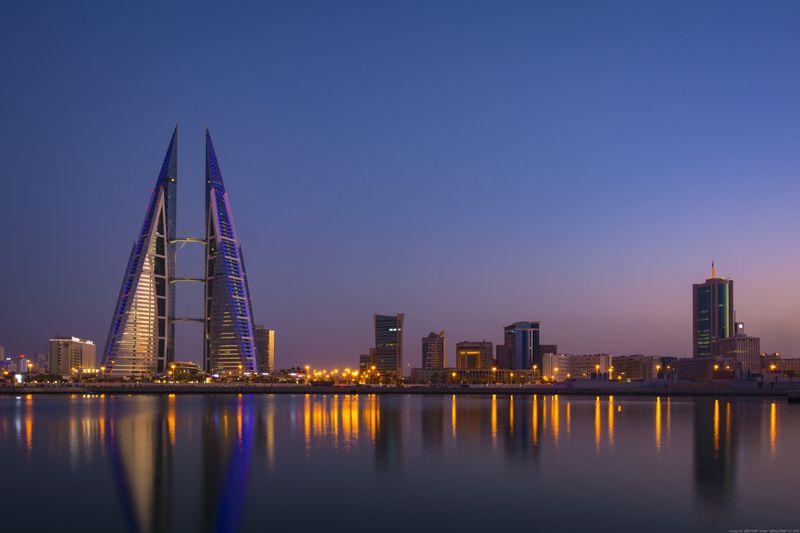
MANAMA — The crackdown began, by the rights groups’ account, on May 9, 2026, when Bahrain’s Ministry of Interior launched a sweeping campaign against Shia clerics, preachers and religious figures across the island. Between May and June, Reuters reported, authorities arrested more than 50 clerics and religious orators, accusing them of trying to run a terrorist group that sought to incite rebellion and overthrow the country’s ruling order with help from Iran’s Islamic Revolutionary Guard Corps. The trial that followed opened on July 5. One August hearing ran more than 13 hours. On November 8, the High Criminal Court is expected to deliver its verdict — and the kingdom, Reuters reported, is bracing for potential protests.
The timing is not incidental. When the United States and Israel launched the Iran war on February 28, Tehran answered by raining drones and missiles on neighboring Gulf states, including Bahrain. What shook Manama most, Bahraini officials told Reuters, was not only the attacks themselves but their accuracy — and the support for them voiced by some Bahrainis at home. Lt. Gen. Tariq Al Hassan, the head of Bahrain’s Public Security agency, framed the state’s response in existential terms: Iran, he said, seeks to undermine and ultimately topple the leadership of the only Gulf country ruled by a Sunni Muslim family but populated mostly by Shia Muslims.
The case, charge by charge
The joint statement issued Friday by 20 international and regional rights organizations describes a mass trial of 69 defendants — 60 of them Shia clerics, the rest affiliates including radoods, the religious reciters who lead mourning gatherings. Fifty-six defendants are in custody; 13 clerics are being tried in absentia. The charges, as the statement summarizes them, include establishing “a terrorist group” to overthrow the “constitutional regime” and to promote Iran’s doctrine of wilayat al-faqih — the Guardianship of the Islamic Jurist — by controlling mosques and local religious gatherings. Among the named defendants are prominent figures such as Sheikh Mohamed Sanqoor, Sheikh Ali Al-Sadadi, Sayed Majeed Al-Mashal, Sheikh Mahmoud Al-Aali and Sheikh Raed Al-Sitri.
Reuters separately reported that authorities have stripped citizenship from 69 citizens of Iranian heritage, and that around a dozen people have already been sentenced to between five and 10 years in prison for allegedly expressing support for the attacks on Bahrain. Those figures sit alongside the trial numbers, and together they describe the widest security sweep in the kingdom since the aftermath of the 2011 uprising.
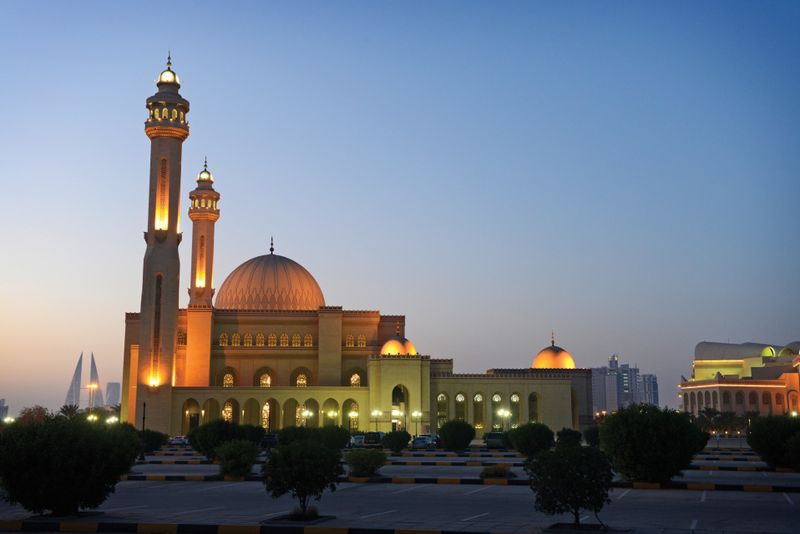
What the rights groups allege — and what the government says
The Bahrain Institute for Rights and Democracy (BIRD) says it has obtained firsthand accounts from detainees alleging abuses that may amount to torture. The joint statement describes incommunicado detention, secret proceedings and coerced confessions. Detainees were initially held at the Criminal Investigation Directorate, where, according to the accounts compiled by BIRD, they reported forced standing, prolonged blindfolding and handcuffing, sleep deprivation, and threats of physical and sexual violence against themselves and their families. Sheikh Mohamed Sanqoor reported being forced to stand blindfolded for an entire week. The groups also say Bahrain’s Special Investigation Unit — the body mandated to investigate torture allegations — did not thoroughly investigate, and they note that the UN Committee Against Torture raised concerns in January 2026 about incommunicado detention and the lack of safeguards for terrorism suspects in Bahrain, months before the arrests began.
The government’s answer is categorical. Bahrain denies targeting Shia citizens, “most of whom are law-abiding and loyal citizens,” Al Hassan told Reuters. Officials present the case as a counterterrorism prosecution: a network, directed from Tehran, that used pulpits to prepare rebellion while Iranian missiles were falling on the country. Iran’s UN mission did not immediately respond to a Reuters request for comment on the crackdown. The 20 rights groups, for their part, have called on Bahrain to guarantee fair trials, independently investigate the torture allegations, and exclude any confession obtained under duress — demands issued two days before the verdict, when they can still embarrass the court but can no longer change the trial.
Why this matters
Bahrain is small — an island of under two million people — but it sits at the exact intersection of the region’s largest forces. It hosts the headquarters of the U.S. Navy’s Fifth Fleet, the command that polices the Gulf and the Strait of Hormuz. It is the Gulf state where the Iran war’s central question — where does loyalty lie when Tehran and Washington collide? — is not abstract but demographic: a Sunni monarchy ruling a Shia majority, 30 kilometers of causeway from Saudi Arabia and a short missile flight from Iran.
That is why the Manama trial matters far beyond Bahrain. Every Gulf government watched the same Iranian salvos this year and quietly asked the same question about its own population. Bahrain is simply the first to answer it in a courtroom, at scale. If the verdicts are harsh and the streets stay quiet, other capitals will read the lesson as permission. If Sunday produces protests — or if the torture allegations harden into a lasting international campaign — the lesson reverses: that wartime loyalty purges carry a price even for America’s closest partners. The case is also a test of whether the legal machinery built after 2011 — special investigation units, trial safeguards, UN review — constrains a security state under genuine attack, or merely decorates its decisions.
How Bahrain got here
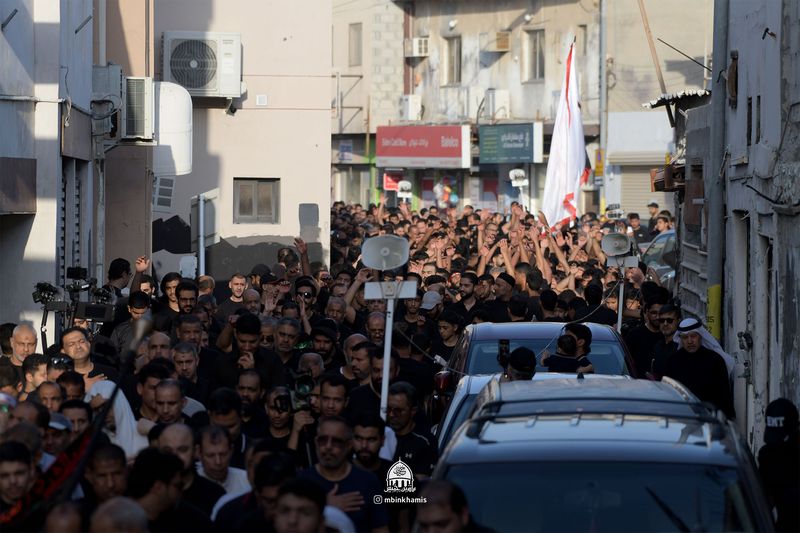
None of this is new; only the war is. In 2011, Bahrain’s Shia majority rose in pro-democracy protests that the monarchy, backed by Saudi-led Gulf forces, crushed. The years that followed brought mass trials, citizenship revocations and the systematic exclusion of the Shia opposition from politics — a record that made Bahrain a byword for the region’s sectarian stalemate. Then came a thaw of sorts: in 2024, royal pardons freed hundreds of prisoners jailed for political activity, a gesture rights groups themselves acknowledged. The war ended the thaw. A government that had been releasing political prisoners in 2024 was, by May 2026, arresting clerics in batches and describing the arrests as survival. The distance between those two Bahrains — two years, one war — is the real measure of what the conflict has done to the Gulf’s domestic politics.
The numbers, in context
Read the figures as a set. Sixty-nine defendants in a single terrorism trial. Sixty of them clerics — in a country where the Shia clergy is the backbone of majority-community life, that is not a fringe sweep but an institutional one. Fifty-six in custody for a verdict delivered six months after arrest. Around a dozen citizens already imprisoned, for five to 10 years, not for acts of violence but, on the reporting available, for expressing support for attacks. Sixty-nine citizens of Iranian heritage stripped of citizenship altogether. And behind the case, a war that began on February 28 and reached Bahrain within hours. Compare the 2024 pardons — hundreds freed — with the 2026 arrests, and the direction of travel is unmistakable: whatever reconciliation the pardons were meant to buy has been spent.
What happens next
Sunday’s verdict is the first fork. Convictions on the central charge — forming a terrorist group to overthrow the constitutional order — would likely bring long sentences and, the authorities expect, the risk of protests; acquittals or light sentences would be read, fairly or not, as the court bending to international pressure applied 48 hours before judgment. The second fork is Washington. Bahrain is a major non-NATO ally and the Fifth Fleet’s home; a mass conviction built on contested confessions puts the United States in the position of defending a partner’s wartime justice or quietly distancing itself from it. The third fork is Tehran’s: Iran has said nothing publicly about the case so far, but a harsh verdict hands it a ready-made cause — the persecution of Shia clerics by a U.S.-backed monarchy — at the very moment the region is deciding whether the war resumes or settles. The clerics in the dock are Bahraini. The audience for their verdict is not.
Related coverage: the tanker strike that widened the Hormuz crisis and Washington’s ordered-departure preparations for Gulf embassies.
Sources
Reuters, “Iran war spurs crackdown on clerics in tiny Gulf state Bahrain” (Nov. 6, 2026), including an interview with Lt. Gen. Tariq Al Hassan, head of Bahrain’s Public Security agency; joint statement of 20 international and regional human rights organizations, including Human Rights Watch and the Bahrain Institute for Rights and Democracy, “Bahrain: Shia Clerics Face Mass Trial Marred by Torture Allegations and Grave Fair Trial Violations” (Nov. 6, 2026), via Americans for Democracy & Human Rights in Bahrain; ADHRB, “Bahrain: Trial of Clerics on 8 November Tests Justice Amid Escalating Crackdown on Religious Freedoms” (Nov. 6, 2026); UN Committee Against Torture, concluding concerns on Bahrain (January 2026). Photos: Wikimedia Commons and as credited in captions; the mosque and gathering images are file photos.