Asif Merchant sentenced 27 years — 330 months, imposed in a Brooklyn courtroom on Tuesday — closes the strangest assassination case of the 2024 campaign: an Iran-directed plot to kill Donald Trump that was mapped out on a hotel napkin, pitched to undercover FBI agents posing as hitmen, and stopped in Texas one day before an unrelated gunman opened fire in Butler, Pennsylvania.
Track it live: Iran war tracker
BROOKLYN, New York, November 17, 2026 — Asif Merchant, 48, of Pakistan, was sentenced on Tuesday in federal court in Brooklyn to 330 months in prison — more than 27 years — for attempting to commit an act of terrorism transcending national boundaries and for murder for hire, the Justice Department said. U.S. District Judge Eric R. Komitee imposed the sentence in the Eastern District of New York, eight months after a federal jury convicted the Pakistani man of traveling to the United States to arrange political assassinations on American soil. It is the sentence that makes this the definitive Trump assassination plot Iran sentencing: a plot prosecutors say was directed by Iran’s Islamic Revolutionary Guard Corps as revenge for the 2020 killing of Qasem Soleimani, foiled before any attack was attempted, and now punished with one of the longest prison terms ever handed down in the United States for a foreign-directed assassination scheme that never drew blood.

330 months in Brooklyn: an “exceptionally serious crime”
The sentencing capped a case that had already produced one of the most unusual trials in the Eastern District’s history. Merchant’s trial began in late February 2026, days before the U.S.-Israeli assault on Iran that opened the Iran war — meaning a Brooklyn jury weighed whether Iran had tried to kill an American president in 2024 while the United States and Iran were, in real time, going to war. The jury convicted him in March 2026. On Tuesday, the question was narrower and, in its way, harder: how much of a man’s remaining life should be taken for a killing that never happened, ordered — on the government’s account, and by Merchant’s own admissions as the Justice Department presents them — by a foreign state’s intelligence service?
Prosecutors had asked for life. Judge Komitee refused, and said why from the bench: he called the offense an “exceptionally serious crime” and observed that few charges are more serious than the contemplated killing of a U.S. president. Merchant, who declined to speak at the hearing, showed no visible reaction as the 330-month term was announced, according to courtroom reporting by the Associated Press and CNN. The number itself deserves precision, because it will be rounded in most retellings: 330 months is 27½ years — not 30 years, and not the life term the government sought. The Merchant 330 months prison sentence sits, deliberately, between the two poles argued in that courtroom: the prosecution’s position that a man who tried to buy a presidential assassination should never leave prison, and the defense’s position that a plot this clumsy, stopped this early, should not be priced as if the shots had been fired.
What Merchant was convicted of
The two counts of conviction describe the plot’s two halves. Attempting to commit an act of terrorism transcending national boundaries is the charge that captures the foreign direction: the jury found that Merchant crossed the world to do, in America, what Tehran’s Revolutionary Guard wanted done. Murder for hire captures the method: he came not to pull a trigger himself, but to purchase one — to find criminals or Mafia members, as the Justice Department puts it, willing to kill a politician at a U.S. political rally. That distinction ran through the whole case. Merchant was, on the evidence, a broker rather than a gunman, and much of the trial fight was over what that means: the government treated the broker as the plot’s indispensable man, the defense treated him as its most replaceable and reluctant one.
How the plot unfolded: pilgrimages, a handler, and a napkin
Recruited through family, trained in Tehran
Per the Justice Department, Merchant admitted that he voluntarily joined Iran’s Islamic Revolutionary Guard Corps — the IRGC, the Iranian state’s expeditionary military and intelligence force, designated by the United States as a terrorist organization. The recruitment, on the account presented at trial, began around 2022 through a relative Merchant had met on religious pilgrimages to Iran. From about 2023, over roughly a year and a half, he met his handler about 15 times in Tehran. He was trained in counterintelligence — the tradecraft of spotting surveillance and protecting a clandestine relationship — and he was tasked with a specific job: go to the United States, hire criminals or Mafia members, and have a politician killed at a political rally. Prosecutors say the motive assigned to the mission was revenge for the January 2020 U.S. drone strike that killed IRGC commander Qasem Soleimani, the most powerful military figure in Iran, on the orders of then-President Donald Trump. That motive is the thread that makes this a Soleimani revenge plot sentence as much as a murder-for-hire one: the killing the plot was meant to answer was six years old when Merchant was sentenced, and the man who ordered it was the man the plot was meant to kill.
The names in the testimony: Trump, Biden and Haley
Who exactly was to die was the subject of some of the trial’s most consequential testimony, and it needs to be stated with the care the evidence requires. Merchant believed the ultimate target was Donald J. Trump. According to trial testimony and the Justice Department’s account, his handler also named then-President Joe Biden and former U.N. Ambassador Nikki Haley in the course of their conversations in Tehran — all three of them 2024 presidential candidates at the time. Merchant testified that he was never ordered to kill one specific person; the names surfaced across his meetings with the handler. Signal Post News states this as what the trial record and the DOJ say, not as an independently verified fact: the only sources for what was said in those Tehran rooms are Merchant’s own admissions and testimony, and the handler has never been produced. What is not in dispute is the shape of the assignment as Merchant himself described it — a politician, at a rally, in the middle of an American election campaign.
A sketch on a hotel napkin, an informant, and $5,000
In April 2024, Merchant flew to the United States to execute the plan. The plot’s fatal flaw arrived almost immediately, and it was human: an acquaintance he approached for help reported him to the FBI and became an informant. Trial video showed Merchant mapping a rally assassination for that acquaintance using objects arranged on a hotel napkin — the crude, now-famous sketch that prosecutors used to show intent and the defense used to show amateurishness. Through the informant, Merchant was introduced to purported hitmen. They were, in fact, undercover FBI agents. He met them three times, and he paid them $5,000, money obtained through relatives overseas, as the down payment on a presidential assassination. Every step after the napkin was, unknown to him, a step inside an FBI construction: the “hitmen” reported to the Bureau, the meetings were documented, and the plot that Tehran believed it was running in America was being run, in practice, by American counterintelligence. No attack ever occurred, no weapon was ever pointed at any candidate, and no rally was ever in danger — facts the judge would weigh explicitly at sentencing.
Arrested in Richmond, Texas — one day before Butler, and unrelated to it
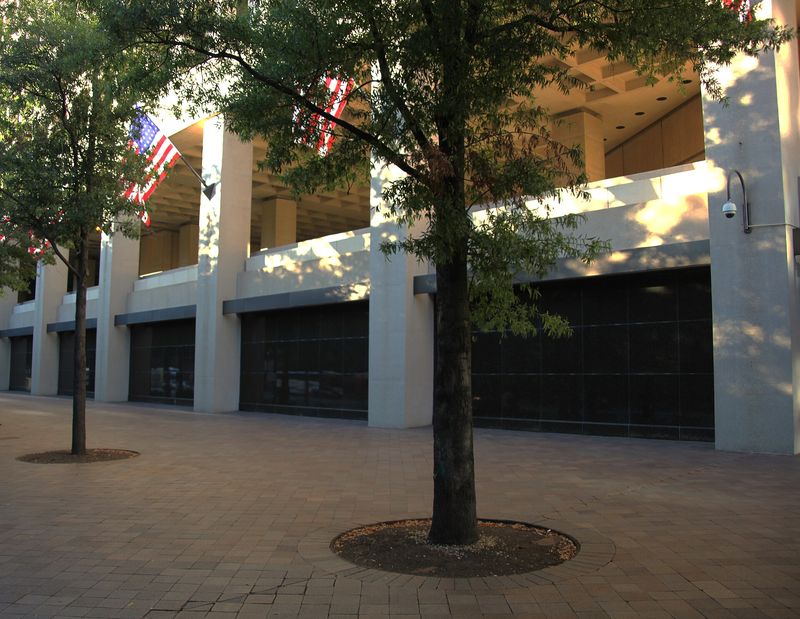
Merchant was arrested in Richmond, Texas, on July 12, 2024, as he prepared to leave the United States. The date matters, and it has caused persistent confusion ever since: July 12, 2024 was one day before the attempt on Trump’s life in Butler, Pennsylvania, on July 13, 2024. The two events were unrelated. The Butler shooting was the work of a lone American gunman with no connection to Merchant, to the IRGC or to this plot, and nothing in the trial record links them; their adjacency on the calendar is coincidence, not coordination. One clerical footnote is worth recording for readers checking the primary source: the Justice Department’s sentencing release carries a “2026” year for the arrest, which the AP, Reuters and CNN trial reporting all contradict — the arrest was in 2024, and this article follows the trial reporting. The distinction is not pedantry. In the summer of 2024, American politics absorbed, within 24 hours, the exposure of a state-directed assassination plot and an actual assassination attempt. Keeping them separate is the first duty of anyone writing about either.
The trial fight: a coerced man, or a willing operative?
Merchant took the stand in his own defense, and his testimony was the trial’s hinge. He told the jury he had joined the plot unwillingly — that he went along with the Revolutionary Guard’s instructions to protect his family in Tehran, and that he expected U.S. authorities to foil the plan. On that account, his American trip was a performance staged for an audience of handlers he feared, by a man who believed the FBI would stop it before anyone was hurt. His lawyers, Christopher Neff and Avraham Moskowitz, built the defense around that portrait: the plot, they argued, was incompetent and half-hearted, the work of a man going through motions; his anti-American social media posts were venting, not ideology; and the napkin sketch was the plan of someone who was never going to succeed and, on the defense telling, never truly meant to. The jury rejected the account and convicted on both counts. The duress claim nevertheless survived conviction as a sentencing argument — and, as Judge Komitee’s reasoning showed, it was not wholly unheard.
For the prosecution, Sara K. Winik answered the defense’s portrait with the plot’s endpoint. Whatever Merchant’s inner reservations, Winik argued, he had flown across the world, recruited help, sketched the killing and paid the money: he did, in her words, “the most extreme thing you can do.” That sentence captures the government’s theory of the whole case — that intent is proved by conduct, and that a man who completes every step of an assassination except the shooting has not half-done the crime but done it, up to the one step he had hired others to perform. It is also why the government sought life: in the prosecution’s framing, the only reason Donald Trump, or Joe Biden, or Nikki Haley is alive is that the FBI reached Merchant’s acquaintance before Merchant reached a real killer, and a defendant does not earn mercy from the competence of the people who stopped him.
The judge’s balance: family fear credited, motive found, life refused
Judge Komitee’s sentencing remarks are the most complete official verdict on the man, as opposed to the plot, and they cut in both directions. He said he believed Merchant had some genuine concern for his family — a partial crediting of the duress account that the jury had rejected as a defense to guilt but that a sentencing judge may still weigh as mitigation. But he also found that Merchant was “highly motivated to do harm to this country,” a finding that foreclosed any portrait of him as a merely passive courier. The life sentence the government wanted was refused in part for a reason rooted in the plot’s own history: it had been foiled early. From the moment Merchant confided in the wrong acquaintance, the scheme existed inside an FBI investigation; the undercover meetings, the documented payment and the Texas arrest meant the plot never acquired a real gunman, a real weapon or a real target date. Komitee’s 330 months can be read as the arithmetic of those findings: severe enough to mark an attempted presidential assassination directed by a foreign power, short of life because the attempt was intercepted at its first American step and because the man who carried it was found to be, in part, afraid for the people he had left behind in Tehran.
Washington calls it justice; Tehran denies it outright
The Justice Department presented the sentence as a message addressed well beyond the Brooklyn courtroom. Attorney General Todd Blanche said Merchant was “justly sentenced.” The department’s release also carried statements from M. Scott Proctor, from U.S. Attorney Joseph Nocella Jr. of the Eastern District of New York, and from James C. Barnacle Jr. of the FBI’s New York office, each presenting the outcome the same way: a foreign intelligence service reached into an American election, its operative was identified almost immediately, and the full weight of the American legal system — investigation, trial and now a 27½-year sentence — is the answer that such plots will reliably meet. For the FBI, the case is also an institutional exhibit: the plot was defeated not by surveillance technology but by a citizen who was approached, recognized what he was hearing, and called the Bureau, after which undercover agents let Merchant incriminate himself at his own pace.
Iran’s denial, stated plainly
Tehran has denied targeting or plotting to attack Trump or other U.S. officials. That denial is carried here prominently, as it must be: the Iranian government’s position is that it did not direct an assassination plot against American officials, and it has rejected the American account of Merchant’s mission. The structure of the evidence should be understood by any reader weighing the two positions. The IRGC’s direction of the plot rests, as a legal matter, on the jury’s conviction and on Merchant’s own admissions as presented by the Justice Department — admissions Merchant himself qualified at trial with his claim of coercion. There is no produced handler, no Iranian document in the public record, and no independent verification of the Tehran conversations beyond what the defendant said about them. What a Brooklyn jury decided, beyond a reasonable doubt, is that Asif Merchant traveled to the United States to arrange political assassinations; the sentence imposed on Tuesday punishes the man the jury convicted. Iran’s denial stands on the record beside it, unanswered by any proceeding in which Tehran was a party.

Why this matters
Analysis. A 27½-year sentence for a plot that killed no one might look, at a glance, like an ending. It is better understood as a measurement — of how long the Soleimani strike’s shadow runs, of how routine foreign assassination plotting on American soil has become, and of what it means that this sentence landed in the middle of a war between the two countries the plot connected.
The long tail of the Soleimani strike
Qasem Soleimani was killed in January 2020. In the nearly seven years since, the promise of revenge for that strike has been a standing feature of Iranian rhetoric and, on the U.S. government’s account, of Iranian operational planning — aimed at the officials of the administration that ordered it, above all at Trump himself. The Merchant case is the fullest judicial airing that claim has ever received: a recruited operative, a handler in Tehran, a mission statement, an American deployment, an arrest, a trial, a conviction and now a sentence, all of it tested in open court. That is a different kind of knowledge than an intelligence assessment or an indictment. Whatever readers make of the duress claim or of Tehran’s denial, the United States has now proved to a jury’s satisfaction that in 2024 a man came to this country to buy the murder of its political leaders as an act of state revenge. Sentencing him closes the case. It does not retire the grievance that prosecutors say produced it, which predates the current war and will outlast this sentence.
Foreign assassination plots on U.S. soil are now a pattern
Merchant is a data point in a series, and the series is the story. American officials have spent years warning that Iran and its networks treat assassination as an instrument of policy abroad — against dissidents, former officials and, in this case, a former and future president. This newsroom’s recent coverage shows how wide the pattern now runs: in an Iran assassination plot in Greece broken up with five arrests across North Macedonia and Greece, and in the RAF Fairford case, where a British-Iranian man was arrested as London pointed at Tehran. The Merchant sentence is the American judiciary’s contribution to deterring that pattern, and its logic is worth stating coldly: plots like this are cheap for the state that commissions them and ruinous for the individual who carries them out. A handler in Tehran risks nothing. The man on the plane risks 27½ years. Sentences like Tuesday’s are designed to raise the price of volunteering — and to make the next acquaintance who is approached, anywhere in the world, a little more likely to make the phone call that Merchant’s acquaintance made.
A 2024 plot, sentenced in the middle of the Iran war
The strangest dimension of Tuesday’s hearing is its timing. Merchant plotted in a world where the United States and Iran were adversaries but not belligerents. He was tried in the very days that changed: his trial opened in late February 2026, days before the U.S.-Israeli assault on Iran opened the Iran war, and he was sentenced with that war still running — the conflict this newsroom tracks as Washington insists, in Vice President Vance’s formulation, that Iran will not become a “forever war”, while at sea tankers are hit in the Strait of Hormuz as a third U.S. carrier arrives in the region. A courtroom is supposed to be insulated from that context, and in the formal sense it was: Komitee sentenced the 2024 plot, not the 2026 war. But the sentence will be read in Tehran and in Washington as a wartime act whatever the court intended — proof, depending on the reader, that the American system punishes Iranian aggression with law even while it fights Iran with arms, or that the legal case was always one front of a wider campaign. The verdict belongs to the jury. The meaning of 330 months, delivered mid-war, belongs to the moment.
Context and background: the road to 330 months
Data. The case spans almost seven years, three countries and two presidencies. Its chronology is the cleanest way to hold it:
| Date | Event | Source |
|---|---|---|
| January 2020 | A U.S. drone strike kills IRGC commander Qasem Soleimani — the killing prosecutors say the plot was meant to avenge | DOJ / trial reporting |
| Around 2022 | Merchant is recruited, per the DOJ, through a relative met on religious pilgrimages to Iran; he admits voluntarily joining the IRGC | DOJ |
| About 2023–2024 | Roughly 15 meetings with his handler in Tehran over about a year and a half; training in counterintelligence; tasked with hiring criminals or Mafia members to kill a politician at a U.S. rally | DOJ / trial testimony |
| April 2024 | Merchant flies to the United States; an acquaintance he approaches reports him to the FBI and becomes an informant; the napkin-sketch meeting is captured on video | Trial reporting |
| Spring 2024 | Three meetings with purported hitmen who are undercover FBI agents; Merchant pays them $5,000 obtained via overseas relatives | DOJ / trial reporting |
| July 12, 2024 | Merchant is arrested in Richmond, Texas, as he prepares to leave the United States | AP / Reuters / CNN |
| July 13, 2024 | The attempt on Trump’s life in Butler, Pennsylvania — unrelated to the Merchant plot | Trial reporting |
| Late February 2026 | Merchant’s trial begins in Brooklyn, days before the U.S.-Israeli assault on Iran opens the Iran war | Reuters |
| March 2026 | A federal jury convicts Merchant of attempting to commit an act of terrorism transcending national boundaries and murder for hire | DOJ |
| Tuesday, November 17, 2026 | Judge Komitee sentences Merchant to 330 months — 27½ years — rejecting the prosecution’s bid for life | DOJ 26-1373 |
Two features of that timeline deserve emphasis. The first is its asymmetry of risk: everything Tehran allegedly invested in this plot was deniable and distant, while everything Merchant invested was personal and total — his freedom, in the end, for a mission whose authors, if the government’s account is right, will never sit in a defendant’s chair. The second is how completely the plot depended on one stranger’s conscience. Had the acquaintance Merchant approached in 2024 simply agreed to help, or even stayed silent, the FBI’s construction never exists. The most sophisticated counterintelligence training Tehran could give him could not solve the problem that an assassination broker must, at some point, trust someone he does not control.
What happens next: an appeal, and the arithmetic of the sentence
Analysis — the appeal, and what 330 months means in practice. The case is not over. Merchant’s defense lawyers said after the hearing that he plans to appeal, while welcoming the court’s rejection of a life sentence — a pairing that tells its own story about Tuesday: the defense lost the number and won the argument that mattered most to their client’s life. An appeal will test the conviction, not merely the sentence, and the duress defense the jury rejected will be re-argued to appellate judges on a cold record. Nothing about an appeal changes the immediate fact: Merchant, 48, is in federal custody, and 330 months from 2026 runs, on paper, into the early 2050s, when he would be in his mid-seventies. Federal sentences are not served to the last day in every case — good-conduct credit and the ordinary mechanics of the federal system will shape the actual release date — but no realistic arithmetic turns 330 months into a short interruption. It is 27½ years: more than half of the life Merchant has lived so far, imposed for a plot in which no shot was fired, no victim was harmed, and no attack ever occurred.
That last fact is the one to end on, because both sides of the courtroom claimed it. For the defense, it is the mitigation: a foiled, fumbled plot, stopped at the napkin stage, punished at a scale usually reserved for completed violence. For the government, it is the aggravation narrowly averted: the plot failed only because its author confided in a man who called the FBI. Judge Komitee’s sentence holds both truths at once, which is what sentencing, at its best, is for. Asif Merchant came to the United States in 2024 to buy a murder at the heart of an American election. On Tuesday, in the city where he was tried, the United States told him what that errand costs: 330 months, counted out in a Brooklyn courtroom, in the middle of a war with the country that sent him.
Related coverage: Vance Says Iran Will Not Become a ‘Forever War’ — Not Even a Two-Year War · Tankers Hit in the Strait of Hormuz as a Third U.S. Carrier Arrives · Iran Assassination Plot in Greece: Five Arrested in North Macedonia and Greece
Sources
- Reuters, November 17, 2026 — “Pakistani man convicted of plotting to kill Trump is sentenced to over 27 years in prison”: the 330-month sentence imposed by Judge Komitee in Brooklyn; the March 2026 jury conviction; the trial’s late-February start, days before the U.S.-Israeli assault on Iran opened the Iran war; prosecutors on the Soleimani revenge motive and on the handler naming Trump, Biden and Haley; Merchant’s testimony that he joined unwillingly to protect family in Tehran; Tehran’s denial that it targeted or plotted to attack Trump or other U.S. officials.
- Associated Press, November 17, 2026 — “Man gets more than 27 years in US prison for assassination plot that he said was steered from Iran” (AP report via The Reflector): the courtroom detail — Merchant declining to speak at sentencing and showing no visible reaction; Komitee on the seriousness of the contemplated killing of a U.S. president; Attorney General Todd Blanche’s “justly sentenced” statement; defense lawyer Avraham Moskowitz saying Merchant plans to appeal while welcoming the rejection of a life term; the July 12, 2024 Texas arrest, a day before the unrelated Butler attempt.
- CNN, November 17, 2026 — “Man sentenced to over 27 years for assassination plot targeting Trump that he said was directed from Iran”: the sentencing hearing and the judge’s remarks; Merchant’s account that he played along with a Revolutionary Guard operative to protect relatives in Iran; the undercover FBI agents posing as hitmen, tipped by the acquaintance who saw the napkin demonstration; the Iranian government’s denial that it tried to kill U.S. officials.
- U.S. Department of Justice, press release 26-1373, Tuesday, November 17, 2026 — “Iranian Intelligence Agent Sentenced to Over 27 Years in Prison for Foiled Plot to Assassinate U.S. Government Officials”: the 330-month sentence for attempting to commit an act of terrorism transcending national boundaries and murder for hire; Merchant’s admitted voluntary membership in the IRGC, his recruitment, handler meetings and counterintelligence training as presented by the department; the March 2026 conviction; and the statements of Attorney General Todd Blanche, M. Scott Proctor, U.S. Attorney Joseph Nocella Jr. and the FBI’s James C. Barnacle Jr. Note: the release text carries a “2026” year for Merchant’s arrest; AP, Reuters and CNN trial reporting establish the arrest as July 12, 2024, and this article follows the trial reporting.