Container ship sunk Strait of Hormuz: Singapore's Maritime and Port Authority (MPA) says two Singapore-registered container vessels were struck by unknown projectiles in the Strait of Hormuz — the GFS Pride, which caught fire and sank after her crew of 21 was evacuated unhurt, and the GFS Giselle, holed a day later but safe at anchor with her 22 crew uninjured.
A Ship Goes Down in Hormuz: GFS Pride Lost, Giselle Holed
Track it live: Live war tracker — follow the war and the shipping crisis around it, including the Iran war tracker.
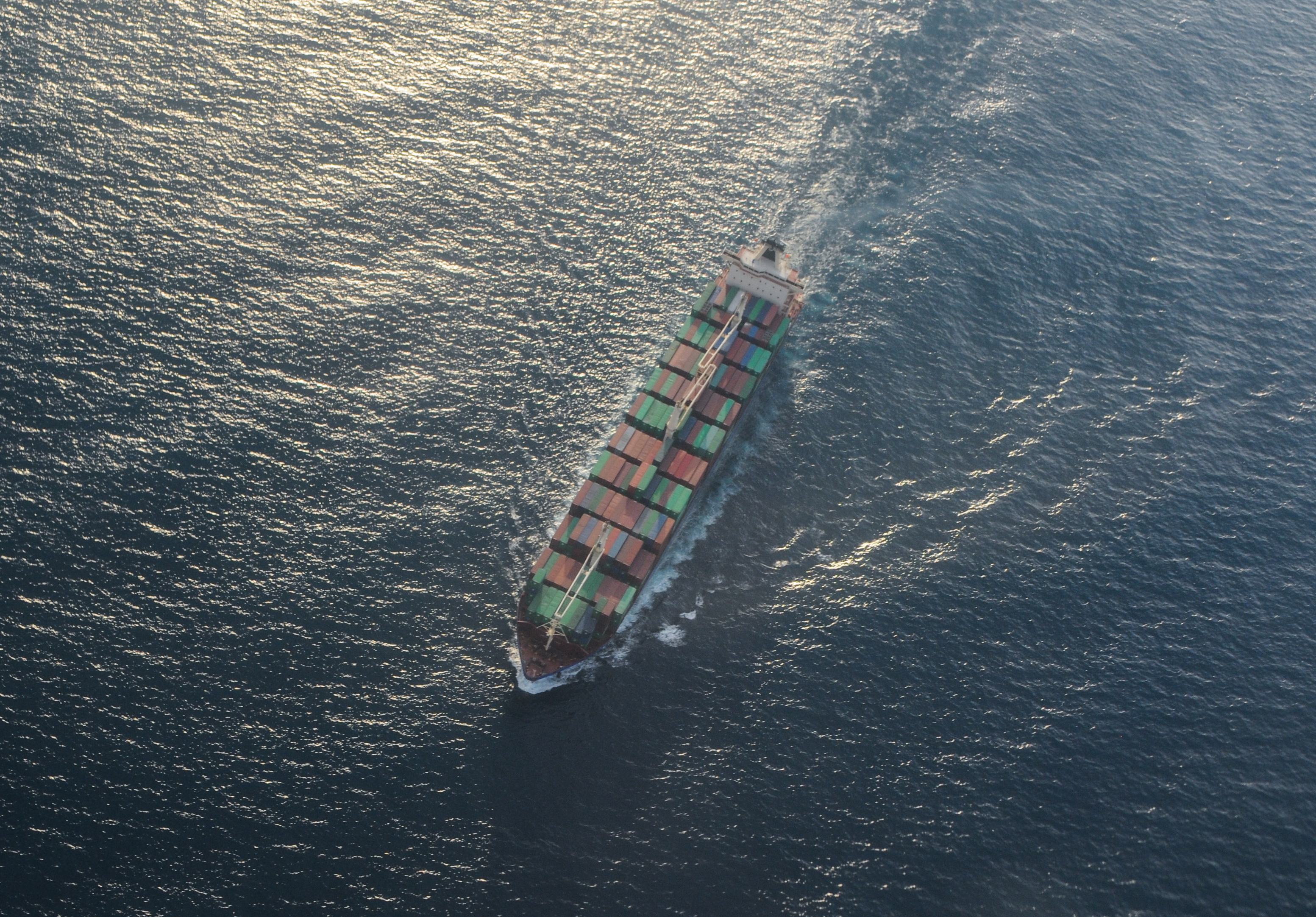
Singapore's Maritime and Port Authority said on Wednesday that two Singapore-registered container vessels had been struck by unknown projectiles in the Strait of Hormuz. The GFS Pride was hit on October 13, caught fire and later sank; all 21 of her crew were evacuated safely and none was injured. The GFS Giselle was struck on October 14, suffered hull damage, and reached a safe anchorage under her own power, with all 22 crew safe. There were no Singaporeans aboard either vessel. The MPA said it is in contact with the ships' manager and is monitoring the situation.
Singapore's response went beyond a shipping notice. The MPA condemned the attacks on commercial shipping as unprovoked and a breach of international law and of the freedom of navigation protected under the United Nations Convention on the Law of the Sea. That framing matters: Singapore is one of the world's largest ship registries and the busiest transshipment port on earth, a state with no part in the fighting whose flag now flies over a wreck in the strait.
A sinking that leaves a hazard behind
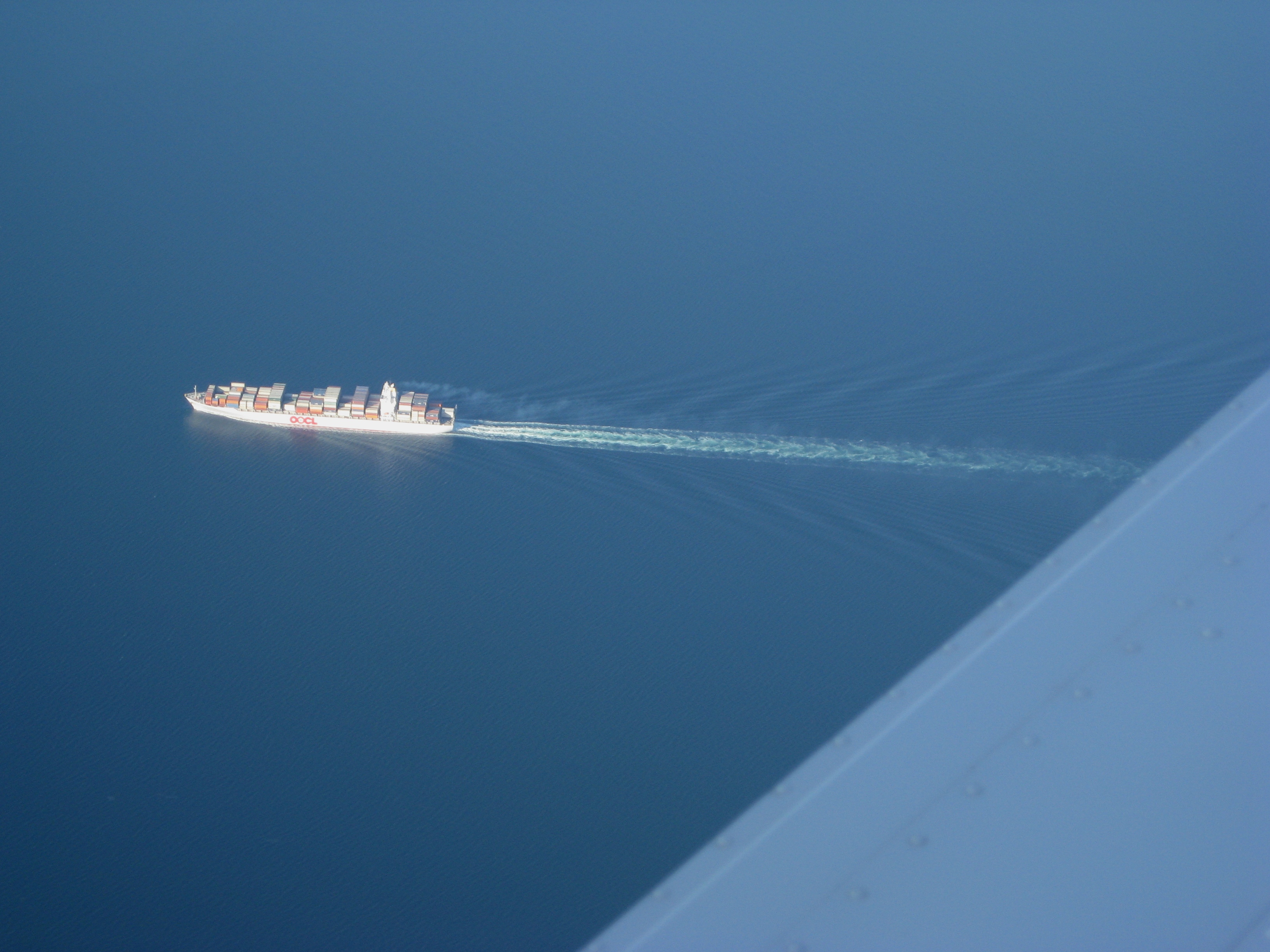
A tanker sinking is an oil story. A container ship sinking is a debris story. The GFS Pride was a 2,824-TEU vessel — a mid-sized container ship carrying, in principle, thousands of boxes of general cargo. Pakistan's hydrographic authorities have warned mariners about floating containers from the wreck: steel boxes floating awash, nearly invisible in a seaway, each one heavy enough to hole a small vessel or foul a larger one's propeller. A sunken box ship does not stop endangering the strait when it goes down; in some ways it gets more dangerous, because the hazard is unlit, uncharted and drifting.
The Pride is also, on the available counts, a milestone nobody wanted. Citing International Maritime Organization data, Reuters reports she is the second vessel to sink since the United States–Iran war began on February 28. Ships have been hit, holed, set alight and abandoned in the months since; sinkings remained rare enough to count. That count is now two, confirmed — and possibly three: the Cape Dao, the first vessel struck in this campaign back on September 23, has also been reported sinking after a failed rescue attempt, a report carried by the maritime intelligence firm Vanguard via Reuters and not independently confirmed.
What is claimed, and what is actually known
Two accounts of the Pride's loss are now on the record, and they do not agree. The Islamic Revolutionary Guard Corps Navy has claimed the ship struck a naval mine while on an unauthorised route. Singapore, the flag state, says both vessels were struck by unknown projectiles. Neither account has been independently verified: no wreck survey has been published, no imagery of the strike has been authenticated, and the cause of the sinking — and responsibility for it — remains unestablished on the public evidence. What is established is narrower and still damning enough: two neutral-flagged merchant ships were hit in an international strait in two days, one of them is on the bottom, and 43 merchant sailors are lucky to be alive.
Read the two framings for what they are. Singapore's is legal: unprovoked attacks on commercial shipping breach international law, full stop — a formulation designed to build a record, not just a headline. The IRGC's is operational: a mine, an unauthorised route — a formulation that shifts responsibility onto the ship and warns every other master in the strait that safety lies in following routes Tehran approves. Both are claims in a contest over who gets to define lawful passage through Hormuz. The torpedoes, missiles, drones or mines — whichever they were — are almost secondary to that argument.
Not one incident — a pattern
The two Singapore ships were not hit in a quiet week. The United Kingdom Maritime Trade Operations centre issued warnings numbered 170-26 through 173-26 covering four separate ship attacks on October 13 alone. Six vessels were struck on October 11, according to gCaptain's tally of the incident reports. Set against that tempo, the Pride and the Giselle look less like anomalies than like the week's arithmetic catching up with a new category of target: the attacks have been frequent enough that eventually they were going to find a container ship, and then, a day later, another one.
That distinction — frequency plus breadth — is what changes the risk calculation for the industry. A shipping line can price the risk of a strait where tankers are occasionally struck; it does so, expensively, every day. A strait where any hull will do, including the feeder container ships that keep Gulf ports supplied, is a different proposition: the question stops being what a transit costs and becomes whether the transit happens at all.
Why this matters
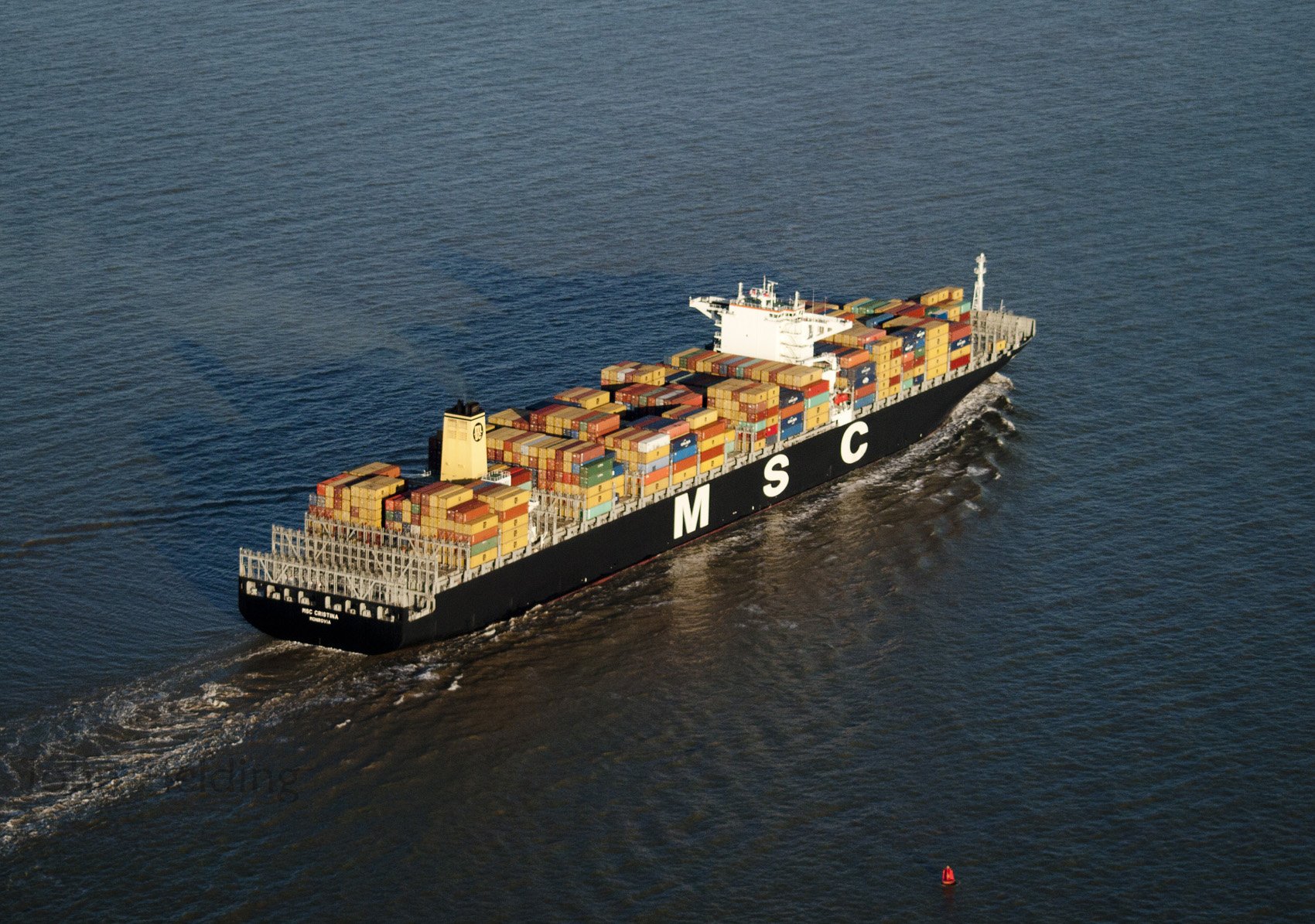
The standard Hormuz statistic — that roughly a fifth of the world's oil and liquefied natural gas normally transits the strait — understates what the waterway carries. Oil is the cargo that makes headlines, but the Gulf's cities run on boxes: food, medicine, machinery, vehicles, electronics and building materials arrive by container ship at ports inside the Gulf, and those ships must pass the same narrow water as the tankers. Brent crude trading around $106 on October 14, lifted by Hormuz risk and the strike on Aramco's Dhahran headquarters, shows energy markets already pricing the strait. Container freight has no single price flashing on a screen; its costs arrive more quietly, in war-risk insurance premiums, surcharges and, eventually, shelf prices.
Insurance is where the widening target set bites first. War-risk cover for a Hormuz transit is repriced voyage by voyage, and underwriters reprice on patterns, not press releases: four attacks in a day, six ships in a weekend, a sinking on Tuesday, a second container ship holed on Wednesday. Each data point argues for higher premiums or for refusing cover on some hulls altogether — and a ship that cannot get cover does not sail, whatever its owners think of the odds. The Giselle's survival story (holed, afloat, anchored under her own power) will be read in underwriting rooms as carefully as the Pride's loss.
Who gains, who pays
The gains from a frightened strait are concentrated; the costs are socialised. Whoever can credibly threaten passage through Hormuz holds leverage over every government and market that depends on it — leverage that grows each time a neutral hull is hit, because each strike advertises that no flag is a safe conduct. The bill, meanwhile, is distributed across shipowners paying war-risk premiums, charterers paying surcharges, Gulf importers paying more for everything that arrives in a box, Asian exporters watching a major market become harder to serve, and consumers at the end of the chain paying prices that quietly include the cost of a war they may never have heard of.
Singapore's position shows how the circle of the affected keeps widening. A city-state 6,000 kilometres away, uninvolved in the war, now has a sunken ship, a formal legal protest and a flag-state investigation to run. Every registry state — Panama, Liberia, the Marshall Islands, the hosts of most of the world's merchant tonnage — is watching the MPA's response, because the precedent set for how a flag state answers the sinking of its ship in Hormuz will be the precedent available when the next wreck flies a different flag.
What happens next
The immediate sequelae are practical. Navigation warnings will multiply around the Pride's wreck and her drifting containers; salvage and survey work, if it happens at all in contested water, will take time. UKMTO's warning tempo over the next several days will tell the industry whether October 13–14 was a spike or a new baseline. Watch three things in particular: whether any major container line suspends Hormuz transits or announces war-risk surcharges (the lines that move first usually set the market); whether escort or convoy arrangements, until now discussed mostly around tankers, are extended to container services; and whether Singapore's UNCLOS framing gathers company — formal protests from other flag and port states would mark the moment the shipping world, and not just the belligerents, starts treating the strait as closed in law even where it remains open in fact.
And under all of it runs the simplest fact of the week. Two ships went into the strait carrying other people's cargo, under a neutral flag, on the ordinary business of trade. One is sunk and one is holed, and 43 sailors are alive because evacuation and seamanship worked. The strait's traffic has survived eight months of war on the assumption that the shooting would stay aimed at oil. The GFS Pride is on the seabed now, and the assumption went down with her.
Related coverage: Tanker attack wave in Hormuz: UKMTO warnings multiply · Aramco headquarters in Dhahran hit by missile · Iran's Hormuz shipping tactics and the oil-market stakes
Sources: Reuters (October 14) on the MPA statement; Reuters (October 14) on the sinking; Asia News Today / Bernama (October 14); gCaptain (October 14). Crew figures, ship details and the MPA's characterisation are as stated by the Maritime and Port Authority of Singapore; the IRGC Navy's mine claim is reported as a claim and has not been independently verified; the reported sinking of the Cape Dao is likewise unconfirmed.