Track it live: Wars tracker
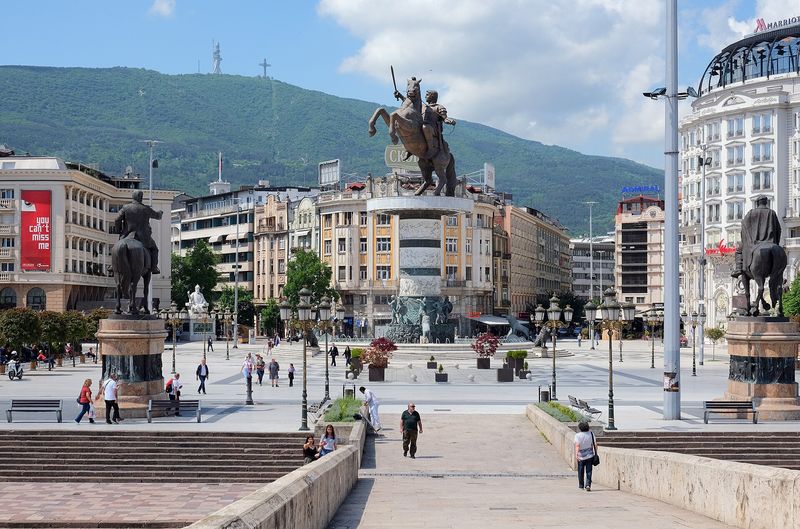
SKOPJE / ATHENS, November 17, 2026 — North Macedonia and Greece have arrested five people over a suspected Iran assassination plot in Greece, the two countries announced on Tuesday — a cross-border intelligence operation that officials say broke up a network preparing to kill a person on Greek soil under the direction of a handler linked, North Macedonia’s security agency alleges, to Iranian intelligence and to one of the most wanted Iranian criminal figures in the world.
North Macedonia’s National Security Agency, the ANB, said it had uncovered a network that, under the instructions of an Iranian citizen, undertook preparatory logistical activities for a terrorist act — an assassination — against a previously identified person in Greece. The investigation was conducted in cooperation with Greece’s National Intelligence Service, the EYP. North Macedonia’s Interior Ministry confirmed that five people were arrested, Reuters reported. All five are North Macedonian citizens, according to reporting by the Associated Press and Israeli outlet chains.
Much about the case remains officially unstated, and precision matters here. The target has not been identified by the ANB, by Greek authorities, or by any other official source. The five suspects have not been named, and no charges have been detailed in any source. Iran gave no immediate response to Reuters, and Iran’s mission to the United Nations gave no immediate response to the Associated Press. What follows separates what officials have said from what agencies allege and what outlets report — because in this story, those are three different things.
The arrests — and a numbers discrepancy worth stating plainly
The core fact is agreed: a joint North Macedonian–Greek operation has put five people in custody or under questioning over an alleged assassination plot. Reuters, citing Greek security officials and North Macedonia’s Interior Ministry, reported that five people were arrested. Greek security officials told Reuters that one North Macedonian national was arrested in Greece on November 12 and extradited to North Macedonia, which then arrested the other four. The suspects have criminal records, the Greek officials said; they had travelled to Iran and met their handler; and one arrested person likely revealed details of the meeting and the plans, according to a Greek intelligence official.
The Associated Press’s account of the same operation is formulated differently, and the difference should be reported rather than smoothed over. AP reported that four people were detained in North Macedonia for questioning, that a fifth person was also questioned, and that a sixth person is wanted. AnewZ, carrying the ANB’s account, described four arrests in North Macedonia plus a fifth person in Greece. These accounts may describe the same five people at different procedural stages, with a sixth person at large — or they may reflect genuinely different counts from two national bureaucracies describing a joint operation in different legal vocabularies. What they cannot honestly be merged into is a single clean number. The formulation this article leads with — five arrested — is the Reuters and Interior Ministry formulation. AP’s four-detained, fifth-questioned, sixth-wanted formulation is attributed to AP wherever it appears.
The handler and the crime boss — ANB allegations, attributed
The most explosive elements of the announcement are allegations by the ANB, and they are presented here as exactly that. The agency named the alleged Iranian handler as Edris Jahangiri Mavaneh, describing him as the main instigator of the plot, a collaborator of Iran’s security and intelligence services with wide contacts, and a man linked to Naji Sharifi Zindashti — an Iranian crime boss and drug lord. AP reported that ANB director Bojan Hristovski named Zindashti as a recruiter in the network. Zindashti is wanted in the United States for allegedly operating a criminal network that targeted Iranian dissidents and activists abroad.
Every link in that chain — Mavaneh to Iranian intelligence, Mavaneh to Zindashti, Zindashti to the recruitment of this network — is an allegation of the North Macedonian security agency. None of it has been tested in a court in this case, no charges detailing it have been published, and Iran has not responded to it. The ANB also gave a sense of the investigation’s depth: “Since the beginning of 2026, the Agency… has undertaken activities to uncover the intentions and plans of individuals linked to foreign/Iranian actors, to commit terrorist acts,” the agency said, in a statement carried by Reuters. Greek-side reporting dates the start of the joint investigation to late February or early March 2026 and says the EYP and ANB worked with other Western agencies.
The target: officially unnamed
Who was to be killed? Officially, nobody has said. The ANB described the intended victim only as a previously identified person in Greece. Greek authorities have not named a target. Iran has not commented. Israeli outlets — the Jerusalem Post, the Times of Israel and Ynet/N12 among them — report that the target was an Israeli executive. That claim is reported here as what it is: reporting by Israeli outlets, without an official source cited for it, naming no individual and no location. It may prove correct. It is not, at this stage, an established fact, and it will not be stated as one.
The distinction is not pedantry. In assassination-plot cases, the identity of the target is the fact that determines what the story is — a threat to a diplomat, a dissident, a businessperson and a intelligence officer are four different stories with four different implications. Until an authority names the target or a court filing does, the honest sentence is the one the agencies themselves wrote: a person in Greece.
The pattern this case is said to fit
Western security services have argued for years — in indictments, sanctions notices and intelligence assessments across the United States and Europe — that Iran has increasingly worked through criminal intermediaries when it acts abroad: hiring or tasking gang figures, drug networks and local criminals to surveil, threaten or attack targets, rather than using its own officers directly. Zindashti’s name sits at the center of that alleged pattern in American charging documents, which accuse his network of targeting Iranian dissidents and activists overseas. That pattern is context for this case, offered by the agencies making the allegations; it is not proof of anything in this case. The North Macedonian and Greek allegations will stand or fall on the evidence their services produce, in court, about these five suspects and this plot.
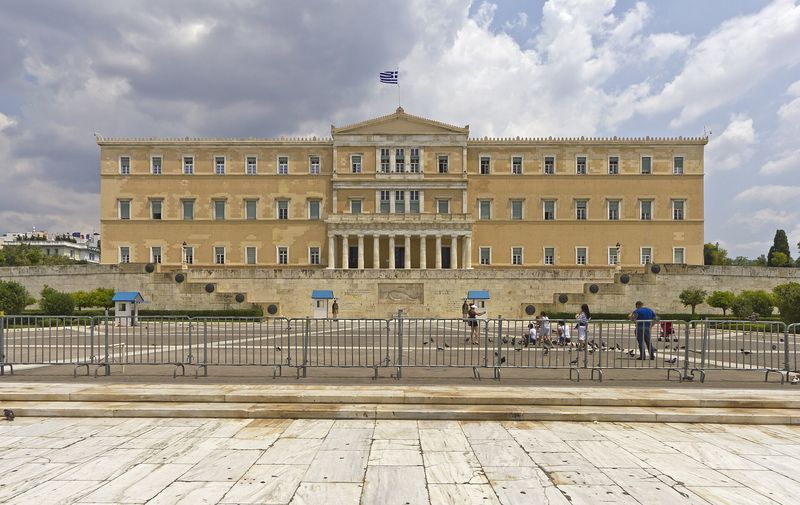
What can be said without allegation is structural. The operation described on Tuesday was multinational in both directions: a plot allegedly run from Iran, through a handler, into two European countries, and disrupted by two national services working with — on Greek reporting — additional Western partners. Small states are not peripheral to this map. North Macedonia, a NATO member since 2020, sits on Balkan routes that intelligence services watch closely, and its ANB plainly wanted the authorship of this disruption known: the agency briefed its account in detail, named its alleged handler and its alleged crime-boss connection, and put its director’s name to the Zindashti claim. Greece’s EYP, for its part, confirmed the cooperation and supplied the account of the November 12 arrest on Greek soil and the extradition north.
Why this matters
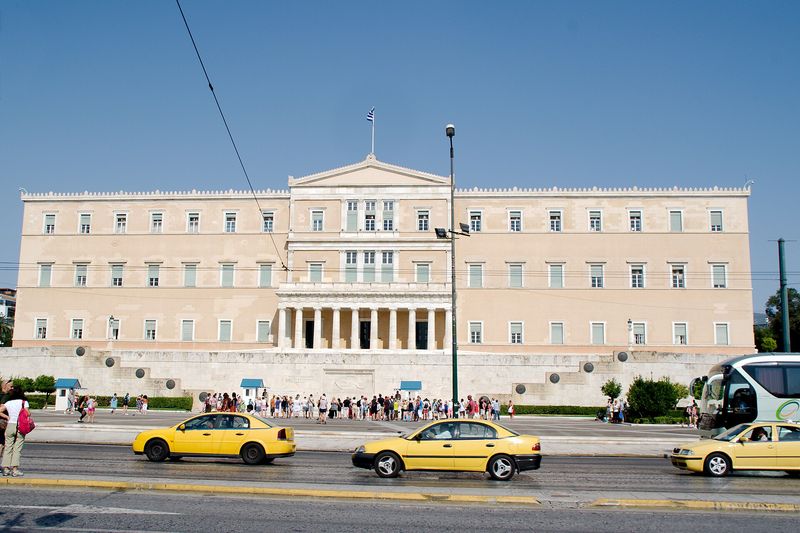
If the allegations are borne out, this case matters because it extends a documented concern into new geography. Alleged Iranian assassination and abduction plots have been charged or disrupted in the United States, Britain, the Netherlands, Denmark, Germany, Turkey and Cyprus in recent years. A plot allegedly staged through North Macedonia against a target in Greece would show the same method — criminal cut-outs, a handler abroad, local recruits with criminal records who had travelled to Iran — operating in the Balkans and the eastern Mediterranean, and being caught there by local services rather than by the larger Western agencies that usually announce such cases.
It also matters because of what it asks of readers and of governments: discrimination between grades of knowledge. Five arrests are a fact. A handler’s name is an agency’s allegation. A target’s identity is, today, a claim in some outlets and a silence in every official statement. Iran’s position is unknown — no immediate response is not a denial, and it is not an admission. Governments deciding how to respond, and publics deciding what to believe, have to hold those categories apart, because collapsing them is how unproven allegations harden into premises for policy.
Finally, the case matters for the two small services that ran it. The ANB and the EYP do not often lead international announcements of this kind. A successful joint disruption — if the courts sustain it — is the kind of operation that deepens intelligence-sharing relationships far beyond its own facts, and the kind that both agencies will cite the next time they ask partners to trust their reporting.
Two small services, one long investigation
The timeline the agencies have disclosed is itself a finding about how this kind of case is built. The ANB says it has been working the network since the beginning of 2026. Greek reporting puts the start of the joint investigation in late February or early March. The first arrest on Greek soil came on November 12 — more than eight months after the investigation opened. That is the rhythm of counter-intelligence work against an alleged proxy network: identify the local recruits, watch the travel, map the contacts, and wait until the picture is complete enough that an arrest does not simply scatter the network and warn the handler. The Greek intelligence official’s remark to Reuters — that one arrested person likely revealed details of the meeting and the plans — suggests the services believe the picture, once the arrests began, filled in quickly.
The suspects’ profiles, as described by Greek officials, fit the alleged method with uncomfortable neatness: North Macedonian citizens, with criminal records, who had travelled to Iran and met their handler in person. Each of those elements is an official claim, not a court finding, and each will have to be evidenced — travel records, communications, the handler meetings — if the case reaches trial. But the profile also explains why the two services describe the plot as logistical preparation rather than an imminent attack: the ANB’s own language is “preparatory logistical activities,” which in plots of this alleged kind means the unglamorous infrastructure of an assassination — surveillance of a target’s routines, safe locations, transport, weapons sourcing — assembled in advance of a decision to act. Disrupting a network at the logistics stage is the outcome every security service wants and the hardest to prove afterward, because the defense in such cases is always that preparation is not intent. The evidence the services gathered over eight months is what will answer that argument.
The Balkan crossroads
Geography is the quiet character in this story. North Macedonia is a landlocked NATO member surrounded by EU states and aspirants, sitting astride the corridor that runs from the Aegean up through the Balkans into central Europe. Greece is the corridor’s maritime gate — a frontline state for migration routes, energy projects and, in the assessment of its own services, foreign intelligence activity connected to the wars to its east and south. A network allegedly recruited in the first country to kill in the second is a case study in how thoroughly the distinction between “frontline” and “rear-area” states has dissolved in Europe’s current security environment.
It is also a case study in how the response has changed. A decade ago, an alleged plot of this kind in Skopje and Athens might have been handled quietly, or announced by a larger ally. On Tuesday it was announced by the ANB and the EYP themselves, with named officials, named alleged handlers and a named alleged crime boss — a public claim of competence and authorship by two services that plainly intend to be treated as producers, not consumers, of European security intelligence. Whether the prosecutions sustain that claim is now a question for two court systems.
What happens next
The next facts will come from prosecutors and courts: whether charges are filed against the five, what those charges say, and whether the sixth person described as wanted in AP’s account is found. Court proceedings may also be where the target’s identity, the handler allegations and the Zindashti connection are first tested against evidence rather than asserted in statements. Iran’s response, when it comes, will be reported as it is given. And the count question — five arrested on the Reuters and Interior Ministry account; four detained, a fifth questioned and a sixth wanted on AP’s — should be resolved by the judicial record rather than by repetition.
Related coverage: U.S. intelligence warnings on Iranian assassination plots; Kuwait’s summons of Iran’s ambassador over an assassination-plot case; and Iran’s Guards and the Bahrain radar claim.
Reporting based on Reuters and the Associated Press, with additional reporting by AnewZ. The handler and crime-network links are allegations of North Macedonia’s National Security Agency (ANB). The suspects are unnamed and no charges have been detailed; the target has not been officially identified. Iran gave no immediate response.
Sources
Sources: Reuters (Nov. 17, 2026); Associated Press via EuropeSays (Nov. 17, 2026); AnewZ (Nov. 17, 2026).