‘The Block Is Out’: Ukraine Takes the Refinery War Back to Russia

KYIV, October 15, 2026 — On day 1,695 of the war, the pause is over. President Volodymyr Zelenskyy has told the Financial Times that Ukraine will resume its strikes on Russian oil refineries, ending a two-day halt that followed President Donald Trump’s announcement of an energy ceasefire between Kyiv and Moscow. The interview, reported by Reuters on Thursday, is as much an indictment of Washington as a warning to Moscow: Zelenskyy said U.S. early-warning alerts had been lost, that Starlink satellite links were slowed across Ukraine, and that American counterparts had warned intelligence support would be blocked if the energy strikes continued. If Washington wants the refinery campaign stopped again, he said, the minimum price is more Patriot air-defense interceptors.
Track it live: Ukraine war map — live front-line and strike tracker.
A two-day pause, then the gloves come off
The refinery campaign has been Ukraine’s most consequential long-range effort of the war: repeated drone strikes on the refineries, depots and pumping stations that turn Russia’s crude into fuel for its army and revenue for its budget. When Trump announced an energy ceasefire, Kyiv held its fire for two days. That restraint has now expired, and Zelenskyy made clear in the interview that he regards the pause as a concession extracted under pressure rather than a step toward a settlement. He criticised U.S. business deals with Moscow, and in a separate interview with Piers Morgan he answered yes when asked whether he felt betrayed, calling the recent diesel deal between Washington and Moscow a victory for the Kremlin.
The Kremlin, for its part, denies that any detailed bargain exists to be broken. Kremlin spokesman Dmitry Peskov told The Times that the details of the ceasefire were never specified, and that Russia will continue attacking Ukrainian power plants. Between those two accounts — Kyiv’s claim of a deal suspended under duress, Moscow’s claim that nothing precise was ever agreed — sits the same unresolved problem that has dogged every energy truce of this war: nothing written down, nothing verified, and both sides free to describe the other as the violator.
The intelligence warning
The most serious of Zelenskyy’s claims concern not diplomacy but the machinery of the war itself. He said Ukraine had lost U.S. early-warning alerts — the notifications that help Ukrainian defenses anticipate incoming attacks — and that Starlink, the satellite network Ukrainian units depend on for communications and drone operations, was slowed nationwide, hampering operations. He said U.S. counterparts had warned that intelligence would be blocked if Ukraine continued striking Russian energy targets. Those claims could not be independently confirmed, and Washington has not publicly detailed any such warning. But their significance does not depend on every detail: a Ukrainian president is now saying, on the record, that his country’s access to American intelligence and American-linked satellite bandwidth is being used as leverage over Ukrainian targeting decisions.
His stated price for a renewed halt is equally pointed: more Patriot interceptors, at a minimum. The demand reframes the argument in terms Washington understands. Ukraine’s cities and power grid are defended in large part by a finite stock of Western interceptors; every mass Russian attack burns through them. If Kyiv is to stop hitting the refineries that fund and fuel Russia’s war, Zelenskyy is saying, then the United States must underwrite the cost of absorbing Russia’s strikes instead — in missiles, not communiqués.
The same night: 580 drones
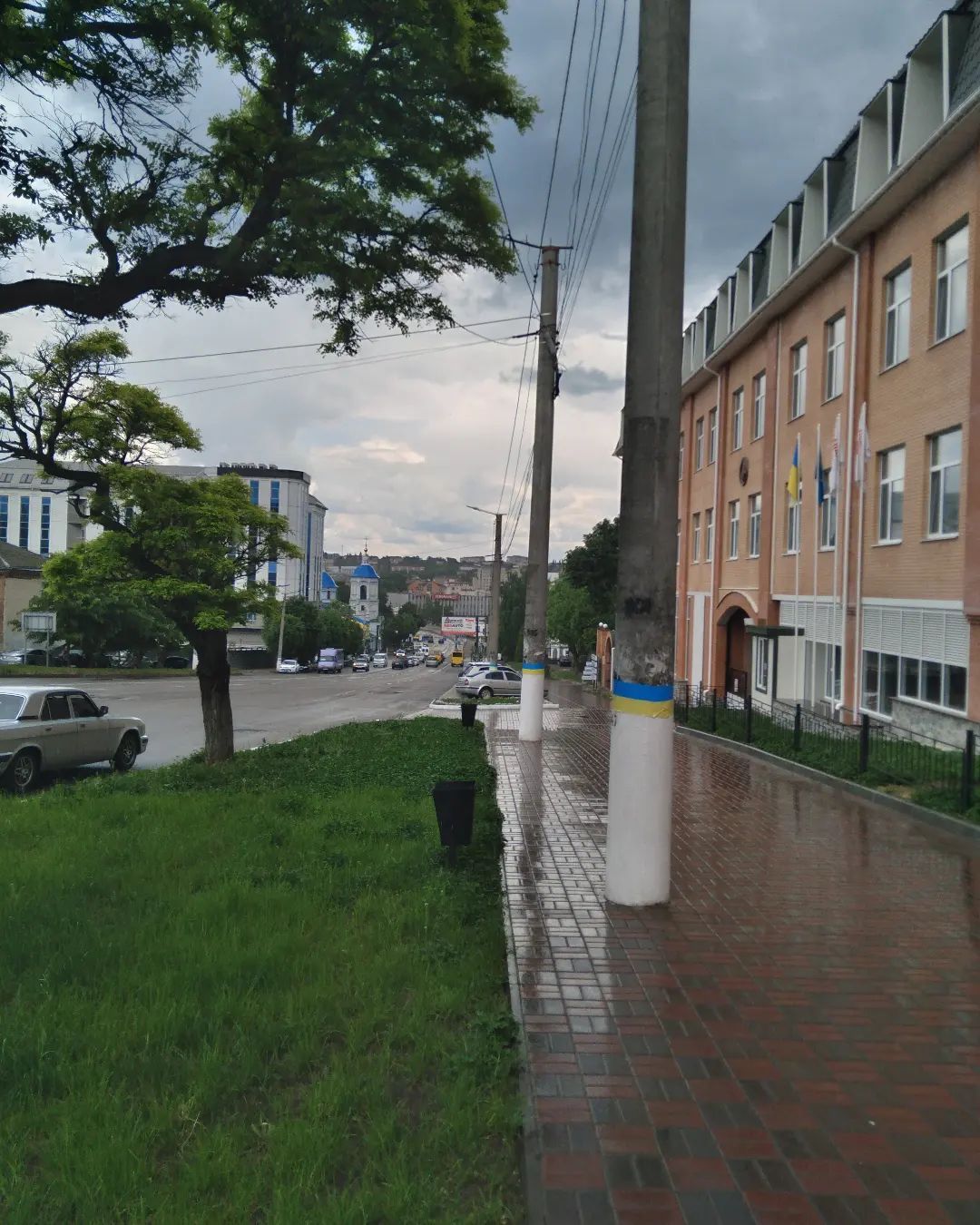
Whatever restraint the energy ceasefire was supposed to produce, it was not visible in the sky over Ukraine on the night Zelenskyy’s interview appeared. Ukraine’s Air Force said Russia launched 580 drones across the country, of which 536 were shot down or suppressed, along with two Kh-59 missiles; strikes were recorded at 31 locations, with falling debris at 11 more. The heaviest blow fell on the Kirovohrad region in central Ukraine, in what Governor Andriy Raikovych described on Telegram as the largest Russian attack on the region of the war: more than 360 drones, 26 locations hit, three people killed and six wounded, with infrastructure, transport, logistics sites and homes among the targets around the regional capital, Kropyvnytskyi.
The arithmetic of the night cuts both ways, and both capitals will read it their way. A 92 percent interception rate is a formidable defensive performance — and it still left roughly four dozen drones and two missiles through, enough to hit 31 locations and kill. For Kyiv, the barrage is the standing rebuttal to any suggestion that the energy war is a one-sided escalation of Ukraine’s making: on the same day its president explained why refinery strikes would resume, Russia mounted one of the largest drone assaults of the war against Ukrainian infrastructure. For Moscow, Peskov’s formulation — no specified terms, no binding pause — leaves the power grid a declared target as the heating season approaches.

Why this matters
Three pressures converge in this single interview. The first is economic: Ukraine’s refinery strikes are among the few tools Kyiv has that impose direct, compounding costs on Russia’s war economy, which is why their suspension was worth an announcement from the White House and why their resumption matters beyond the front line. The second is dependence. Modern Ukrainian operations run on American intelligence and American-linked satellite communications to a degree no European ally can currently replace; if access to either can be throttled to shape Ukrainian decisions, that is a structural fact about the alliance, not a passing quarrel — and every capital in Europe will have noted Zelenskyy saying so out loud. The third is bargaining. By naming Patriots as the minimum price of restraint, Kyiv is converting an argument about obedience into an argument about air defense: interceptors are countable, deliverable and visible, and a refusal to send them is correspondingly hard to explain.
There is a risk in Zelenskyy’s candor, and he will know it. Publicly accusing Washington of slowing Starlink and warning of an intelligence cutoff invites friction with the one partner Ukraine cannot replace, weeks before the U.S. midterms, and it hands Moscow a ready-made picture of a divided alliance. That he said it anyway suggests Kyiv calculated the greater risk was silence — a pause quietly extended, a campaign quietly abandoned, and a precedent set that Ukrainian targeting is subject to veto. The diesel deal, the “betrayed” answer, the refinery announcement: read together, they are a government insisting that its side of the bargain be visible, even when visibility is uncomfortable.
What happens next
The immediate test is physical: whether Ukrainian drones return to Russian refining capacity in the coming nights, and at what scale. The second test is in Washington — whether Patriot deliveries move, whether the intelligence and Starlink questions get a public answer, and whether the administration treats Zelenskyy’s interview as pressure to negotiate or as defiance to punish. The third is in the sky over Ukraine, where Russia has now demonstrated it can put 580 drones into a single night’s attack and where, on Moscow’s own account, power plants remain targets. The energy ceasefire lasted two days. What replaces it — an explicit exchange of restraint for interceptors, or a renewed and widening strike campaign on both sides — will be decided in the open this time, because Kyiv has chosen to conduct the argument in public.
Sources: Reuters, “Zelenskiy says Ukraine will resume strikes on Russian refineries, FT reports,” Oct. 15, 2026; Reuters, “Central Ukrainian region hit by vast drone attack, killing three,” Oct. 15, 2026; CNN, Oct. 14, 2026; The Times, Oct. 15, 2026; Ukrainian Air Force and Governor Andriy Raikovych via Telegram. Related on Signal Post News: Zelenskyy blasts Trump–Russia diesel deal as a gift to Putin, Starlink speed limits and Ukraine’s drone missions and Russian attack on Lutsk kills six.