Operation Vivaldi Ukraine: Ukraine's Third Army Corps said on Wednesday that its counteroffensive north of Sloviansk has retaken 16 settlements and 277 square kilometres, after a fourth phase that freed three more villages near Lyman — figures Kyiv announced as Russia pressed its own attacks across Ukraine the same day.
Vivaldi's Fourth Season: 16 Villages Back
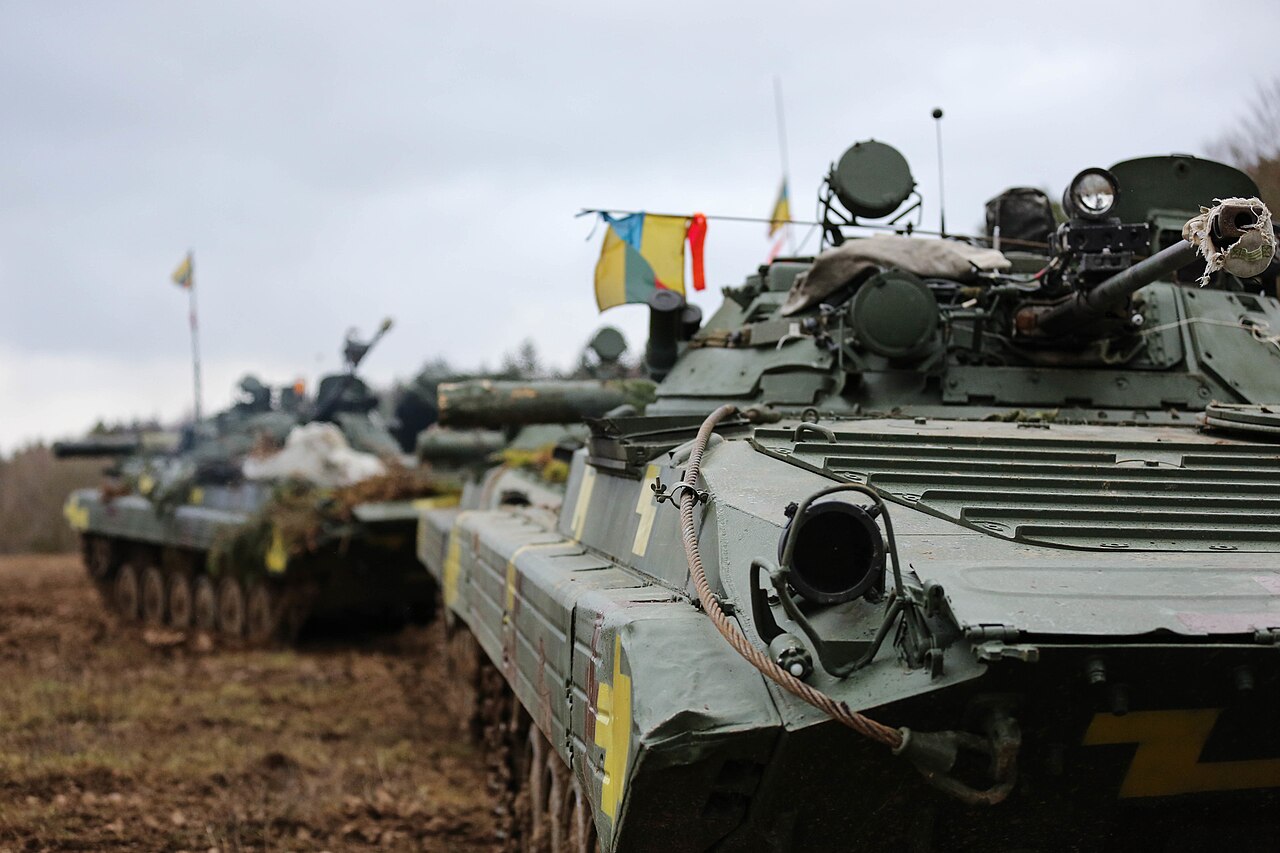
Track it live: Ukraine war map — live tracker
The announcement, carried by Reuters and by Newsweek, closes the fourth "season" of an operation named, with a flourish unusual even by this war's standards, after Vivaldi's Four Seasons. The Third Army Corps launched it in mid-September, first — on its own account — to eliminate Russian infiltration north of Lyman, and then, as the infiltrators' positions collapsed, as a growing offensive in its own right. The first three phases, through late September, retook 176 square kilometres. The fourth added 101 more and the three villages named on Wednesday. President Volodymyr Zelenskyy visited the Lyman area on September 30 and called the operation important for Ukraine's defence in many ways; on Wednesday his corps commander gave it an epitaph for the season: the Kremlin's plan to seize the Donetsk and Luhansk regions, Biletskyi said in a video address, will not be implemented in the foreseeable future.
What Kyiv says the operation achieved
The territorial count is only half of the corps' claim. The other half is about what did not happen. Russia's forces north of Lyman had, over the course of this year, built a salient that threatened to outflank the Sloviansk-Kramatorsk agglomeration — the twin cities that anchor Ukraine's so-called fortress belt, the chain of fortified urban positions on which the defence of the still-Ukrainian fifth of Donetsk region rests. Biletskyi said the operation stopped that outflanking, protected the Kharkiv-Sloviansk highway — the main supply artery into the Donbas pocket — disrupted Russia's "West" grouping, and forced Moscow to pull units of its 1st Tank Army from the Kupiansk axis, easing pressure on the rail hub of Kupiansk-Vuzlovyi. The corps put Russian losses at about 3,000 soldiers in the fourth phase and about 8,000 across the operation, with more than 250 Russian troops captured over its course. Ground Forces, Special Operations Forces, National Guard, Border Guard and drone units all took part, according to the corps.
Those loss and capture figures are unverified — wartime casualty claims by either side in this conflict have repeatedly proved impossible to check independently, and this article treats them the same way it treats the map: as the claim of the side that made it. Russia's military regularly announces its own village captures along the same front, and Russian commentary on Vivaldi's earlier phases disputed Kyiv's account of who holds what around Lyman. What can be said without taking a side is narrower, and still significant: an operation Kyiv announced, named and filmed is now being declared complete by its own commander, with a specific list of villages attached — a claim concrete enough to be tested against the satellite and geolocation record in the days ahead.
The outside check: ISW's reading
The closest thing to an independent assessment available at publication is the Institute for the Study of War's. In an analysis reported by Euronews earlier this month, ISW — which builds its maps from open-source evidence and is generally cautious about Ukrainian claims — concluded that Vivaldi had dismantled the northern arm of a Russian pincer aimed at the fortress belt. On ISW's reading, the Russian campaign depended on two arms, from Lyman in the north and Dobropillia in the southwest, eventually linking up behind Sloviansk and Kramatorsk; Ukrainian forces collapsed the northern salient along the Ridkodub-Nove-Novomykhailivka and Yarova-Drobysheve-Stavky lines and forced Russian units onto the defensive. ISW's account credits the first three phases with 176 square kilometres — matching the corps' own arithmetic before Wednesday's fourth-phase update. That convergence matters: it does not confirm the new 277 figure, but it means the operation's first act was legible to outside analysts in roughly the shape Kyiv described, which is more than can be said for most announced offensives in this war's fifth year.
Why this matters
Vivaldi matters because of where it happened. Sloviansk is not an arbitrary dot on the Donetsk map. It was one of the first cities seized by Russian-backed forces in April 2014 and retaken by Ukraine that July; it was a named objective of Russia's 2022 offensive; and together with Kramatorsk it forms the northern anchor of the fortress belt that Russia has spent two years and enormous casualties trying to crack at Chasiv Yar, Toretsk and Pokrovsk. Moscow's stated terms for ending the war include Ukraine ceding the roughly 20 percent of Donetsk region it still holds — the fortress belt, in other words, handed over without a fight. A Ukrainian operation that pushes the line away from Sloviansk's northern approaches, and that outside analysts assess as having broken the northern pincer drawn against the belt, speaks directly to that demand: it is Kyiv's material argument that the territory Russia wants for free is, in fact, defensible and defended.
It also matters because of scale — and here honesty about proportions is required. 277 square kilometres is real ground: about the size of a mid-sized European city, won back village by village. Set against the roughly 20 percent of Ukraine Russia occupies, it is a fraction of one percent. Russia's pace of gains has slowed this year, as Reuters noted in reporting Wednesday's announcement, but Russia is still the side that has been gaining net ground across 2026 as a whole. Vivaldi does not reverse that arithmetic. What it changes is the local geometry of the war's most contested region at the moment winter approaches: the highway stays open, the pincer stays broken, and the force Moscow had positioned to threaten Sloviansk from the north has, on the evidence available, spent the autumn going backwards instead.
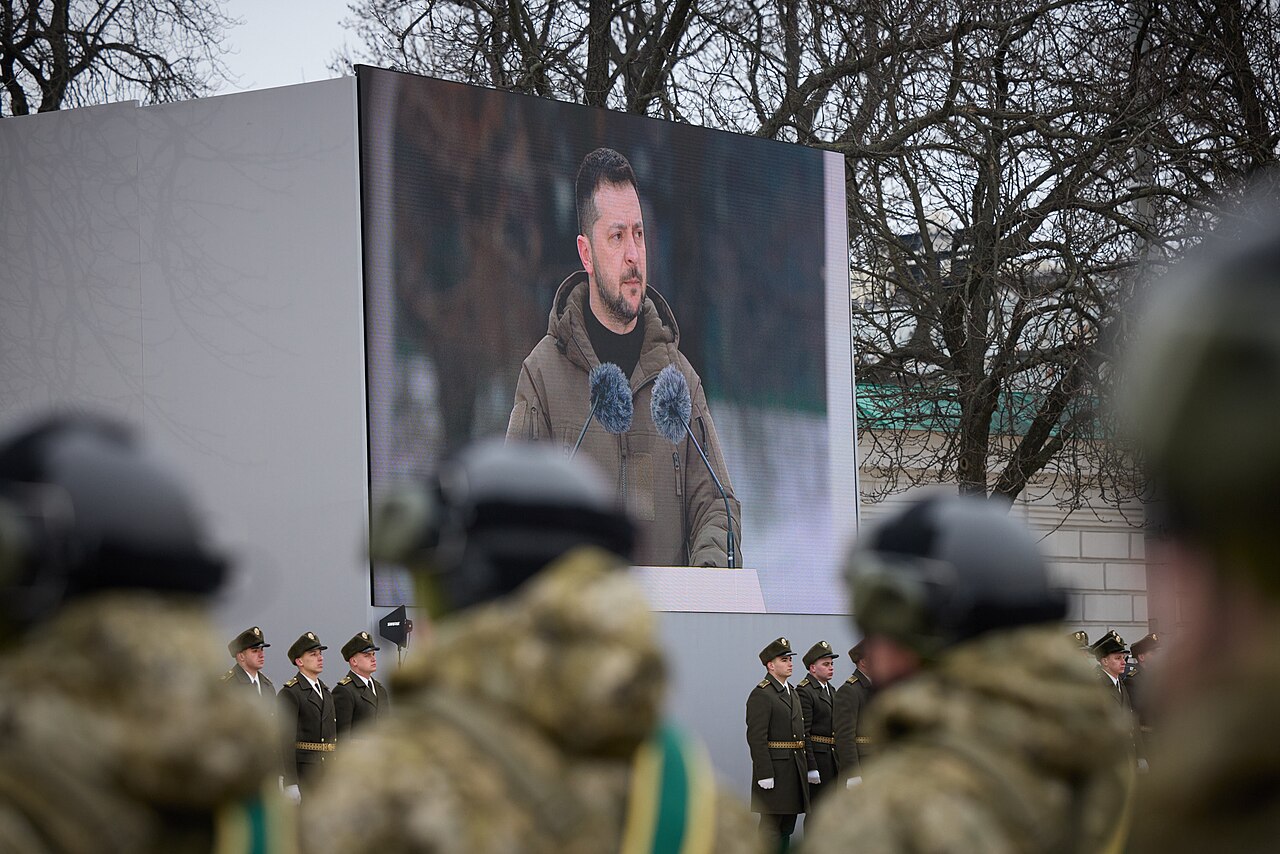
The ground itself: Lyman's second war
The villages at the centre of Wednesday's announcement sit in Lyman's orbit, and Lyman has seen this film before. Russia captured the rail hub in the first weeks of the full-scale invasion in 2022 and used it as a logistics point for its northern Donetsk operations; Ukraine retook it that autumn, in the counteroffensive that followed the Kharkiv breakthrough, in one of the war's most symbolic reversals. Russia never retook the city, but through 2025 and into 2026 its forces ground forward in the forests and villages north of it — the advance Vivaldi was built to reverse. The three villages named on Wednesday — Zelena Dolyna, Lypove and Kolodiazi — are small places whose names have now appeared in Ukrainian, Russian and Western reporting for months, as the line moved through them in one direction and, Kyiv says, has now moved back. For the civilians who lived in them, most long evacuated, the flag over the village council changes little this winter. For the armies, villages like these are the war's true currency: high ground, road junctions and tree lines, bought and sold a few hundred metres at a time.
What happens next
Three tests will decide whether Vivaldi's fourth season was a turning point or a season finale. The first is verification: geolocated footage and updated front-line mapping from analysts like ISW will either settle on something close to 277 square kilometres or they will not, and the gap between claim and map will itself be information about how Kyiv communicates this phase of the war. The second is Russia's answer. Moscow's commanders have been forced, on Ukraine's account, to feed 1st Tank Army units into the Lyman sector once already; whether they counterattack the retaken villages before winter, or accept the new line and shift weight to the Pokrovsk and Kupiansk axes, will show how much the redeployment actually cost them. The third is winter itself. Every autumn campaign in this war has ended in mud, cold and a frozen line that both sides then spent the dark months shelling. If Ukraine can hold the Vivaldi ground through that freeze — and keep the Kharkiv-Sloviansk highway open under drone surveillance — Biletskyi's claim that the Donbas seizure plan is off the foreseeable agenda will look considerably stronger in the spring than it does on the day it was made.
Related coverage: Ukraine War, Day 1694: the daily briefing · Operation Vivaldi's first seasons: the September counteroffensive · The surrenders: 250 Russian soldiers taken prisoner during Vivaldi
Sources: Reuters, Newsweek via GhanaMMA, The Gaze (Third Army Corps statement), Ukrainian reporting via Korol Danylo.