Russian attack on Lutsk: a Russian strike on the far-western Ukrainian city of Lutsk killed six people on Wednesday, regional officials said, after drone debris hit a warehouse and a residential building was damaged — one of the deadliest single attacks on Ukraine's west in this phase of the war.
The War Reaches Lutsk: Six Dead in Ukraine's West
Track it live: Ukraine war map — live tracker
The facts established by Wednesday evening are these. A Russian attack on Lutsk, the capital of the Volyn region in Ukraine's northwest, killed six people and injured at least 12, according to the latest official figures reported by Reuters and Ukrainian media. The regional governor, Roman Romaniuk, said on Telegram that drone debris hit a warehouse in the city and that a residential building was damaged. The injured figure — at least 12 — is the governor's initial count and had not been formally updated in the reporting available when this article was published; the death toll, by contrast, was revised upward twice during the day as the consequences of the strike became clear.
That sequence matters, and it is worth stating plainly rather than smoothing over. Early casualty figures in attacks like this one are almost always provisional: they count the dead recovered and identified at the scene in the first hours, not the people who die later of their injuries or are found as rescue work proceeds. Lutsk on Wednesday followed the pattern exactly — three, then four, then six. Readers should treat six as the latest confirmed figure from officials, not necessarily the last one, and this article will be updated if Ukrainian authorities revise it again.
What was hit — and what is disputed
On the Ukrainian account, the deadly mechanism in Lutsk was debris: Romaniuk said drone debris hit a warehouse, and a residential building was damaged in the attack. Ukrainian media reported that a Russian Shahed-type drone struck a warehouse in the city, that a fire followed, and that two of the injured were in a serious condition. Whether the warehouse was hit directly or by the falling wreckage of an intercepted drone is not a pedantic distinction — it is the central mechanical question of Ukraine's air war, and it is addressed below — but for the people inside and around the building, the effect was the same.
What the warehouse was, and what it stored, is disputed in the way these things now routinely are. Ukrainian officials described a warehouse; Russian military channels claimed the target was a logistics terminal used to move military cargo, and pointed to the scale of the fire as evidence. Neither account has been independently verified, and no evidence has been published by either side that settles what was stored in the building. What is not disputed is the outcome: a warehouse burned, a residential building was damaged, and six people in a western Ukrainian city are dead.
Russia's Defence Ministry, in its statement on Wednesday's operation as a whole, described a massive strike against communications and energy infrastructure in Ukraine — listing power and heating plants in Kyiv and the surrounding region, a substation, a heating and power plant in Kharkiv, and a data centre in the capital that it said was used to gather intelligence on Russia's military. The ministry's statement, reported by the Interfax news agency, did not single out Lutsk. Russia routinely describes its long-range strikes as aimed at military and military-linked infrastructure; Ukraine and its partners routinely describe the same strikes as attacks on cities and civilian life. The warehouse in Lutsk sits, unresolved, inside that gap between the two descriptions — which is precisely why the verifiable facts, the building and the bodies, have to carry the story.
One city inside a nationwide night
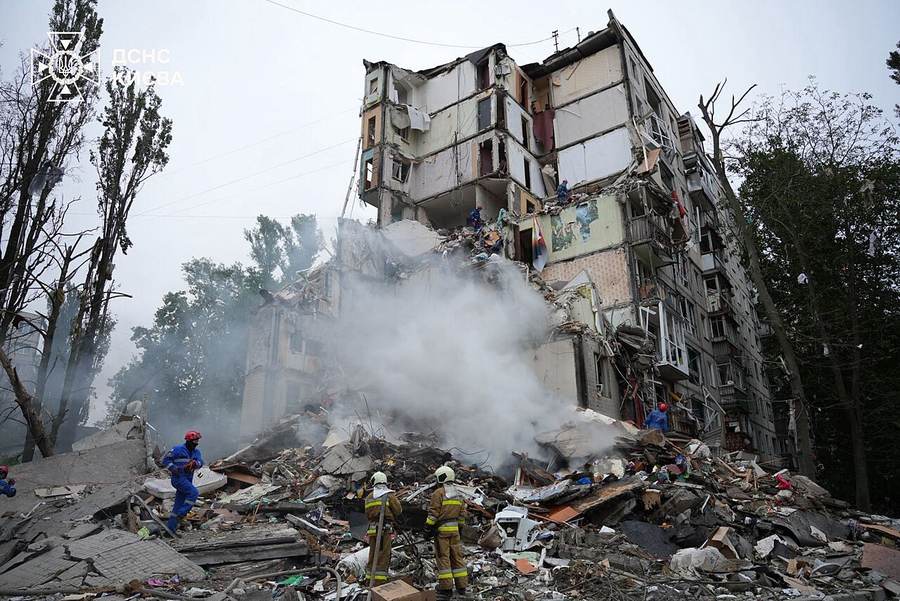
Lutsk was not attacked in isolation. It was the western end of one of the heaviest nationwide Russian strikes of the autumn — the same wave that hit Kyiv's energy system for the second night running, left some 600,000 people without power in the capital region, and killed people in at least four regions. Al Jazeera's accounting of the day, compiled before the Lutsk toll rose, counted at least nine dead across Ukraine: three in Kyiv, where a strike on a multistorey building in the Desnianskyi district killed two people and another attack in the Holosiivskyi district killed one; two killed and six wounded in the Dnipropetrovsk region; one killed in the Zaporizhzhia region; and the initial three in Lutsk. Add the revised Lutsk figure and the nationwide toll for Wednesday stands at at least 12, with further missile attacks reported in the Kharkiv and Zhytomyr regions and strikes reaching Sumy and Chernihiv as well.
The timing is the diplomatic fact of the week. The Lutsk strike came three days after President Donald Trump announced an energy ceasefire between Russia and Ukraine — an arrangement neither side formally confirmed — and on the second consecutive day of heavy Russian attacks on the Ukrainian power grid. President Volodymyr Zelenskyy said the overnight assault on Kyiv and Kharkiv used 39 ballistic missiles and more than 120 attack drones and loitering munitions against energy and critical infrastructure, and he called the strike on the grid deliberate and demonstrative. Russia's Defence Ministry, for its part, presented the operation as a planned massive strike on infrastructure it links to the Ukrainian military. Both governments are describing the same night; they are describing it for opposite audiences, and Lutsk's six dead belong to neither narrative — they are simply the cost, recorded in a city that was not supposed to be on the list at all.
Why this matters
Lutsk matters for three reasons that go beyond one day's toll. The first is geography. Western Ukraine — Volyn, Lviv, Zakarpattia — has functioned throughout this war as the country's rear: the corridor through which Western weapons and aid enter from Poland, the refuge to which families from the east and south have fled since 2022, and the region whose cities host the logistics of a state at war precisely because they are far from the front. A strike that kills six people in Lutsk does not change that geography by itself, but it advertises, as every western strike does, that the rear is a relative concept. The distance from Lutsk to the Polish border is about 90 kilometres; the distance from Lutsk to the nearest Russian launch areas is well within the range of every drone and missile Russia fired on Wednesday.
The second reason is the debris problem, which is really the air-defence problem stated honestly. On the governor's account, what hit the Lutsk warehouse was debris — the wreckage of a drone brought down by Ukrainian defences. Shooting a drone down over a city does not make it disappear; it converts a weapon aimed at a target into tons of falling metal and explosive over whatever happens to be below. Ukraine downed only a fraction of the missiles fired in this week's attacks — officials put the interception figure for the Kyiv assault at 4 of 39 ballistic missiles — because ballistic missiles are the hardest class of weapon to stop and the interceptors that stop them are scarce and rationed. Every western city added to Russia's target lists consumes some of that scarce coverage, and every interception over a populated area carries the Lutsk risk. There is no version of defending a city that removes the danger; there are only versions that distribute it differently.
The third reason is what Lutsk says about the target set. This week's strikes have ranged across energy plants, a data centre in Kyiv that Russia said gathered intelligence, Sberbank's data centre at Balakovo on the Russian side — hit by Ukrainian drones the same night — Starlink restrictions that disrupted Ukrainian drone operations, and now a warehouse in the far west. The war's target lists on both sides are widening from the battlefield to the systems behind it: power, data, logistics, money. A warehouse in Lutsk is a small entry in that ledger. Six deaths in a city of 216,000 that most of the world could not have placed on a map before Wednesday is not.
The city that was a refuge
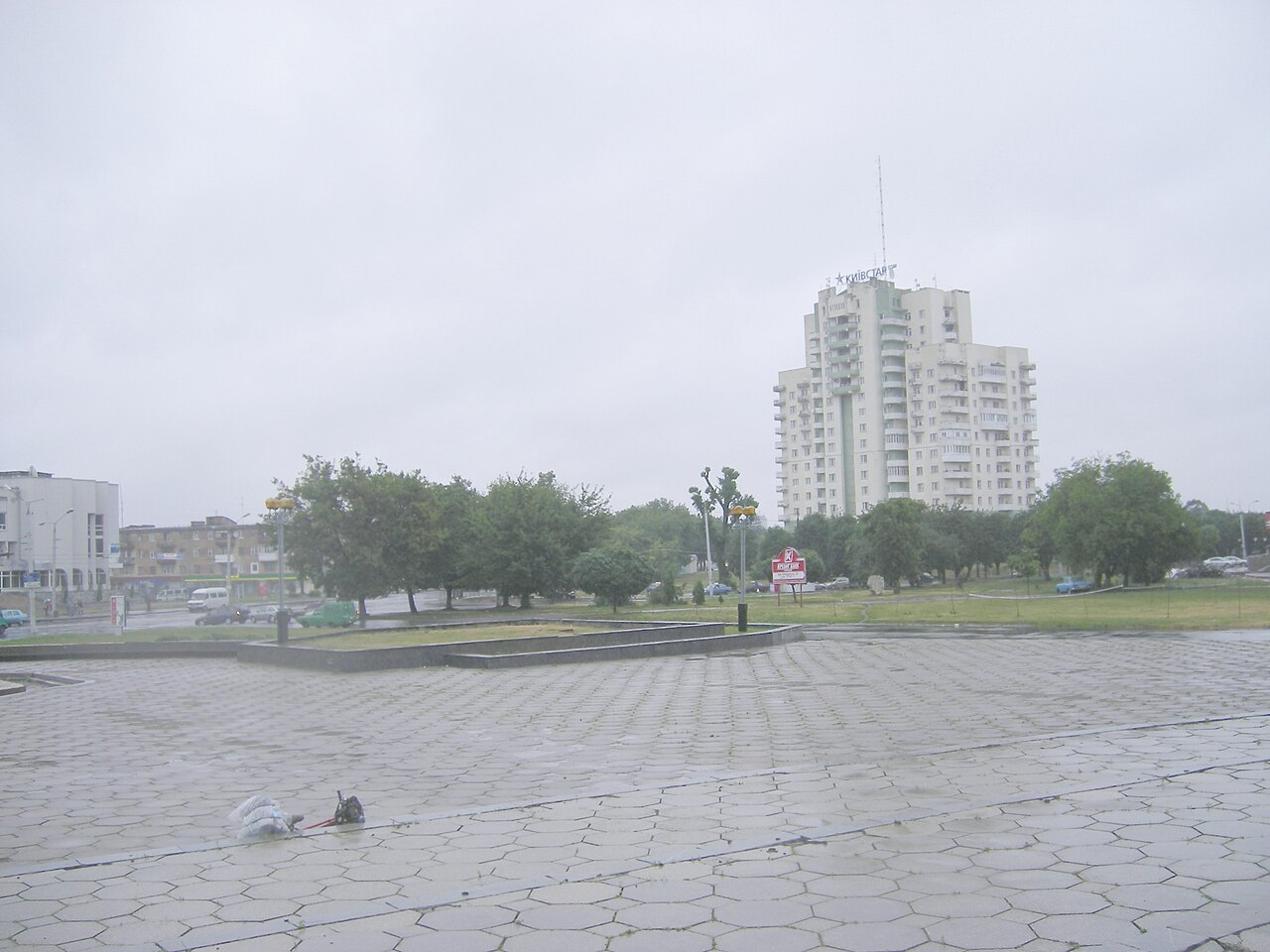
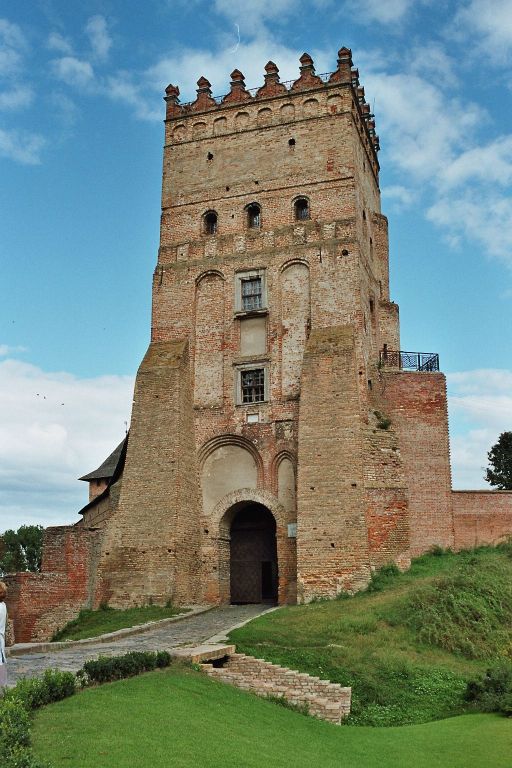
Some context for readers meeting Lutsk for the first time. It is one of Ukraine's oldest cities, recorded as early as 1085, built around the castle raised in the 1340s by Liubartas, a son of the Lithuanian grand duke Gediminas, on a bend of the Styr River. Its industries in peacetime were unglamorous and productive — scientific instruments, food production, an automobile plant — and its population in the last pre-war estimates was about 216,000. Since 2022 it has also been something else: a place people moved to in order to be safe. Internally displaced Ukrainians settled across Volyn precisely because the west felt removed from the war. Lutsk has been struck before — a major attack in the summer of 2025 was among the heaviest the city had seen — but a single-attack death toll of six puts Wednesday in the city's worst days of the war, and it will recalibrate what "removed from the war" means for the families who chose it.
What happens next
Three things to watch. First, the toll and the investigation: Ukrainian authorities will update the Lutsk casualty figures as hospitals report and the warehouse site is cleared, and the sequence of Wednesday's revisions — three, four, six — warns against treating any figure as final until they do. Second, the pattern of the strikes: if western logistics and warehouse targets recur in the coming waves, Lutsk will read in retrospect as a target-set decision, not an accident of debris; if they do not, it will remain the deadliest illustration yet of what falling wreckage does to a city underneath an air battle. Third, the air-defence allocation: every Patriot-class interceptor and every gun system Ukraine positions to shield the west is one not positioned over Kyiv, Kharkiv or the front — and Russia's evident strategy of striking everywhere at once is designed to make that arithmetic hurt. Lutsk's dead are, in that cold sense, part of the arithmetic. Naming them as people first, and arithmetic second, is the least a report from a city that was supposed to be safe can do.
Related coverage: Ukraine War, Day 1694: the daily briefing · The same night in Kyiv: strikes on the energy grid and the Balakovo drone attack · Starlink's speed limit and Ukraine's disrupted drone missions
Sources: Reuters, Reuters wrapup via Devdiscourse, Al Jazeera reporting, Ukrainian reporting via Korol Danylo.