First Blow After the Pause: Ryazan Refinery Burns as the Energy Truce Dies
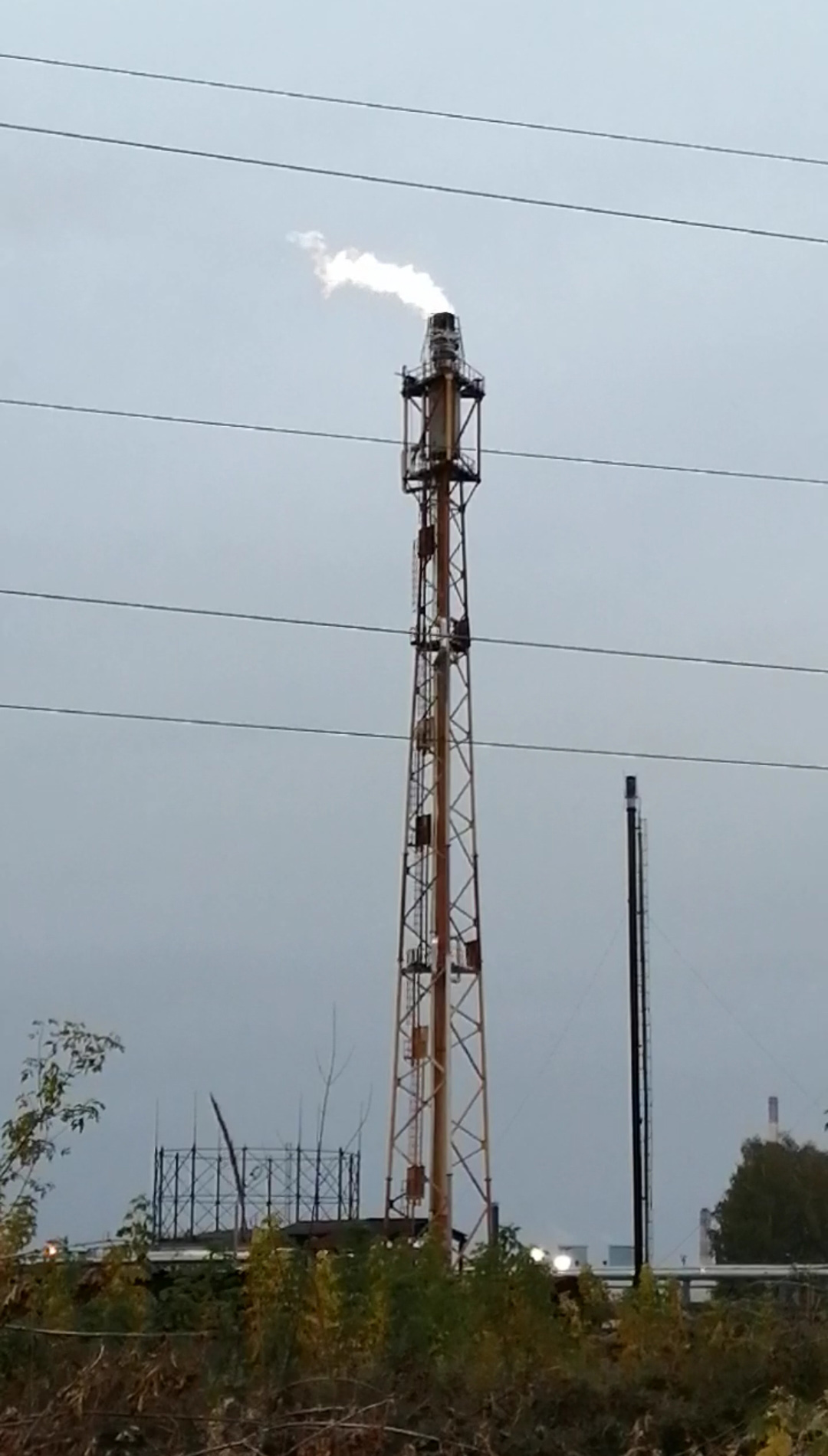
KYIV, October 15, 2026 — The pause lasted three days. Early on Thursday, Ukrainian drones attacked the oil refinery in Russia's Ryazan region, about 300 kilometres (180 miles) southeast of Moscow, and started a fire at the plant, according to Russia's Defense Ministry and Ryazan Governor Pavel Malkov. The Russian outlet Astra published a photograph it said showed the blaze. A senior Ukrainian official, speaking on condition of anonymity, confirmed to the Associated Press that Ukraine had hit the refinery. It is the first Ukrainian attack on Russian energy infrastructure since the energy ceasefire announced by President Donald Trump on Sunday — and it makes the argument Zelenskyy set out hours earlier in his Financial Times interview impossible to mistake: the refinery campaign is back on.
Track it live: Ukraine war map — live front-line and strike tracker.
What burned at Ryazan, and why this plant matters
The Ryazan refinery, operated by the state oil company Rosneft, is one of the largest plants in European Russia and is reported to account for roughly 5 percent of the country's total crude refining capacity. It supplies fuel to Moscow and the surrounding region, and in 2024 it processed about 13 million tonnes of crude into gasoline, diesel and fuel oil. The plant is no stranger to this war: it has been struck repeatedly since 2024, forced into partial shutdowns before, and each outage has tightened the supply of exactly the product Russia can least afford to lose — diesel, the fuel its army, farms and freight network all run on.
Neither side has published a verified damage assessment for Thursday's strike. Malkov said emergency services were working at the scene and that the material damage was still being assessed. That caution matters: a fire at a refinery can mean anything from a burned storage area to a knocked-out distillation unit, and the difference between the two is the difference between a headline and a fuel shortage. What can be said already is that Kyiv chose its first target back carefully — a high-capacity, Moscow-supplying plant deep inside Russia, hit within hours of the pause formally ending. The message to the Kremlin, and to Washington, was the timing as much as the tonnage.
How a three-day ceasefire collapsed
The sequence is worth laying out, because it explains the anger on all three sides. On Sunday, Trump announced an energy ceasefire between Russia and Ukraine, presenting it as a step toward a wider settlement. Kyiv complied: for three days, Ukraine held its fire on Russian refineries and energy facilities — the campaign it regards as its most effective economic weapon. But by Kyiv's account, Russia did not reciprocate. Ukrainian officials say Russian strikes on Ukraine's power grid and fuel depots continued through the pause, and Zelenskyy said on Wednesday that Russian attacks had left some 600,000 people without power.
Then came the grievances that turned frustration into rupture. Zelenskyy told the Financial Times that Ukraine had been left without the usual U.S. early-warning alerts for incoming Russian ballistic missiles, and that the Starlink satellite service Ukraine's military depends on had been slowed across the country — steps he said were presented to Kyiv first as pressure to stop the energy strikes and later as a technical glitch, an explanation he publicly rejected. In the interview published Thursday, he declared the pause over in terms that left no room for reinterpretation, and set his price for any renewed halt: at a minimum, more U.S.-made Patriot interceptors to defend Ukrainian cities. Trump, for his part, announced a diesel supply deal with Russia last week aimed at easing fuel prices, and on Saturday called for Zelenskyy's replacement — a combination that Kyiv reads as Washington rewarding Moscow while punishing the partner under bombardment. Our earlier report today covered Zelenskyy's announcement that the strikes would resume; Ryazan is that announcement carried out.

The same night, in numbers: 850 drones one way
The Ryazan strike did not happen in a quiet sky. Zelenskyy said Russia launched more than 850 drones at Ukraine between midnight and Thursday morning, hitting 15 regions — a barrage he noted arrived, in his words, precisely while Ukraine's defensive capabilities were being restricted. Ukraine's Air Force said its defences stopped 536 of the drones, with impacts recorded at 31 locations. In the central Kirovohrad region, an attack lasting more than ten hours killed three people and injured six, according to Ukraine's Emergency Services. Russia's Defense Ministry, for its part, said its air defences downed 166 Ukrainian drones overnight — the wave that included the Ryazan attack — and that Russian forces struck two vessels carrying military cargo. As always in this war, each side's figures are its own claims; the scale of the exchange, however, is not in serious dispute. On the night the energy ceasefire died, both countries fought the energy war at full intensity.
Why this matters
The refinery campaign is not a sideshow to the front line — by the numbers, it may be Ukraine's highest-leverage operation of the war. Russia earns the money that funds its invasion from hydrocarbons, and it moves its army on diesel. A plant representing roughly a twentieth of national refining capacity does not need to be destroyed to matter: repeated strikes force repairs, idle units, rerouted crude and, at the margin, higher fuel prices — the very prices Trump cited when he pressed Kyiv to stop and struck his diesel deal with Moscow. That is the uncomfortable triangle at the centre of this story. Ukraine's most effective economic weapon raises the global fuel prices its own patron is trying to lower, which is why Washington's pressure on Kyiv is real, and why Kyiv's defiance is also real: from Ukraine's side of the table, it is being asked to surrender its best leverage while its cities lose power and its early-warning feed goes dark.
Who gains and who loses from Thursday's strike depends on the damage assessment that has not yet come. If Ryazan's key units are intact, the strike is primarily a political fact — proof that the ceasefire is dead and that Kyiv will not trade the campaign for promises. If a distillation unit is out for weeks, it becomes an economic fact as well, tightening Russian diesel supply heading into winter and testing whether the Trump diesel deal can actually deliver relief at the pump. The critics of Kyiv's campaign, in Washington and in European capitals, argue that refinery strikes harden Moscow, strain the alliance and risk energy prices that hurt Ukraine's own supporters. Its defenders answer that a ceasefire observed by only one side is not a ceasefire at all — and that Russia's 850-drone night, launched during the supposed truce, is the strongest evidence for their case. Both arguments now have fresh data. Neither capital shows any sign of yielding.
What happens next
Three scenarios now branch from Ryazan. In the first, Thursday's strike is the start of a renewed rhythm — the every-few-days refinery tempo Ukraine maintained before the pause — and Russia answers against Ukraine's grid as winter approaches, when power cuts bite hardest; that is the escalation path, and the overnight drone numbers suggest both sides are already on it. In the second, Washington converts its pressure into a bargain: Patriot batteries and restored intelligence in exchange for a verifiable, mutual energy truce — the deal Zelenskyy himself priced in his interview, and the only version of a pause Kyiv has signalled it would accept. In the third, the rift widens: the United States deepens its energy dealings with Moscow, European governments fill more of the gap, and Ukraine leans harder on its own long-range weapons, which need no one's satellite permission to fly. Which path the war takes will be visible within days — in whether a second refinery burns this week, and in whether the early-warning alerts over Kyiv come back. The ceasefire that died on Thursday lasted three days. Its replacement is being written tonight, in fire, at both ends of the drone routes.
Related coverage: Zelenskyy says Ukraine will resume strikes on Russian refineries · Ukraine strikes Rostov oil terminal amid Trump–Putin diesel deal
Sources
- Associated Press, October 15, 2026 — Ukraine resumes attacks on Russian oil refineries after brief truce (Ryazan strike and fire per Russia's Defense Ministry and Governor Pavel Malkov; Ukrainian official confirmation; Kirovohrad casualties; 850-drone barrage).
- Reuters, October 15, 2026 — Zelenskyy says Ukraine will resume strikes on Russian refineries, FT reports (Financial Times interview, energy-ceasefire timeline, intelligence and Starlink dispute, Patriot condition, Trump diesel deal).