Updated Oct. 1, 2026, 7:45 p.m. PDT
USS George Washington carrier Middle East
Topics: USS George Washington carrier Middle East · George Washington carrier Yokosuka Japan · CVN-73 relieved Abraham Lincoln · forward deployed carrier Japan Middle East · George Washington carrier August 2026 · USS Abraham Lincoln 260 days at sea · why did Washington leave Japan · US carrier Pacific to Middle East 2026 · Trump George Washington Japan visit 2025 · how long is a forward deployment
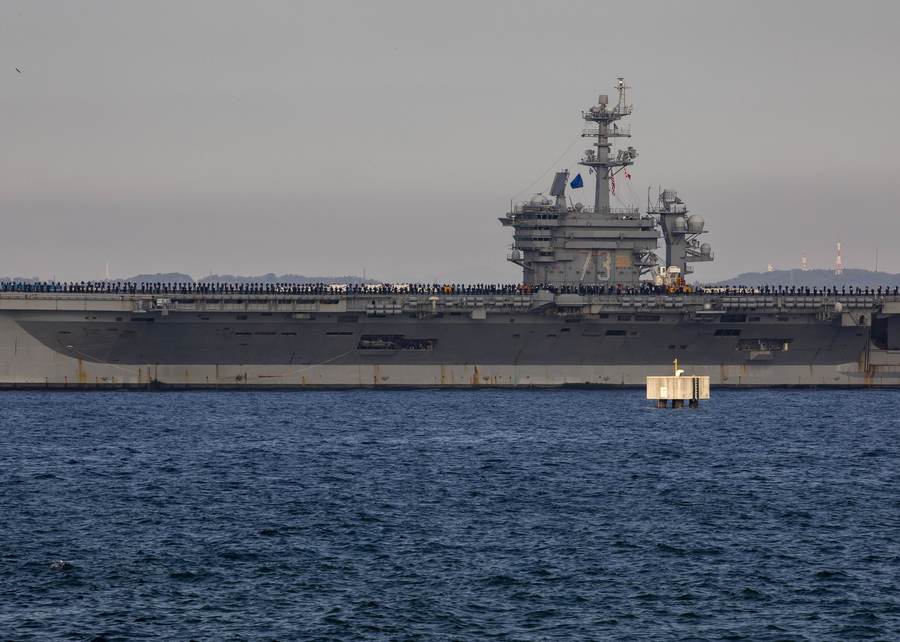
The USS George Washington carrier Middle East mission begins with an unusual fact: the ship normally belongs in Japan. CVN-73 is the U.S. Navy’s only forward-deployed aircraft carrier, based at Yokosuka to respond quickly in the Western Pacific. Sending it west to relieve USS Abraham Lincoln in August 2026 showed how urgently the Navy needed another flight deck in the Iran theater.
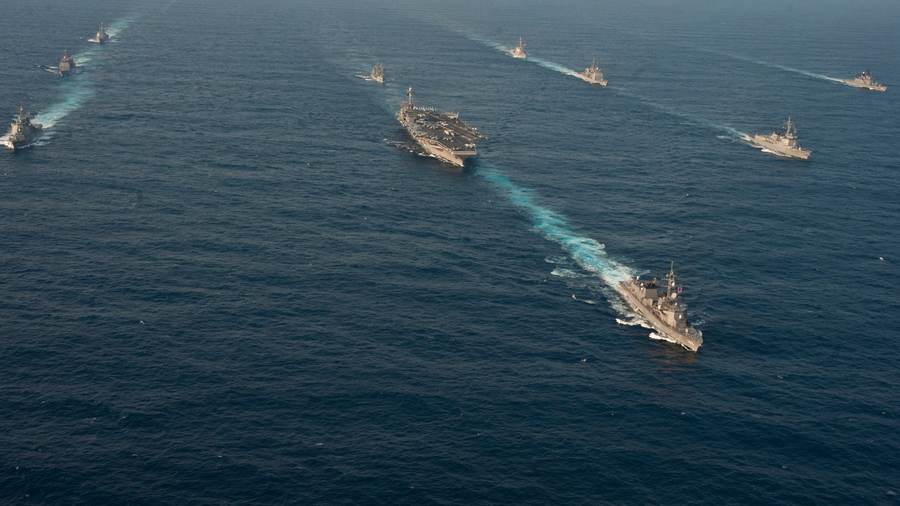
Washington is now one of two U.S. carriers in the region alongside USS George H.W. Bush. USS Theodore Roosevelt is sailing from San Diego and could create a three-carrier overlap by late October or November. Washington may instead rotate home to Japan, making its next move a test of how the Navy balances the Middle East against continuing commitments in Asia.
What the Washington is
USS George Washington, CVN-73, is a Nimitz-class nuclear-powered aircraft carrier commissioned on July 4, 1992. It is about 1,092 feet long, displaces roughly 104,000 long tons at full load and carries about 3,200 ship’s personnel before the embarked air wing. Two nuclear reactors propel the ship and support high-tempo flight operations.
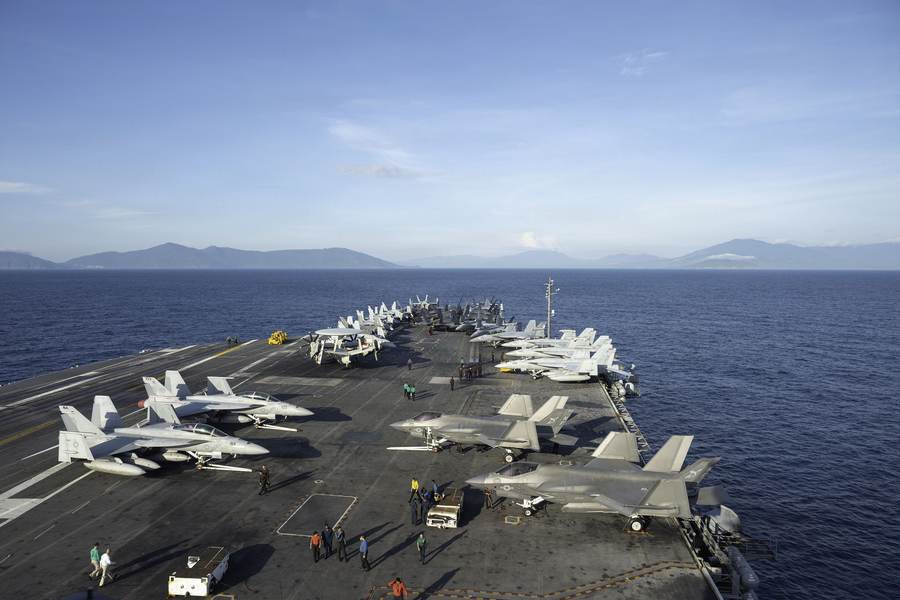
The air wing typically combines strike fighters, electronic-warfare aircraft, airborne early-warning planes and helicopters. Catapults launch conventional fixed-wing aircraft; arresting wires recover them. Escorts and logistics ships turn the carrier into a strike group capable of air defense, surveillance, sea control and sustained strike operations.
Forward-deployed: what the Japan homeport means
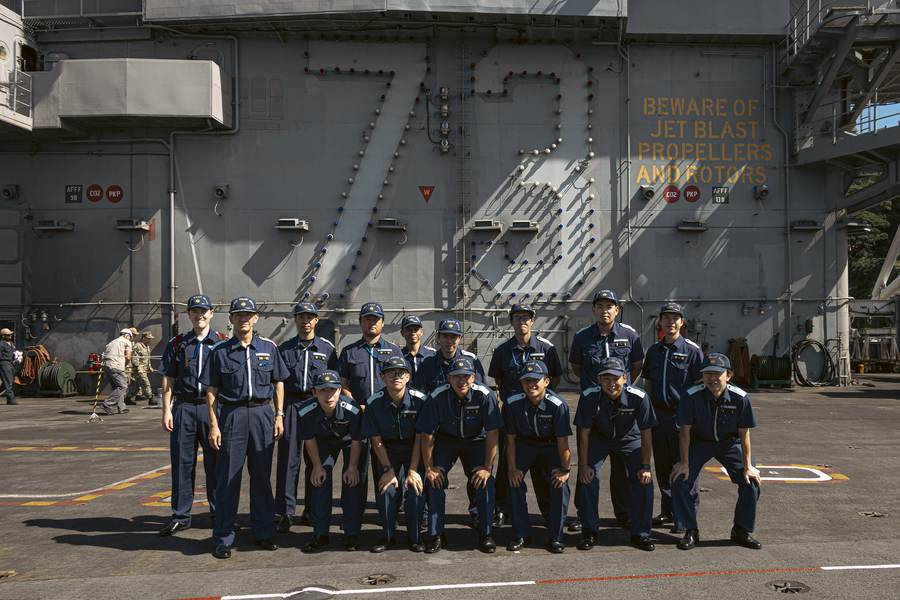
Most U.S. carriers deploy from an American homeport for months and then return. A forward-deployed carrier lives closer to the region where it is expected to operate. George Washington arrived in Yokosuka on November 22, 2024, replacing USS Ronald Reagan as the Navy’s only forward-deployed carrier. Sailors and families are based in Japan, while the ship conducts patrols and exercises across the Western Pacific.
That arrangement reduces transit time to Asian contingencies but does not make the ship permanently available. It still needs maintenance, training and crew rest. Pulling the George Washington carrier from Yokosuka to the Middle East therefore shifts risk: it strengthens one theater while reducing the most powerful immediately available U.S. naval aviation presence near Japan, the Korean Peninsula and the East and South China seas.
A six-year overhaul before the return to Japan
Washington returned to Japan after a refueling and complex overhaul that ran from 2017 through 2023. The once-in-a-service-life process refueled the reactors and modernized major systems. The six-year interval also illustrated the cost of nuclear-carrier readiness: keeping a ship operational for decades requires long periods when it is unavailable.
The 2024 return restored a familiar role. George Washington had previously served as the forward-deployed carrier in Japan before Ronald Reagan replaced it. That history gives the crew and Navy an institutional understanding of Yokosuka operations, even though many individual sailors are new. It also explains why an extended detour to the Middle East carries broader fleet consequences.
Relieving the Lincoln after 260 days at sea
USS Abraham Lincoln had been at sea for more than 260 straight days when George Washington relieved it in August 2026, according to AP reporting. The number is more than a record of distance or endurance. It measures delayed maintenance, exhausted crews and families waiting at home. No carrier can remain indefinitely without degrading the people and machinery that make it effective.
CVN-73 relieved Abraham Lincoln rather than simply adding another deck. That distinction matters because Lincoln is not currently in the region. Washington’s move sustained the carrier presence while allowing Lincoln’s crew to leave an exceptionally long deployment. The later arrival of Theodore Roosevelt could create a temporary surge or permit another rotation.
Its role in the region now
The George Washington carrier August 2026 movement placed a Pacific-based air wing into a Middle East fight that began February 28 and continued after a fragile ceasefire collapsed. Alongside Bush, Washington can provide defensive combat air patrols, airborne radar coverage, electronic warfare, anti-submarine patrols and strike capacity.
Because the carrier is forward-deployed, its absence from Japan is strategically visible. Allies in Asia watch whether Washington returns on schedule; rivals can test for gaps. The Navy can cover some missions with land-based aircraft, submarines, destroyers and allied forces, but no substitute provides the same combination of mobile airpower, command capacity and political signaling.
President Trump’s October 28, 2025 visit and speech aboard George Washington in Japan underscored that symbolism. Less than a year later, the ship is serving far from its nominal Pacific station. The move demonstrates global reach while exposing how a limited number of carriers must cover several theaters at once.
Why it matters
The deployment matters on two maps. On the Middle East map, Washington keeps a carrier available while Roosevelt crosses the Pacific and Indian Ocean. On the Indo-Pacific map, its absence tests the resilience of U.S. alliances and basing. Moving a forward-deployed carrier signals that leaders judged the Iran contingency serious enough to accept that tradeoff.
It also reveals the limits behind impressive numbers. Counting three carriers does not mean the United States has three spare carriers. Each ship arrives from another commitment and eventually needs maintenance. A surge can create overwhelming short-term capacity, but sustaining it requires rotations, escorts, munitions and crews that cannot be improvised.
Who wins and who loses
Middle East commanders gain continuity. Washington relieved Lincoln without letting the carrier presence disappear. Regional partners gain more air-defense and surveillance support. The White House gains an option that does not depend on immediate access to a foreign runway.
Indo-Pacific planners accept a thinner margin. Japan remains protected by U.S. and allied forces, but the symbolic and operational absence of its forward-deployed carrier is real. China and North Korea can observe how the United States reallocates scarce assets under pressure.
The Lincoln crew gains relief; the Washington crew inherits the strain. More than 260 days at sea demonstrates why rotations are necessary. Washington’s sailors now face their own uncertain schedule. The fleet gains readiness in one place by spending human endurance in another.
Iran faces more capable airpower but can exploit the politics. Two carriers complicate Iranian planning and make U.S. warnings more credible. Tehran can also frame the Pacific ship’s arrival as escalation, strengthening factions that argue pressure should be met with resistance rather than compromise.
How long is a forward deployment?
“Forward-deployed” is not a fixed number of months at sea. It describes where the ship and much of its support structure are based. Patrols can vary in length, and the carrier normally returns to Yokosuka between them. The Middle East diversion extends distance and complicates maintenance planning because the ship is operating far from its Japanese homeport.
For families, the distinction is less abstract. Home is in Japan, but operational demand can keep the ship thousands of miles away. For planners, the benefit is speed: Washington could respond from the Pacific sooner than a carrier beginning preparations in the continental United States.
What happens next
The clearest indicator will be whether Washington leaves when Roosevelt arrives. A return to Yokosuka would show the deployment was a bridge — first relieving Lincoln, then handing the mission to Roosevelt. Remaining in the region would create a three-carrier posture and signal preparation for either a period of intense deterrence or renewed operations after the November 3 midterms.
Watch also for air-wing movements, escort assignments and port calls. Those details reveal whether the ship is preparing for combat, routine sustainment or rotation. Whatever the next order, George Washington has already demonstrated the central bargain of a forward-deployed carrier: speed when a crisis erupts, paid for by risk in the region it temporarily leaves behind.
Sources
Internal links
- Third U.S. carrier and thousands of troops head toward the Middle East
- Iran’s president arrives in New York for the U.N. General Assembly
- USS George H.W. Bush: the carrier already holding the line
Reporting note: Ship specifications and historical details are drawn from U.S. Navy public information and the image records linked above. Current deployment details are attributed to the listed reports. Force movements can change.