Updated Oct. 1, 2026, 7:35 p.m. PDT
USS Theodore Roosevelt third carrier
Topics: USS Theodore Roosevelt third carrier · Theodore Roosevelt carrier strike group · CVN-71 deployment Middle East 2026 · USS Chosin cruiser Roosevelt strike group · Nimitz-class carrier specs nuclear · third US carrier Middle East October 2026 · Roosevelt carrier arrived November · how many aircraft on a carrier · carrier air wing size Nimitz · San Diego carrier deployment September 2026 · Trump third carrier Iran strikes
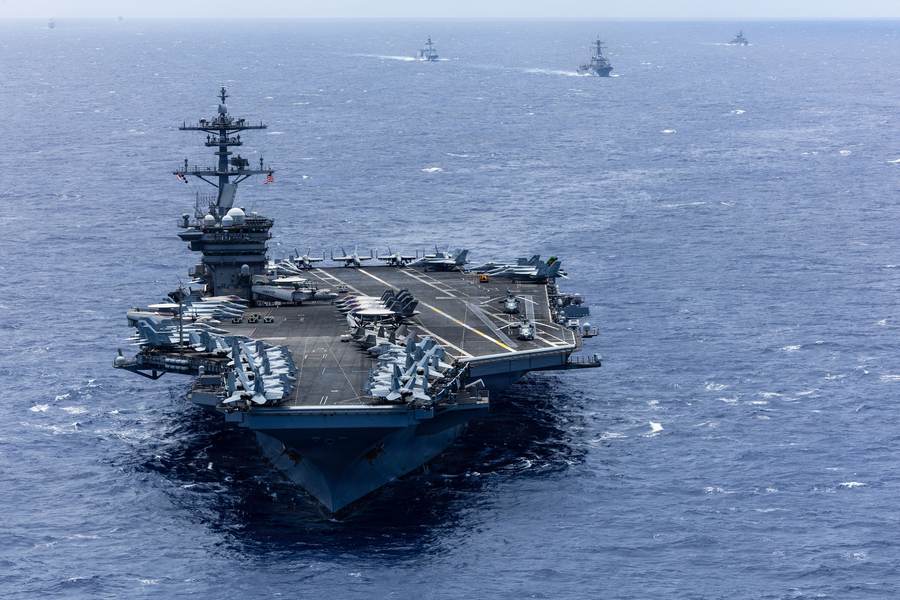
The USS Theodore Roosevelt third carrier deployment is the largest single piece of the new U.S. naval movement toward the Middle East. The Nimitz-class carrier left San Diego on Sunday, September 28, with escorts including the cruiser USS Chosin. It is expected in the region around the end of October or in November, joining USS George H.W. Bush and USS George Washington if both remain on station.
The timing turns a scheduled deployment into a strategic signal. The Iran war began February 28, a fragile ceasefire later collapsed, and President Donald Trump has said renewed strikes are “possible” after the November 3 midterm elections. Roosevelt carries the air wing, command systems and endurance to make that threat operational rather than rhetorical.
What the Roosevelt is
USS Theodore Roosevelt, CVN-71, is the fourth Nimitz-class nuclear-powered aircraft carrier. Commissioned in 1986 and now homeported in San Diego, it is about 1,092 feet long and displaces roughly 104,600 long tons at full load. The ship’s company numbers about 3,200, with roughly 2,480 more personnel in the embarked air wing.
Two nuclear reactors provide propulsion and steam for the catapults. Nuclear power does not mean unlimited endurance: food, aviation fuel, munitions and spare parts still have to be replenished. It does mean the ship itself can operate for roughly two decades between reactor refuelings, allowing commanders to concentrate logistics on air operations and the people aboard.
Nimitz-class carrier specs: nuclear power and a floating airfield
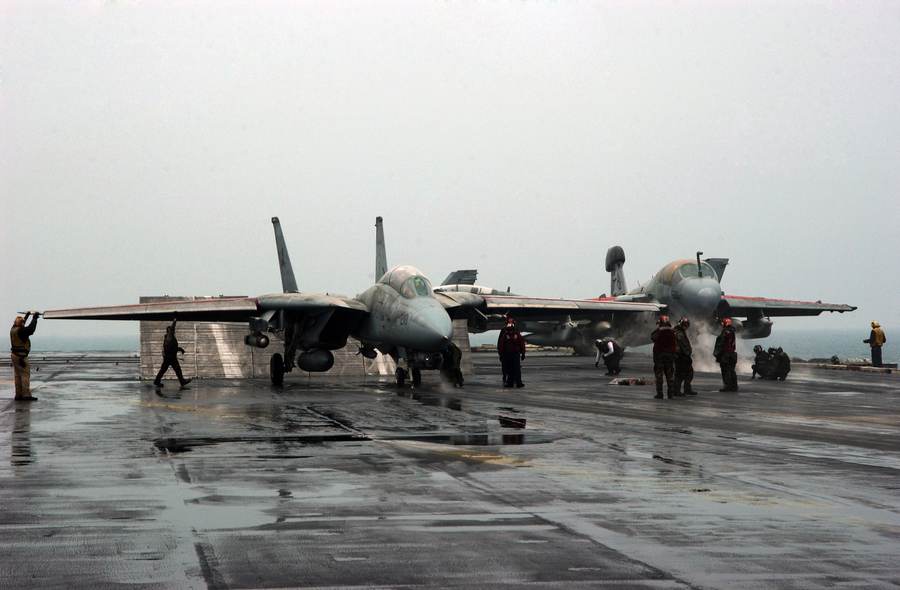
A typical carrier air wing brings roughly 60 to 70 aircraft. The mix can include F/A-18E/F Super Hornets for strike and fleet defense, EA-18G Growlers for electronic warfare, E-2D Hawkeyes for airborne command and early warning, and MH-60 Seahawks for anti-submarine, transport and rescue missions. The precise load changes by assignment.
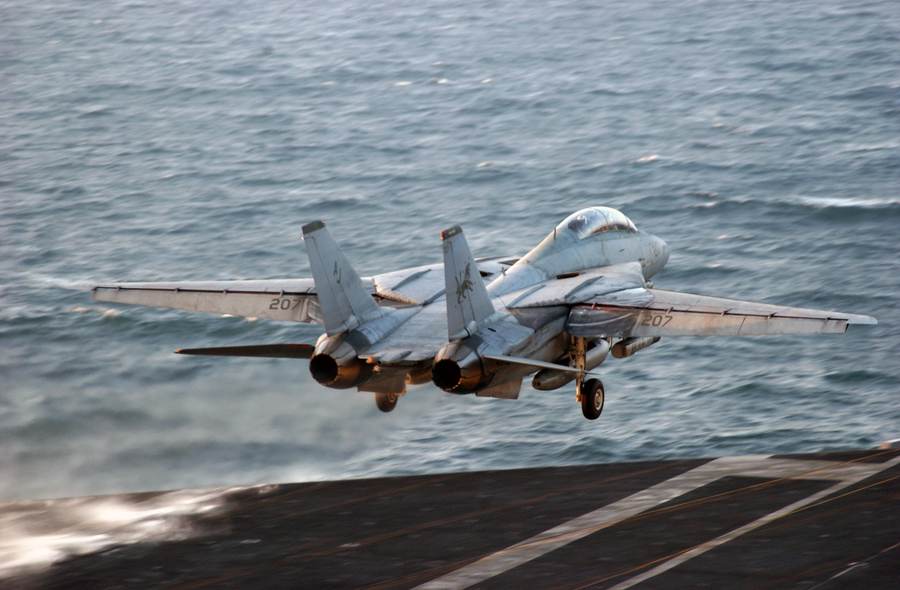
Asked how many aircraft are on a carrier, the useful answer is not just the total. The air wing combines sensors, jamming, fighters, tanking and helicopters into one system. The flight deck and hangar allow aircraft to launch, recover, refuel, rearm and launch again. Escorts add air and missile defense, anti-submarine protection and long-range missiles.
The ship’s history
Named for the 26th president, Roosevelt entered service during the Cold War and has repeatedly deployed to the Mediterranean, Persian Gulf and broader Middle East. Its record includes combat operations in the 1991 Gulf War and later campaigns, making CVN-71 one of the Navy’s most experienced platforms for sustained operations far from home.
The most politically charged chapter came in 2020, when COVID-19 spread aboard the ship during a Pacific deployment. Capt. Brett Crozier warned that the outbreak threatened the crew, his message circulated beyond its intended recipients, and he was relieved of command. The episode produced investigations and a national argument over military command, transparency and readiness. It also showed how a carrier’s strength — thousands of people working in tightly connected spaces — can become a vulnerability during a public-health crisis.
The lesson for a long Middle East deployment is logistical as much as medical. Navy leaders prepared extra food, hygiene supplies, retail stock and communication support before Roosevelt sailed, according to reporting cited by the New York Post. Those details matter because endurance is not only reactor life or jet fuel; it is the ability to keep nearly 6,000 people healthy, supplied and connected to families.
The “third carrier” mission
The Theodore Roosevelt carrier strike group departed San Diego with USS Chosin among its escorts. In parallel, USS Makin Island’s amphibious ready group sailed with the 13th Marine Expeditionary Unit. AP put the combined movement at more than 7,000 sailors and 2,000 Marines, while the Wall Street Journal reported roughly 9,000 to 10,000 personnel.
Calling Roosevelt the third U.S. carrier in the Middle East is conditional. Bush and Washington are already in the region, but Washington could return to its forward homeport in Japan after Roosevelt arrives. If it stays, the United States would briefly field three carrier strike groups there for the first time since April. If it rotates, Roosevelt would sustain a two-carrier posture instead.
That uncertainty is not a contradiction; it is the point of naval maneuver. Ships can be moved, overlapped or reassigned without negotiating permanent basing. A Roosevelt carrier arrival in November gives the Pentagon a decision window after the midterms and allows the White House to increase or reduce pressure without announcing a fixed commitment now.
What a carrier strike group brings
A carrier does not sail alone into a high-threat theater. Cruisers and destroyers contribute radar coverage, air and missile defense, anti-submarine warfare and strike weapons. Supply ships sustain the formation. The carrier air wing extends surveillance and combat reach hundreds of miles from the deck. Together they form a mobile network rather than a single target.
For an Iran contingency, that network can defend regional bases and shipping, escort aircraft, conduct reconnaissance, jam radars and launch precision strikes. It can also complicate geography for an adversary: aircraft can approach from different directions, while escorts distribute sensors and interceptors across a wider area. The group’s capacity remains finite. Missile inventories, aircraft maintenance, tanker support and crew fatigue determine how long a high sortie rate can be sustained.
Why it matters
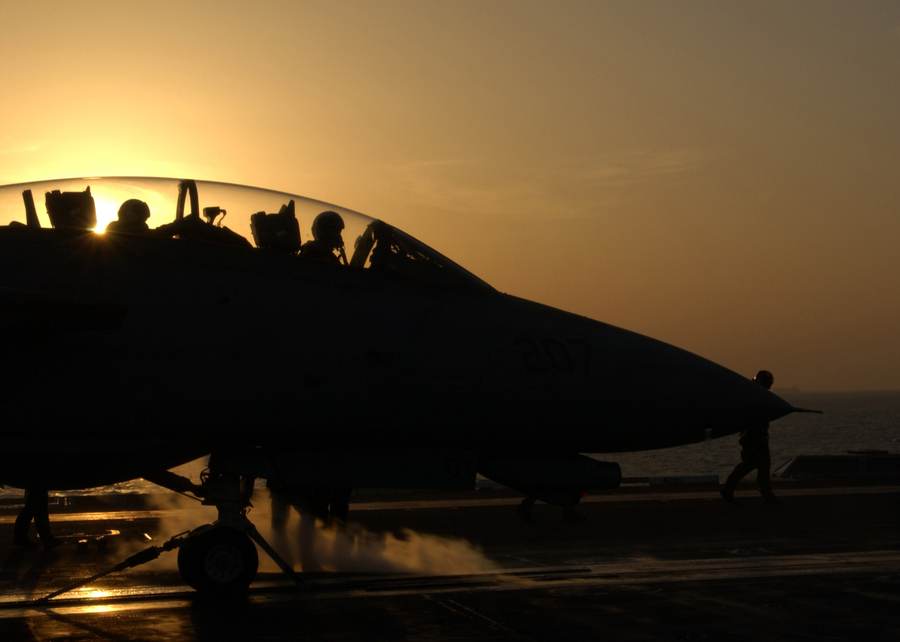
The third U.S. carrier Middle East deployment in October 2026 signals preparedness for a campaign, even if the preferred outcome is deterrence. More than 50,000 U.S. troops were already in the region. Adding Roosevelt and the Makin Island group increases the naval presence to an unusually high level, with more than 20,000 sailors and Marines and hundreds of aircraft according to AP.
Carrier concentration can reassure Gulf partners and pressure Tehran, but it also consumes readiness that could be needed in the Pacific or Europe. Every month Roosevelt spends near Iran is a month it is not available elsewhere, followed by maintenance and recovery time. Strategy is therefore a choice among risks, not a simple count of flight decks.
Who wins and who loses
Washington gains immediate options. The White House can threaten or conduct strikes without depending entirely on another country’s airfields. Regional allies gain more air-defense and surveillance capacity. Diplomats gain coercive leverage if Tehran believes the force is both capable and politically authorized.
Iran faces a harder military problem but gains a narrative. More carriers increase the cost of attacks on shipping or U.S. bases. Iranian leaders can also point to the deployment as evidence of encirclement, potentially weakening officials arguing for compromise. Deterrence and escalation can be produced by the same movement.
The Navy absorbs the bill. Sailors face an uncertain deployment length, families face prolonged separation, and maintenance schedules tighten. Other combatant commands lose access to a carrier. Taxpayers bear operating and munitions costs whether aircraft fly combat missions or simply remain ready.
What happens next
Watch the route, escorts and overlap. A transit through the Pacific and Indian Ocean takes weeks; operational security may limit public detail. The presence of USS Chosin and other escorts will show how the group is configured. Whether Washington remains after Roosevelt arrives will determine if “third carrier” becomes a sustained fact or a temporary overlap.
Also watch the political clock. Trump has linked possible renewed bombing to the period after November 3, while officials told the Journal that ships could arrive by the end of November. If diplomacy produces a workable ceasefire, Roosevelt may remain a deterrent. If attacks resume, its first missions could involve surveillance and air defense before strike operations. If the ship turns elsewhere, the deployment will still have forced Tehran and U.S. allies to plan for its arrival.
Sources
Internal links
- Third U.S. carrier and thousands of troops head toward the Middle East
- Iran’s president arrives in New York for the U.N. General Assembly
- USS Makin Island: the amphibious ship in the new deployment
Reporting note: Ship specifications and historical details are drawn from U.S. Navy public information and the image records linked above. Current deployment details are attributed to the listed reports. Force movements can change.