Updated Oct. 1, 2026, 7:30 p.m. PDT
USS Makin Island F-35B lightning carrier
Topics: USS Makin Island amphibious ship · Makin Island 13th Marine Expeditionary Unit · Wasp-class amphibious assault ship specs · USS Makin Island departed San Diego · what is a lightning carrier · LHD-8 displacement crew length · amphibious ready group vs carrier strike group · F-35B amphibious assault ship · USS John P. Murtha USS Anchorage · Makin Island hybrid propulsion · how many Marines on Makin Island · US Marines Middle East deployment 2026 · Iran war naval buildup October 2026
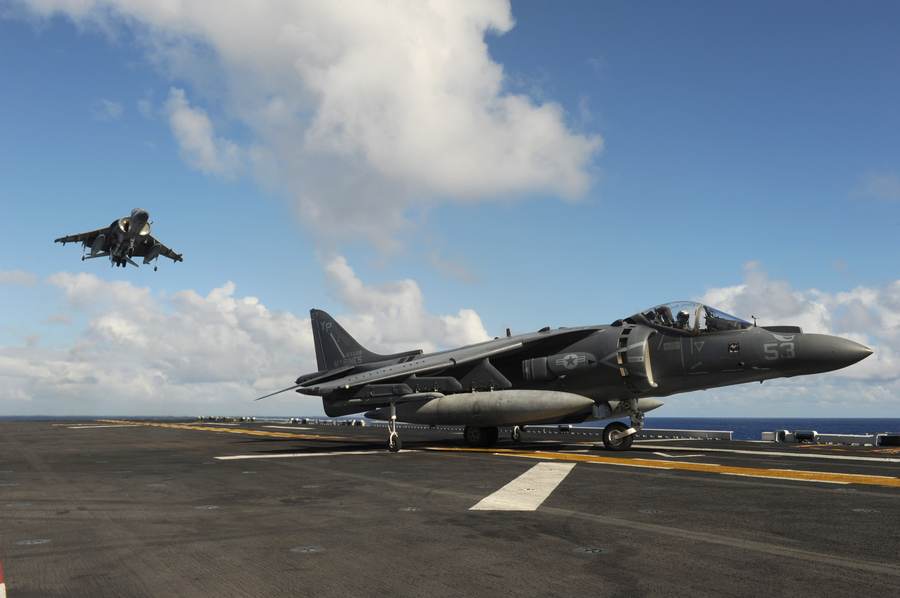
The USS Makin Island amphibious ship is heading from San Diego toward the Middle East with the 13th Marine Expeditionary Unit, but the flat deck can make the ship easy to misread. Makin Island is not a nuclear-powered aircraft carrier. It is a Wasp-class amphibious assault ship built to move Marines, aircraft, vehicles and landing craft together, then put that force ashore from beyond the horizon.
USS Makin Island departed San Diego on Monday, September 29, one day after the USS Theodore Roosevelt carrier strike group. The Makin Island Amphibious Ready Group also includes USS John P. Murtha and USS Anchorage. Together they carry roughly 2,200 Marines in the deployment described by the Associated Press, one part of a movement totaling about 9,000 service members on roughly seven ships.
What the Makin Island is
Makin Island, hull number LHD-8, is the eighth and final ship of the Wasp class. Commissioned in October 2009 and homeported in San Diego, it displaces about 41,684 long tons at full load and stretches 844 feet. Its normal company is about 1,208 sailors, while berthing and support spaces can accommodate roughly 1,687 embarked troops; deployment totals vary by mission, and the present 13th MEU package is reported at about 2,200 Marines across the three-ship group.
The ship is named for the 1942 Makin Island raid by Carlson’s Raiders in World War II. Its engineering plant also marked a transition: Makin Island was the first U.S. Navy ship to combine gas turbines with hybrid electric propulsion. At lower speeds, electric motors can drive the shafts more efficiently; gas turbines provide higher-power operation. That Makin Island hybrid propulsion system reduces fuel use during long periods of economical steaming.
Wasp-class amphibious assault ship specs at a glance
The basic LHD-8 displacement, crew and length figures explain why the ship looks carrier-like but works differently: 844 feet long, about 41,684 long tons fully loaded, more than 1,200 sailors in the ship’s company and space for an embarked Marine force. A full-length flight deck supports helicopters, MV-22 Osprey tiltrotors and short-takeoff, vertical-landing F-35B fighters. Below that deck are hangar, maintenance, medical and command spaces.
The distinguishing feature is lower in the hull: a floodable well deck. It can launch landing craft and amphibious vehicles carrying Marines, trucks and supplies toward shore. A supercarrier is optimized around aircraft. Makin Island is optimized around the Marine air-ground team — infantry, aviation, logistics and command — with sea and air routes to an objective.
Not an aircraft carrier: the plain-language difference
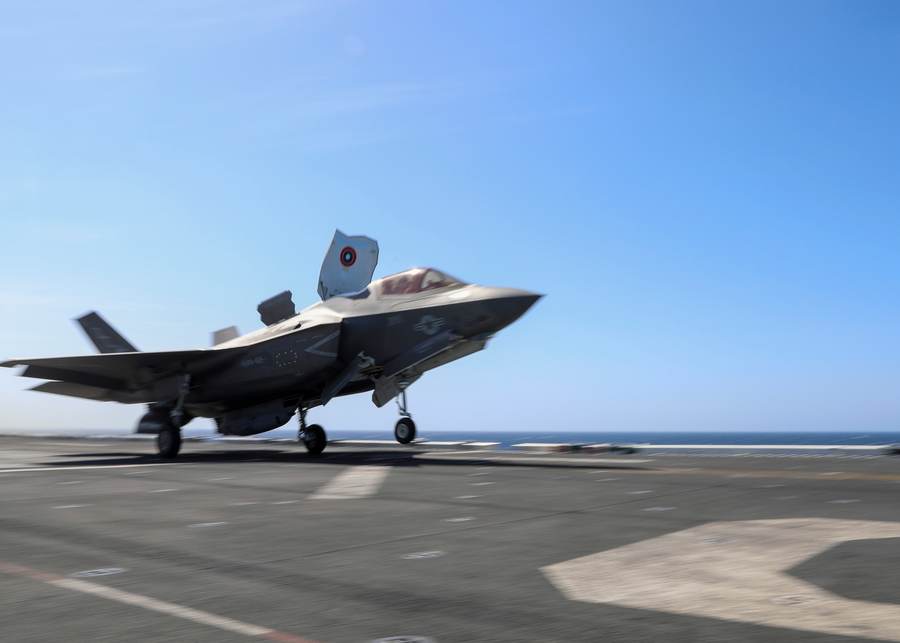
Visitors see a long flight deck and jets, so the natural question is whether Makin Island is an aircraft carrier. In Navy classification, it is not. A Nimitz-class carrier uses steam catapults and arresting wires to launch and recover conventional fixed-wing aircraft. Makin Island has neither. Its F-35B jets can take off over a short run and land vertically, while helicopters and Ospreys do not need catapults.
That difference shapes scale. A nuclear supercarrier such as Theodore Roosevelt is 1,092 feet long, displaces more than 100,000 tons and normally deploys with about 60 to 70 aircraft. Makin Island is smaller, conventionally powered and usually carries a mixed aviation package designed around Marine missions. It trades the carrier’s larger air wing and sustained sortie capacity for a well deck, troop spaces and the ability to land a combined force.
What is a “lightning carrier”? The phrase describes loading an amphibious assault ship with a larger-than-normal group of F-35B Lightning II fighters — sometimes around 20 — so it can temporarily emphasize sea-based airpower. That does not turn the ship into a supercarrier. The smaller deck, aviation-fuel capacity, maintenance spaces and lack of catapults limit the number and types of aircraft it can operate. The concept is useful when commanders need extra stealth fighters, but it remains one configuration among many.
Its role in this deployment
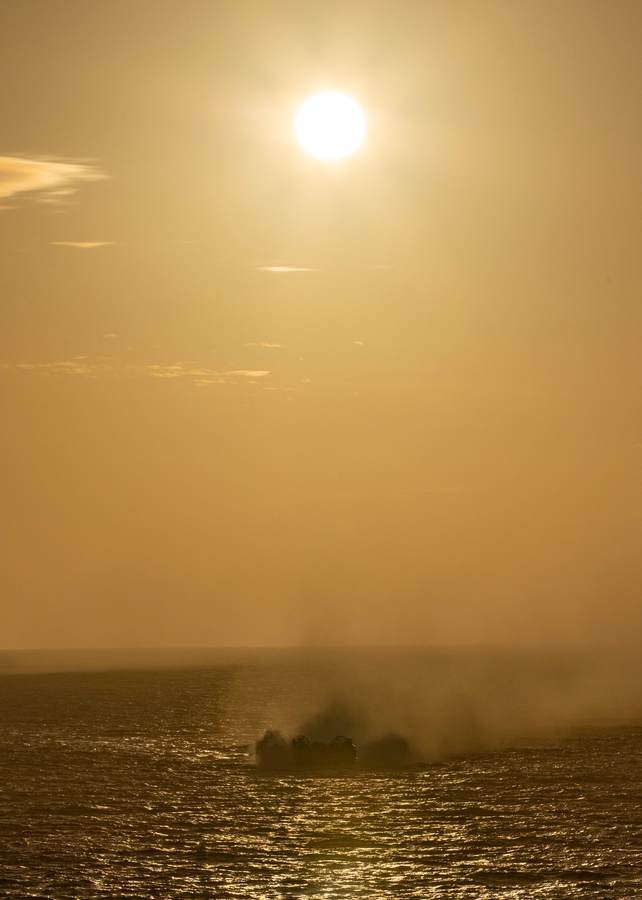
The Makin Island 13th Marine Expeditionary Unit pairing gives commanders options that a carrier strike group does not. USS John P. Murtha, an amphibious transport dock, and USS Anchorage, a dock landing ship, expand the force’s capacity for landing craft, vehicles, cargo and Marines. The group can conduct evacuation, maritime security, humanitarian relief or limited raids without immediately relying on a land base.
That is the practical answer to “how many Marines are on Makin Island.” The roughly 2,200 figure refers to the MEU across the amphibious ready group, not necessarily every Marine sleeping aboard LHD-8. The unit’s infantry, aviation and logistics elements are distributed among the ships so the formation can operate as a team and survive the loss or diversion of one platform.
For the US Marines Middle East deployment in 2026, F-35Bs add precision-strike and sensor capacity; MV-22s extend the range at which Marines or supplies can move; helicopters support assault, transport and rescue; landing craft handle heavier loads. That combination bridges the gap between airpower alone and a major ground deployment.
Amphibious ready group vs. carrier strike group
A carrier strike group is built around the aircraft carrier and its air wing, protected by cruisers or destroyers and supported by logistics ships. Its central purpose is sustained aviation and sea control. An amphibious ready group is built around the Marine expeditionary unit. Its central purpose is putting a self-contained force where it is needed, from ship to shore.
The two formations complement each other. Roosevelt can provide air defense, surveillance, electronic warfare and long-range strike. Makin Island can move Marines, open an evacuation corridor, secure a small objective or demonstrate that Washington has options beyond bombing. In an Iran contingency, that amphibious capability can support raids or recover personnel, but its value may be coercive: the threat of a mobile landing force changes what Iranian planners must defend.
Why it matters
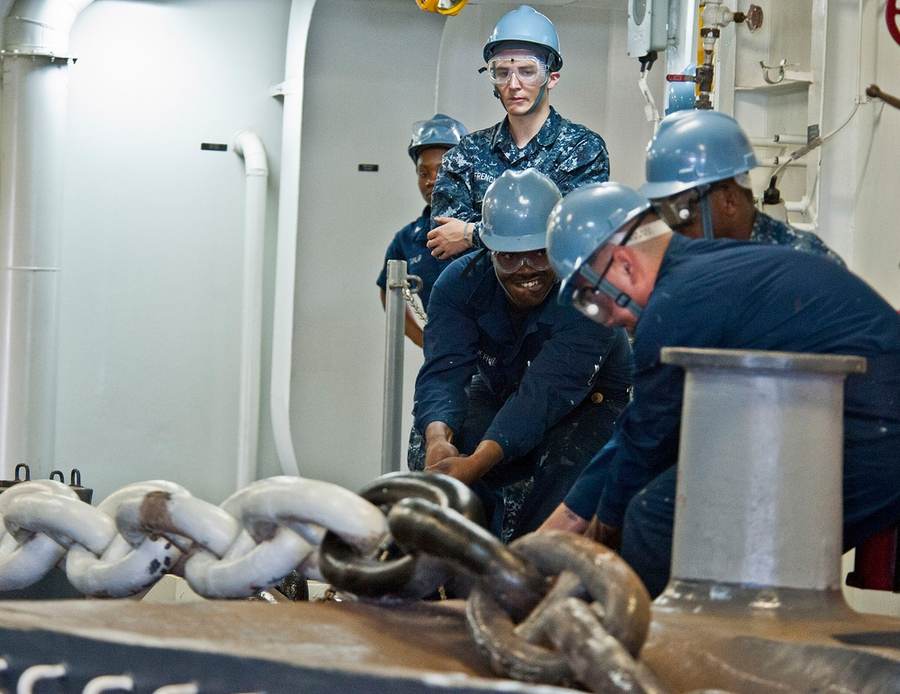
The Iran war naval buildup in October 2026 is not simply another carrier story. The war began February 28, a fragile ceasefire collapsed, and more than 50,000 U.S. troops were already in the region before this movement. Adding an amphibious force signals that planners are preparing for more than one scenario. It can deter escalation, reinforce embassies, evacuate civilians or support combat — and each use requires different equipment already carried at sea.
The well deck matters as much as the flight deck. Ports and airfields are fixed, visible and politically sensitive. Amphibious ships bring their own mobile launch points. That independence is useful if bases are unavailable or vulnerable, although ships near shore also face missiles, drones, submarines and mines. The force creates options; it does not eliminate risk.
Who wins and who loses
U.S. commanders gain flexibility. They can combine Marine aviation and landing capabilities with carrier airpower already in theater. Allies gain another evacuation and crisis-response platform. The 13th MEU gains a real operational mission after training for exactly this range of contingencies.
Iran must spread attention. Defenses cannot focus only on carrier-launched strikes. Coastal security, ports and potential landing areas become part of the planning problem. At the same time, Iranian hard-liners can use the deployment as proof of an American threat, strengthening arguments against compromise.
Sailors, Marines and their families bear the human cost. A long deployment means separation and sustained readiness under threat. Regional shipping and energy markets also lose certainty: every additional combat-capable ship can reinforce deterrence, but it can also raise the perceived chance that a crisis will widen.
What happens next
The immediate question is transit time and assignment. Makin Island’s group is expected to arrive on the same broad late-October-to-November timeline as the Roosevelt deployment, but officials can redirect or sequence ships as conditions change. Watch whether the group remains concentrated, whether the 13th MEU begins visible exercises with regional partners and whether landing craft or F-35Bs shift forward.
The larger test is whether presence produces restraint. If negotiations recover, Makin Island may function mainly as insurance. If attacks widen or civilians must be moved, its aviation, hospital capacity and landing craft could become central. If renewed strikes follow the November 3 midterms, the ship’s contribution will likely be measured not by how much it resembles an aircraft carrier, but by how many different problems its Marines can solve.
Sources
Internal links
- Third U.S. carrier and thousands of troops head toward the Middle East
- Iran’s president arrives in New York for the U.N. General Assembly
- USS Theodore Roosevelt: the third carrier sailing to the Middle East
Reporting note: Ship specifications and historical details are drawn from U.S. Navy public information and the image records linked above. Current deployment details are attributed to the listed reports. Force movements can change.