Ukraine Operation Vivaldi counteroffensive
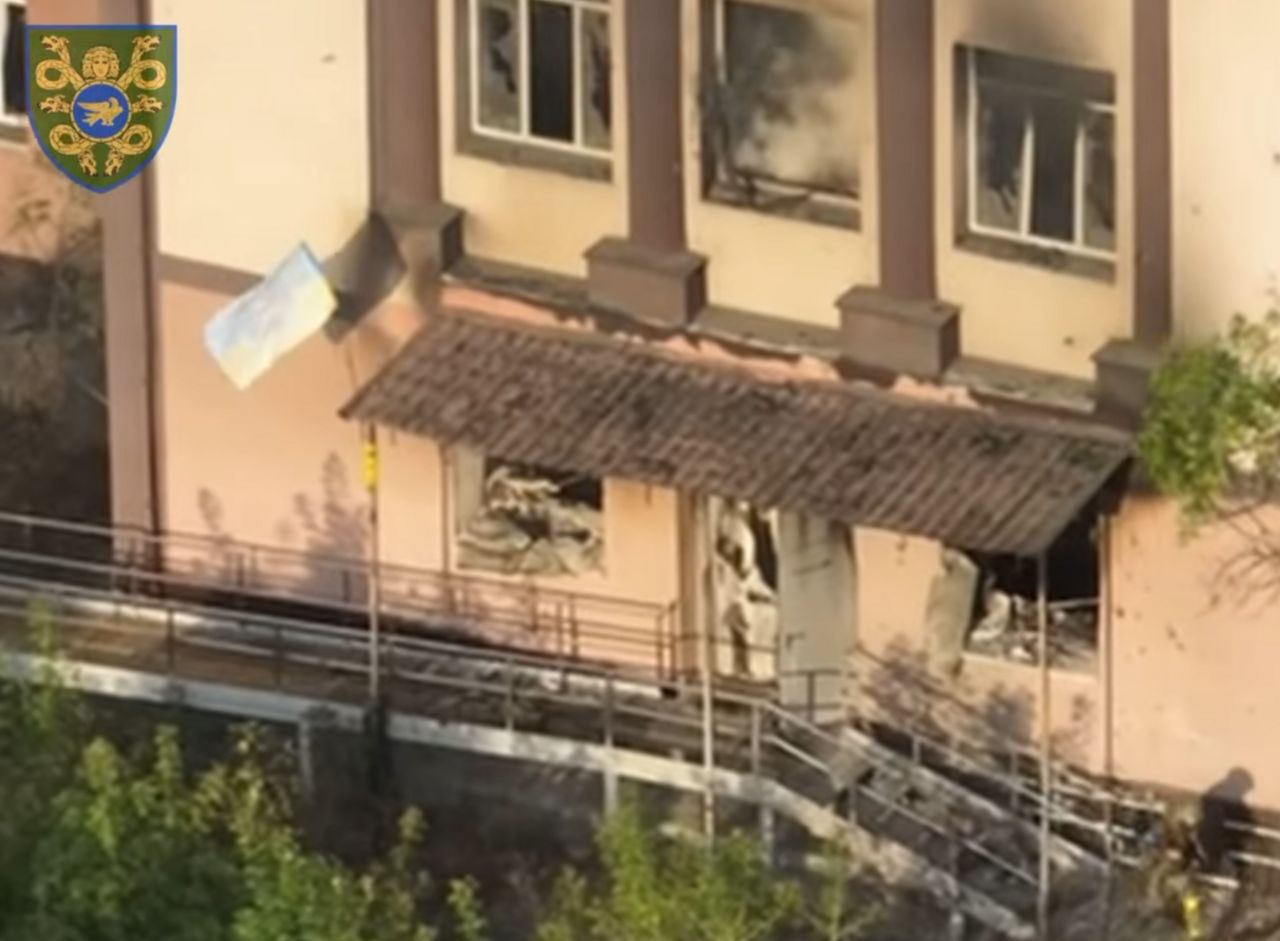
Ukraine's Third Army Corps commander, Brigadier-General Andrii Biletskyi, said Monday that the Ukraine Operation Vivaldi counteroffensive had entered its third publicly disclosed stage and retaken another 51 square kilometres — about 20 square miles — in the Lyman sector of northern Donetsk. He said Ukrainian troops liberated Nove, Ridkodub and Katerynivka and restored control over Karpivka and Novomykhailivka.
The corps put the operation's cumulative territorial gain at 176 square kilometres. It also claimed about 2,000 Russian personnel losses in this phase and said more than 250 Russian servicemen were taken prisoner. Those casualty, prisoner and territorial figures come from the Ukrainian military and have not been independently verified. Reuters said it could not verify Biletskyi's account and noted that drone warfare has created a broad no-man's-land, or “kill zone,” that makes a fixed front line unusually difficult to establish.
What happened
Third Army Corps Donetsk advance claims 51 square kilometres
Biletskyi described the third stage as a further rollback of Russian infiltration and assault positions around the Lyman axis. In the corps' account, the Nove, Ridkodub and Katerynivka liberated claim is accompanied by restored Ukrainian control over Karpivka and Novomykhailivka. Together, those gains would widen the pocket of ground Ukraine says it has recovered since May.
The corps also said the campaign had degraded the combat capability of Russia's 20th and 25th Combined Arms Armies. That claim is operationally important because those formations support pressure across the northern Donetsk front, but the degree of damage is not independently measurable from the public reporting reviewed. Moscow had not provided a corresponding account of the third stage at publication time.
The announcement therefore establishes what Ukraine says it has accomplished, not a mutually confirmed map. The firmest description is that a senior Ukrainian commander publicly claimed a 51-square-kilometre gain and named five settlements where Kyiv says its control was established or restored.
Why this matters
ISW Vivaldi assessment focuses on the fortress belt
The Institute for the Study of War assessed that Operation Vivaldi achieved the “operationally-significant” aim of disrupting Moscow's attempt at a wide encirclement of the Ukrainian-held fortress belt of Sloviansk and Kramatorsk. That matters more than the acreage in isolation. A northern pincer would threaten the roads, rail links and defensive depth connecting the cities that anchor Ukraine's remaining position in Donetsk.
Even Rybar, a prominent pro-Kremlin military blogger, acknowledged that the counterattack would “delay the assault” and leave part of the northern flank of Russia's “South” grouping uncovered. An admission from a Russian-aligned commentator does not independently validate every Ukrainian claim, but it strengthens the case that the operation has imposed a real operational cost on Moscow's timetable.
The significance is also cumulative. Russia's overall advances slowed during 2026, while Kyiv said earlier this year that it clawed back more than 700 square kilometres in the southeast. Operation Vivaldi is smaller, but it is aimed at a strategically sensitive approach to cities that Russia would need to isolate before mounting a broader assault. Delay can be a battlefield effect of its own: it consumes troops, ammunition and time while giving defenders longer to prepare.
How we got here
Lyman counteroffensive 2026 began under an information blackout
Operation Vivaldi began in May under an information blackout and was first revealed publicly by Biletskyi on September 15. He said the first stage cleared 75 square kilometres of Russian infiltration groups and de-occupied another 10 square kilometres. Ukraine said Serednie was liberated and Novoselivka, Oleksandrivka, Yarova and the Korovyi Yar area were cleared.
Biletskyi framed the operation with a musical metaphor: “Our operation is called Vivaldi, and Vivaldi, as is well known, has four seasons, and this is only the first of them.” That line was delivered when stage one was disclosed. Monday's announcement places the campaign at stage three, leaving the commander's promised fourth “season” as an implied next phase rather than a publicly described plan.
Ukraine ground robots UGV tactic shaped stage two
In the second stage, heavy bomber drones from the Third Assault Brigade carried NC13 “Gryphon” unmanned ground vehicles more than 10 kilometres behind Russian lines and released them for missions in the rear. Ukraine billed the pairing of heavy-lift drones and explosive Ukraine ground robots, or UGVs, as a world first. Public reporting supports that the corps announced and displayed the tactic, but independent observers have not verified every mission or the “world first” claim.
Across the broader operation, Ukraine says about 3,000 Russian troops were killed or wounded. That wider figure and the stage-three estimate of roughly 2,000 personnel losses are both Ukrainian military claims. They should not be combined as if produced by an independent casualty ledger.
Who gains, who loses
Ukraine gains defensive depth and initiative if the map holds. Re-establishing control around the Lyman sector would complicate a Russian northern approach toward Sloviansk and Kramatorsk. It also gives Kyiv a narrative of tactical adaptation at a time when the country is trying to sustain foreign military support and show that Russian gains are neither automatic nor irreversible.
Russia risks delay and a more exposed flank. A damaged northern pincer could force Moscow to reinforce ground it expected to use as a springboard, redistribute reconnaissance and drone assets, or accept a slower assault sequence. If the corps' assessment of the 20th and 25th Combined Arms Armies is broadly correct, Russia would also face the cost of restoring combat capacity before renewing pressure.
Civilians remain exposed regardless of who controls a village on a given day. A wider drone kill zone blurs rear and front areas, makes evacuation and aid delivery more dangerous and raises the risk that settlements advertised as secured remain within artillery and drone range. A flag or unit announcement does not by itself mean normal life has returned.
Skeptics have sound reasons for caution. The commander announcing the gains leads the force that carried out the operation. Wartime units have incentives to emphasize success, and neither Reuters nor Signal Post News could independently verify the reported 51 square kilometres, the named settlements, the 2,000 personnel losses or the prisoner count. Front-line maps can lag behind local movement, and drone surveillance turns apparent control into a spectrum rather than a clean line. Those caveats do not erase the operation; they define what is known and what remains claimed.
The numbers in context
Ukraine retakes 176 square kilometres, according to its military
The claimed cumulative gain of 176 square kilometres is militarily meaningful at the local level but modest against the whole Donetsk battlefield. Russia controls roughly 80% of the region, while Ukraine holds about 20%. Moscow wants all of Donetsk, its central territorial demand in negotiations that have stalled.
The third-stage claim of 51 square kilometres represents just under three-tenths of Vivaldi's reported cumulative total. The first disclosure accounted for 85 square kilometres — 75 cleared of infiltration groups and 10 described as de-occupied. Differences among “cleared,” “de-occupied,” “retaken” and “controlled” matter because they describe different levels of military presence, and public summaries do not always use them consistently.
The claimed 2,000 Russian personnel losses and more than 250 prisoners would indicate a costly phase if verified. They are not verified. The figure of more than 250 prisoners is more concrete than a broad killed-or-wounded estimate but still comes from the same belligerent source. No equivalent Russian accounting was available in the cited reports.
Compared with Kyiv's claim of more than 700 square kilometres clawed back in the southeast earlier in 2026, Vivaldi's 176 square kilometres is about one quarter as large. But geography, not just area, determines operational value. Ground on a flank that protects or threatens the Sloviansk–Kramatorsk belt can matter more than a larger tract that does not affect a major line of advance.
What happens next
The first military question is whether the promised fourth “season” begins before winter or whether the third stage consolidates. Wet ground, colder temperatures and shorter daylight can slow vehicle movement and complicate battery performance, resupply and casualty evacuation. They can also expose fixed supply routes to persistent drone observation. Ukraine may choose to fortify the retaken area rather than chase a symbolic timetable.
Russia's response will show whether Vivaldi has interrupted or merely postponed pressure on the fortress belt. Reinforcements toward Lyman, renewed infiltration attempts, heavier glide-bomb use or concentrated strikes against Ukrainian logistics would suggest Moscow is trying to restore its northern option. A shift toward other axes could indicate that the operation changed the immediate assault plan.
The diplomatic track remains separate from the battlefield but not insulated from it. U.S. envoys Jared Kushner and Steve Witkoff visited Moscow and Kyiv this month as Washington tried to restart talks. Russia's demand for all of Donetsk collides directly with Ukraine's effort to hold and recover ground there. Each side will read any verified battlefield change as leverage, making local control central to negotiations that have so far stalled.
Conclusion
The Donetsk counteroffensive of September 2026 is best understood as a potentially important operational disruption wrapped in claims that still require independent confirmation. Ukraine says stage three restored five settlements, retook 51 square kilometres and brought Operation Vivaldi's total to 176 square kilometres. ISW's assessment and Rybar's acknowledgment support the narrower conclusion that Moscow's northern approach has been delayed. The precise map and loss totals remain less certain.
What happens after the announcement will be the stronger test: whether Ukraine can hold the ground through winter, whether Russia can rebuild pressure on the Sloviansk–Kramatorsk flank, and whether Vivaldi's fourth “season” proves to be another advance, a consolidation phase or simply a metaphor overtaken by events.
Sources
Verification note: Reuters reported it could not independently verify Biletskyi's claims. Signal Post News likewise treats the territorial, casualty and prisoner totals as attributed Ukrainian military figures, not independently established facts.