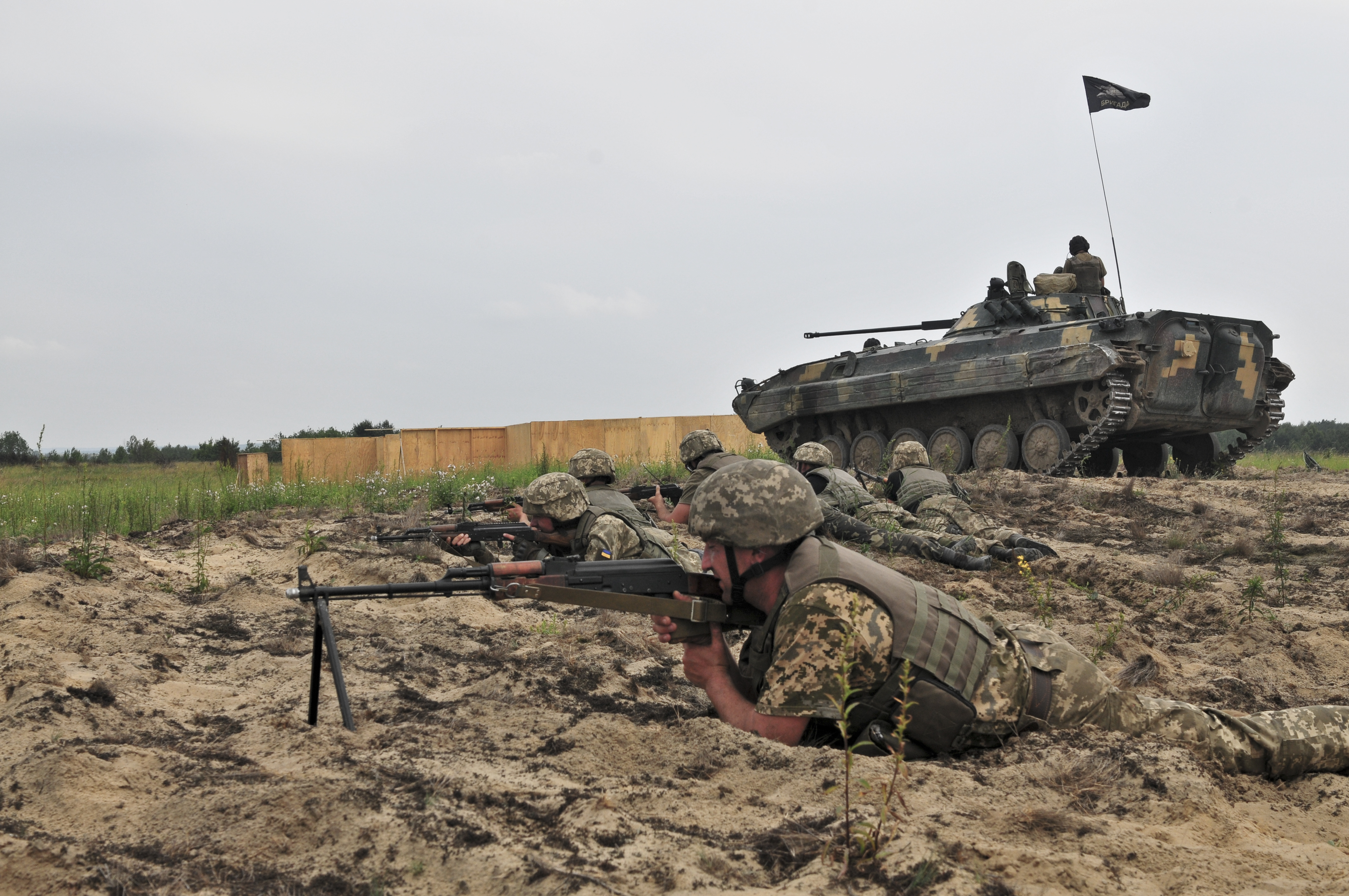
LYMAN SECTOR, DONETSK — Ukraine captures 250 Russian soldiers near Lyman in what Kyiv describes as the largest mass surrender of the war, after small ground robots air-dropped behind Russian lines and explosive-packed "Trojan" armored carriers cracked open fortified positions in northern Donetsk. The Third Army Corps, commanded by Brigadier-General Andrii Biletskyi, announced the surrenders this week as the claimed third phase of its Operation Vivaldi counteroffensive — figures that, like every battlefield total in this war, come from one side of the front and have not been independently verified.
CNN reported the corps' announcement on October 2 and noted explicitly that it could not independently verify the surrender video or the figures. The corps said the prisoners included whole subunits — officers, pilots and artillerymen among them — and named Alexander Manankov as the highest-ranking captive. A video the corps released this week shows what it says are dozens of surrendering Russian troops moving in a single-file human chain through a forest, followed by an improvised roll call.
What happened
Operation Vivaldi third phase: robots first, infantry second
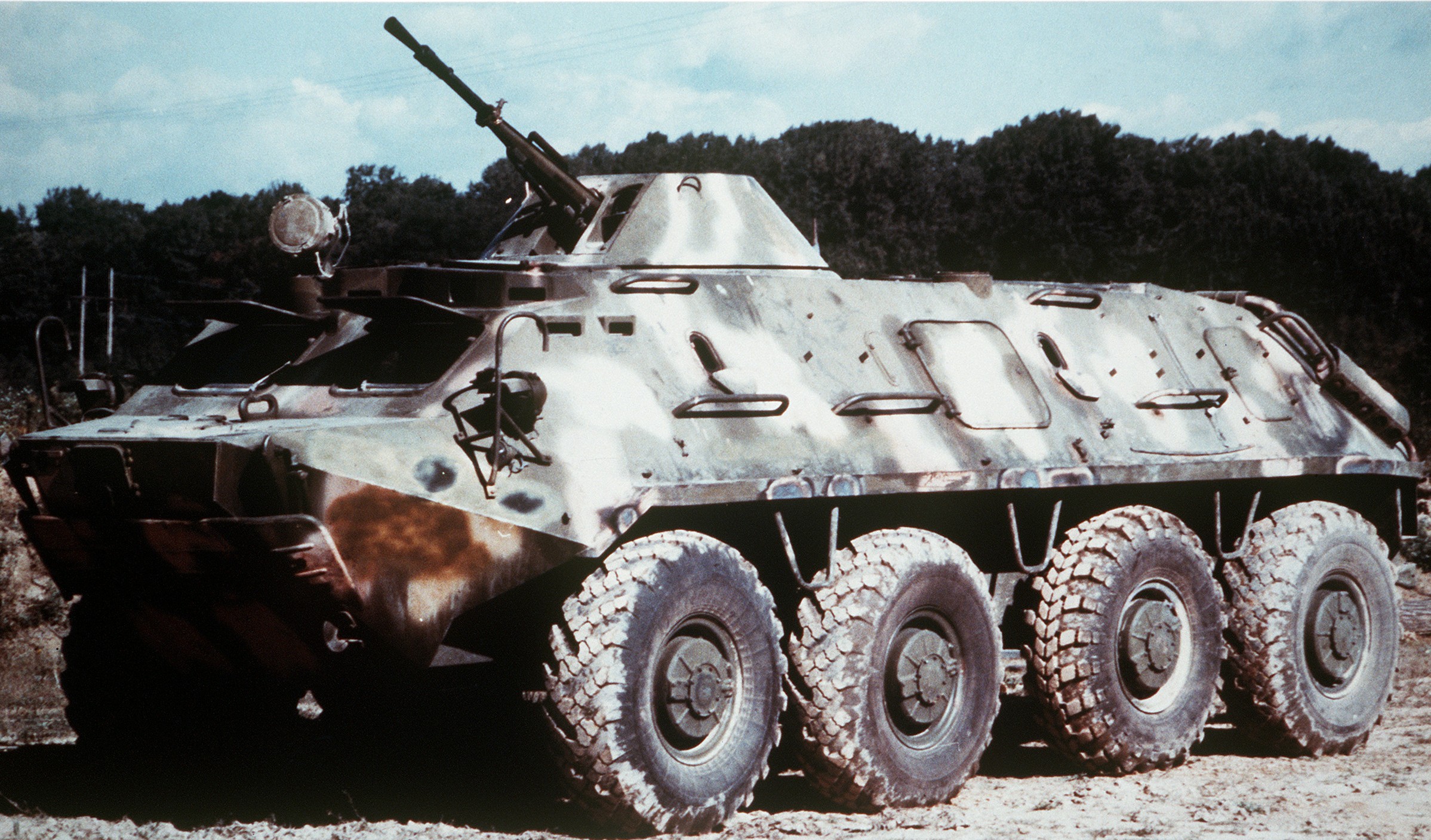
The operation, as described by the corps, paired two unmanned tricks. First, small ground robots were air-dropped behind Russian lines — an evolution of the drone-and-UGV pairing Ukraine used in Vivaldi's second stage, when heavy bomber drones carried NC13 "Gryphon" unmanned ground vehicles more than 10 kilometres into the Russian rear. Second, "Trojan" armored personnel carriers — Soviet-designed BTR-type vehicles converted into robotic, explosive-laden breachers — were driven at fortified Russian positions and detonated. The logic is to spend machines before men: blast a hole with a driverless carrier, push robots through the gap, and present surrounded Russian troops with surrender as the only survivable option.
The deception plan mattered as much as the machines. According to the corps' account, Ukrainian forces feinted toward Shandryholove–Zelena Dolyna while the real blow fell on the high ground around Nove. The corps claims five settlements were retaken in this phase — Nove, Ridkodub, Katerynivka, Karpivka and Novomykhailivka — for a claimed 51 square kilometres, bringing the operation's cumulative claimed total to 176 square kilometres. It also claimed roughly 2,000 Russian personnel losses in this phase and about 5,000 killed or wounded across all three phases.
The prisoners' own testimony, as reported by The Sun from the corps' video, is grim. The captives said they surrendered because they "didn't want to die in vain." They described eating bark and grass and drinking from puddles after their provisions ran out. One prisoner said commanders ordered them to form a "circular defence" and then turned off the radios. Three men, the report says, died for lack of medication. That testimony is uncorroborated — it comes from prisoners speaking on camera in Ukrainian custody, a setting in which candor about morale and free choice cannot be assumed. But it is consistent with what Russian military bloggers themselves have been saying: prominent pro-war commentators lamented the Lyman setbacks and demanded answers over command failures and supply shortages, a backlash reported by Politico.
Why this matters
The war's biggest mass surrender — and a warfare inflection point
If even the rough shape of the claim holds, this is the largest mass surrender of the war so far, and it lands on two levels at once. Tactically, 250 prisoners taken from whole subunits — officers, pilots, artillerymen — is the kind of event that does not happen to an army whose logistics and command are functioning. Armies that are fed, supplied and led in contact do not surrender in the hundreds; they withdraw, they counterattack, or they die in place. Mass surrender is what happens when the system around the soldier collapses first.
Strategically, this is the first operation at this scale built around unmanned systems as the lead element rather than the support act. Drones have been the defining weapon of this war, but they have mostly been used as artillery from the sky — observation, strike, resupply. Vivaldi's third phase, as Kyiv describes it, is something newer: robots and robotic carriers doing the breaching work that used to cost infantry companies. If the model works repeatably, the casualty arithmetic that has constrained every Ukrainian operation since 2023 starts to change. Ukraine is short of people; it is not short of engineers.
There is a third audience: Washington and the European capitals bankrolling Ukraine. The announcement arrives days after Russian forces reached the Siverskyi Donets river and pressed on Lyman — a message that Russian advances are not inevitable and that Ukrainian adaptation continues. And 250 new prisoners are 250 new entries in the exchange ledger. Kyiv's "I Want to Live" project said in January that more than 10,000 Russian soldiers had surrendered during the war; every mass surrender replenishes the pool Ukraine trades for its own captured troops.
.jpg)
How we got here
Vivaldi's seasons and the Donetsk fortress belt
Operation Vivaldi began in May under an information blackout and was first disclosed publicly by Biletskyi on September 15. The commander gave it a musical name — "Vivaldi, as is well known, has four seasons, and this is only the first of them." The first stage, he said, cleared 75 square kilometres of Russian infiltration groups and de-occupied another 10. The second stage introduced the air-dropped ground robots. The third stage is the one now in the headlines, and the metaphor still promises a fourth.
The geography explains the effort. Lyman sits on the northern approach to the "fortress belt" — the Sloviansk–Kramatorsk agglomeration that anchors Ukraine's remaining position in Donetsk. Russia controls roughly 80 percent of the region and demands all of it; the fortress cities are what stand between that demand and its fulfillment. Russian forces had pushed to the Siverskyi Donets river, threatening to turn the northern flank. A Ukrainian counter-push here is not about acreage for its own sake; it is about breaking up an encirclement before it forms. The Institute for the Study of War made exactly that point about the operation's earlier stages, calling the disruption of Moscow's wide encirclement attempt "operationally significant."
Who benefits, who loses — and what the skeptics say
Kyiv's leverage, Moscow's credibility problem
Ukraine gains initiative and bargaining power if the map holds. Retaking the Nove heights complicates any Russian northern approach toward Sloviansk and Kramatorsk, and the imagery of a mass surrender — real or staged — is a morale weapon in both directions: it tells Ukrainian troops the enemy can be broken and tells Russian troops their commanders may already have written them off.
Russia faces a command-credibility problem that its own commentators are amplifying. The remarkable feature of this episode is not Ukrainian messaging; it is the Russian military-blogger backlash. Prominent pro-war voices lamented the Lyman advances and demanded answers over command failures and supply shortages. When your own side's loudest supporters describe the supply system as broken, the enemy's narrative needs less help. Moscow's official response — denying any setback and calling the Ukrainian account a smokescreen — is the standard denial, but denials do not resupply a surrounded subunit.
The skeptics have the strongest single argument: verification. CNN said it could not independently verify the video or the surrender claims. The open-source DeepState monitors only "partly reflected" the claimed territorial gains, per Politico's reporting. Prisoner testimony filmed in custody is inherently compromised. And Biletskyi commands the force he is praising — wartime commanders have every incentive to round up. None of that proves the claims false; the milblogger anger suggests something real happened. But the honest accounting is that we know the shape of an event and the scale of a claim, and the two are not the same thing.
Civilians lose in every version of this story. The five named settlements — Nove, Ridkodub, Katerynivka, Karpivka, Novomykhailivka — are villages in a drone-saturated kill zone. A flag-raising does not make a village livable, and control that changes hands under drone observation tends to change hands again.
What the numbers mean
250 surrenders against 10,000; 51 square kilometres against a region
Start with the surrenders. The "I Want to Live" project's January figure of 10,000-plus Russian surrenders across the war means 250 in a single operation is roughly 2.5 percent of the war's entire recorded total, concentrated in one sector in days. That concentration is the story: surrenders in this war have mostly been individual or small-group events — a soldier walking across with a white flag, a drone dropping surrender instructions. Whole subunits laying down arms together is a different phenomenon, and it points at unit cohesion rather than individual despair.
The territorial figures deserve the same proportional treatment. The claimed 51 square kilometres in this phase is just under 30 percent of Vivaldi's claimed 176-square-kilometre cumulative total. Against the whole of Donetsk — a region of roughly 26,500 square kilometres, about 80 percent of it Russian-held — 176 square kilometres is under one percent. That sounds trivial until you remember that the relevant denominator is not the region; it is the northern approach to the fortress belt. A few kilometres of high ground on the correct axis can matter more than a hundred square kilometres of steppe elsewhere. Nove's heights are the correct axis.
The claimed 2,000 Russian personnel losses in this phase and roughly 5,000 across the operation are the least verifiable figures of all — killed-and-wounded estimates are where wartime accounting is foggiest, and they should not be added to the prisoner count as if they came from the same ledger. Treat them as the corps' estimate of the price it imposed, not a casualty census.
What happens next
Three things to watch. First, the exchange pipeline. Two hundred and fifty prisoners are leverage Kyiv will spend: expect their names to surface in the next round of swap negotiations, and expect Moscow to downplay the number for as long as it can. Second, the fourth "season." Biletskyi's metaphor still has one movement left, and the question is whether it plays before winter. Wet ground and short days favor the defender with drones; Ukraine may consolidate the Nove heights rather than chase the metaphor. Third, the Russian answer. If Moscow reinforces toward Lyman and tries to retake the heights, Vivaldi has at least forced Russia to spend reserves on ground it thought was settled. If Russia instead shifts pressure to other axes — Kostiantynivka, the southern approaches — the operation will have bought the fortress belt time, which is the one commodity Ukraine's engineers cannot manufacture.
Conclusion
Strip away the fog and this much is solid: Ukraine's Third Army Corps executed a robot-led assault near Lyman, released footage of mass surrenders, and claimed its largest single haul of prisoners of the war — and Russia's own military commentators are furious about the setback rather than disputing that one occurred. The precise figures — 250 prisoners, 51 square kilometres, 2,000 losses — remain Ukrainian claims awaiting independent confirmation. But the direction of travel is visible even through the fog: unmanned systems are moving from the supporting cast to the lead role in breaching operations, and an army that cannot keep its forward units fed and in radio contact will keep producing the footage its enemy wants the world to see.
Sources
Verification note: CNN reported it could not independently verify the Third Army Corps' video or its surrender figures. Signal Post News likewise treats the territorial, casualty and prisoner totals as attributed Ukrainian military claims, not independently established facts. Prisoner testimony cited from The Sun's reporting of the corps' video was filmed in Ukrainian custody.