Sberbank data centre drone strike: Ukrainian drones have hit the data processing centre of Russia's largest bank at Balakovo on the Volga — a facility built to become the biggest in the country — and Sberbank's own leadership has confirmed the attack.
Ukraine's Drone War Reaches Russia's Biggest Data Centre
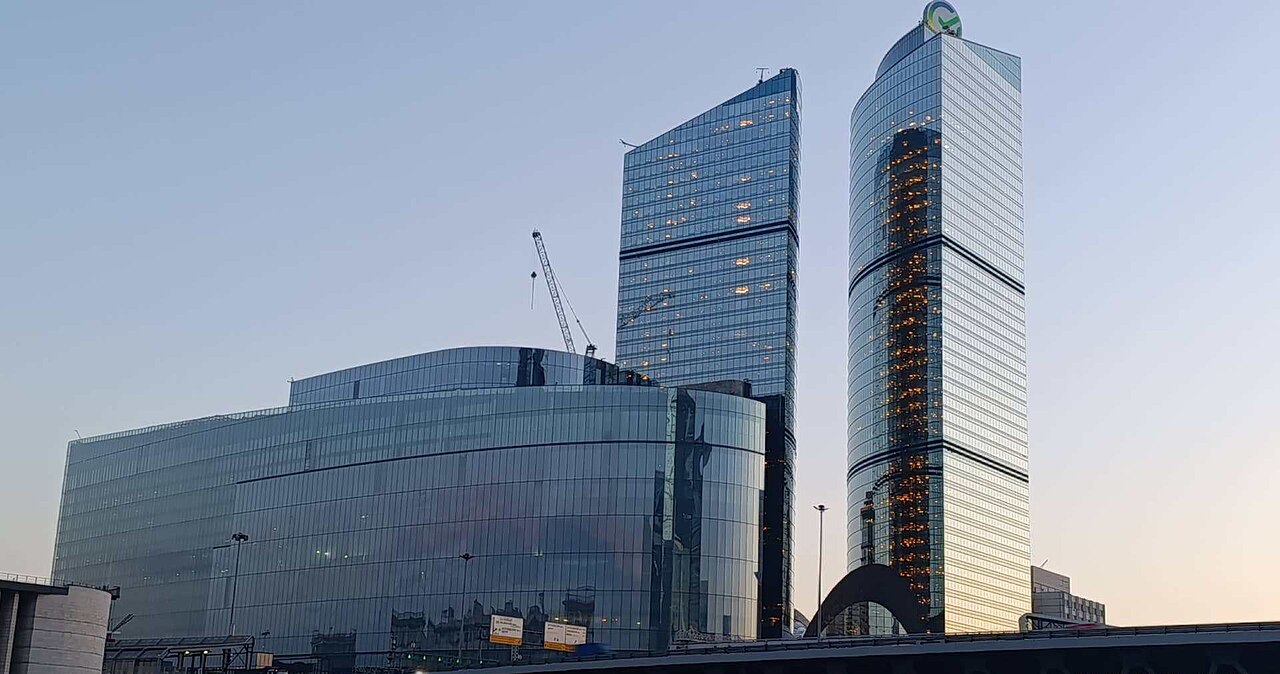
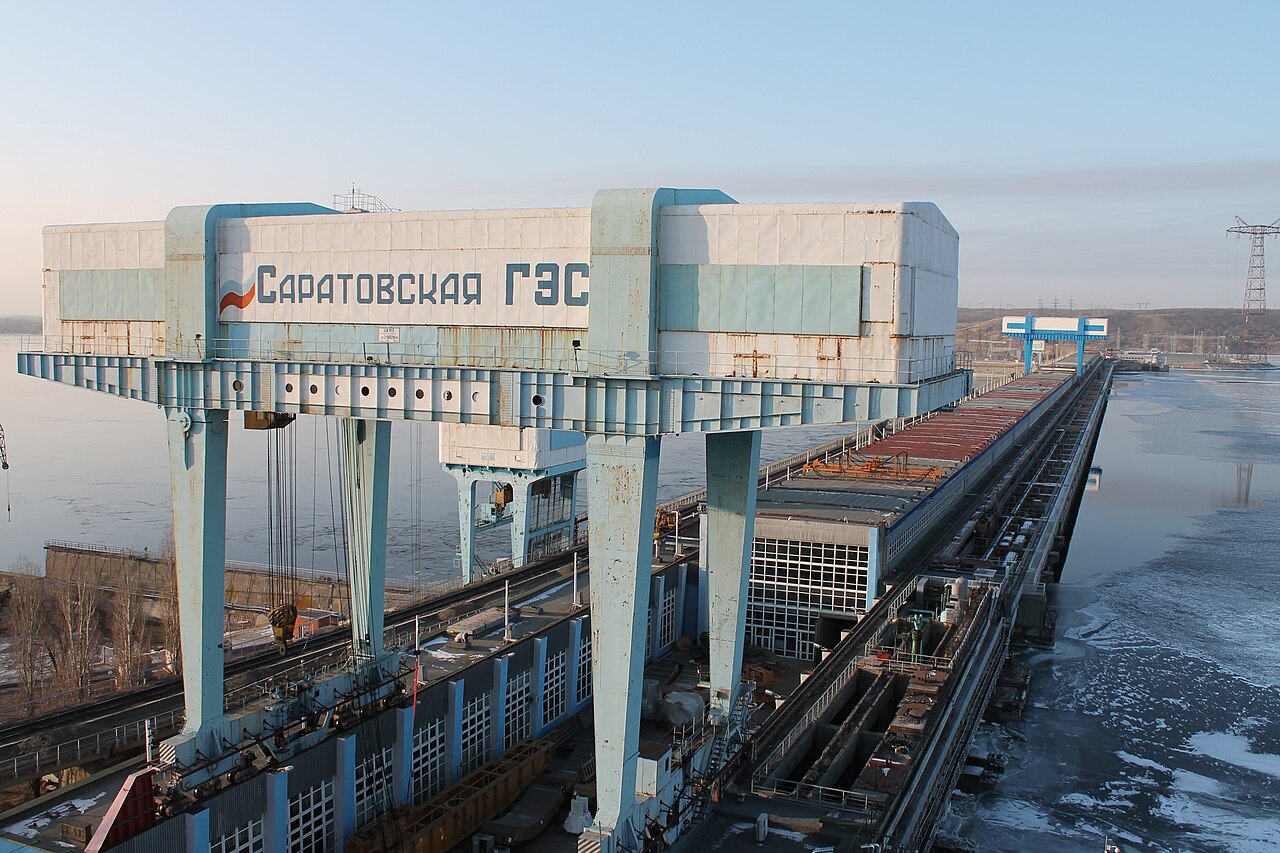
Ukrainian drones hit Russia's biggest data centre, owned by Sberbank, the country's largest bank and technology company, but did not disrupt its operations, a senior executive said on Wednesday. The confirmation came from the bank itself: its first deputy CEO, Alexander Vedyakhin, told reporters the data processing centre had been attacked and that all of Sberbank's systems and services were operating normally, without disruption. The centre stands at Balakovo, a Volga River town in the Saratov region that also hosts a nuclear power plant and the Saratov hydroelectric station — and it was not the only thing struck in the town that night.
Track it live: Ukraine war map and live tracker
Saratov's governor, Roman Busargin, said a Ukrainian drone attack on Balakovo early on Wednesday killed one person and damaged several residential buildings. It was not immediately clear whether that death was connected to the strike on the data centre, and Busargin said the town's infrastructure facilities were operating as usual. Russia's Defence Ministry, for its part, claimed Ukrainian forces launched more than 900 drones toward Russian territory and the annexed Crimean Peninsula overnight — a figure that could not be independently verified, and one this article treats as a claim, not a count.
What is confirmed, and what is not
The core fact rests on an unusual foundation for a wartime strike: an admission by the target. Sberbank is state-owned and is Russia's largest financial institution by assets and customers. Its leadership had every institutional reason to say nothing, or to describe an anonymous incident at an unnamed facility. Instead, its first deputy CEO confirmed, on the record and by name, that the bank's data processing centre was attacked. Russia's state TASS news agency carried the same confirmation on Wednesday, and the Ukrainian monitoring channel Exilenova+ had already identified the struck data centre in Balakovo's industrial zone as Sberbank's, reporting fires in the area overnight.
What has not been established is the damage. Sberbank says its services never stopped. The governor says infrastructure is operating as usual. Russian emergency services have released no full damage assessment of the site, and neither Sberbank nor Yandex — whose data centres were attacked three times in the past week — has said whether any supercomputers were harmed in this series of strikes. Ukraine's military, in the reporting checked on Wednesday, had not issued a claim specifically naming the Sberbank centre; the identification rests on the bank's own confirmation, the governor's account of the Balakovo attack, and monitoring reporting. Readers should hold those two layers apart: the attack happened, by the admission of the institution attacked. Its physical cost is still unknown.
Reporting from Ukrainian outlets, carried in European coverage of the strike, added two further targets in the same industrial zone: the MZ Balakovo metallurgical plant, a producer of reinforcing bars and long steel products, where photographic evidence was said to show damage inside the plant's zone. That reporting is Ukrainian-sourced and has not been confirmed by Russian authorities, whose public account of the night in Balakovo mentions residential damage and one death. Both accounts agree on the setting: Balakovo sits on the east bank of the Volga, roughly 530 miles (850 km) from Ukrainian-controlled territory — far inside what Moscow long treated as a safe rear.
A $1 billion bet on digital sovereignty
To understand why this address matters, consider what is being built there. The Balakovo centre covers some 55,000 square metres, according to Russia's state RIA Novosti news agency's earlier reporting on the project, and it is scheduled to host Russia's biggest supercomputer when it goes into operation in 2027. Industry reporting on the project put its cost at 122.2 billion rubles — more than $1 billion — with plans for around 3,000 server racks, up to 120,000 servers, and electrical capacity of up to 82 megawatts. Monitoring reporting describes the centre as still under construction but already partially operational, and expected to serve as a base for GosTekh, the Russian state's own digital services platform.
That combination is the point. Balakovo is not a commercial server farm that happens to sit in Russia. It is a flagship of the Kremlin's digital sovereignty programme: the physical plant meant to run the state bank's systems, host government digital services, and power the artificial intelligence ambitions of a country cut off from much Western technology. Sberbank and Yandex are Russia's two leading AI developers — the domestic market is shared between Sberbank's GigaChat model and YandexGPT — and both, by the industry's own assessments, trail the leading American and Chinese developers by up to nine months, in part because Western sanctions complicate Russia's access to the most advanced chips. A supercomputer is the scarcest asset in that race. Building the country's largest one, in a single building, on a single site, concentrates that asset in a way a drone campaign can now reach.
Why this matters
Ukraine's long-range campaign has moved through target sets in sequence, and each move has carried a logic. Oil refineries came first and longest: burn the fuel, squeeze the revenue, raise the price of the war at the pump. Then, in the past two weeks, the pattern visibly shifted to the infrastructure underneath Russia's digital economy — three attacks on Yandex data centres in a week, which reporting on those strikes said would take months to repair and which disrupted everyday services from taxis to shopping, followed now by the state bank's flagship centre. Kyiv's stated rationale, as reported this week, is reciprocity: Ukraine says it is responding to Russian attacks on its own data sites. Russia, for its part, has spent this same week striking Ukraine's power grid — the overnight wave that hit Balakovo was the mirror image of the wave that hit Kyiv's energy facilities, in a night when both capitals' hinterlands burned at once.
The analytical question is what a data centre campaign can actually achieve, and the honest answer is: less than a refinery campaign in the short term, and potentially more in the long term. A refinery fire stops fuel today. A data centre that keeps running — as Sberbank insists its centre did — stops nothing today. But the campaign's effects are cumulative and psychological as much as physical. Every flagship facility inside drone range must now be defended, hardened, duplicated or dispersed, and air defence is a finite resource Russia is already stretching across refineries, airfields, ports and cities. Redundancy is expensive: duplicating a $1 billion facility's critical functions elsewhere costs a meaningful fraction of the original bet, under sanctions that already make the hardware hard to buy. And the signal to every planner in Moscow is that no category of rear-area infrastructure — not banking, not AI compute, not the state platform itself — sits outside the war's geography any more. Balakovo is 850 kilometres from the front. The distance no longer protects it.
There is a second ledger, and balance requires stating it. The same night's attack on Balakovo killed a person in a residential area, on the governor's account, and damaged homes. Ukraine's deep-strike campaign is waged with weapons that fall on industrial towns, and the distinction Kyiv draws — military and economic infrastructure, not civilians — is tested by every strike that lands near housing, whatever the intended target. Russian strikes on Ukrainian cities kill civilians in far larger numbers, as this week's Kyiv toll shows; that asymmetry is real, and it does not erase the individual cost recorded in Balakovo on Wednesday. Both facts belong in the same article, because both are the war.
The supercomputer question
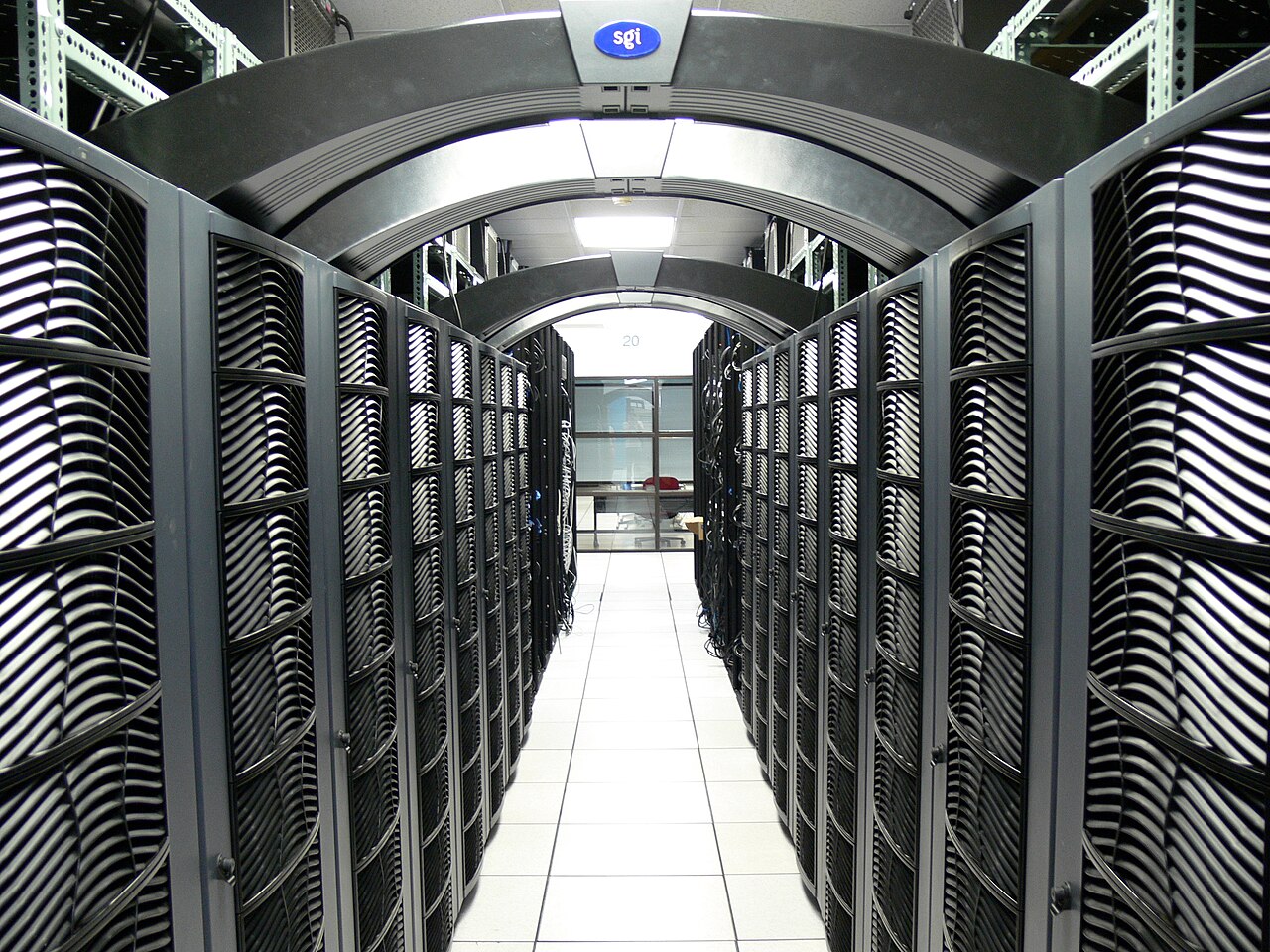
One specific unknown hangs over this strike, and it is the one that will decide how the episode is ultimately scored. The Balakovo centre's strategic value is concentrated in a single scheduled asset: the supercomputer due to enter service in 2027. High-performance computing hardware is exactly what sanctions make hardest for Russia to replace — advanced processors and accelerators are controlled exports, sourced through intermediaries at premium prices and long delays. If the strike damaged installed computing hardware, or the specialised power and cooling systems a supercomputer hall depends on, the cost would be measured not in repair bills but in schedule: months added to a programme that is already, on the industry's own reckoning, most of a year behind the global frontier.
Neither Sberbank nor Yandex has said whether supercomputers were damaged in this month's data centre attacks. That silence cuts both ways and should be read carefully. It may mean there is nothing to report — a partially built facility, struck at its edges, with its most valuable rooms untouched. It may equally reflect the obvious incentive of institutions under attack to project normality: Sberbank's entire confirmation was framed around continuity, services normal, customers unaffected, a message aimed as much at depositors and markets as at journalists. Until an independent damage assessment exists — satellite imagery analysis, fuller official accounting, or evidence of service or schedule disruption — the supercomputer's fate stays in the category this article has kept it in from the first paragraph: unknown, and decisive.
What happens next
Four developments will show whether Balakovo was an episode or a campaign. First, repetition: Yandex was struck three times in a week before the target list reached Sberbank, and a campaign is defined by return visits — a second strike on Balakovo, or a first on another banking or state facility, would settle the question. Second, defence: watch where Russia moves air defence, and what it chooses not to defend — every battery redeployed to a data centre is a battery absent from a refinery, a bridge or a city. Third, disclosure: if the 2027 supercomputer schedule slips publicly, or Sberbank's reporting begins absorbing unusual repair and security costs, the damage question resolves itself in the bank's own numbers. Fourth, escalation of the target logic: Kyiv frames these strikes as answers to Russian attacks on Ukrainian data and energy infrastructure, which means the campaign's tempo is partly set in Moscow — another destroyed Ukrainian facility invites another Russian one, 850 kilometres behind the lines, in a town most Russians had never associated with the war.
Wars widen by category before they widen by geography. The refinery campaign taught Russia that its fuel system was a front line. The Yandex strikes taught it that its consumer internet was one. Balakovo, confirmed not by Kyiv's boasts but by the bank's own deputy chief executive, teaches the harder lesson: the state bank, the government platform and the national supercomputer now sit on the same list. Sberbank's systems, it says, never stopped. The list, on Wednesday's evidence, is not going to shrink.
Related coverage: Ukraine's first Yandex data centre strike at Sasovo · The second Yandex data centre hit, at Kaluga · The same night in Kyiv: Russian strikes on the energy grid and the Balakovo attack
Sources: Reuters, TASS reporting via DN, Dagens, EA WorldView.