Trump urged Zelenskyy Moscow meeting
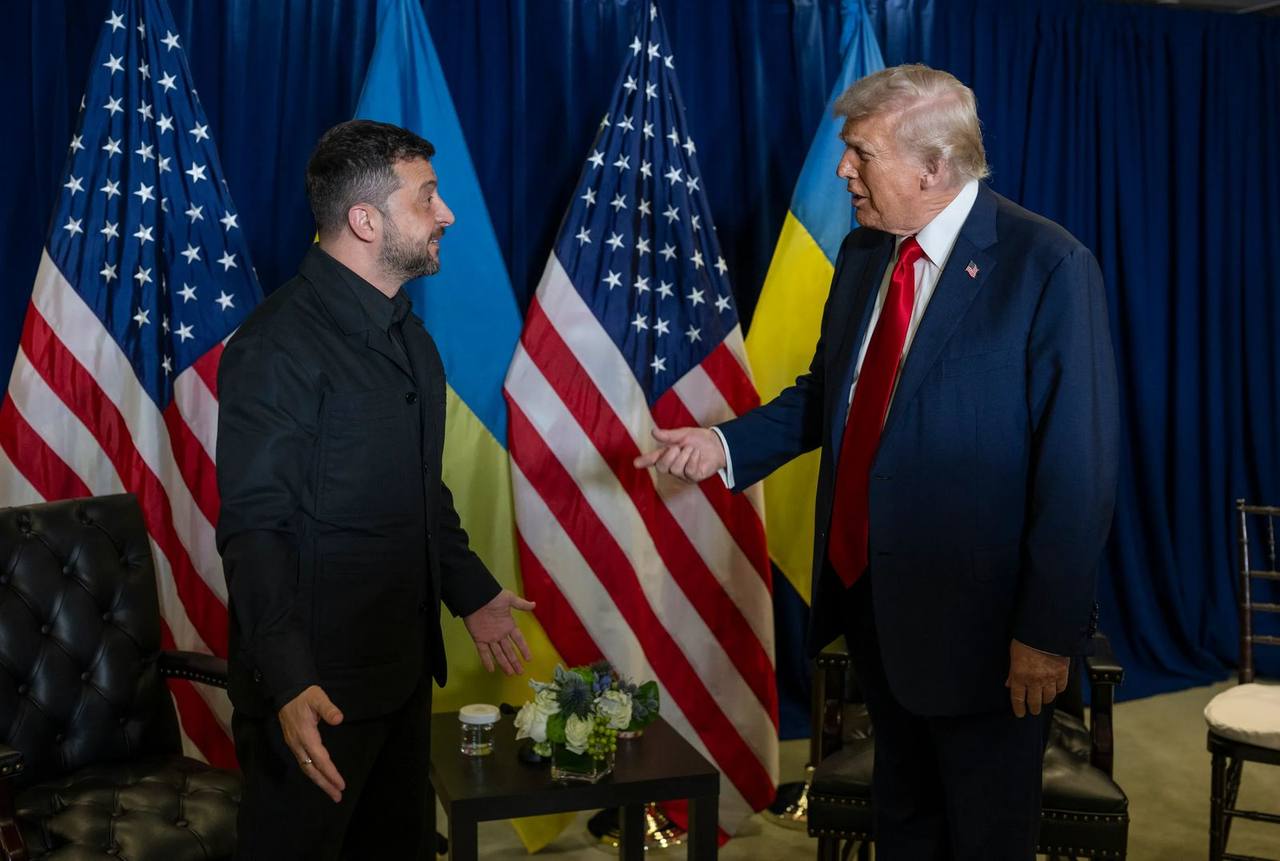
NEW YORK — The claim that Trump urged Zelenskyy to meet in Moscow has become a test of credibility around a peace push whose basic architecture is still unsettled. Bloomberg reported on September 25, citing people familiar with a private discussion, that President Donald Trump encouraged Ukrainian President Volodymyr Zelenskyy to travel to the Russian capital for talks with Vladimir Putin during their September 22 meeting on the sidelines of the U.N. General Assembly. Zelenskyy declined and, according to the report, was upset that the idea had been raised again. Ukraine’s Presidential Office called the account “false information,” and a senior U.S. official disputed it without offering a detailed alternative account.
What is established — and what is disputed
The most important distinction is between the existence of a diplomatic discussion and the contested detail about Moscow. Several reports agree that Trump and Zelenskyy discussed possible negotiations involving Russia. Bloomberg’s account adds the specific assertion that Trump proposed Moscow as the venue for a direct meeting with Putin. Kyiv rejects that detail. The White House dispute, as reported, did not provide a transcript or a full competing description of the exchange.
Financial Times correspondent Christopher Miller said his sources confirmed that possible trilateral talks were discussed but did not confirm a Moscow proposal. That leaves a narrow but consequential evidentiary gap. The broader subject of talks appears well supported; the location and the way it was presented remain contested. Responsible reporting should not collapse those two questions into a single certainty.
Why the venue matters
A meeting place is not ceremonial in this war. Moscow is the seat of the Russian government, the capital of the state that invaded Ukraine, and a place where Ukrainian officials would depend on Russian authorities for security and movement. Accepting Moscow would expose Zelenskyy to political criticism at home and create imagery that the Kremlin could use to depict him as arriving on Russian terms.
Neutral venues distribute those risks differently. Switzerland, Türkiye, the United Arab Emirates and several Arab states have all appeared in discussions because they can host delegations without requiring either belligerent to enter the other’s territory. A neutral venue does not resolve territory, sanctions or security guarantees, but it prevents the location itself from deciding the optics before negotiations begin.
Kyiv’s denial
Dmytro Lytvyn, an adviser in Ukraine’s Presidential Office, rejected the Bloomberg account as false information. That denial deserves to be presented directly rather than treated as a footnote. Private leader-level meetings rarely produce verbatim public records, and accounts from unnamed participants can reflect genuine recollection, selective briefing or an attempt to shape later bargaining.
Kyiv has a clear reason to contest any suggestion that it seriously considered Moscow. Ukrainian law, domestic politics and wartime security all make the idea highly sensitive. But motive alone does not prove or disprove the report. The same applies to Washington: disputing the account may protect a negotiation from becoming trapped in a fight about optics. Without a transcript or on-record reconstruction, the venue claim remains attributed reporting, not settled fact.
The Kremlin keeps Moscow on the table
Kremlin spokesman Dmitry Peskov has repeatedly said Zelenskyy could come to Moscow and would receive security guarantees. That formulation presents the Russian capital as a practical offer. Kyiv sees it as a demand that Ukraine accept the aggressor’s chosen ground. The disagreement is therefore not simply about personal safety; it is about sovereignty and negotiating status.
Putin has also sought to preserve the appearance that Russian proposals remain available while warning of retaliation for Ukrainian strikes. That combination allows Moscow to characterize itself as open to diplomacy without suspending military pressure. It places the burden on others to decide whether an invitation is a genuine path to negotiations or a condition designed to be rejected.
The June letter and Zelenskyy’s own terms
Zelenskyy’s June 2026 open letter proposed direct talks but ruled out both Kyiv and Moscow. It named Switzerland, Türkiye or Arab states as plausible venues and called for a ceasefire, an all-for-all prisoner exchange, and the return of civilians and children. Those terms established that Ukraine was not refusing direct contact in principle; it was defining where and under what conditions contact could occur.
The letter also separates humanitarian steps from a final political settlement. Prisoner exchanges and the return of deported or displaced civilians can be negotiated even when borders and security guarantees remain unresolved. A ceasefire, however, requires monitoring, attribution and consequences for violations. These are technical questions that explain why lower-level talks may be necessary before a leaders’ meeting.
The UAE proposal changes the format
The United States has separately proposed technical-level trilateral talks among Ukraine, Russia and the United States in the UAE. Zelenskyy said Washington would speak with Moscow, Kyiv would consult European partners, and the sides would assess the result within ten days. No date, delegation list or mandate had been announced by the reporting cutoff.
That proposal is more concrete than a disputed venue suggestion because it identifies three parties, a possible neutral host and a short review period. It is still not a peace conference. Technical talks can establish whether the sides agree on vocabulary, sequencing and limited confidence-building measures. They can also expose that the parties use the same words—ceasefire, security, recognition—to mean incompatible things.
What the ten-day clock can deliver
Ten days is enough time to test political willingness, not enough time to resolve a war that began with Russia’s full-scale invasion in February 2022. A credible near-term result could be a meeting date, a list of negotiators, a narrow agenda or an agreement to exchange information. It would be misleading to treat the clock as a deadline for a comprehensive settlement.
The deadline nevertheless imposes discipline. Washington must tell Kyiv whether Moscow accepts the format; Moscow must decide whether to participate without securing its preferred venue; and Ukraine must coordinate with European governments whose weapons, financing and sanctions policies affect any deal. If nothing is announced, the silence itself will show that the procedural gap remains large.
Dmitriev, Witkoff and Kushner
Russian envoy Kirill Dmitriev met Steve Witkoff and Jared Kushner on September 24, adding another channel to a process already crowded with public speeches and private contacts. Such meetings can clarify positions quickly because the participants are close to the leaders. They also create accountability problems when detailed readouts are absent and governments later dispute what was proposed.
The sequence matters: a private Trump–Zelenskyy exchange, a reported Russian contact with senior U.S. intermediaries, and a public UAE proposal all occurred within days. That density suggests active diplomacy, but activity is not the same as convergence. The negotiators may be testing multiple formats precisely because none has yet bridged the central disputes.
Energy ceasefire as a possible first step
An energy ceasefire has emerged as one candidate for limited de-escalation before winter. The attraction is obvious: protecting power generation, substations, heating and fuel infrastructure could reduce civilian suffering. The difficulty is definition. Energy systems include dual-use facilities, and attacks can be attributed differently by the two sides.
A durable arrangement would need a protected-sites list, shared reporting procedures, independent monitoring and an agreed response to violations. It would also need to address Ukrainian strikes on Russian refining and logistics alongside Russian strikes on Ukraine’s grid. A one-sided moratorium would be rejected as military advantage disguised as humanitarian policy.
The China question
Zelenskyy said he asked Trump to raise Ukraine with Chinese President Xi Jinping. Beijing matters because of its economic relationship with Moscow, its permanent seat on the Security Council and its ability to influence trade and technology flows. Ukraine’s request reflects the limits of pressure that Europe and the United States can apply alone.
There is no public evidence that Xi accepted a role in the proposed UAE format. China may prefer broad principles and bilateral influence to direct participation in a U.S.-led process. Even so, any settlement involving sanctions relief, reconstruction, energy trade or long-term security will be affected by Chinese choices. The request is therefore strategic even if it produces no immediate public commitment.
Putin’s G20 invitation and the politics of access
Trump’s invitation for Putin to attend a December G20 gathering in Florida adds another potential point of contact. An invitation is not confirmation that Putin will travel, and a multilateral summit is not a substitute for negotiations with Ukraine. It does, however, offer Moscow access to a forum where bilateral meetings can occur around a wider agenda.
For Kyiv, the risk is that normalization proceeds faster than enforceable concessions. For Washington, the opportunity is to use access as leverage. For Moscow, participation can signal that isolation is weakening. The diplomatic value therefore depends on what conditions, if any, are attached and whether Ukraine remains inside the decision-making process.
Security guarantees are the real test
Any ceasefire that does not address future security risks becoming a pause rather than an end. Ukraine wants guarantees strong enough to deter renewed attack, while Russia has objected to arrangements that deepen Ukraine’s integration with Western military structures. The United States and Europe have not publicly agreed on the exact forces, authorities or automatic responses a guarantee would contain.
A venue dispute can be solved by choosing a third country. A security-guarantee dispute requires governments to commit money, weapons, intelligence and potentially personnel over many years. That is why a dramatic leaders’ meeting may generate headlines without solving the central implementation problem.
Territory and the danger of ambiguity
Territory remains the hardest political issue. Russia controls Ukrainian land and seeks recognition of changes Kyiv rejects. Ukraine argues that occupation cannot become legal title through coercion. Outside governments may distinguish between a ceasefire line and a recognized border, but ambiguous language can be interpreted differently once fighting stops.
Negotiators would need to specify whether territorial questions are deferred, whether sanctions relief is reversible, and whether displaced residents retain property and return rights. None of those issues is solved by saying proposals are “on the table.” The phrase signals availability, not agreement.
Who gains from the competing accounts
The Bloomberg account gives Moscow evidence that its preferred venue reached the highest level of U.S. discussion, even if Kyiv denies it. It allows Ukraine to demonstrate that it will resist arrangements it regards as unsafe or politically coercive. It also puts Washington in the position of defending both its role as mediator and the confidentiality of private talks.
Leaks can be negotiating tools. They may pressure a party, test public reaction or pre-empt a rival account. But they can also reduce trust among leaders who need candid conversations. The immediate winner is not obvious; the larger effect may be to make future meetings more scripted and less flexible.
Winners, losers and critics
Ukraine benefits from a trilateral format that prevents a U.S.–Russia deal from being presented after the fact, but loses room for maneuver if every private discussion becomes a public loyalty test. Russia benefits when Moscow is treated as a plausible summit venue, yet risks appearing to use venue as a barrier. Washington gains leverage by convening, but owns the diplomatic cost if its accounts remain inconsistent.
European allies risk marginalization because they would finance much of Ukraine’s defense and reconstruction without a formal seat in the proposed three-way room. The UAE could gain diplomatic stature as host while absorbing reputational risk if talks become theater. Critics of the process will watch whether limited deals protect civilians or merely freeze military advantage.
What to watch next
First, watch for a named date and delegation for the UAE proposal. Second, look for a written agenda that identifies whether energy, prisoners, children, shipping or territory is included. Third, assess whether European governments are consulted before commitments are made. Fourth, distinguish between a meeting and a negotiated outcome.
The final test is verification. Announcements matter only if the parties define compliance and consequences. A ceasefire without monitors, a security guarantee without authorities, or a humanitarian commitment without access can collapse under the first disputed incident.
How to judge a real breakthrough
A credible breakthrough would have observable features: named negotiators, a date, a neutral venue accepted by all sides, a written scope and authority to discuss reciprocal measures. A leaders’ photograph without those foundations could create momentum, but it could also conceal the absence of agreement. The strongest signal would be a limited commitment that can be monitored—such as a prisoner exchange schedule or a defined infrastructure-protection mechanism—followed by verified compliance.
Language also matters. “Open to talks” describes posture, not consent to another side’s terms. “On the table” says proposals exist, not that they are mutually compatible. “Security guarantees” can mean consultation, arms supply or a binding defense obligation. Readers should watch for operational definitions rather than treating diplomatic phrases as completed policy.
The bottom line
The allegation that Trump pressed Zelenskyy to go to Moscow is newsworthy because it reveals how deeply the parties disagree about the conditions of diplomacy. It is not established fact: Bloomberg reported it, Kyiv denied it, a U.S. official disputed it, and separate reporting confirmed broader talk of a trilateral meeting without confirming Moscow.
The actionable development is the parallel UAE proposal. If Washington can turn that idea into a dated, empowered technical meeting, the venue controversy may become secondary. If it cannot, the dispute will stand as another example of a peace process generating more competing narratives than enforceable terms.
Related coverage
- U.S. proposes UAE-hosted trilateral talks
- Zelenskyy says Trump made a final decision on Patriots
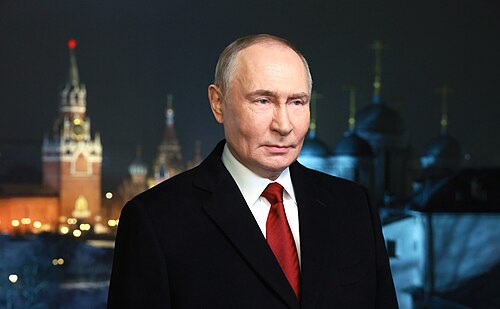
- Putin says peace proposals remain on the table
Sources
- Europe Says, September 25, 2026: report on Bloomberg’s account of the private meeting.
- Zambian Observer: Kyiv’s denial and response from the Presidential Office.
- Europe Says: reporting on the competing descriptions of possible talks.
- Reuters, September 25, 2026: UAE technical-level proposal, ten-day review and related diplomacy.
- CNN, September 25, 2026: Trump–Zelenskyy meeting and Patriot discussions.
- The Intellectualist: secondary account of the reported Moscow request.
Reporting cutoff: September 26, 2026. Claims are attributed to the people, governments and organizations that made them. Where the underlying evidence or operational picture was not independently available, this article says so. Analysis is by Signal Post News.