Black Sea cargo ship attack
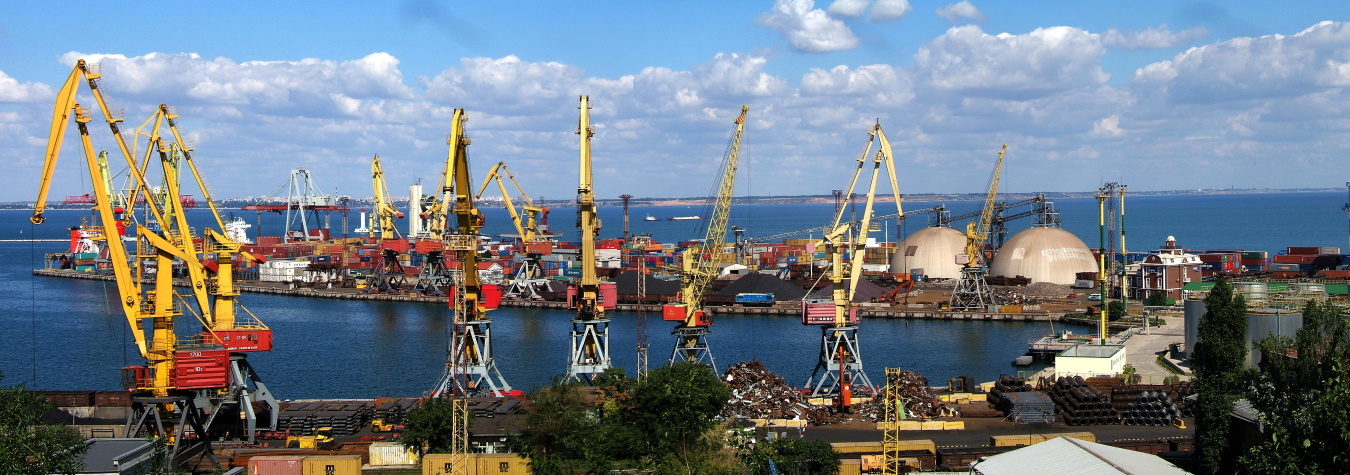
Overnight on September 22–23, 2026, a Russian strike hit a commercial cargo vessel sailing under the flag of Antigua and Barbuda in the Black Sea near Odesa, killing its Ukrainian captain and setting the ship on fire. The Ukrainian Navy reached the vessel, evacuated the surviving crew and extinguished the blaze, according to the Ukrainian Sea Ports Authority account carried by SAFETY4SEA.
Oleh Kiper, head of the Odesa regional administration, confirmed the strike and the captain's death. The overnight attack also damaged civilian port infrastructure in the Odesa port area and started fires, according to reporting collected by RKS News. The available reports do not identify the vessel or say that its cargo had a military purpose.
“The world must recognize and properly assess Russia's targeted terror against civilian shipping and the people who keep the sea lanes open.”
That was the ports authority's judgment. It is an attributed Ukrainian official statement, not an independent legal ruling. What is independently significant is the pattern surrounding it: a second civilian captain has been killed in six days, insurers now treat the entire sea as a high-risk zone, and the attacks are landing directly on the routes that connect Ukrainian exports to global food markets.
Why this matters
The death off Odesa followed a September 17 Russian drone attack on a Tanzanian-flagged civilian vessel heading toward a Ukrainian port. That earlier strike killed the captain and injured three crew members. Two captains dead in less than a week is not merely a change in the casualty count. It shows how civilian mariners—people operating ships registered in third countries—are being pulled into the war's expanding maritime front.
The timing made the latest strike more pointed. On September 23, President Volodymyr Zelenskyy told the Crimean Platform summit that Ukraine was ready for a Black Sea maritime truce. The same day brought a burning freighter and another dead captain. That sequence does not by itself prove Moscow struck in response to the offer, but it captures the gap between diplomatic proposals and conditions at sea. Read Signal Post News' full analysis of Ukraine's Black Sea maritime truce proposal.
The economic consequences travel farther than the blast. London marine insurers have expanded the area classified as high risk to cover the entire Black Sea as attacks on commercial shipping increase. War-risk premiums, routing delays and the possibility that underwriters refuse voyages all add to the price of moving grain. Import-dependent buyers in Asia, the Middle East and Africa then absorb part of that cost through freight and food prices. Reports that wheat prices have soared are a warning about direction; the source set reviewed here does not provide a single benchmark series from which to calculate the strike's isolated price effect.
A startling acceleration at sea
Turkey's IMEAK Chamber of Shipping says at least 226 civilian and commercial vessels have been hit in the Black Sea since Russia's full-scale invasion began in February 2022. Of those, 163—about 70 percent—were hit in the first eight months of 2026. That concentration means the maritime war is not simply accumulating damage over time. It has accelerated sharply this year.
The comparison with earlier phases is stark. If 163 of the 226 recorded vessel strikes came in 2026's first eight months, then 63 were recorded across the nearly four preceding years covered by the total. Definitions and reporting methods matter, and the chamber's count should be read as its tally rather than a universal registry. Even with that caution, the proportion shows a steep break from the earlier pace.
Turkish President Recep Tayyip Erdoğan used his U.N. General Assembly address to call recent attacks on commercial vessels in the Black Sea “unacceptable,” regardless of which side carried them out. Turkey has proposed that Russia and Ukraine halt attacks on civilian vessels. Neither side has yet put that proposal into effect. Ankara's position matters because Turkey controls the straits linking the Black Sea to the Mediterranean and has a direct interest in keeping merchant traffic moving.
How safe-passage norms collapsed
The Black Sea once had an imperfect but recognizable wartime bargain: commerce could move through defined routes even while the armies fought elsewhere. The 2022 grain arrangement created a negotiated channel for food exports. After that arrangement broke down, Ukraine developed its own corridor along the western Black Sea coast. It kept exports moving, but without the same jointly negotiated framework.
That deterioration turned ports, approaches and the vessels themselves into pressure points. Striking near Odesa can squeeze Ukraine's export income without taking territory. Each damaged berth, delayed sailing and higher insurance quote weakens the reliability of the corridor. The immediate loser is the crew exposed at sea; the wider losers are port workers, shipowners, underwriters and food-importing countries paying more to absorb the risk.
Ukraine is also attacking the opposing side's maritime revenue network. Maj. Gen. Robert “Magyar” Brovdi said Ukrainian units disabled 300 Russia-linked vessels over 11 weeks in Operation MoLoChKa and “burned” 21 tankers in three days. Those are Ukrainian military claims and have not been independently verified in the material reviewed here. They nonetheless show Kyiv's stated strategy: make the shadow-fleet system carrying Russian oil harder and more expensive to operate. See our separate report on Ukraine's shadow-fleet drone campaign.
Who benefits—and who pays
Pressure on Ukraine's export earnings
Russia stands to gain strategic leverage when carriers hesitate to enter Ukrainian waters or ports lose throughput. Ukraine depends on its maritime corridor for export income, and uncertainty can be economically useful to Moscow even when a vessel's cargo survives. That is the strategic logic; it is not proof of the operational purpose assigned to this specific strike.
Russia has argued in connection with attacks on shipping and port facilities that vessels or infrastructure can support Ukrainian military logistics. That is Moscow's claim, not an established fact about the Antigua and Barbuda-flagged ship hit off Odesa. No evidence in the reviewed reports shows that this vessel had a military role. The distinction between a claimed military objective and a flagged civilian ship is exactly where scrutiny under the laws of naval warfare becomes most important.
Civilians, insurers and food buyers absorb the loss
Maritime-law specialists cited in coverage of the attacks argue that striking flagged civilian vessels without a lawful military basis breaches the laws of naval warfare. A final legal judgment would depend on facts that are not public, including target identification, cargo, warning, proportionality and the circumstances of the strike. The legal concern is nevertheless acute because a ship's foreign registry and civilian crew do not disappear when it enters a war-risk area.
Insurers can respond before courts do. They price uncertainty, not verdicts. As the risk zone widens, owners may pay more, reroute, demand security assurances or withdraw ships. That is how a local strike can choke a corridor without physically closing it—and how grain buyers thousands of miles away can end up paying for a war they do not control.
The diplomacy now has a test case
Egypt, India and Turkey have advanced ideas for protecting Black Sea navigation, while U.S. Secretary of State Marco Rubio has spoken of a limited grain-and-energy ceasefire. The proposals have strategic logic: isolate civilian trade and food security from the wider territorial war, then use a narrow agreement to create a first measure of reciprocity. Zelenskyy's public acceptance gives that effort a Ukrainian entry point. His broader U.N. argument—that governments must act rather than stay silent—is examined in our report on his General Assembly address.
A maritime truce would need more than parallel promises. It would require agreed civilian corridors, precise definitions of protected ships and port infrastructure, a mechanism to verify routes and cargoes, rapid communication after an alleged violation, and credible investigation. Without those parts, each side can describe the same vessel as protected commerce or military logistics and the agreement collapses at first contact.
What happens next
The immediate questions are practical. Will the surviving crew and vessel be identified? Will authorities disclose the cargo and damage assessment? Will Russia respond to the ports authority's account or to the maritime-truce proposals? And will insurers raise premiums again after a second captain's death in six days?
If strikes continue, the pressure is likely to compound rather than remain linear. Some underwriters may withdraw, shipowners may refuse bookings, fewer sailings may compress capacity, and Ukraine's corridor could slow even without a formal blockade. Grain prices and import bills would face further upward pressure, especially where governments have little fiscal room to subsidize food.
The Black Sea cargo ship attack therefore belongs in two stories at once. It is a human loss centered on a Ukrainian captain and the crew the Navy pulled from a burning ship. It is also a test of whether the international system can preserve a civilian lane through an expanding maritime war. The truce proposals now have a concrete benchmark: not another communiqué, but whether the next merchant captain reaches port alive.
Sources
- SAFETY4SEA: Russian strike on commercial vessel in Odesa kills captain
- RKS News: Russian strike on commercial vessel kills Ukrainian captain
- UNITED24 Media via Europe Says: Black Sea shipping and maritime-truce context
Reporting basis: The casualty, rescue and damage details are attributed to the Ukrainian Sea Ports Authority and Odesa regional officials through the linked reports. Statements by Ukrainian, Russian and Turkish officials are presented as claims or positions, not as independently adjudicated findings. Signal Post News did not independently inspect the vessel.