War · Ukraine · Diplomacy
Back-channel sources have relayed the Kremlin’s opening position to the Financial Times in stark terms: Putin demands Donbas ceasefire precondition — no truce until Kyiv surrenders the part of the Donbas Moscow does not yet hold — while a winter campaign of strikes on Ukraine’s energy system is prepared as the lever, three days before trilateral talks open in Abu Dhabi.
Track it live: Ukraine war map — live tracker · Live war tracker
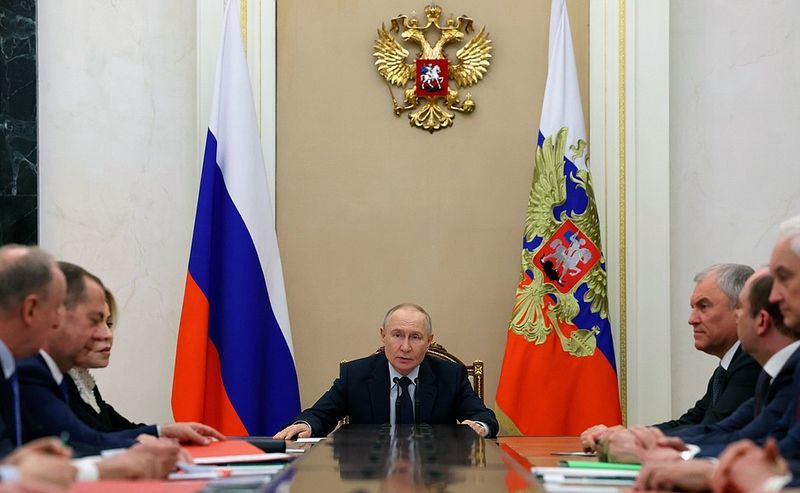
ABU DHABI, November 7, 2026 — Three days before the first trilateral peace talks since February open here, the message relayed from Moscow could hardly be harder: Putin demands Donbas ceasefire precondition — Ukraine must surrender the remaining eastern Donbas it still holds before any ceasefire takes effect — according to two back-channel sources cited by the Financial Times on Saturday, who said a meaningful ceasefire in Abu Dhabi is unlikely and that President Vladimir Putin is instead focused on a brutal winter campaign of air strikes against Ukraine’s energy infrastructure to regain the upper hand. Within hours of those accounts appearing, the Kremlin publicly confirmed the machinery of the talks themselves: spokesman Dmitry Peskov told Interfax that Russia’s delegation to the November 10–11 meeting will be led by Vladimir Medinsky and was briefed by Putin at the Security Council on Friday, while Europe — outside the room — pushed back in public, with EU foreign policy chief Kaja Kallas declaring in Warsaw that “Putin does not have a veto over European security.”
What the sources relayed: ‘I will destroy all your infrastructure until you agree’
The Financial Times account, published on November 7 and carried via the Irish Times, with parallel reporting by Censor.net on November 6 and RBC-Ukraine, rests on two sources in back-channel contact — and it is important to be precise about what that means. The words attributed to Putin below are a source’s relay of his position, not a public statement by the Russian president, and Moscow has not confirmed them. On that basis, the FT reported that the sources expect no meaningful ceasefire to emerge from Abu Dhabi, because Putin’s priority is a winter campaign of air strikes on Ukraine’s energy infrastructure designed to regain the upper hand. Moscow, the sources said, views shifting the talks’ focus from territory to security guarantees as a way to drag out the process while Ukraine’s military position weakens.
The second source relayed Putin’s position in the first person: “I will destroy all your infrastructure until you agree. By next year Ukraine won’t have any infrastructure left. All the bridges, ports, railways, energy infrastructure, power stations … will have been destroyed.” Alongside the threat, the FT reported the demand itself: surrender of the remaining eastern Donbas as a precondition for a ceasefire — that is, territory handed over before, not as a result of, negotiations — plus further territorial concessions in exchange for security guarantees provided by NATO countries. The FT also reported Putin’s own framing, as the sources presented it: the strikes are retaliation for Ukraine’s drone attacks on Russian refineries and warehouses, and Kyiv, in Moscow’s telling, bears the blame for the collapse of previous ceasefire efforts. Kyiv’s framing is the mirror image: it is Russia’s strikes on power stations, bridges and homes that have repeatedly broken the pauses. Both framings are stated here as their holders state them; the documented sequence of strikes, examined below, is a matter of record.
The delegations: Medinsky for Moscow, Umerov for Kyiv
What is on the record, from Saturday, is the cast. Peskov told Interfax that the Russian delegation is led by Vladimir Medinsky — Putin’s aide and the Kremlin’s lead negotiator in earlier rounds — and includes Igor Kostyukov, chief of the GRU military intelligence service; Deputy Foreign Ministers Sergei Ryabkov and Mikhail Galuzin; and Yury Zhigarlovsky of the General Staff, with presidential aide Yuri Ushakov overseeing the team. All of them, Peskov said, met Putin on Friday at the Security Council — the meeting in the photograph above — which is the Kremlin’s way of signalling that the delegation negotiates with the president’s instructions in hand, not with room to improvise.
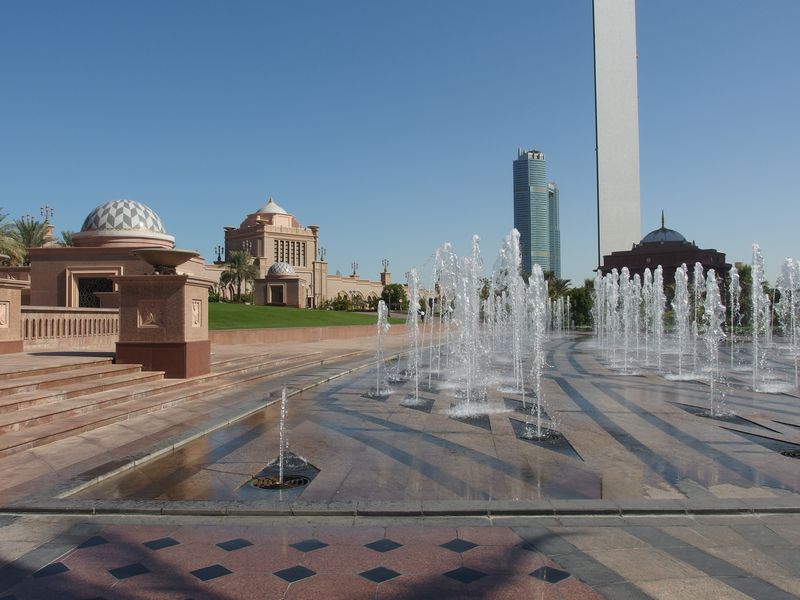
Ukraine’s team is led by Rustem Umerov, according to David Arakhamia, who described the line-up to the Kyiv Independent; it includes military intelligence chief Kyrylo Budanov, Arakhamia himself, Sergiy Kyslytsia and Dmytro Lytvyn. Budanov has struck the delegation’s most hopeful public note, telling CBS he is cautiously optimistic about progress toward a meeting between President Volodymyr Zelenskyy and Putin — the leaders’ summit Kyiv has sought throughout. US special envoy Steve Witkoff and Jared Kushner mediate. The delegations arrive via Brussels, where Ukrainian and Western officials met on November 4–5, and they meet in a format with a short history: trilateral rounds in Abu Dhabi on January 23–24 and February 4–5 and in Geneva on February 17–18, then nothing at this level since February.
Europe answers from outside the room
The loudest reactions on Saturday came from the continent that is not, formally, at the table. Kallas, speaking in Warsaw, paired her “no veto” line with its institutional corollary: any agreement requires the EU. Poland’s foreign minister, Radoslaw Sikorski, said a deal struck above Europe’s heads is “actually impossible.” Ukraine’s foreign minister, Andrii Sybiha, argued that Moscow cannot be Europe’s security guarantor, and the European Commission restated that the EU decides matters affecting its own security. Behind those public lines sits a private irritation the FT and AFP both recorded: a European official called Kushner’s role in a European security framework a “complete surprise,” European officials insist there will be no simultaneous European-security talks until the war ends, and changes to NATO are, in their formulation, out of the question. Peskov, for his part, said Moscow has received no European proposals and that the Europeans have not decided who speaks for them. An EU summit next week will test that disarray — Italy’s Giorgia Meloni has already called Europe’s efforts “disjointed, uncoordinated” — while President Donald Trump said on Thursday that an agreement “might involve all of Europe,” without meeting the Ukrainian delegation. Kushner’s framework work, as described by US officials, has five goals, keeps NATO central, and will involve consulting Europeans on the Abu Dhabi sidelines rather than across the table. The argument over the framework’s authorship began earlier this week, when Zelenskyy warned of a ‘Yalta 2.0’ in a Trump Europe–Russia security deal; Saturday’s exchanges are that argument hardening into positions.
The Donbas demand is the war’s oldest question, restated
Context strips the precondition of any novelty, which is part of its weight. In his public terms on November 3, Putin already included ceding the last roughly 15 percent of the Donbas that Ukraine still holds. Ushakov said in January that a lasting deal requires all of the Donbas. In June 2024, Moscow’s demand ran to four regions. And the Institute for the Study of War assessed on October 26 that capturing the Donbas “fortress belt” — the chain of fortified cities anchored by Sloviansk and Kramatorsk, built up since 2014 — is Russia’s principal objective in Donetsk Oblast: the ground Moscow most wants, and has not been able to take by assault, is the ground the precondition asks Kyiv to hand over at the table. Zelenskyy’s stated position runs in the opposite sequence: end the war first, security guarantees second, and no withdrawal from the Donbas. That is the same sequencing he defended on Friday when Zelenskyy warned of new Russian strikes on bridges and energy while confirming Ukraine’s refinery campaign continues.
Between the reports, a night of strikes
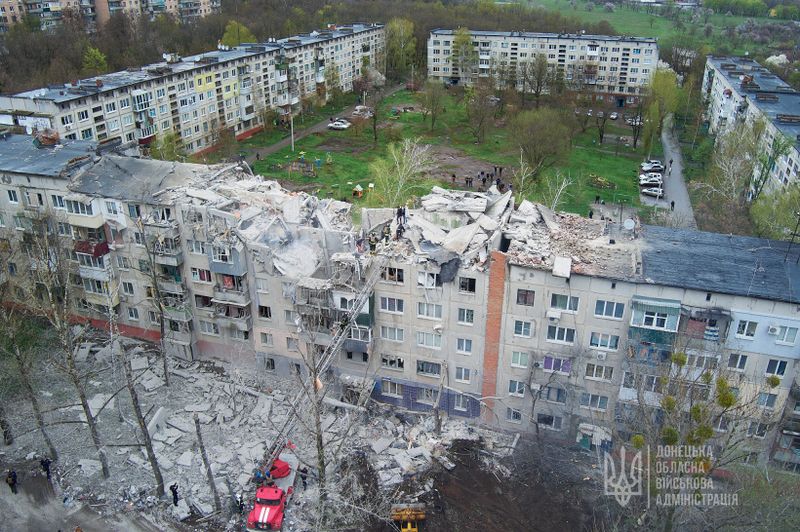
The diplomacy is not happening in a quiet week. Overnight on November 6–7, within hours of the FT account appearing, Russia launched one of its heaviest attacks of the autumn on Kyiv — 36 ballistic missiles and 172 drones, by Zelenskyy’s count — closing the Northern Bridge, wrecking a kindergarten and blacking out Chernihiv, as Signal Post News reported in our report on Russia’s ballistic missile attack on Kyiv. The timing is a fact; what it proves about intent is not. Attacks have preceded negotiating rounds throughout this war, and both sides read the same night differently — pressure, in one telling; in the other, evidence that the strike campaign is an end in itself rather than a bargaining instrument. Either way, Ukrainian delegates will fly to Abu Dhabi from a capital repairing a bridge.
An unconfirmed counter-claim
One conflicting account should be recorded precisely because it conflicts — and labelled for what it is. The journalist Sergei Pavlyuchenko, via Topcor, has claimed that Putin’s envoy Kirill Dmitriev proposed an energy ceasefire running to the New Year and a peace deal by spring 2027, with Russia allegedly willing to leave part of the Donbas under Kyiv’s control in exchange for Ukrainian force reductions. No government has confirmed any element of that claim. It contradicts the FT account on the central question — whether Donbas territory is a precondition or a bargaining chip — and readers should treat it as an unconfirmed report, not a second source.
Why this matters
Analysis. A precondition is not an opening bid, and the distinction decides what Abu Dhabi can be. An opening bid is made to be traded; a precondition is a gate — nothing moves until it is paid. If the FT’s sources are right, Moscow has gated the ceasefire itself behind the war’s single most valuable territorial prize, the one its army has spent years failing to take. Accepting the gate would hand Russia the fortress belt intact, with its fortifications, its high ground and its road and rail junctions, in exchange for a pause whose terms would still be unwritten; refusing it, on Moscow’s relayed logic, invites the winter campaign. That is the structure of a lever, not a negotiation — which is why the second half of the relayed position, the infrastructure threat, matters as much as the demand. Winter is the one season when energy strikes compound fastest: generation lost in November is heat lost in January, repair crews work under fire in the cold, and every blackout is also an argument, repeated nightly to millions of people, about the price of refusing.
The counter-arguments deserve their weight. Moscow’s stated rationale is that Ukraine’s deep strikes on refineries and depots are themselves an infrastructure campaign, that previous pauses collapsed amid mutual violations, and that security guarantees — the subject Moscow wants foregrounded — are a legitimate core issue for any durable settlement, not a stalling device. It is also true that preconditions stated through back channels are sometimes softer in the room than in the relay: the unconfirmed Dmitriev account, whatever its reliability, exists because envoys float variants. And Budanov’s cautious optimism about a leaders’ meeting suggests Kyiv sees at least a procedural path worth travelling. What critics of Moscow’s approach answer is that the arithmetic on the ground keeps moving in one direction while the talks are arranged: each week of process, on the FT account, is a week of strikes that weaken the position from which Ukraine would eventually negotiate — time itself functioning as a weapon, whichever capital one believes started the clock.
Who gains and who loses follows from that arithmetic. If the precondition stands and the winter campaign proceeds, Moscow gains leverage it has not won outright in Donetsk, at the cost of whatever goodwill the Abu Dhabi format still holds in Washington. Kyiv loses most if the gate is ever paid — territory, fortifications and the principle that borders are not revised by ultimatum — and loses more slowly, in megawatts and morale, if it is not. Europe loses standing either way the framework question is settled without it, which is why Saturday’s pushback was about authorship as much as substance; the United States, as mediator, gains a process and inherits its deadline problem. The data points frame the stakes concretely: roughly 15 percent of the Donbas still in Ukrainian hands, a fortress belt the ISW calls Russia’s principal objective, 36 ballistic missiles and 172 drones in a single night three days before the talks, and a relayed promise that by next year Ukraine would have “no infrastructure left” if it refuses.
What happens in Abu Dhabi, and after
Four scenarios cover most of the plausible range for November 10–11. First, the procedural opening: delegations exchange texts, agree humanitarian or energy sub-groups, and schedule the next round — movement without a ceasefire, and the outcome the FT’s sources implicitly predict. Second, the narrow deal: a limited energy or maritime truce of the kind Kyiv has previously said it would accept, which would test both sides’ retaliation claims within weeks. Third, the sidelines outcome: the real product is the US–European consultation on Kushner’s framework, with the trilateral serving as its venue — watch what is briefed to European capitals before the EU summit next week. Fourth, breakdown: no joint statement, competing readouts, and the winter campaign setting the tempo until the next format is invented. Beyond the two days, the markers are the EU summit’s language on authorship, whether a Zelenskyy–Putin meeting is scheduled or quietly dropped, and the strike tempo itself — the clearest available measure of whether the lever described to the FT is being pulled.
Should a ceasefire ever be gated on territory handed over in advance — or does paying that price once guarantee it will be demanded again? Follow Signal Post News for continuing coverage of the Abu Dhabi talks, the war in Ukraine and the diplomacy around them, and share your view in the comments.
Sources
Financial Times, November 7, 2026, as carried by the Irish Times (two back-channel sources: a meaningful Abu Dhabi ceasefire unlikely; the winter energy-strike campaign; the relayed “I will destroy all your infrastructure” position; the Donbas surrender precondition and further concessions for NATO-country guarantees; strikes framed as retaliation for Ukraine’s refinery and warehouse attacks); parallel reporting by Censor.net, November 6, 2026, and RBC-Ukraine. Interfax, November 7, 2026 (Kremlin spokesman Dmitry Peskov: the Medinsky-led delegation, its membership, Yuri Ushakov’s oversight role, and the Friday Security Council meeting with Putin; no European proposals received). Kyiv Independent, November 7, 2026 (David Arakhamia on the Umerov-led Ukrainian delegation). CBS (Kyrylo Budanov, cautiously optimistic on progress toward a Zelenskyy–Putin meeting). AFP and Financial Times, November 7, 2026 (Kaja Kallas in Warsaw; Radoslaw Sikorski; Andrii Sybiha; the European Commission; the European official on Kushner’s role; Giorgia Meloni; President Trump’s Thursday remarks). Institute for the Study of War, October 26, 2026 (the fortress belt as Russia’s principal Donetsk objective). The Pavlyuchenko claim was published via Topcor and is unconfirmed by any government. Photos: kremlin.ru and Wikimedia Commons, as credited in the captions.