World · Kenya · Africa
Paul Mackenzie sentenced 200 years — 100 years for murder by starvation and a consecutive 100 years for direct homicide — after a Mombasa High Court convicted the Good News International Church leader over the deaths of 190 children and one adult in Shakahola Forest. The judge refused the death penalty prosecutors had sought, reasoning that execution could strengthen the convicted men’s belief that dying would reunite them with Jesus.
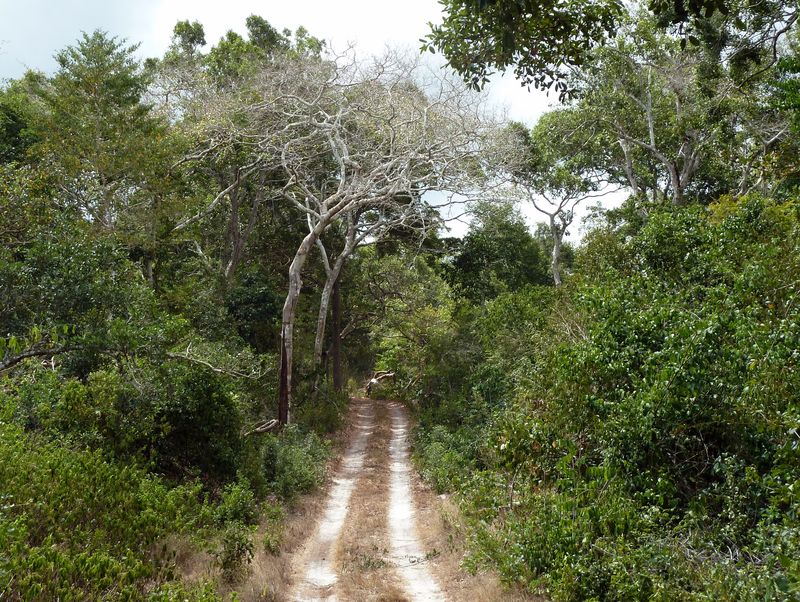
MOMBASA, November 7, 2026 — A Mombasa High Court on Friday, November 6, 2026, sentenced Kenyan cult leader Paul Mackenzie to 200 years in prison — 100 years for murder by starvation and a consecutive 100 years for direct homicide — after his conviction over the deaths of 190 children and one adult linked to his Good News International Church in Shakahola Forest, Reuters reported. Justice Diana Kavedza read the judgment. The sentence closes the main trial arising from one of the deadliest cult tragedies in modern history, while leaving separate cases, unidentified remains and Kenya’s stalled religious-regulation reforms unresolved.
The sentencing hearing
Mackenzie was convicted on October 19, 2026, alongside 28 co-accused, on 191 counts. According to Reuters, he smiled as he entered the hearing tent on Friday wearing a grey polo shirt and black trousers. His defence rejected the case against him, and Mackenzie had denied forcing anyone to fast — a position he maintained through the proceedings.
The co-accused received sentences ranging from 10 to 160 years, Reuters reported, with assistant pastor Smart Mwakalama receiving 160 years. The convicted have 14 days to appeal. For the families who sat through the trial, Friday’s hearing was the first time the court attached a definitive legal consequence to each of the 191 deaths it had examined — even as other proceedings arising from the same events continue elsewhere in the Kenyan courts.
Two crimes, two 100-year terms
The structure of the sentence reflects the two ways the court found the victims died. Of the 191 victims, 183 — 182 children and one adult — died of starvation, prosecutors said, while 8 children were killed by direct violence, including suffocation, strangulation and head injuries. The court imposed 100 years for the starvation murders and a further, consecutive 100 years for the direct homicides.
Prosecutors said followers were told to starve themselves and their children in order to reach heaven before the world ended; Mackenzie had preached that the world would end in August 2023. According to the prosecution case reported by Reuters and CNN, accomplices threatened and beat victims who resisted, and bodies were left in shallow graves and latrines, some buried alive. The investigation produced 426 postmortem reports — a measure of how much of the trial rested on forensic reconstruction of deaths that, in many cases, no living witness saw.
Why the judge refused the death penalty
Prosecutors had sought the death penalty. Justice Kavedza declined to impose it, reasoning, as Reuters reported, that execution could strengthen the convicts’ belief that dying would reunite them with Jesus rather than deter them — a punishment that, in the judge’s assessment, risked functioning inside the defendants’ own theology as a reward rather than a sanction.
The decision also sits inside a longer Kenyan reality: the country has carried out no execution since 1987, so a death sentence would in practice have meant life in prison under a legal cloud, its deterrent value theoretical and its finality endlessly deferred. By imposing 200 years instead, the court handed down a term that no defendant can outlive and that takes effect immediately, without depending on an execution Kenya has not performed in nearly four decades.
How the case unfolded
Mackenzie had been on the authorities’ radar since 2017, when his premises were searched. His church was shut down in Malindi in 2019, and he relocated his followers to Shakahola Forest near Malindi in Kilifi County. The case broke into public view in April 2023, when bodies were uncovered in the forest and exhumations began.
The Kenya National Commission on Human Rights says 448 bodies were ultimately found in Shakahola Forest. A separate case concerns 52 deaths at a village some 30 kilometres away — a suspected combined total of around 500 deaths — in which Mackenzie has pleaded not guilty. Separate terrorism, manslaughter, radicalisation and education charges arising from the affair are still pending, which means Friday’s sentence, however final it sounds, is not the end of his time in court.

Kenya’s coast has carried several difficult stories this autumn. In other recent Kenya coverage, we reported how Kenya recorded a second Ebola death as a 65-year-old woman died in Nairobi quarantine, and how a Tanzanian activist, Twaha Mwaipaya, was reported missing in Kenya after his taxi was stopped in Kamulu. The Shakahola case, though, reaches back years before any of them — and its central question is how a preacher known to authorities since 2017 was still gathering followers in a forest in 2023.
The families
Behind the legal arithmetic are households that lost children in numbers that are difficult to absorb. Stephen Mwiti, 48, lost six children; his wife is among the convicted accomplices. “I lost children and I will not be able to get them back no matter what happens,” he said, in remarks reported by Reuters — a reminder that for many families the trial divided the bereaved from the accused along lines that ran through the same homes.
Mackenzie’s own family was split by the case as well. His son, Dan Mackenzie, told Reuters: “It’s justice to the people who we lost.” For relatives on both sides of that divide, the sentence settles the criminal question. It does not return the dead, and the work of identifying remains recovered from the forest — and returning them to families — continues.
Why this matters
Analysis. The verdict answers the question of individual criminal guilt. It does not answer the question Kenyans have asked since April 2023: how this was allowed to happen. Warning signs were visible from 2017, when Mackenzie’s premises were first searched, yet the deaths in Shakahola Forest happened years later. President William Ruto in 2023 took responsibility for the government’s failure to prevent them, and in May 2023 he appointed a task force to review the law governing religious groups. Government-backed and Senate reform proposals were published in 2024 — but they have still not been passed.
What a 200-year sentence settles
The sentence establishes, to the criminal standard and on a public record, how 191 people died and who the court holds responsible. It gives families a definitive verdict rather than an allegation, and it removes Mackenzie and his senior accomplices from any position from which they could gather followers again. The Kenya National Commission on Human Rights’ Ojiro Odhiambo said the conviction is an important step — while insisting it cannot be the last one.
What it does not settle
Odhiambo argued that administrators, police, intelligence officials and religious leaders who missed the warning signs must also be accountable. That institutional failure is untouched by Friday’s judgment. So are the unidentified remains, the families still waiting for them, and the unregulated religious movements still operating in Kenya while the 2024 reform proposals sit unpassed. A sentence against one man, however long, is a verdict on the past; the systems that failed to interrupt it remain in place until Kenya’s parliament acts.
The numbers in context
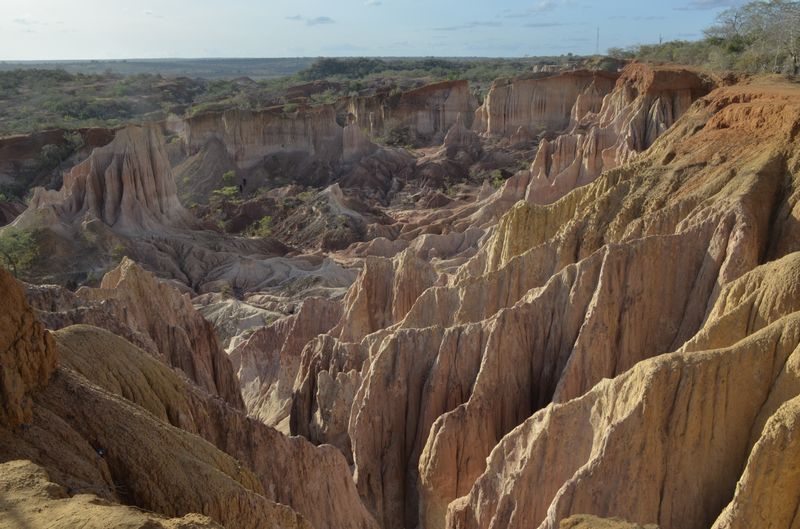
Three numbers describe Shakahola, and they do not match. The Kenya National Commission on Human Rights says 448 bodies were recovered in the forest. This trial proceeded on 191 counts. A separate case concerns 52 more deaths at a village 30 kilometres away, taking the suspected combined total to around 500.
The gaps between those figures are not necessarily contradictions. A criminal trial can only proceed on the victims prosecutors can prove to the criminal standard — an identified death, a cause of death established by evidence, and a chain linking that death to the accused. The 426 postmortem reports the investigation produced show both the scale of that forensic effort and its limits: some recovered remains could not be identified, and some deaths could not be evidenced to the standard a murder conviction requires. The 191 counts are the floor the court could certify, not a full census of the dead.
Even at that floor, the scale is historic. Reuters has compared Shakahola with the 2000 Uganda doomsday cult deaths, in which more than 700 people died, and with Jonestown in 1978, where more than 900 died. Shakahola sits among the deadliest cult tragedies in modern history — distinguished, even within that grim company, by how many of the dead were children, and by how long the warning signs were on official record before the graves were opened.
Who gains, who loses, what critics say
Prosecutors and the victims’ families gain a definitive verdict: a conviction and a sentence that together state, in law, that these children were murdered. The defence maintains its position that no one was forced to fast — the argument at the heart of the case it rejected — and the convicted retain their right to appeal within 14 days.
Critics of the state argue that a sentence against Mackenzie cannot substitute for accountability further up the chain, or for the reforms that were proposed in 2024 and never enacted. Religious-freedom advocates, for their part, caution against regulation drafted so broadly that it punishes ordinary congregations for the crimes of a movement like Mackenzie’s. Both arguments will outlive this trial: one says Kenya regulated too late, the other warns against regulating too wide. The court’s judgment resolves neither — it was never the court’s job to do so.
What happens next
The convicted have 14 days to appeal, and any appeal will test the evidence behind the 191 counts. Beyond this case, the separate proceedings over the 52 deaths at the nearby village — in which Mackenzie has pleaded not guilty — and the outstanding terrorism, manslaughter, radicalisation and education charges remain before the courts. In Nairobi, the question is whether the 2024 reform proposals for religious groups finally move through parliament, more than three years after the graves at Shakahola were opened. And in Kilifi County, the quieter work continues: identifying the recovered remains and returning them, one by one, to families who have waited years to bury their children.
Do you think a sentence like this one brings closure when the wider failures behind Shakahola remain unaddressed? Follow Signal Post News for continuing coverage of the appeals, the remaining Shakahola cases and Kenya’s debate over regulating religious groups.
Sources
- Reuters, “Kenya cult leader sentenced to 200 years” (November 6, 2026) — the sentence and its two 100-year components, the sentencing hearing, Justice Kavedza’s reasoning on the death penalty, the co-accused terms, the families’ reactions and the reform background.
- CNN, “Kenyan cult leader sentenced to 200 years in prison over the deaths of 190 children” (November 6, 2026) — coverage of the sentencing at the Mombasa High Court and the background to the Shakahola case.
- Kenya National Commission on Human Rights figures on the bodies recovered at Shakahola, as reported by Reuters and CNN.