Health · United States · Measles · Outbreak
The US measles cases 2026 record is set: the CDC counts 5,182 confirmed cases this year — more than double all of 2025 — with 43 outbreaks, 562 hospitalizations and a death toll the CDC and the states count differently, days before a WHO/PAHO review of the elimination status held since 2000.
Track it live: Outbreak tracker

ATLANTA, November 7, 2026 — The United States has set a US measles cases 2026 record that a generation of public-health officials worked to make impossible: 5,182 confirmed measles cases reported so far this year, according to the Centers for Disease Control and Prevention’s update of November 6, 2026, with data as of November 5 — the highest annual total since 1991 and more than double the full-year 2025 total of 2,289. The milestone arrives with the country’s measles elimination status, held since 2000, formally in question: a World Health Organization and Pan American Health Organization review expected on November 10 will weigh whether transmission that began with the 2025 Texas outbreak has now run long enough to end the elimination era. Euronews, reporting the CDC figures on November 6, put the total as the highest in 35 years. USA Today’s November 5 investigation, published a day before the CDC update, documented a parallel dispute over how many Americans measles has killed this year — a dispute in which the CDC’s official count and the states’ count do not match, and which this article reports in full below, with each number attributed to the authority that stands behind it.
The numbers behind the record
Cases have been reported in 47 jurisdictions, the CDC said, with a further 18 cases recorded among international visitors. Forty-three outbreaks have been reported in 2026, and 96 percent of all confirmed cases — 4,993 of the 5,182 — are outbreak-associated: 3,608 from outbreaks that began in 2026 and 1,385 from outbreaks that began in 2025, according to the CDC figures carried in the November 6 reporting. That proportion matters analytically. A caseload driven by infected travelers arriving from abroad looks different from one driven by outbreaks spreading inside the country, and a 96 percent outbreak-association rate is the statistical signature of sustained domestic transmission rather than a series of isolated importations.
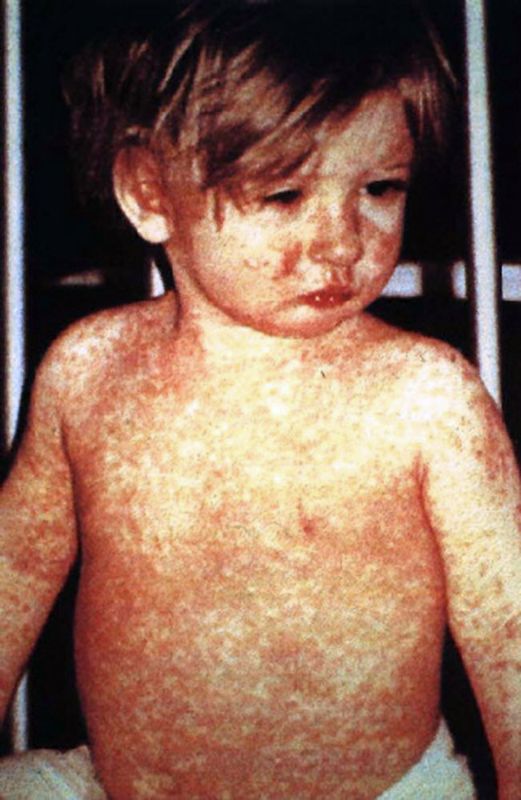
The human cost recorded alongside the case count is substantial. The CDC data include 562 hospitalizations — 11 percent of confirmed cases. Children and adolescents account for about 60 percent of all cases, according to Euronews’ summary of the CDC data, and nearly all cases have occurred in unvaccinated people, according to CDC-derived reporting. In other words, the 2026 record is not a story of a vaccine failing at scale; on the numbers as reported, it is a story of the virus finding the people the vaccine never reached.
Why this matters
Crossing 5,000 cases is a headline. What makes this week different is that the number now carries an institutional consequence with a date attached. The elimination designation is not ceremonial: it is the formal verification, maintained under WHO and PAHO review, that endemic measles transmission has been interrupted in the United States. It has held since 2000, through every imported case and contained cluster of the past quarter-century. Losing it would return the United States to a category it last occupied in the twentieth century — a country where measles is again considered endemic — and would start a formal, evidence-heavy process to win the status back, in which the country would have to demonstrate, to outside reviewers, that transmission had been interrupted all over again. The November 10 review will also be reading a record that includes a public disagreement between the CDC and state health authorities over the most basic figure of all: how many people the disease has killed. That dispute, set out below, is part of why this milestone is a data-integrity story as well as an epidemiological one.
How the US got here: eliminated in 2000, unraveling since Texas
Measles was declared eliminated in the United States in 2000, the culmination of a vaccination era that reduced a disease which once infected millions of American children a year to a few dozen imported cases annually. Elimination never meant zero cases. It meant the absence of continuous endemic transmission: travelers would still bring the virus in, and small clusters would still flare where vaccination had thinned, but each chain was expected to burn out or be stopped. The break in that pattern came in 2025, when the Texas outbreak began a chain of transmission that has, on the CDC’s own accounting, continued into and through 2026 — 1,385 of this year’s confirmed cases are attributed to outbreaks that began in 2025. That continuity is precisely what the November 10 review will assess, because the verification framework turns on whether transmission of a single chain has persisted for twelve months or more.
What the national curve looks like at state level is visible in Pennsylvania, the state hit hardest in the reporting this autumn. Signal Post News has covered that state story in depth, and it is the essential companion to this national milestone: our report on the Pennsylvania measles outbreak topping 1,004 cases traces how the state outbreak was built, and our coverage of the measles exposure at Philadelphia International Airport shows how a single infected traveler can trigger a multi-terminal public alert. Pennsylvania’s own health department figures, reported by USA Today on November 5, now put the state at 1,487 cases — more than a quarter of the national total in one state.
The coverage arithmetic: from 95.2 percent to 92.4 percent
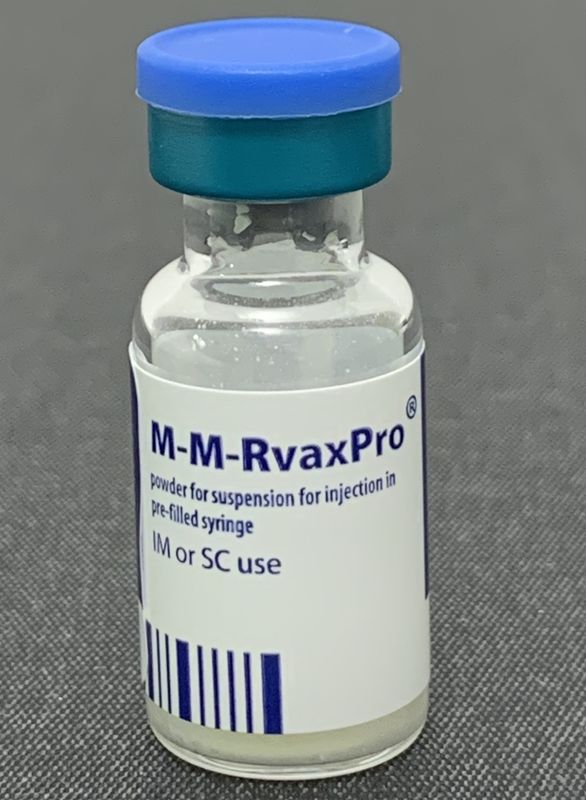
Behind the case curve sits a slower-moving number that explains it. Kindergarten coverage with the measles, mumps and rubella (MMR) vaccine fell from 95.2 percent in the 2019–20 school year to 92.4 percent in 2025–26, according to the CDC-derived figures reported this week — below the roughly 95 percent threshold health officials cite as the level of population immunity needed to keep measles from spreading. The arithmetic of that slide is unforgiving. Across a national kindergarten cohort of roughly three and a half million children, each percentage point of coverage represents on the order of 35,000 children; a 2.8-point decline therefore represents on the order of 100,000 additional children entering school in a single cohort year without MMR protection — and because the decline has run for several consecutive cohorts, the unprotected population compounds year over year. Measles is among the most contagious viruses known, and the national average conceals the mechanism that actually produces outbreaks: coverage is not evenly spread, so communities where vaccination has fallen well below 92 percent can sustain transmission even while the national figure looks close to the threshold. The 43 outbreaks and the 96 percent outbreak-association rate in the CDC data are what that arithmetic looks like when a virus this transmissible meets those pockets.
Who is most at risk
The burden of a record year does not fall evenly. The first dose of MMR is routinely given at 12 to 15 months of age, which means infants in their first year of life cannot yet be vaccinated and depend entirely on the immunity of the people around them. People who are immunocompromised — because of illness or treatment — likewise cannot always be vaccinated, and rely on the same shield. For both groups, the operative figure is not their own vaccination status but the coverage rate of their community, which is why the slide from 95.2 percent to 92.4 percent is, for them, a direct measure of exposure. Children and adolescents, at about 60 percent of confirmed cases in the CDC data, are the population in which the virus is actually circulating; the 562 hospitalizations — 11 percent of cases — are the measure of how serious that circulation has been in 2026.
Two death counts, one outbreak: the CDC–states dispute
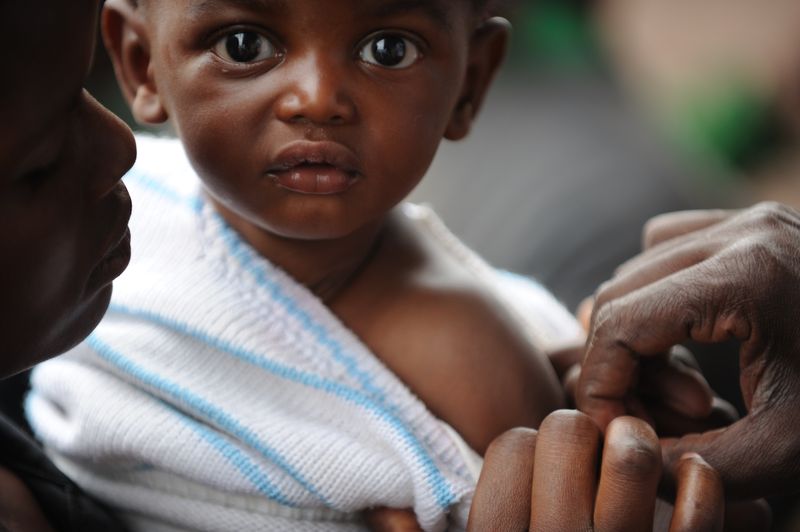
On the gravest number of all, the authorities do not agree, and readers deserve both counts with their sources attached rather than a single settled figure. The CDC’s official count is four measles deaths in the United States in 2026, as of October 29 — a figure produced by a classification method that USA Today’s November 5 investigation described as controversial, detailing how the CDC changed the way it classifies measles-related mortality. State health authorities, by contrast, report at least eight deaths in 2026, including very young children. Pennsylvania alone reports six deaths, alongside its 1,487 cases — a state-level toll that already exceeds the federal total. Our earlier report on Pennsylvania’s fifth measles death, in a state outbreak where all five of the dead at that point were unvaccinated, traced how those state attributions are made case by case.
Treated as a data-integrity question, the dispute is not a rounding difference. Death counts feed everything else: they shape how severity is communicated, how hospitals and states plan, and what outside reviewers examining the elimination file will read. The CDC’s position, as reported, is that its count follows its classification method; the states’ position is embedded in their own investigative attributions, which arrive at a higher number. Where a death is classified as measles-related by the state that investigated it and not by the federal ledger, both numbers can be internally consistent and publicly irreconcilable — and it is the gap itself, days before an international review, that has become part of the story. Signal Post News is reporting both counts, attributed, and will update this account if either authority revises its figure.
November 10: three scenarios for the elimination review
USA Today reported that the WHO review of the US elimination status is expected on November 10, conducted with PAHO, the WHO’s regional office for the Americas. The question before the reviewers is narrow and factual: whether the transmission chain that began in 2025 constitutes continuous endemic transmission of twelve months or more, which would end the elimination designation the US has held since 2000. Three outcomes frame the possibilities.
Scenario one: the US retains its status
Reviewers conclude that the evidence does not yet establish twelve months of continuous endemic transmission — for example, if the chains are judged to have been interrupted and restarted by new introductions rather than sustained uninterrupted. The designation survives, the US keeps its verification standing, and attention returns to the case curve itself: whether the record total bends down fast enough to keep the question from returning at the next review.
Scenario two: retained, with a formal warning
The middle outcome keeps the status in place while attaching formal findings: requirements for strengthened surveillance, documented outbreak response and a defined window in which the US must demonstrate that transmission has been interrupted. This outcome would leave the 2000 designation technically intact but visibly conditional — less a vindication than a deadline, with the 5,182-case record entered as the reason the conditions were imposed.
Scenario three: the US loses elimination status
If reviewers judge that continuous transmission has persisted since the 2025 Texas outbreak, the United States loses the elimination status it has held since 2000, and measles is once again classified as endemic in the country. In practice, the change is classificatory but far from meaningless: the US would report internationally as a country with endemic measles transmission; regaining the status would require demonstrating, under the same verification framework, that transmission had been interrupted for at least twelve months, followed by re-verification — a process measured in years, not news cycles. Day-to-day clinical care would not change on November 11, but the classification frames everything from international health reporting to how future outbreaks are funded and fought, and it would stand as the formal marker that a quarter-century of elimination had ended.
What happens next
Four things will tell the story from here. First, the November 10 review itself: which scenario lands, and what conditions, if any, are attached. Second, the CDC’s next updates: whether the weekly curve bends as the year closes or whether 5,182 is a waypoint rather than a peak. Third, Pennsylvania, whose 1,487 cases and six state-reported deaths make it the jurisdiction to watch for both the epidemiology and the counting dispute. And fourth, the death toll itself: whether the federal and state ledgers converge on a single, agreed methodology — or whether the gap between four and at least eight becomes a permanent feature of how this record year is remembered, and a standing exhibit in the argument over the numbers the country is asked to trust.
Should the reviewers weigh the CDC’s official death count or the states’ higher count when they judge the US record — and what evidence would settle the question for you? Follow Signal Post News for continuing coverage of the measles record, the November 10 elimination review and the state outbreaks behind the national numbers, and share your view in the comments.
Sources
Centers for Disease Control and Prevention, measles cases and outbreaks page, updated November 6, 2026 (data as of November 5, 2026): 5,182 confirmed cases in 47 jurisdictions plus 18 cases among international visitors, 43 outbreaks, 4,993 outbreak-associated cases (96 percent), 562 hospitalizations, and the CDC death count of four as of October 29, 2026; full-year 2025 total of 2,289. USA Today, November 5, 2026: state health authorities reporting at least eight deaths including very young children; Pennsylvania Department of Health figures of six deaths and 1,487 cases; the CDC’s contested change to measles-mortality classification; the WHO review expected November 10, 2026 following the 2025 Texas outbreak. Euronews, November 6, 2026: 5,182 cases as the highest annual total in 35 years (since 1991); children and adolescents about 60 percent of cases; kindergarten MMR coverage of 95.2 percent in 2019–20 and 92.4 percent in 2025–26 against a roughly 95 percent threshold. Photos: Wikimedia Commons, as credited in the captions.