After a wounded man left Allen Hospital in federal custody, New York's mayor said two hours of direct talks with Trump and DHS had failed. Outside, roughly 300 protesters pushed against police barricades and several people were arrested.
The Mamdani Bronx ICE shooting fallout became a direct confrontation between City Hall and Washington late Thursday, when Mayor Zohran Mamdani said he spent about two hours on the phone with President Donald Trump and Homeland Security Secretary Mullin trying — unsuccessfully — to secure the release of Oscar Belgal. Mamdani said Belgal, a 28-year-old Dominican man shot in the neck during an ICE operation earlier in the day, was removed from NewYork-Presbyterian Allen Hospital in unmarked federal vehicles with blacked-out windows.
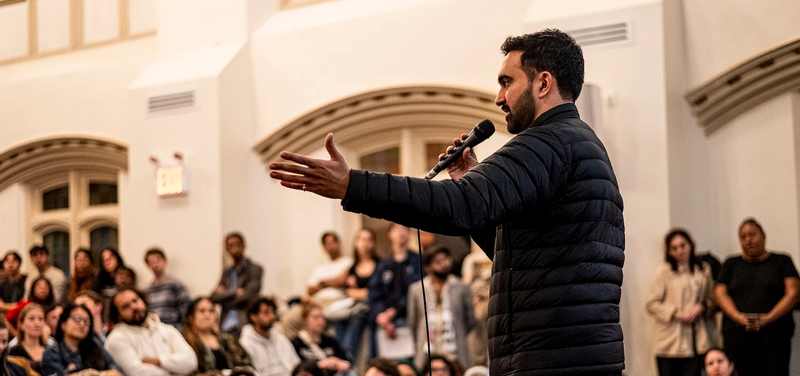
Standing near the scene as protesters interrupted him with chants of “complicit,” Mamdani called ICE “rotten to its core” and “an agency that must be abolished.” He demanded that agents leave the area and halt enforcement operations in New York City. The declaration moved the story beyond the initial Bronx shooting and the unanswered questions around seven gunshots: a sitting mayor was now publicly contesting federal custody in real time.
Why the Mamdani Bronx ICE shooting confrontation matters
Two hours of Mamdani-Trump negotiation ended without a deal
Mayors regularly criticize federal policy; they do not often announce that they have personally negotiated with a president for two hours over a single detainee and failed. That disclosure turns Belgal's custody into a test of power. City Hall can mobilize attention, legal support and local political pressure. It cannot order a federal agency to release someone or withdraw from the city.
The rhetoric was equally consequential. Mamdani's call to abolish ICE is the first such demand from the New York mayor's office in response to an active enforcement operation. It aligns him with the movement that helped carry him into office, while giving Trump and immigration hawks a ready-made example of what they describe as local obstruction of lawful federal enforcement.
The timing sharpens every incentive. The November 3 midterms are 26 days away. Mamdani can show his base that his campaign promises on ICE were not merely symbolic. Trump and Republicans can point to a Democratic mayor demanding that a federal law-enforcement agency leave America's largest city. The facts of the shooting matter on their own; politically, each side also has an audience primed to see Thursday night as proof of its larger case.
Bronx protest at Allen Hospital turns into a barricade clash
Roughly 300 people gathered outside NewYork-Presbyterian Allen Hospital, chanting “ICE off our streets,” “No justice, no peace” and “From Palestine to Mexico, all these walls have got to go.” The crowd marched to the hospital and blocked an intersection at the entrance. As NYPD officers put up barricades, some demonstrators shoved the barriers and threw water bottles, producing a pushing confrontation with police.
Police made arrests; early reporting cited at least five people taken into custody. Footage showed congressional nominee Darializa Avila Chevalier knocked to the ground amid the crush. Public Advocate Jumaane Williams and City Council Member Carmen De La Rosa, who represents Marble Hill, also condemned the shooting near the scene. Their presence gave the NewYork-Presbyterian Allen Hospital protest the character of both a street demonstration and an emergency gathering of city officials.
The distinction between peaceful participation and particular acts matters. Hundreds joined the demonstration; reports attributed the thrown bottles and barricade pushing to some members of the crowd. The NYPD ICE protest clash should not be used to assign every protester the same conduct, just as the arrests themselves do not establish guilt.
What is known about the Oscar Belgal ICE shooting
Jessica Tisch: at least one agent fired seven rounds
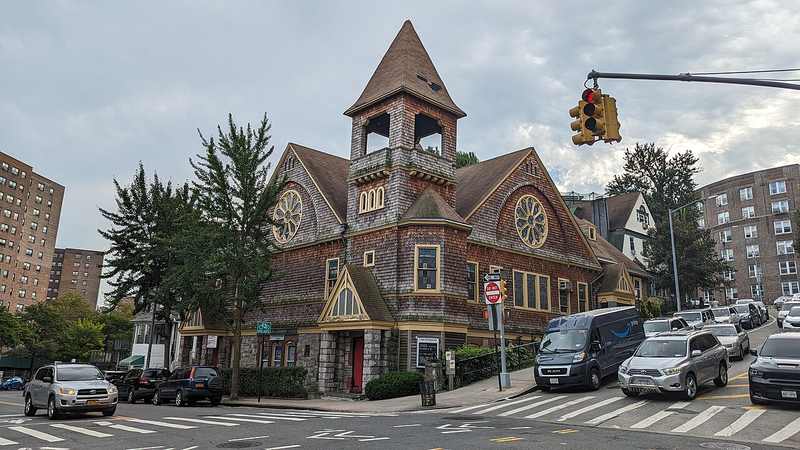
The confrontation began around 4 p.m. Eastern time near 2 Marble Hill Avenue. Belgal was pulling into a parking space when plainclothes federal officers approached, according to the Associated Press account. At least one ICE agent fired seven rounds, NYPD Commissioner Jessica Tisch said. One bullet entered the front windshield and exited a rear window. Belgal was struck in the neck below his left ear and suffered injuries described as non-life-threatening.
A 5-year-old boy believed to be Belgal's son was inside the car and was not hurt. He was later with a family member. NYPD was not part of the operation and was not at the scene when the shooting occurred, Tisch said. A police security camera captured the moments leading up to the encounter but not the gunfire itself, according to the AP report.
Those facts make the investigative questions unusually concrete. Seven rounds were discharged toward a vehicle with a child inside. The bullet path through the windshield and out a rear window will help reconstruct the positions and movement of the car and agents. Video before the shots may establish how quickly the confrontation developed, but investigators will still need other footage, witness accounts, ballistics and agent statements to explain why lethal force was used.
DHS says the operation was legitimate enforcement
Grand larceny conviction, prior arrests and alleged Trinitarios ties
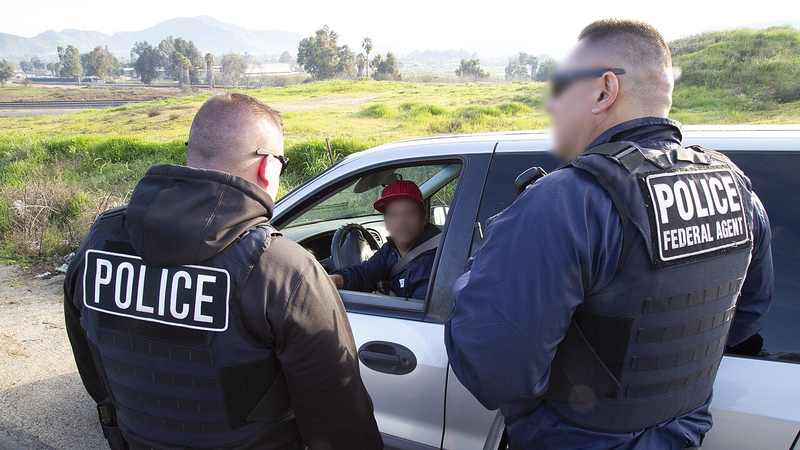
The Department of Homeland Security gives a sharply different frame from the mayor. DHS says ICE was conducting a targeted operation to arrest Belgal, not a random street sweep. The department points to a prior grand larceny conviction, previous arrests involving assault, robbery, drug possession and weapons possession, and alleged ties to the Trinitarios gang. Those gang ties are a DHS allegation, not an adjudicated fact established in the reporting reviewed for this article.
DHS also says NYPD arrested Belgal on December 7, 2023, but that he was released days later. The department blames New York's sanctuary policies, which generally limit when local authorities cooperate with federal immigration detainers. Supporters of the operation argue that those policies forced federal officers to make an arrest in a less controlled setting and that agents were carrying out legitimate immigration enforcement against a person with a criminal record.
Mamdani and protesters reject that premise. Their argument is that a person's immigration status or criminal history does not answer whether seven shots were justified, especially with a child in the vehicle, and that aggressive enforcement around a hospital can frighten immigrants away from medical care. ICE says its personnel rendered aid after the shooting. The FBI and Homeland Security Investigations were at the scene, and the incident remains under investigation.
How New York reached this rupture
New York's sanctuary rules and federal immigration priorities have collided for years. The city limits cooperation with ICE in many cases, arguing that residents must be able to report crimes, attend court and seek care without fearing that ordinary contact with local government will become an immigration trap. Federal officials answer that the policy can release people they want held, shifting arrests from jails to homes, workplaces and streets.
Belgal's 2023 release now sits at the center of that argument. DHS presents it as evidence that the city obstructed a safer transfer. City officials and immigrant-rights advocates distinguish local criminal custody from federal civil immigration enforcement and argue that detainers do not erase due-process concerns. Neither position alone resolves whether the shooting on Thursday was lawful.
Mamdani was elected in 2025 and took office in January 2026 after campaigning on resistance to aggressive ICE activity. Only weeks ago, he and Trump held a cordial meeting at Gracie Mansion during the United Nations General Assembly. Thursday's failed phone negotiations marked a rupture: cooperation at the level of tone gave way to a public dispute over custody, force and federal authority.
Governor Kathy Hochul also called Trump and Secretary Mullin and asked that body-camera footage be released. That request may become the most practical bridge between camps. The mayor's abolition demand is politically sweeping; releasing evidence is a narrower step that could let the public assess what agents confronted and whether seven rounds were proportionate.
Who benefits — and who absorbs the damage
Mamdani, Trump and the midterm argument
Mamdani benefits with voters who elected him to resist federal immigration tactics. His language is unmistakable, and his account of spending two hours negotiating with Trump depicts personal engagement rather than distance. But critics on his right will ask why a mayor intervened for a man with a criminal conviction and alleged gang ties before the shooting investigation had produced its findings.
Trump and immigration hawks benefit from the mirror image. They can present the episode as a choice between enforcing federal law and city politicians protecting a removable noncitizen. But critics of the administration will ask why a targeted arrest ended with seven shots through a car carrying a child and why Belgal was moved in unmarked vehicles while local leaders sought answers.
Republican campaigns gain a vivid sanctuary-city argument just before the midterms; progressive campaigns gain images of a wounded man, a frightened neighborhood and federal agents operating without local police involvement. Each side can mobilize its base. Neither should mistake mobilization for resolution.
The people who do not win
The 5-year-old in the car gains nothing from the political fight. Marble Hill residents face the harder task of deciding whether authorities approaching a vehicle are protectors, enforcers or an unpredictable danger. Hospital workers and patients face a second-order risk: if immigrants come to believe that treatment sites can become transfer points to federal custody, some may delay care even when seriously ill.
Community trust is particularly difficult to rebuild because the agencies involved are not a single institution. NYPD says it was absent from the operation, yet city officers later had to manage the protest. ICE is a federal agency with more than 20,000 employees and over 400 offices, according to agency figures cited in reporting. A mayor cannot expel that national system by declaration, but his language can influence how city agencies, hospitals and residents respond to it.
The numbers in context
Seven rounds. That is the figure Tisch gave for at least one ICE agent's gunfire. Investigators must determine the threat agents perceived, the timing of each shot and the meaning of the windshield-to-rear-window trajectory.
About 300 protesters. The crowd was large enough to block an intersection and create sustained pressure at barricades, but reporting attributes bottles and shoving to some demonstrators rather than the entire gathering.
Five years old. The child in Belgal's car was physically unharmed. His presence raises the stakes of both the agents' decision-making and any attempt to reduce the incident to a partisan symbol.
Non-life-threatening. Belgal's neck wound was serious enough to require hospital treatment but was not expected to kill him. That medical outcome does not settle whether the force was justified; it defines the harm investigators must explain.
More than 20,000 employees and 400 offices. That scale shows the limit of a municipal abolition demand. Congress created and funds ICE; eliminating it would require federal legislation and a plan to redistribute its responsibilities. A city can restrict cooperation within legal bounds, litigate particular practices and use political pressure, but it cannot dissolve the agency.
What happens next
Watch the evidence. The FBI and HSI investigation will turn on video, ballistics, witness testimony and the agents' account of the vehicle's movement. The central question is not simply whether Belgal was a lawful enforcement target; it is whether the circumstances justified seven shots.
Watch Belgal's custody. His removal from Allen Hospital suggests federal detention will continue while immigration authorities determine the next step. His prior conviction and pending legal matters could shape detention and deportation proceedings, but the precise timetable and outcome were not established Thursday night.
Watch the courts and City Hall. Mamdani's demand that ICE leave New York has no obvious mechanism to bind a federal agency. The city can contest detention, decline forms of cooperation, seek records, support legal challenges and regulate city property within the law. Abolishing ICE would require Congress, not a mayoral order.
Watch the protests. The Allen Hospital crowd could be the start of a sustained mobilization or a single-night eruption. More confrontations would shift attention from the shooting investigation to public order; a disciplined, peaceful campaign would keep the focus on force, custody and transparency.
Watch November 3. Twenty-six days gives both parties time to make the Bronx a national message. Voters will hear competing stories: federal enforcement frustrated by sanctuary policy, or federal power operating with inadequate accountability. The investigation may eventually decide questions of conduct. The political verdict will arrive first.
Related coverage
- ICE shooting in the Bronx: what happened and what remains unknown
- ICE shock-glove proposal draws scrutiny over pain-compliance technology
- Trump tells Minnesota to “fight back” against Somali immigrants
Sources
Reporting with attribution, the competing accounts and the unanswered investigative questions in view.