ICE shock gloves Army study
ICE shock gloves Army studyICE electric shock glovesGLOVE shock gloves ICEICE $16.7 million shock gloves contractCalifornia ban shock glovesICE de-escalation devicesCompliant Technologies shock glovesFort Leavenworth shock glove studyNewsom AB 2760 shock glovesAmerican Oversight ICE gloves
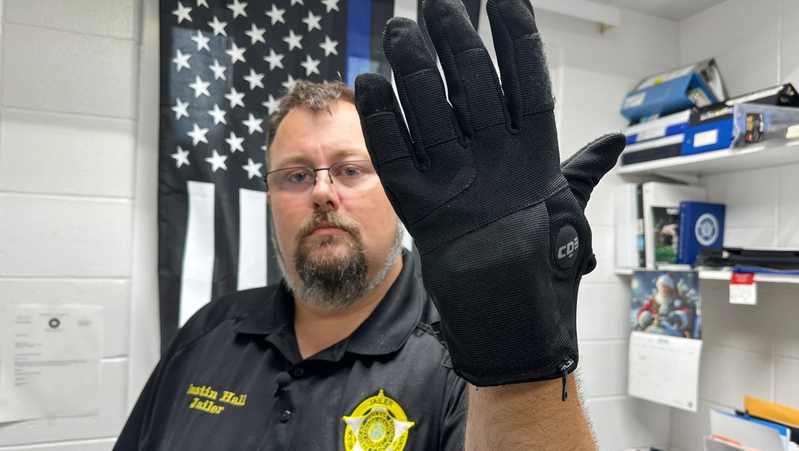
WASHINGTON — The Associated Press reported October 6–7 that a U.S. Army study of the G.L.O.V.E. shock gloves, conducted during an exercise at the military prison at Fort Leavenworth, Kansas, in October 2024, found participants felt intense pain, stopped fighting immediately and feared additional exposures. ICE leaders were aware of the findings before signing a $16.7 million contract in August 2026 for 6,000 pairs of the gloves, according to records obtained by the watchdog group American Oversight and shared with the AP. The account has since been carried by CNN, NBC and other outlets.
The disclosure matters because it moves the debate beyond advertising claims. The agency did not buy the devices without evidence of what they do; its leadership had seen a military study describing both their effectiveness and their psychological aftermath. That puts the ICE electric shock gloves at the center of a larger question: whether a tool built around pain and fear can be deployed with enough restraint, documentation and oversight to justify calling it de-escalation.
What the Army tests actually found — the Fort Leavenworth exercise
During the Fort Leavenworth shock glove study, Army employees played combative prisoners. Several were large-statured men. Officers applied shocks by touching the gloves to exposed skin, and the participants stopped resisting within seconds. The study recorded “fatigue, soreness and excessive apprehensiveness to being shocked again,” adding that “just seeing the GLOVE was enough to make them want to comply.”
The mechanism is important. A Taser is intended to disrupt muscular control. The G.L.O.V.E. instead overloads peripheral nerve endings, producing sharp pain while leaving the subject physically capable of movement. In the tests, shocks did not significantly shorten the time needed to establish control, but officers reported using less effort. The study said the device offered “a boost in confidence to smaller or less trained members.”
Skin condition changed the experience. Participants with wet or oily skin described stronger shocks, and one reported discomfort for 30 minutes. Those details complicate any claim that the output will feel uniform in the field: sweat, weather, medical vulnerability and the duration of contact can all shape the encounter.
ICE knew before it signed — the $16.7 million contract
Records obtained by American Oversight show ICE leadership had the Army study before the August purchase of 6,000 pairs. ICE describes the equipment as “distraction and de-escalation devices” that could be safer than other less-lethal options. Its argument is straightforward: if a brief shock produces rapid compliance, officers may avoid a prolonged struggle or an escalation toward force capable of killing.

Border czar Tom Homan has said it could “be awhile” before the gloves reach the field because training and policy issues are still being worked out. ICE did not respond to the AP's request for comment about the study and rollout status. DHS says equipment is reviewed for compliance with law-enforcement policies and that officers receive ongoing de-escalation and use-of-force training.
That leaves an unresolved gap between procurement and deployment. The ICE $16.7 million shock gloves contract is complete, but the operational rules that determine when a gloved officer may touch someone, for how long and with what reporting requirements are not yet public.
The critics' case — pain compliance without a mark
Civil-liberties advocates argue that the features making the gloves attractive also make them difficult to police. They can be discharged with a touch, leave little or no visible mark and have seen limited use beyond jails. The manufacturer warns against use on high-risk populations including children, pregnant women and disabled people.
Sen. Catherine Cortez Masto of Nevada and 15 Democratic Senate colleagues wrote to ICE on August 27 asking the agency to abandon the plan or explain how the gloves would be used, tracked and managed to prevent abuse. ICE has not responded. Their concern is not only whether the devices can work, but whether an encounter that leaves pain without a visible injury can be reconstructed later by supervisors, courts or the public.
Supporters answer that accountability failures are not unique to this tool and can be addressed with strict policy, training, activation logs and body-camera review. Critics counter that those safeguards must exist before fielding, not after the first disputed use.
California draws the line — Newsom's AB 2760 ban

Gov. Gavin Newsom signed AB 2760 on September 29 as part of a roughly 20-bill package. The law bars California law-enforcement agencies from possessing or using wearable electroshock devices, including shock gloves. His office called it the first such ban in the country.
The restriction arrived after Sacramento County Sheriff Jim Cooper spent about $35,000 on 10 devices in August. Deputies were trained, but Cooper said none had been deployed on duty. The episode shows how quickly procurement can outpace statewide policy: one agency was preparing for use while lawmakers were closing the door.
DHS responded that federal immigration enforcement is a federal responsibility and urged California to cooperate. First Assistant U.S. Attorney Bill Essayli posted on X advising DHS to disregard the ban, saying Newsom had “no jurisdiction.” That dispute foreshadows a legal fight over how far a state prohibition can reach when federal officers operate inside the state.
Why this matters — the deeper significance
Pain leaves less evidence than incapacitation
A weapon designed to work through pain and fear rather than muscular incapacitation raises the accountability stakes. The absence of a mark may reduce injury, but it can also reduce the physical record available when accounts conflict. That makes documentation, activation data, body-camera footage and supervisory review central rather than secondary.
An equalizer can also lower the threshold for force
The Army study's finding that the glove boosts confidence in “smaller or less trained members” cuts two ways. It may allow an officer to control a larger person without a baton, Taser or firearm. It may also make physical force easier to initiate by lowering the effort and training required to inflict pain.
A jail tool moves toward the street
ICE has explicitly contemplated use against protesters who “create civil disturbances.” That moves a device tested in a controlled prison exercise into demonstrations, where crowds, protected speech, confusion and rapidly changing conditions create a different risk profile. The question is not simply whether the glove works, but whether a jail-derived method belongs in street policing.
The timing magnifies the stakes
The purchase comes while ICE faces scrutiny over allegations of excessive force and as the federal-state conflict over immigration enforcement is already burning in California. Every use will therefore be judged not only as an individual officer's decision, but as evidence in a broader institutional and constitutional argument.
What happens next
Homan's timetable puts training and policy first, which means fielding could remain delayed even after thousands of pairs have been purchased. The Senate letter remains unanswered, leaving lawmakers without the use limits, logging requirements and disciplinary framework they requested.
California's template may invite similar bills elsewhere, while federal-state litigation could test whether those bans touch federal operations. Manufacturers and agencies will also face pressure for independent medical review and transparent reporting before deployments expand beyond custodial settings.
The Army study leaves the decisive question open. “Safer than other options” is a comparison that can only be tested against real encounters, real injuries, real reporting and real accountability. The next chapter will be written not by the procurement contract, but by the rules ICE adopts before the first field use — and by whether those rules survive the first case that reaches a courtroom.
Sources
- CNN — reporting on the Army study, ICE contract and rollout questions.
- Military.com / Associated Press — AP account of the Fort Leavenworth tests and records obtained by American Oversight.
- KION / CBS — reporting on Newsom's AB 2760 ban and the California response.