War · Gaza · Israel · United Nations
The UN human rights office warned on Friday that Israeli forces are pushing Palestinians into ever-smaller areas of Gaza, destroying civilian infrastructure and attacking the displacement sites where families shelter — and said the pattern raises concerns about ethnic cleansing.
Track it live: Israel war map
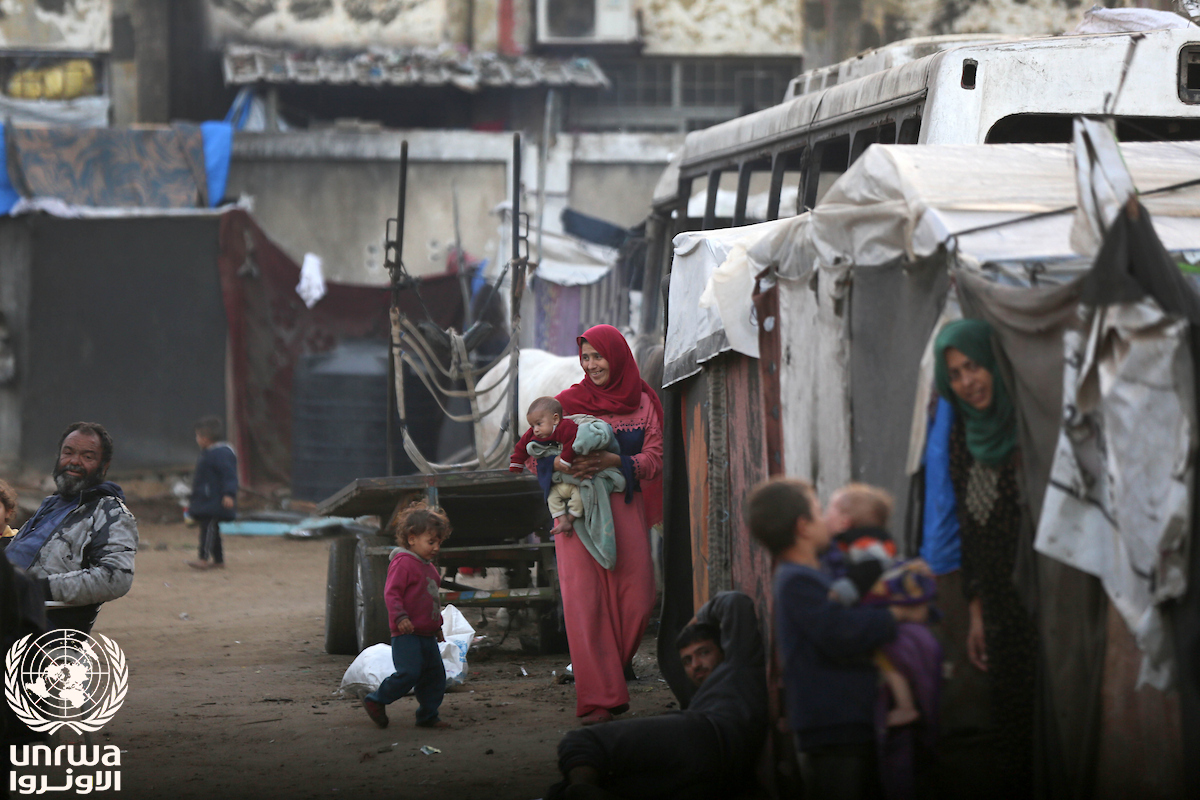
GENEVA — The United Nations human rights office, OHCHR, warned on Friday, October 30, that Israeli forces in Gaza are pushing Palestinians into ever-smaller areas, destroying civilian infrastructure and attacking displacement sites, in a pattern it said raises concerns about ethnic cleansing. Israel, the office said, has stated an aim to increase its military deployment area to 70 percent of the Gaza Strip — up from roughly half the territory when the current ceasefire's withdrawal line was drawn — and its forces appear to treat the so-called yellow line that marks that deployment as a “kill zone,” shooting at Palestinians who approach a boundary that is neither clearly marked nor fixed.
Over the past two weeks, OHCHR documented the line moving westward in Al Shujaiyeh, in Gaza City, and in eastern Al Bureij, eastern Deir Al-Balah and eastern Al Maghazi, in the central Strip. In Shujaiyeh, the office said, at least two attacks on displacement camps were reported, and explosive robots were used to detonate remaining buildings. The warning is among the starkest the UN human rights office has issued since the ceasefire took hold, and it lands as that ceasefire's second phase — meant to settle Hamas's disarmament and a fuller Israeli withdrawal — remains deadlocked. No Israeli response to this specific OHCHR statement appeared in the UN or Al Jazeera accounts of it published on Friday; what Israel has said about earlier allegations, and what remains unverified, is set out below.
What the UN documented
OHCHR's account is specific about place and method. The expansion it describes is not a single offensive but a steady westward creep of the deployment line across four areas at once: Al Shujaiyeh in the east of Gaza City, and the eastern edges of Al Bureij, Deir Al-Balah and Al Maghazi in the middle of the Strip. Each shift pushes the families living nearest the line — most of them already displaced at least once — further west, into the narrowing coastal strip where the great majority of Gaza's roughly two million people are now concentrated.
The most detailed incident in the statement concerns Shujaiyeh. On October 25, according to OHCHR, a drone dropped munitions on tents at the Al Shujaiyeh junction, close to the yellow line. The fire that followed burned for nearly five hours. Citing the Palestinian Ministry of Public Works and Housing, the office said the attack displaced 200 families — about 800 people — most of them women, children and older persons. OHCHR said at least one further attack on a displacement camp in Shujaiyeh was reported in the same period, and that explosive robots were detonated in remaining buildings in the neighbourhood, a method residents across Gaza have described as demolishing structures remotely after troops withdraw from them.
‘The nightmare of displacement is both acute and chronic’
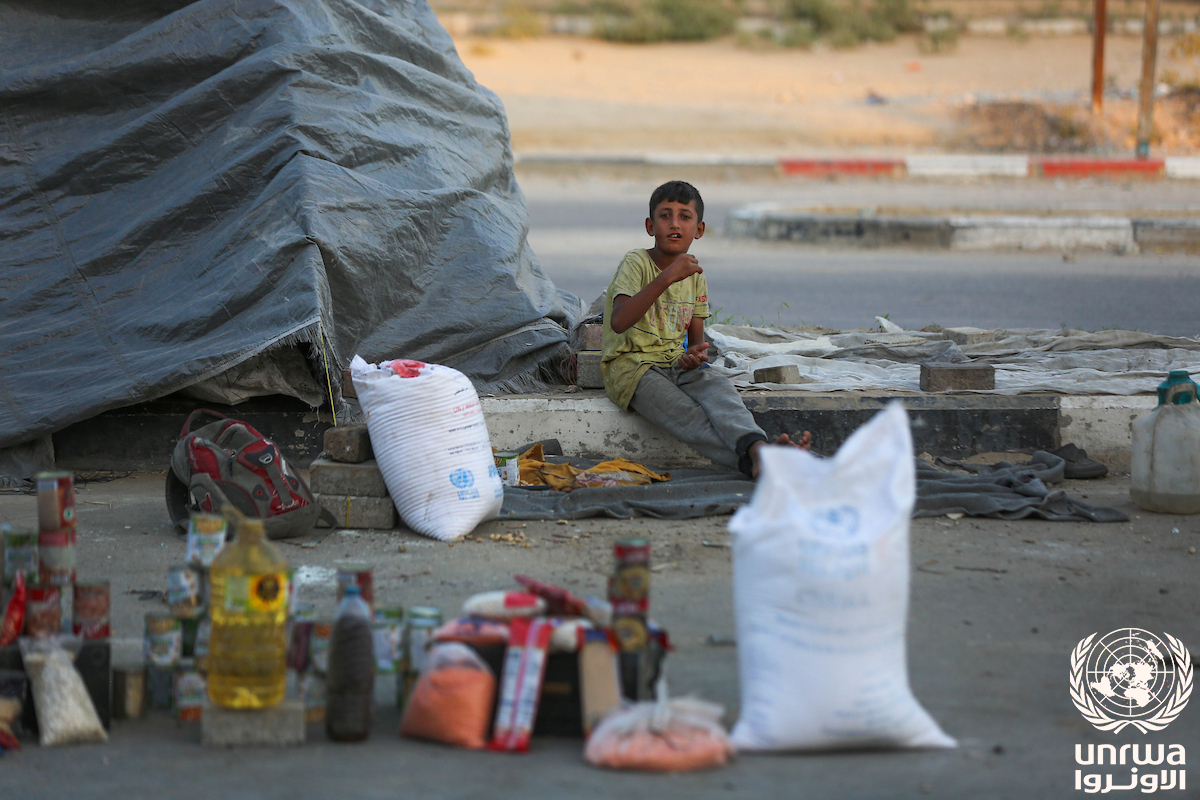
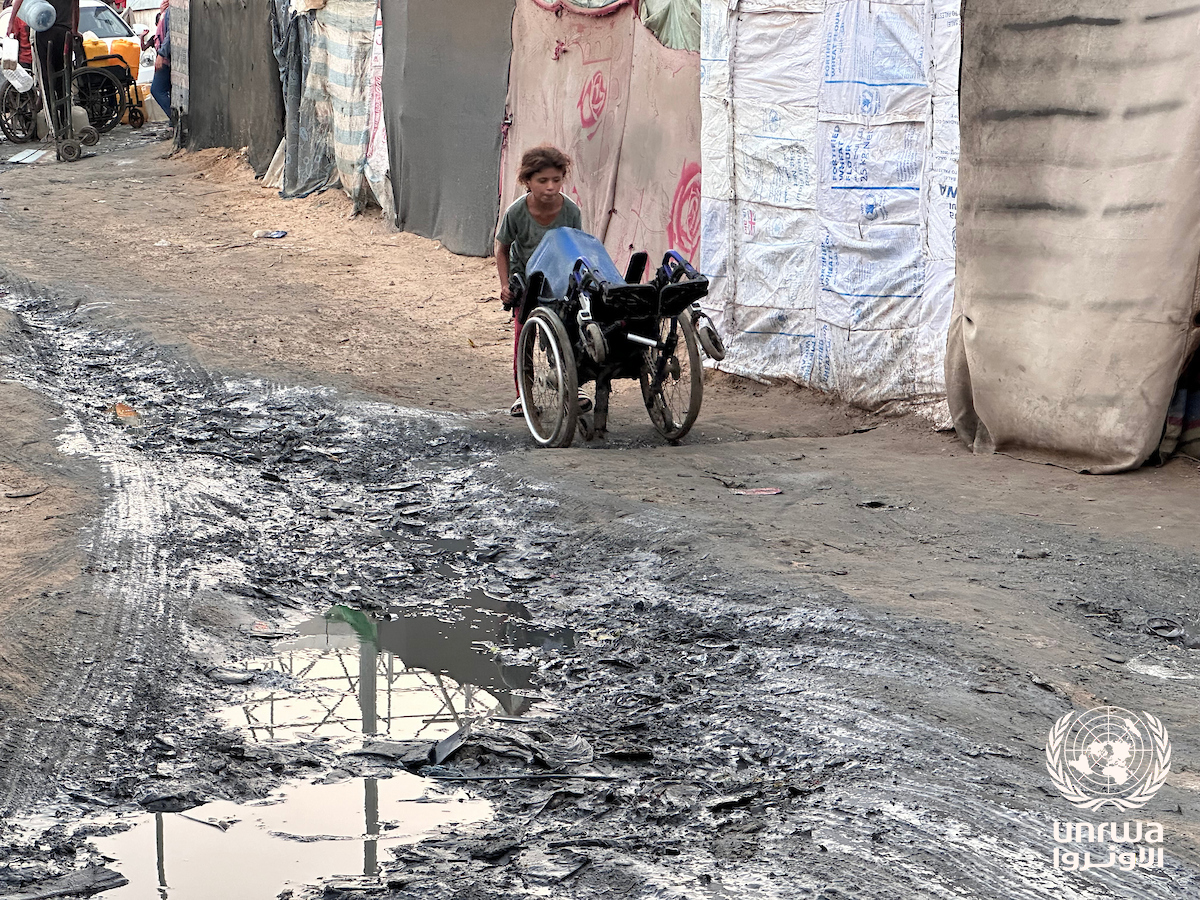
Ajith Sunghay, the head of UN Human Rights in the Occupied Palestinian Territory, framed the warning around time as much as territory. “The nightmare of displacement in Gaza is both acute and chronic,” he said — acute in the new attacks and orders, chronic in the years families have now spent outside their homes. This, OHCHR noted, is the fourth year of displacement for many Palestinians in Gaza and the fourth winter they face in flimsy tents, with restrictions on shelter aid deepening the crisis as temperatures fall and rain turns camp ground to mud and standing water.
On the yellow line itself, the office's language was blunt. OHCHR said Israeli forces appear to treat the line as a kill zone. Its spokesperson Mayy El Sheikh added the detail that makes the line so dangerous in practice: there is no single line known to Palestinians. The boundary exists in Israeli military statements and in maps, but on the ground it is unmarked, it shifts, and residents say they often learn where it is only when shots are fired. OHCHR said hundreds of people have been shot near the line.
The office's legal conclusion followed from those facts. Forcible transfer of a protected population, OHCHR said, is a war crime and may amount to a crime against humanity — and Israel, as the occupying power, must cease it. The ethnic-cleansing concern in Friday's statement is presented by OHCHR as a concern arising from the pattern it documented — displacement, destruction of civilian infrastructure and attacks on the sites people flee to — rather than as a completed legal finding, and this article reports it in those terms.
What the yellow line is — and how it moved
The yellow line entered Gaza's geography with the ceasefire that began on October 11, 2025. Under the agreement's first phase, Israeli forces withdrew to a deployment line running the length of the Strip, leaving them in control of roughly half of Gaza — about 53 percent by most published estimates — while Hamas was to release hostages and the parties negotiated phase two: Hamas's disarmament, a further Israeli withdrawal and arrangements for governing and rebuilding Gaza. A year on from the deal, phase two has not happened, and the line that was drawn as a temporary military boundary has instead hardened into the Strip's defining feature — and, on OHCHR's account and in recent reporting, crept from roughly half the territory to more than 60 percent, on the way to the 70 percent deployment Israel has stated as its aim.
Strikes inside the ceasefire have never fully stopped, a pattern Signal Post News examined in why Israel strikes Gaza despite the ceasefire. Friday's statement is different in emphasis: its subject is not individual strikes but land — the slow redrawing of how much of Gaza Palestinians are permitted to live in at all. A UN commission of inquiry reached broader conclusions about Israel's conduct in Gaza in a report covered by Signal Post News as the UN commission's Gaza genocide and ceasefire report; Israel rejected that report's findings, as it has rejected ethnic-cleansing and genocide allegations in earlier UN findings, and says its operations target Hamas.
Why this matters
Seventy percent, in land and living space
Gaza is about 365 square kilometres — roughly 141 square miles — and home to about two million people. At the ceasefire line of roughly 53 percent, Israeli forces controlled about 193 square kilometres and Palestinians lived, overwhelmingly in the west, on about 172. At 70 percent, the deployed area rises to about 255 square kilometres and the space left for two million people falls to about 110 square kilometres — a loss, on those figures, of more than a third of the land Palestinians were living on when the ceasefire began, and a density in the remaining area of roughly 18,000 people per square kilometre before accounting for rubble, damaged buildings and land that is unusable. Those are arithmetic consequences of the percentages OHCHR cited, not new UN figures — but they describe what a percentage point means when the territory in question is one of the most crowded places on earth.
An unmarked, shifting line
A boundary that moves and is not marked creates a distinct kind of risk. Farmers cannot know whether a field is on the permitted side this week; families in tents cannot know whether the junction beside their camp has become a firing line; and the people shot near the line, on OHCHR's account, include people who had no reliable way of knowing they had crossed anything. That is why the office's “kill zone” characterisation matters beyond its rhetoric: it describes a rule of engagement applied, in effect, to a line only one side can see.
A fourth winter in tents
The timing compounds it. Displacement that might be survivable in spring becomes life-threatening in winter in tents that flood, in camps where sewage runs between shelters, and under restrictions that OHCHR says are limiting the shelter aid that could replace flimsy tents with something warmer. Every new westward shift of the line restarts the cycle for the families in its path: another move, another tent, another winter beginning from less.
The numbers, in context
Al Jazeera, reporting the same warning on Friday, relayed the latest Gaza Health Ministry figures: 1,574 people killed and 5,687 wounded since the ceasefire of October 11, 2025, and 74,570 killed and 175,808 wounded since October 2023. Those figures are the Health Ministry's, relayed by Al Jazeera; they are attributed here to the ministry, they cannot be independently verified by Signal Post News, and Israeli officials have disputed the ministry's counts in the past while UN agencies have generally treated its overall toll as reliable. What the ceasefire-period figure shows, whichever way it is read, is that the year since the October 2025 ceasefire has not been a year without killing — it has averaged, on the ministry's numbers, several deaths a day alongside the slower displacement OHCHR documented on Friday.
Critics, defenders — and what has not been said
Two things should be stated plainly. First, no Israeli response to this specific OHCHR statement appeared in the UN News account or the Al Jazeera reporting of it on Friday, and this article does not invent one. Second, Israel's established position on the broader allegations is a matter of record: it has rejected ethnic-cleansing and genocide allegations arising from earlier UN findings, maintains that its operations target Hamas rather than Gaza's civilian population, and links any further withdrawal to Hamas's disarmament — the same condition on which phase two of the ceasefire is deadlocked, with Hamas unwilling to disarm without a full withdrawal. OHCHR's contrary position is also a matter of record: whatever the military objective, it says, forcible transfer is a war crime that may amount to a crime against humanity, and the occupying power must stop it. Signal Post News reports both positions as their holders state them and takes no side between them; the documented facts in Friday's statement — the places named, the incident of October 25, the toll of 200 families displaced from one junction — are attributed to OHCHR and the Palestinian ministry it cited, and have not been independently confirmed on the ground by this newsroom.
Who gains and who loses from the present stalemate is unevenly distributed. A larger deployment area gives Israel a deeper buffer and stronger leverage in any phase-two negotiation — it would be trading land it holds for concessions rather than promising withdrawals it has not made. It leaves Hamas governing, in practice, a compressed coastal enclave whose population's conditions worsen by the month, and it leaves mediators with a ceasefire whose map no longer matches the one they negotiated. The clearest losers are the families in Shujaiyeh, Bureij, Deir Al-Balah and Maghazi who have moved again — and the two million people whose living space is the variable everyone else is negotiating over.
What happens next
Three scenarios now branch from Friday's warning. In the first, the line stabilises short of 70 percent: the OHCHR statement, and the diplomatic attention it draws, raises the cost of further expansion enough that the deployment freezes where it is, and phase-two talks resume over a map that is at least static. In the second, the expansion continues to the stated 70 percent without a single decisive battle — more junctions, more camp attacks of the kind reported in Shujaiyeh, more families arriving in the west — until the remaining enclave's density produces the humanitarian emergency aid agencies have been predicting, and the argument shifts from where the line is to whether the area west of it can sustain life at all. In the third, the line becomes the casus belli for the ceasefire's collapse: Hamas or another faction treats the encroachment as a breach worth answering, Israel responds at scale, and the phase-one arrangements dissolve back into open war. None of the three is yet determined. What Friday established is the direction of travel documented by the UN's own human rights office — westward, in four places at once, toward a stated 70 percent — and the test for the coming weeks is whether any party with leverage over that line chooses to stop it moving.
Related coverage
- UN Commission on Gaza: Genocide Finding and the Ceasefire Report
- Gaza Ceasefire at One Year: What the Anniversary Revealed
- Why Israel Strikes Gaza Despite the Ceasefire, Explained
Sources
- UN News — report of the OHCHR statement on Gaza displacement and the yellow line (October 30, 2026).
- ReliefWeb — republication of the OHCHR press release (October 30, 2026).
- Al Jazeera — reporting on the OHCHR warning and Gaza Health Ministry figures (October 30, 2026), as carried in its Gaza coverage.
- Photos: Ashraf Amra / UNRWA (CC BY-SA 3.0 IGO) and UNRWA, via Wikimedia Commons, as credited in the captions. All are file photographs of displacement in Deir el-Balah.
This article is based on the UN News report of the OHCHR statement of October 30, 2026, the OHCHR press release as republished by ReliefWeb, and Al Jazeera's reporting of October 30, 2026. Casualty figures are the Gaza Health Ministry's, as relayed by Al Jazeera, and are attributed as such. No Israeli response to this specific statement appeared in those accounts. Analysis is by Signal Post News.