Europe · Politics · Poland
Police in riot gear ringed Poland’s Constitutional Tribunal in Warsaw on Friday night after one of its own judges suspended the court’s president and his deputy and took direction of the institution herself. The court’s official channels called the move a coup d’état; the governing camp’s allies call the suspended leadership illegitimate; President Karol Nawrocki turned his aircraft around on a flight to Senegal to come home. Two rival claims to lead Poland’s highest constitutional court are now in force at the same time — and both camps are accusing the other, in so many words, of a coup.
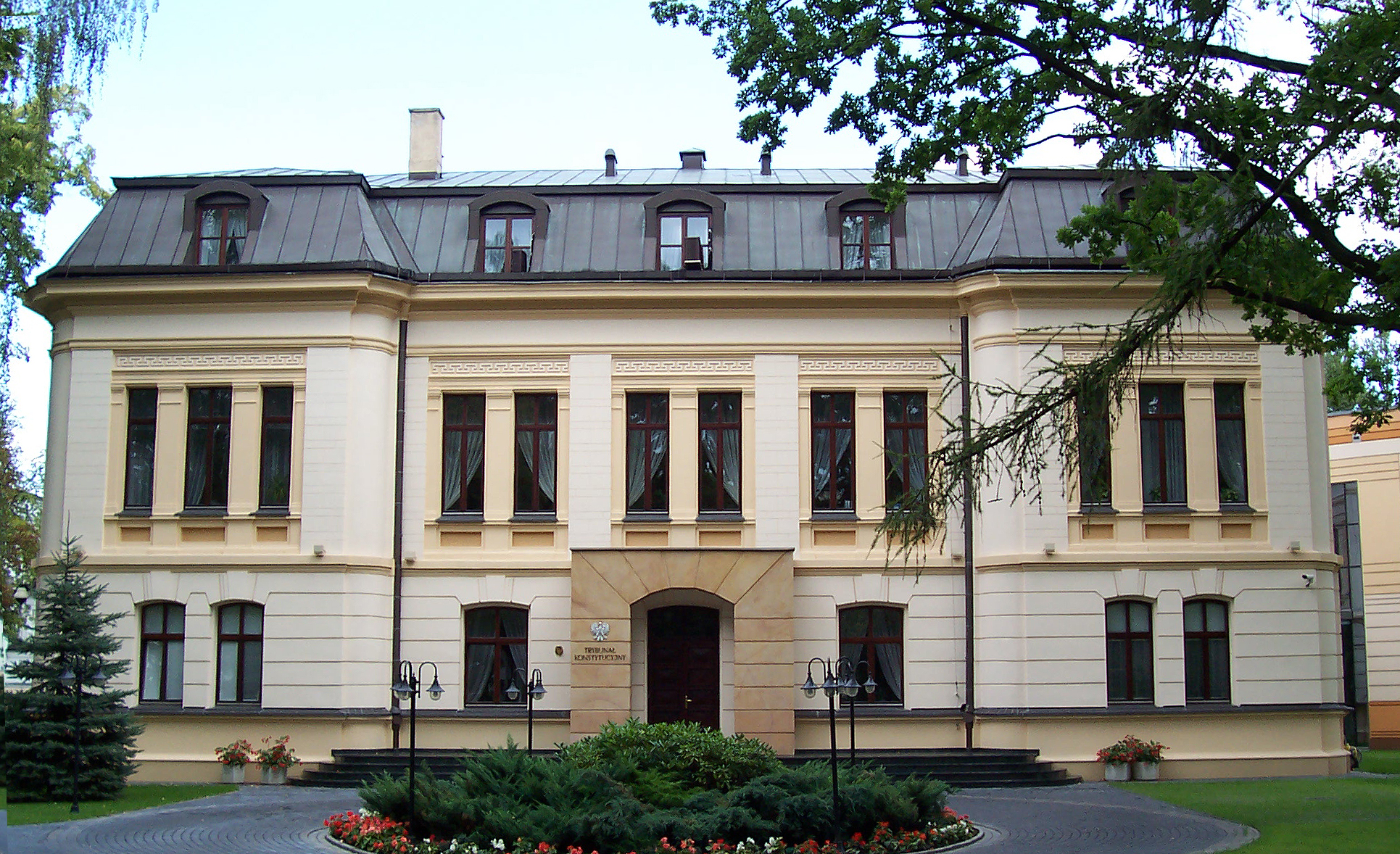
WARSAW — The Poland Constitutional Tribunal crisis stopped being a lawyers’ argument on Friday night and became a scene: police lines on the fence of the country’s top court, a suspension order signed against the court’s own president, the court’s website passing into new hands, and a president of the republic turning his plane around over a trip to West Africa. Judge Anna Korwin-Piotrowska, elected to the Tribunal by the current Sejm in March 2026, signed an order suspending Tribunal president Bogdan Święczkowski and deputy president Bartłomiej Sochański for one month and assumed direction of the court. The Tribunal’s own channels responded that the website had been illegally taken over, that Korwin-Piotrowska does not act for the court, and that those involved, in their words, “commit the crime of coup d’état.” Święczkowski’s circle maintains that he remains the court’s president. Warsaw police, acting on two written requests, cordoned the Tribunal’s headquarters and detained three people. No soldier was involved, the government continues to function, and both camps spent the night describing the other’s conduct as a coup — a word each side aims at the other, and which the facts of Friday night, on their own, do not settle.
The order that started it
The trigger was a single judicial order. On Friday, Judge Anna Korwin-Piotrowska — one of the judges elected to the Tribunal by the governing majority in the Sejm earlier this year — suspended President Bogdan Święczkowski and Deputy President Bartłomiej Sochański for one month. In the same stroke she assumed direction of the court herself. The Polish Press Agency (PAP) reported that the profiles of Święczkowski and Sochański then disappeared from the Tribunal’s official website, the most visible sign that control of the institution’s public face had changed hands.
Whether a single judge of the Tribunal has the legal power to suspend its president is the question on which the entire night turns. Korwin-Piotrowska’s camp treats the order as a lawful act by a lawfully elected judge against a leadership they say was never lawfully installed. Święczkowski’s camp treats it as a nullity — an act by a judge with no authority over the court’s presidency, which under the constitution is appointed by the president of the republic from candidates presented by the Tribunal’s general assembly. Both readings cannot be right. On Friday night, both were enforced at once, in different parts of the same institution: one on its website and in its direction, the other in its official statements and in the person of a president who does not accept that he has been suspended.
Two presidents of one court
The Tribunal’s own communication channels issued the most dramatic language of the night. The court’s website, they said, had been illegally taken over. Korwin-Piotrowska, they said, does not act for the court. And those involved, they said, “commit the crime of coup d’état.” It is difficult to overstate how unusual that sentence is: a constitutional court’s official voice accusing sitting state actors of the gravest crime in the Polish penal code, in real time, while the events are still unfolding outside its own fence.
Against that, Święczkowski’s circle maintains the simple position that he is still president — that a suspension pronounced without authority changes nothing in law, whatever it changes on a website. Poland therefore ended Friday with two competing claims to lead its constitutional court: one grounded in an order and in physical and digital control of the institution’s direction, the other grounded in the constitutional appointment process and in outright refusal. When an institution’s website, building access and leadership are claimed by two sides at once, every act the institution performs — every ruling signed, every panel convened — inherits the dispute. That, more than any single statement, is what Friday night changed.
Police on the perimeter
Warsaw police cordoned the Tribunal’s headquarters on Friday night, and their own account of why is a matter of written record. In a statement published on X, the Polish Police said officers “secured the area in front of the gate and around the Constitutional Tribunal’s fence,” that because of “aggressive behavior involving the throwing of dangerous objects toward the police and individuals breaching the fence, officers arrived in greater numbers in front of the building,” and that “three people were detained.” The statement said the operations were “aimed at restoring order” and stated explicitly: “The police are not intervening inside the Constitutional Tribunal building.”
Reuters reported that the police acted on two written requests. The first came from Attorney General and Justice Minister Waldemar Żurek, concerning the security of the court amid protests. The second came from Korwin-Piotrowska herself, citing risks to judges and staff. Officers held the outer perimeter; they did not enter the building. Three people were detained after breaching the fence, and objects were thrown at officers, Reuters reported.
The same police line reads two ways in Poland’s two public languages. To the government’s supporters, it is a textbook protective deployment: written requests, an outer cordon, no entry into a constitutional body’s seat, detentions limited to people who jumped a fence during a protest. To the opposition, it is the image of the night: riot police deployed around a constitutional court at the written request of a justice minister who is simultaneously the country’s chief prosecutor, on the day that court’s leadership was removed by one of its own judges. Both descriptions point at the same officers standing in the same street. What divides them is everything that happened before the police arrived.
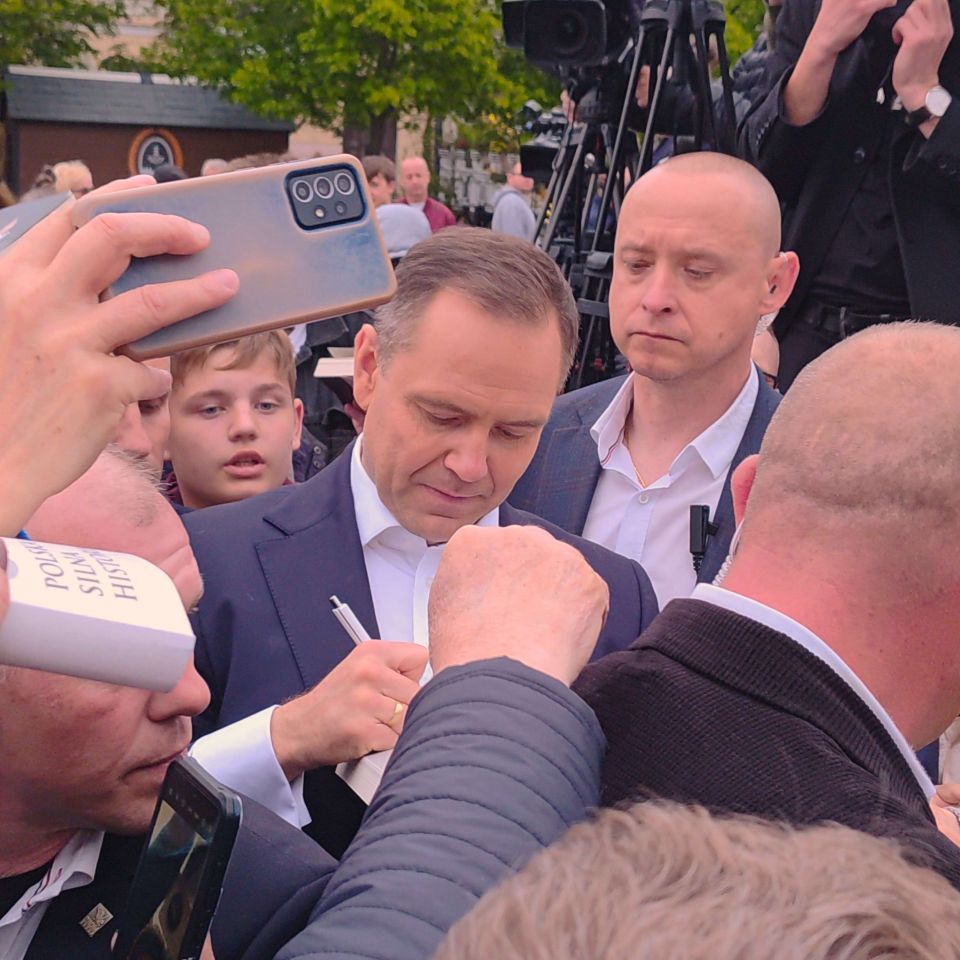
The president turns around
President Karol Nawrocki was en route to Senegal when the crisis broke, and his response became the night’s second defining image. He announced that he was interrupting the trip and returning to Poland. “In such a moment, the President must be in Poland,” he said. “I am interrupting my flight to Senegal. I am returning.”
The turnaround matters beyond its drama. Nawrocki is not a bystander to the Tribunal dispute; he is one of its parties. For months he has refused to swear in three of the six judges elected to the Tribunal by the current Sejm majority — the act of presidential oath-taking without which, in his camp’s reading, the judges cannot take their seats. His return sets up a weekend in which the presidency, the government and two rival court leaderships all claim constitutional warrant for what they do next, and in which the president’s first moves — a statement, a legal filing, a refusal, an initiative — will signal whether the confrontation escalates or cools.
Kaczyński at the court, Tusk’s answer
Jarosław Kaczyński, the leader of the opposition Law and Justice party (PiS), went to the court and gave the opposition’s case its headline form: an attack on the Tribunal, a coup, and a warning that Poland is becoming a police state. The reasoning behind those words, stated in full, runs like this. A judge with no authority over the presidency removed the court’s leadership. The court’s website was seized. Police were deployed against a constitutional body at the request of a justice minister who doubles as chief prosecutor. A state in which the executive can reach into a court that way, PiS argues, is a state in which the constitution has already been set aside — and the word for setting it aside by force of office is the word they used.
Prime Minister Donald Tusk answered on X in the government’s own register: restoring the rule of law after the PiS years is difficult and sometimes painful, it requires firm decisions, and “there is no other way.” The government’s reasoning, stated in full, runs like this. The Tribunal’s current leadership was installed through appointments that the government and European courts consider unlawful; Święczkowski, himself a former PiS-era prosecutor-politician, refused to seat judges elected by the current parliament; and the police deployment concerned the security of a building and its staff amid protests, executed on written requests, with officers outside the building throughout. On that reading, Friday was not the executive capturing a court but the state finally dislodging a capture that happened years earlier — firmly, because, in Tusk’s phrase, there is no other way.
Why this matters
A constitutional court is the referee of every other dispute in a state. When the referee’s own whistle is contested, every ruling the court issues — on elections, on abortion, on European law, on the legality of the government’s own reforms — carries a legitimacy asterisk that opponents can cite forever. Poland is not a small state where that asterisk stays a domestic matter. It is the European Union’s largest eastern member, a frontline NATO state, and the principal logistics hub through which Western military aid reaches Ukraine. Uncertainty about which court is Poland’s court is therefore uncertainty inside the alliance’s supply chain and inside the EU’s legal order at the same time.
There is also a precedent problem that reaches beyond Poland. The EU spent years fighting the Tusk government’s predecessors over the composition of this same Tribunal: rulings from Luxembourg, Article 7 proceedings, and billions in EU funds frozen until Warsaw changed course — funds that were then unlocked, in significant part, on the promise that the rule of law would be restored lawfully. If restoration is now carried out by contested suspensions and police cordons, Brussels faces the same argument from the opposite direction, made by the people it previously sanctioned. The principle the EU defends in Poland this winter may end up being defined by how it reacts when its preferred government is the one accused.
Who gains, who loses
If the suspension holds, the government gains direction of the court — its docket, its panels, its public voice — and pays for it in legitimacy at home and in Brussels, where every future ruling favourable to Warsaw will be discounted by the manner of the takeover. PiS gains the most vivid illustration its police-state narrative could ask for, plus a president flying home through the night as its embodiment. The court itself loses either way: an institution whose authority rests on being obeyed without police at the fence has already spent something it cannot quickly earn back. And the costs of the uncertainty are carried, as usual, by people with no seat at the table — Polish citizens whose cases wait on a court arguing about who may sit in it, and Poland’s partners, who must now decide which of two court leaderships to treat as real.
How Poland got here
The wider dispute over who sits on the Constitutional Tribunal dates to the appointment battles of 2015, when the outgoing and incoming parliaments fought over the same seats and the incoming PiS majority seated its own candidates in places the European Court of Human Rights later found had not been lawfully filled. Through the PiS years the Tribunal became, in the view of the EU and of Poland’s current government, an instrument of the ruling party; in the view of PiS and its voters, a lawful court defending the constitution against judicial activism. Tusk’s coalition won the December 2023 change of government on a pledge to restore the rule of law, and ran immediately into the structural problem that has defined Polish politics since: the restoration requires the cooperation of institutions the coalition does not control — presidential oaths, presidential signatures, and the Tribunal itself.
Through 2025 and 2026 the standoff hardened into its present shape. Nawrocki refused to swear in three of the six magistrates elected by the Sejm majority. Święczkowski refused to seat the majority’s judges. And in January 2025, Święczkowski had already reached for the strongest word in the Polish legal vocabulary, filing a complaint of some sixty pages accusing Tusk of carrying out a systemic coup — a charge prosecutors did not act on, but which established, long before Friday, that both camps keep the same accusation loaded. Friday’s suspension did not create the crisis. It was the moment the crisis acquired a police line.
The legal question underneath
Strip away the statements and a genuinely hard legal problem remains, one Poland’s constitution was not designed to solve: there is no referee for a fight between the referee and the players. The government’s side argues that unlawfully composed benches produce no lawful authority worth protecting, and that a judge elected by the current Sejm acted within the court’s internal powers. The opposition’s side argues that the presidency of the Tribunal is a constitutional appointment that no internal order can touch, and that what occurred fits the gravest provisions of the penal code. Constitutional scholar Łukasz Bernaciński cited Article 128 of that code — which carries up to twenty years for forcibly removing a constitutional body — strictly as his own analysis of the situation; other lawyers dispute which side, if either, the article fits. That dispute is the point. When each camp can quote the constitution and the penal code at the other, the argument is no longer really about texts. It is about which institution gets to say what the texts mean — which is the very office now in dispute.
What happens next
The suspension runs for one month, which makes the calendar the first battlefield. On Monday, someone will control the Tribunal’s docket, its website and access to its building, and someone else will dispute that control — watch which of those facts is true by the end of the first working day. Nawrocki’s first moves on his return will set the presidency’s line: a legal challenge, a public address, or an attempt at mediation would each open a different week. The Sejm majority, the prosecution service and the suspended judges all hold possible counter-moves, from counter-orders to criminal referrals, and protesters on both sides have shown they can reach the fence quickly. Brussels, finally, will be asked — by PiS, loudly — whether the rule-of-law standard it enforced for a decade applies to a government it welcomed. Its answer, or its silence, will be read in every capital where a court is contested.
Two stabilising facts deserve the last word, because they are facts and not claims. No military unit has played any part in this crisis, and none has been asked to. And the Polish government continues to function: ministries open, parliament sitting, a prime minister posting and a president flying home. Both camps, even at the height of Friday night, argued in the language of law. A country whose factions accuse each other of coups in legal filings is in danger; a country whose factions still bother with legal filings is not yet lost. Poland, on Friday night, was both.
Related coverage
- How Poland’s Top Court Became a Battlefield: The Tribunal Crisis Explained
- Coup d’État or Rule-of-Law Restoration? Poland’s Tribunal Fight, From Both Sides
- UK and Poland Deepen Defence Ties in Warsaw
- Europe Prepares Its Citizens for War
Sources
- Reuters — reporting from Warsaw, October 30, 2026: the police perimeter, the two written requests, the three detentions and objects thrown at officers.
- Polish Police (@PolskaPolicja) — official statement on X, October 30, 2026: officers secured the gate and fence area, three people detained, operations aimed at restoring order, and “the police are not intervening inside the Constitutional Tribunal building.”
- PAP (Polish Press Agency) — reporting, October 30, 2026, including the removal of the suspended judges’ profiles from the Tribunal’s website, via Polish Radio.
- Constitutional Tribunal of Poland — statements published on the court’s official channels, October 30, 2026, describing an illegal takeover of the website and the acts involved as a coup d’état.
- President Karol Nawrocki — statement, October 30, 2026, announcing the interruption of his flight to Senegal and his return to Poland.
- Prime Minister Donald Tusk — post on X, October 30, 2026, on restoring the rule of law.
- Rzeczpospolita, Wprost and Demócrata — Polish coverage of the suspension order, the Tribunal’s statements, the presidential turnaround and the party leaders’ reactions, October 30, 2026.
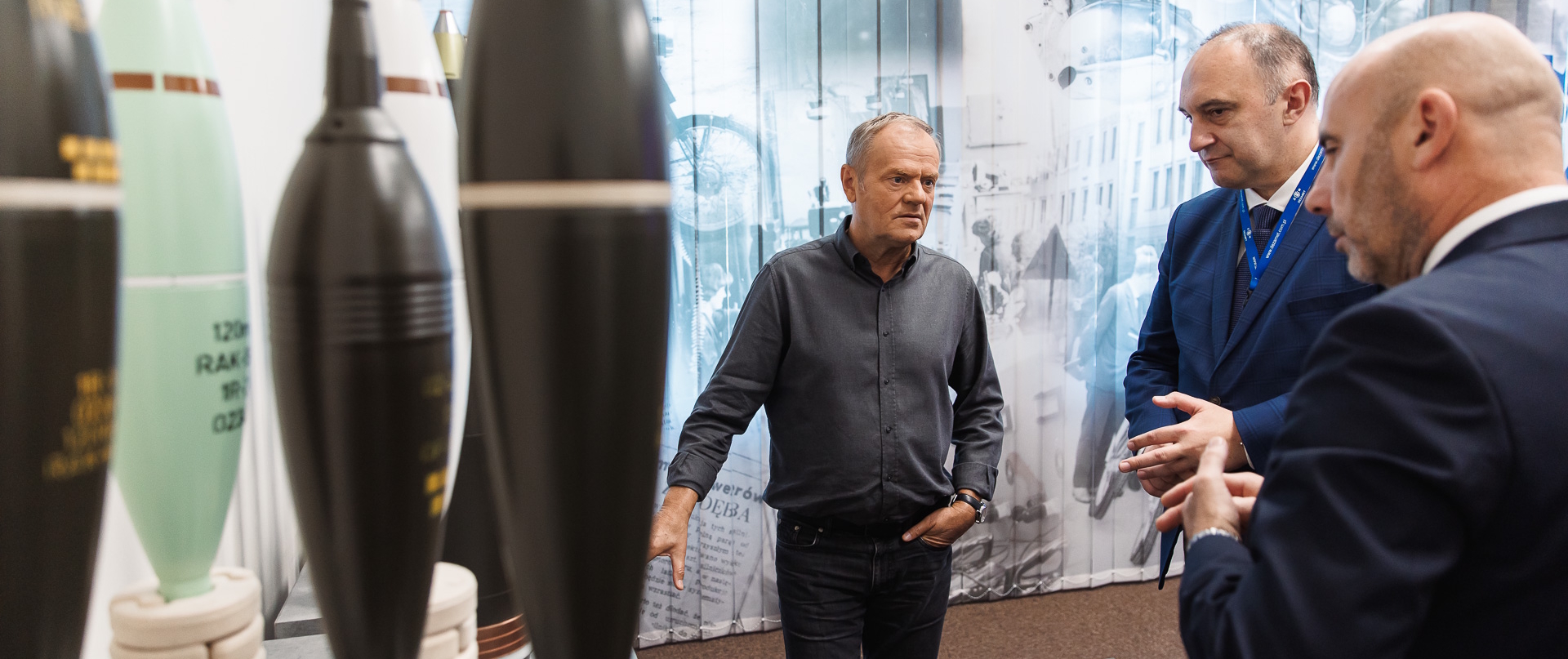
- Photos: Jurij (CC BY-SA 3.0), Brat Forelli (CC BY-SA 4.0) and the Chancellery of the Prime Minister of Poland (CC BY 3.0 PL), via Wikimedia Commons, as credited in the captions. All three are file photographs — the Tribunal’s seat, a May 2025 campaign rally and a September 2025 factory visit — not photographs of the October 30, 2026 events.
This report is based on Reuters and PAP reporting of October 30, 2026, the Polish Police’s official statement of October 30, the Constitutional Tribunal’s published statements, and the on-record statements of President Nawrocki, Prime Minister Tusk and PiS leader Jarosław Kaczyński. “Coup” and “coup d’état” appear in this report only as claims attributed to the camps that made them; no coup has been established as fact by any court or authority. The legal effect of the suspension order is contested by the court’s suspended leadership. Analysis and scenarios are by Signal Post News.