World · Europe · Ireland · Northern Ireland
Dublin has never before formally studied what a united Ireland would look like. Taoiseach Micheál Martin says that is about to change — and insists the work must be evidence, not advocacy.

DUBLIN — Ireland will set up a government body that would, for the first time, undertake research and preparations for the possibility of a future Irish unity referendum, Taoiseach Micheál Martin has said, in the most concrete step Dublin has yet taken toward examining what a united Ireland might actually involve. The body would scope out the models and challenges of the different constitutional outcomes available to Northern Ireland — including remaining part of the United Kingdom, or keeping its devolved institutions while becoming part of a united Ireland.
A research body, not a campaign
Martin told The Irish Times the new body is meant to build what he called, in a speech earlier this week, an “independent and dispassionate base of knowledge on which you can have a credible discussion about constitutional futures.” He was explicit about what it is not. “What has concerned me about this push for a border poll since Brexit is that it’s partisan, it’s a one-sided advocacy approach,” Martin said. “It’s sort of putting forward the idea that this would be easy and that it’s inevitable and our time has come. And it’s almost that this would be a victory for nationalism, as opposed to an approach which genuinely seeks to hear all voices.” He said he would bring the first steps of the proposal to cabinet before the end of the year. His coalition partner Fine Gael will publish what it describes as a blueprint for a unified island at its annual conference next week. No date for any referendum has been proposed, and the body itself advocates no outcome.
Why this matters
The question is moving from slogans to spreadsheets
For a century, Irish unity has been argued as identity, history and grievance. What Dublin announced on Friday is different in kind: a state-funded attempt to price the question — health services, pensions, policing, tax, subvention, symbols — before anyone is asked to vote on it. That sequencing matters. The 2016 Brexit referendum, which set this entire debate in motion, was widely criticised for being held before the practical terms of leaving were understood. Martin, who has repeatedly invoked that lesson, is effectively proposing the opposite order: research first, vote later — if a vote ever comes.
It changes the politics on both sides of the border
For nationalists, a government research body institutionalises the unity question inside the Irish state for the first time; it can no longer be dismissed as a Sinn Féin talking point. For unionists, the same step will read as Dublin preparing the ground for a border poll — which is precisely why Martin wrapped it in language about hearing “all voices” and studying the status quo as seriously as unity. And for London, it raises the pressure on the one mechanism that actually triggers a vote.
How we got here: a century of partition, three decades of peace
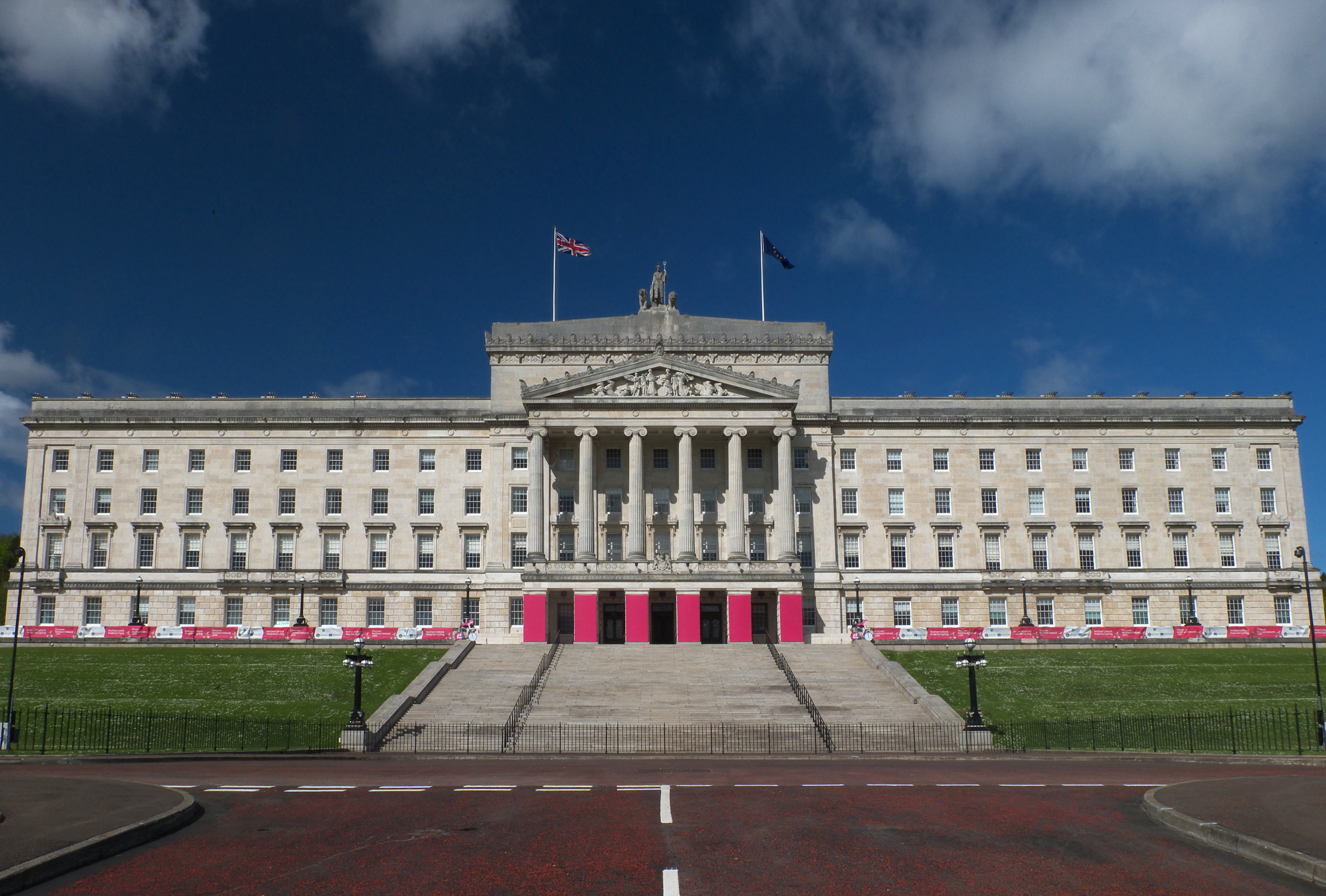
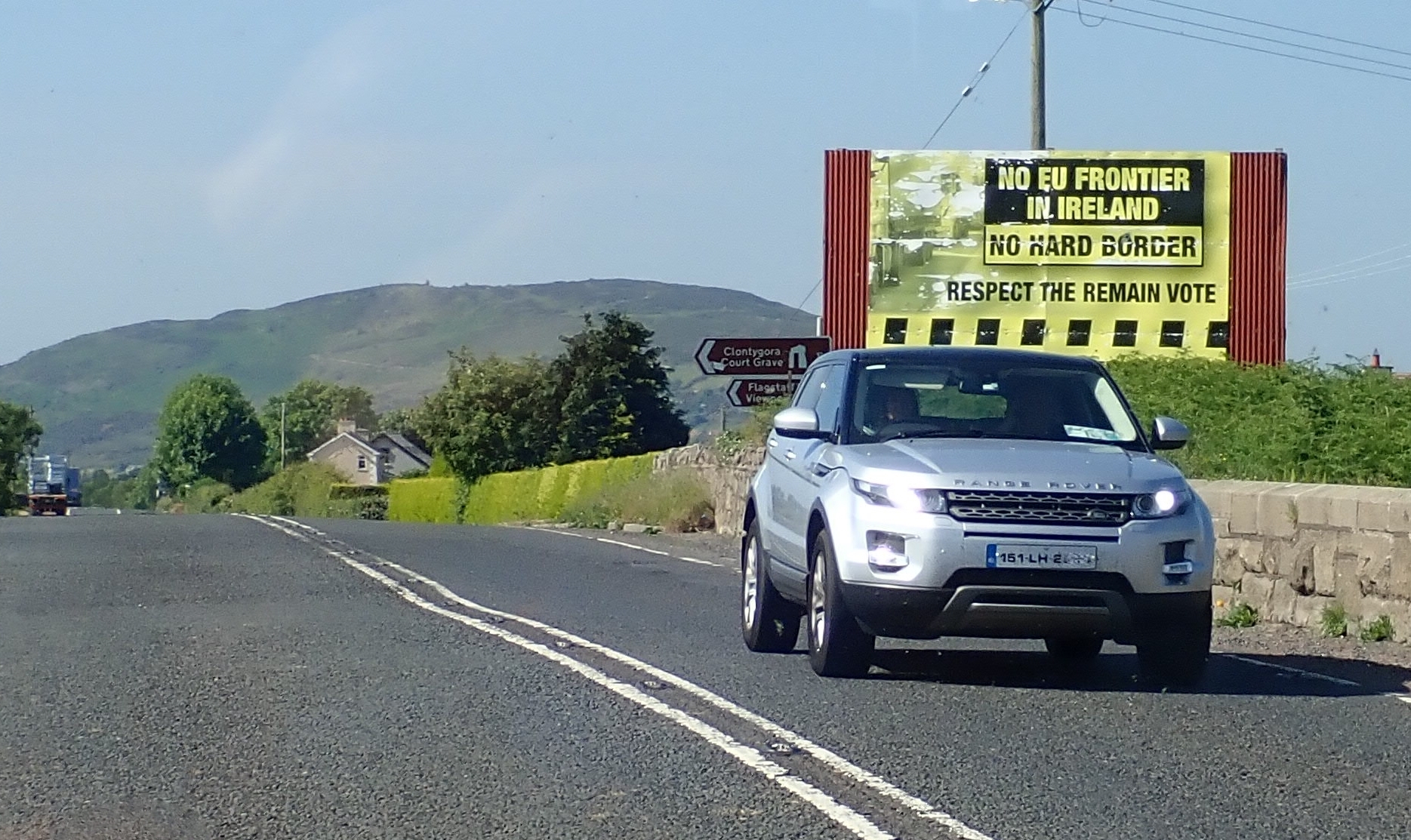
Ireland was partitioned in 1921, with six northern counties remaining in the United Kingdom. The conflict known as the Troubles claimed more than 3,600 lives over roughly three decades before the 1998 Good Friday Agreement established power-sharing in Belfast and wrote the principle of consent into law: Northern Ireland’s status can change only if majorities in both jurisdictions vote for it. Under the agreement, the British government is obliged to call a referendum — a “border poll” — if it appears likely that a majority of Northern Irish voters would back unity. The trigger sits with the Secretary of State for Northern Ireland, currently Hilary Benn. Brexit destabilised every assumption underneath that settlement: Northern Ireland voted 56 percent to remain in the EU in 2016 but was taken out with the rest of the UK. Demographics have shifted too — the 2021 census recorded, for the first time, more residents from a Catholic background than a Protestant one — and Sinn Féin has become the largest party at Stormont, where Michelle O’Neill serves as First Minister, and the largest party in Northern Ireland local government. The European Council confirmed in 2017 that a united Ireland would automatically be part of the European Union.
What the numbers actually say — and why they conflict
Reuters noted that opinion polls consistently show a majority in favour of remaining in the United Kingdom, though the gap has narrowed since the Brexit vote a decade ago. But the answer depends heavily on the question. European Movement Ireland’s Island of Ireland EU Poll 2026, conducted by Amárach Research among 1,200 adults north and south in March 2026, found 63 percent of respondents in Northern Ireland would vote for a united Ireland inside the EU, against 29 percent opposed — while 73 percent in Northern Ireland said they would vote for the UK to rejoin the EU. FactCheckNI cautioned that the EU framing likely lifts the unity figure above what conventional constitutional polling finds, and that the result should be read as indicative of attitudes rather than a prediction of voting behaviour. Both things are true at once: attachment to the union still leads in most head-to-head polling, and Brexit has made the constitutional question live in a way it was not a generation ago. That gap between sentiment and voting intention is exactly the terrain Martin’s research body is being built to map.
London’s position, and the critics on every side
The British government has shown no appetite for a vote. Prime Minister Andy Burnham told reporters during a visit to Belfast in late August that a referendum on Irish unity was “off the table,” while pledging to stick “one hundred percent” to the Good Friday Agreement. Dublin’s own foreign minister, Helen McEntee, has taken a different tone, saying a border poll will happen “in the future” and that both governments “need to be prepared” — a line Martin’s announcement now echoes in institutional form. Nationalist critics will note that research can also be a way of postponing a decision: Sinn Féin has demanded a referendum within this decade, and a body that studies models for years could be read in Belfast and Derry as Dublin kicking the question down the road. Unionist critics will argue the opposite — that any Dublin body, however neutral its remit, normalises the prospect of unity and unsettles a settlement that depends on stability. Martin’s answer to both is built into the design: the body studies every outcome, including Northern Ireland remaining British with its devolved institutions intact, and publishes evidence rather than a verdict.
What happens next
Three milestones now matter. First, Martin’s cabinet paper before the end of the year, which will define the body’s remit, membership and budget. Second, Fine Gael’s unified-island blueprint next week, the first time a governing Irish party has set out its own model in detail — and an early test of whether the coalition’s two big parties are describing the same destination. Third, London’s response: the Good Friday Agreement gives the Secretary of State discretion over when the referendum test is met, and Dublin researching unity does not oblige London to call anything. The scenarios from here range from the quiet one — the body produces reports, the debate professionalises, and no vote is called for a decade — to the fast one, in which published evidence shifts polling enough that refusing a border poll becomes the harder position for a future British government to defend. What Friday changed is narrower and more durable than either: for the first time since partition, the Irish state is paying to find out what unity would actually mean.
Related coverage
- Orange Order Garvaghy Road Parade Blocked by 2,000 After 30-Year Ban Lifted
- Ireland Teachers Begin Work-to-Rule as Pay Dispute Escalates Toward October 14 School Shutdown
- UK Budget 2026: Healey’s ‘Steady as You Go’ First Budget Hands 20 Million Households £100 for Energy Bills
Sources
- Reuters — “Irish government to scope out possibility of unity with Northern Ireland for first time” (October 30, 2026).
- The Irish Times — interview with Taoiseach Micheál Martin, as reported by Reuters.
- European Movement Ireland — Island of Ireland EU Poll 2026, conducted by Amárach Research.
- FactCheckNI — analysis of the European Movement Ireland poll.
- Photos: Houses of the Oireachtas (CC BY 4.0), Johndmcdonald (CC BY-SA 3.0) and Eric Jones via Geograph (CC BY-SA 2.0), via Wikimedia Commons, as credited in the captions. All are file photographs.
This article is based on Reuters reporting of Taoiseach Micheál Martin’s announcement and his Irish Times interview, European Movement Ireland’s Island of Ireland EU Poll 2026 and FactCheckNI’s analysis of it. Poll findings are reported as published by their sponsors and pollsters; analysis is by Signal Post News.