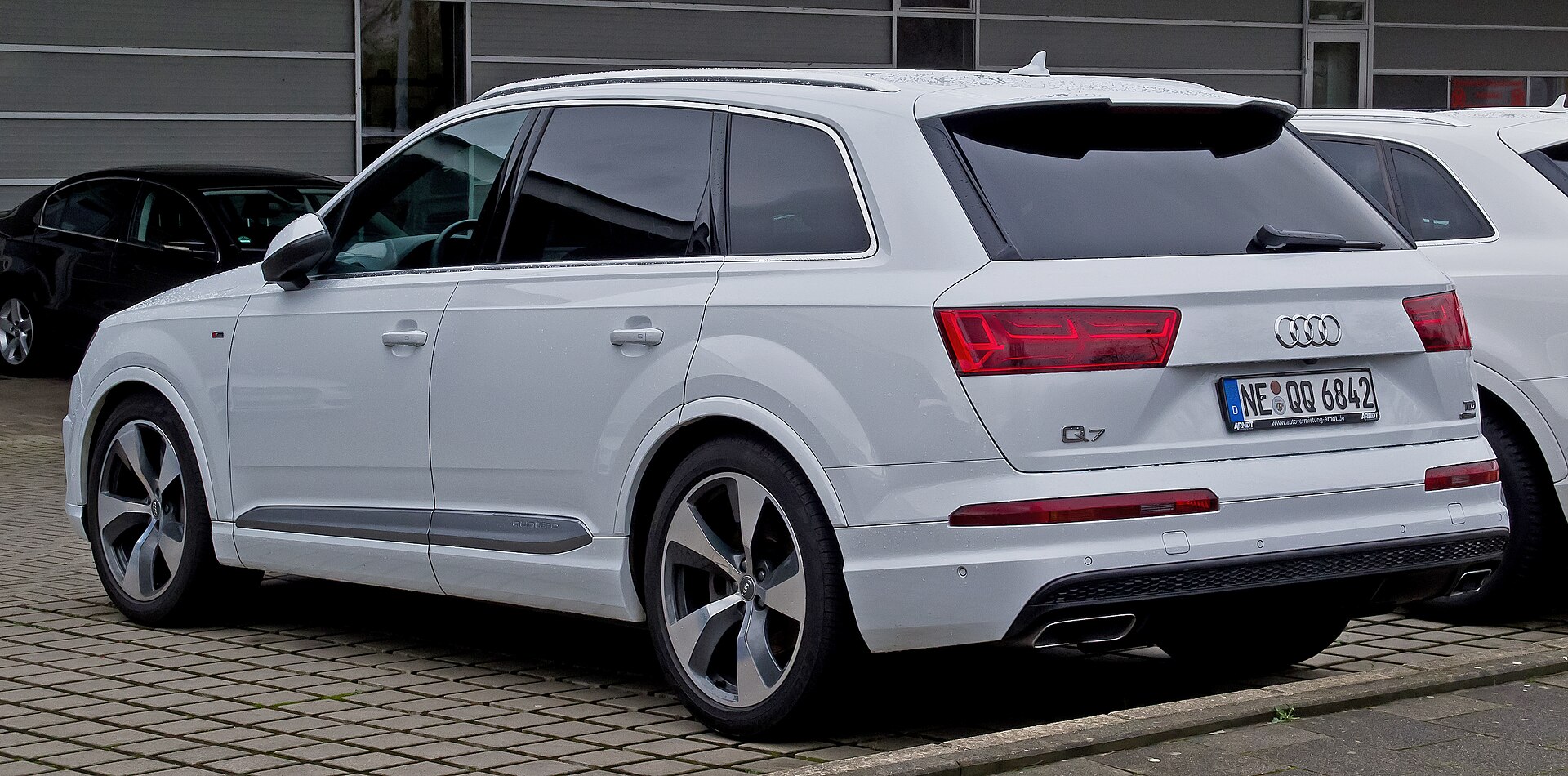
President Trump used a midterm rally in Perry to unveil the Audi Georgia plant — a $4 billion factory near Macon that would end Audi’s status as the only German premium brand building nothing in America, create about 4,500 jobs and put the Q7, Q8 and Q9 on U.S. soil in the early 2030s.
PERRY, Georgia — The Audi Georgia plant that President Donald Trump announced at a campaign rally here on Saturday would be the first U.S. factory in Audi’s history: a $4 billion assembly plant near Macon designed to build 200,000 sport utility vehicles a year and employ about 4,500 people, ending at a stroke the German brand’s total dependence on imports from Europe and Mexico.
Trump, who has pressured automakers for years to move production to the United States and has raised tariffs on autos, steel, aluminum and parts, put his own figures on the deal. He pegged the investment at $4.2 billion and called it the biggest single investment in U.S. auto industry history. Reuters, reporting the company’s figures, put the investment at $4 billion. Standing beside the president, Audi chief executive Gernot Döllner made the commitment in plain terms: “We are planning to bring our biggest and most premium SUVs, and produce them here in Macon, Georgia.” Döllner described the project as a long-term investment because Audi believes in the American market.
The outline that emerged Saturday is specific even if the site work is years away. Audi said the plant will create approximately 4,500 jobs, that construction is scheduled to begin next year and that production will start in the early 2030s. The plant is expected to assemble the Audi Q7, Q8 and Q9 SUVs, a U.S. official told Reuters — the three largest, most profitable vehicles in Audi’s American lineup, and the models most exposed to import tariffs. The same official said Audi also plans to build 25,000 vehicles a year in neighboring South Carolina, at the $2 billion Scout Motors plant under construction in Blythewood, near Columbia; some of those vehicles, now built in Europe, would be exported.
Where exactly the Georgia factory rises was filled in by Georgia reporting of the company’s announcement alongside Gov. Brian Kemp’s office: the Middle Georgia Megasite in Peach County, southwest of Macon, with site grading planned for 2027. That fits the Macon reference Döllner used onstage and sits comfortably with the timeline Audi gave Reuters — grading and groundwork through 2027, construction beginning next year in earnest, and the first Georgia-built SUVs in the early 2030s. Kemp, a Republican term-limited out of the governor’s office after this year’s election, has spent two terms recruiting electric-vehicle and battery plants to Georgia; an Audi factory would be the state’s biggest automotive catch since Hyundai’s Metaplant near Savannah.
Why this matters
The Audi Georgia plant matters less for its price tag than for what it completes. With this announcement, every major German auto brand — Volkswagen, BMW, Mercedes-Benz and now Audi — will build vehicles in the American South. Audi was the holdout: the only German marque selling in the United States without a U.S. factory, importing every vehicle it sells here from Europe or Mexico. That structure was an aesthetic choice in the free-trade era and became a financial wound in the tariff era. A plant rated at 200,000 SUVs a year is not a toe in the water. It is scaled to supply the bulk of what Audi sells in America, which means the company is not hedging against tariffs — it is relocating the center of gravity of its U.S. business inside the tariff wall.
That is also why the announcement was staged as politics. Trump did not unveil the Audi plant at an auto show or a chamber of commerce lunch; he unveiled it at a midterm campaign rally in a battleground state, nine days before the November 3 elections, with the company’s chief executive standing beside him. For the White House, the plant is the proof-of-concept for the entire tariff strategy — evidence that import taxes do not merely raise revenue or punish competitors but physically move factories. For Audi, the same stage was the price of admission: public alignment with the president whose policies made the plant necessary. Both things can be true at once, and the rest of this story is mostly about who, in the end, pays for the alignment.
Two decades of someday
An American factory has been the industry’s longest-running Audi story. The Wall Street Journal noted that a U.S. move had been under consideration for at least two decades, surfacing in strategy reviews and dying in cost committees, because the business case never survived contact with Audi’s margins: a premium brand selling premium volumes could import profitably, especially with a plant in Mexico — where Audi has built the Q5 in San José Chiapa since 2016 — covering part of North American demand outside the European tariff and currency risks.
What changed was not Audi’s affection for Georgia. What changed was the arithmetic of staying out. Volkswagen, Audi’s parent, has built cars in Chattanooga, Tennessee since 2011. BMW’s largest factory anywhere is in Spartanburg, South Carolina. Mercedes-Benz has built SUVs in Vance, Alabama since the 1990s. Each of those plants turned a foreign brand into a local employer with senators, suppliers and a story to tell in Washington. Audi, alone, kept writing checks to the Treasury instead — and last year the checks got very large.

The tariff math behind the Audi plant Georgia jobs
Reuters put a number on the pain: last year, Trump’s tariffs cost Audi €1.2 billion, about $1.4 billion, precisely because the brand imports everything it sells in the United States. Set that beside the plant’s price. A $4 billion factory equals roughly three years of tariff bills at last year’s rate — and tariffs, unlike factories, buy nothing that lasts. Audi’s Q7 and Q8 are built in Bratislava, Slovakia, and the coming Q9 was expected to join them there; every one of those vehicles crosses the Atlantic and the tariff line before it reaches an American showroom. Moving those three nameplates — Audi’s biggest and most premium SUVs, in Döllner’s words — inside the United States removes the tariff from the vehicles Audi can least afford to discount.
A sales slump sharpened the decision
The announcement also lands on a company under pressure. Trade-press reporting of Audi’s company figures has its global sales down about 7% in the first half of 2026 and its U.S. sales down about 16% this year. A shrinking, fully imported lineup facing a permanent tariff is a compounding problem: raise prices and lose volume, or hold prices and lose money. A Georgia plant does not solve that problem this year or next — nothing rolls off its line until the early 2030s — but it changes the story Audi can tell investors and dealers about the decade after.
How the German rivals already do it
Audi is not pioneering a model; it is adopting, late, the model its rivals proved. The comparison shows both the opportunity and the catch. BMW’s Spartanburg plant has operated since 1994 and builds the brand’s X-series SUVs for the world. Mercedes-Benz Vance, in Alabama, has built SUVs since 1997 and added electric models this decade. Volkswagen Chattanooga opened in 2011 and today builds the Atlas SUV and the ID.4 electric crossover. All three plants also export — a point the U.S. official’s briefing echoed for Audi, with some Georgia production potentially shipped abroad, and 25,000 Audi vehicles a year planned for Scout’s Blythewood plant in South Carolina, some of them for export as well.
| Brand | U.S. plant | Building since | What it makes |
|---|---|---|---|
| BMW | Spartanburg, South Carolina | 1994 | X-series SUVs — BMW’s largest plant worldwide |
| Mercedes-Benz | Vance, Alabama | 1997 | GLE, GLS and electric EQ SUVs |
| Volkswagen | Chattanooga, Tennessee | 2011 | Atlas SUV and ID.4 electric crossover |
| Scout Motors (VW) | Blythewood, South Carolina | Under construction ($2 billion) | Scout vehicles — plus 25,000 Audis a year, per a U.S. official |
| Audi | Middle Georgia Megasite, Peach County | Production planned early 2030s | Q7, Q8 and Q9 — 200,000 SUVs a year planned |
The Scout arrangement deserves a pause, because it shows Volkswagen thinking of the Southeast as one production system. Audi Q7 Q8 Q9 production in the U.S. will be split: the flagship volume in Georgia, a smaller 25,000-vehicle stream inside Scout’s $2 billion South Carolina plant. For Volkswagen, Audi’s parent, U.S. production stops being a single Chattanooga outpost and becomes a regional network — the same structure BMW and Mercedes built over thirty years, assembled by Audi in roughly five.
Who benefits — and who pays
Georgia workers and suppliers take the clearest win
Approximately 4,500 jobs, in Audi’s figure, at a plant in Peach County — plus the supplier and logistics employment that follows an assembly plant, and construction work beginning next year. Georgia auto plant 4500 jobs announcements have a track record in the state: Kia’s West Point plant and Hyundai’s Metaplant each anchored regional supplier clusters, and state officials will expect the Middle Georgia Megasite to do the same for the counties between Macon and Warner Robins. What those jobs pay, and on what terms, is not yet public — one of the open questions below.
Volkswagen and Audi buy tariff shelter
For the Volkswagen Group, the plant converts an open-ended tariff exposure — €1.2 billion in a single year, at 2025’s rates — into a fixed, depreciable asset. It also buys political insurance in the company’s largest single market outside China: a German automaker that employs thousands of Georgians negotiates with Washington from a different position than one that only imports. The export element cuts the same way; vehicles built in Georgia for other markets make the plant a contributor to the U.S. trade balance the administration says it wants.
Trump’s campaign gets its exhibit A
The political beneficiary is obvious and was choreographed: a sitting president, onstage with a foreign CEO, announcing 4,500 jobs in a state whose Senate seat and governorship are both contested on November 3. Sen. Bernie Moreno of Ohio, a former car dealer and one of the Senate’s loudest tariff defenders, posted on X that the plant “would never have happened without tariffs.” The administration will repeat that sentence for nine days.
German workers want their guarantee
In Germany, the reaction was supportive with a condition attached. Christiane Benner, head of the IG Metall union and deputy chair of Volkswagen’s supervisory board, told Reuters it was “right and necessary” to tap the U.S. market through a new plant — but that “firm prospects for workers at all sites, particularly those here in Germany, must be clearly defined and set out.” She also noted the formal point that matters for the timeline: a final decision on the investment rests with Volkswagen’s supervisory board, which has not yet taken it. Every Q7 that moves from Bratislava to Georgia is, eventually, a job question in Slovakia and Germany.
Car buyers have already paid part of the bill
The critics’ case, as Reuters summarized it, is that the tariffs said to have summoned this plant have also raised vehicle prices and that trade uncertainty delayed some automaker investments rather than accelerating them. Both effects land on the same people: buyers. A Georgia-built Q7 in 2032 may escape the tariff, but the Audis sold between now and then — imported, tariffed, in a market where Audi’s U.S. sales are already down about 16% this year — carry the cost in their sticker prices. Whether the plant ultimately validates the policy depends on arithmetic no rally can settle: whether the value of the factory and its jobs exceeds the cumulative price increases and the public incentives that helped land it.
A battleground announcement, nine days out
Georgia is not a backdrop; it is the point. Democratic Sen. Jon Ossoff is defending his seat against Republican Rep. Mike Collins, and the governor’s race between Republican Rick Jackson and former Atlanta Mayor Keisha Lance Bottoms is tight — two contests, either of which could be swung by a few tens of thousands of votes in the Atlanta suburbs and the mid-state counties where the plant will rise. The Trump Audi announcement hands Collins and Jackson a concrete deliverable — a factory, in the region, with a jobs number — while Ossoff and Bottoms are left arguing the counterfactual about prices and the years before production starts. That asymmetry is precisely what a campaign rally announcement is designed to create, and both parties understand it: expect the Perry stage, and Döllner’s sentence about Macon, in Republican advertising within days, and expect Democrats to answer with the price of an imported Audi today.
What happens next
The first test is in Wolfsburg, not Georgia. Volkswagen’s supervisory board must still take the final investment decision, as IG Metall’s Benner pointed out — a formality in most tellings, but the venue where German labor’s demand for site guarantees will be priced into the project. Then comes the Georgia work: site grading at the Middle Georgia Megasite planned for 2027, construction beginning next year on Audi’s account, and production in the early 2030s — a horizon long enough that the plant’s first SUV will be sold by a different administration than the one that announced it.
The unanswered questions are the ones that will decide whether Saturday’s rally is remembered as an industrial turning point or a campaign prop. How large is Georgia’s incentive package, and what does it cost per job? What will the plant pay, and will its workforce follow Chattanooga’s — where Volkswagen workers voted to unionize in 2024 — or the non-union tradition of the Southern transplant corridor? Is the 200,000-vehicle capacity all combustion and hybrid, or does the Audi SUV plant America is getting have an electric share that Saturday’s announcement did not mention? And does the model mix stay at Q7, Q8 and Q9, or widen once the concrete is poured? Audi, which waited two decades to make this decision, has bought itself time to answer. The tariffs that forced its hand allow it no more delay than that.
Related coverage
- Trump Lifts Canada Tariffs: Nine Exemptions Hand Maine’s Susan Collins a Midterm Lifeline
- Trump Holds Off Wind Turbine Tariffs — but Puts Imports on a 180-Day Clock
- China Urges U.S. to Halt Expanded Outbound Investment Curbs and Warns of Countermeasures
Sources
- Reuters, by Bo Erickson and David Shepardson — the Perry announcement, the $4 billion figure, Döllner’s remarks, the Q7/Q8/Q9 plan and the Scout arrangement
- The Wall Street Journal — Trump announces Audi’s first-ever U.S. factory in Georgia as tariffs bite; two decades of consideration
- AUDI AG — official site for company statements and model information
Figures are attributed as reported: President Trump put the investment at $4.2 billion and called it the largest single investment in U.S. auto industry history; Reuters reported $4 billion as the company figure. The Peach County site detail and 2027 grading come from Georgia reporting of the company and governor’s office announcement; Audi’s own timeline, via Reuters, is construction beginning next year and production in the early 2030s. Sales declines are trade-press reporting of Audi company figures.
Independent analysis of a verified announcement, with contested claims — investment size, tariff credit and price effects — attributed to the sides making them.