Politics & Economy — The White House on Friday, October 23, 2026 lifted its 50 percent tariffs on nine categories of Canadian farm, forestry and equipment goods — blueberries, potatoes, apples and seaweed among them — in a move the Wall Street Journal reported was designed to help Maine Senator Susan Collins and other northern-state Republicans eleven days before the November 3 midterms, even as new levies on other Canadian goods took part of the relief back.
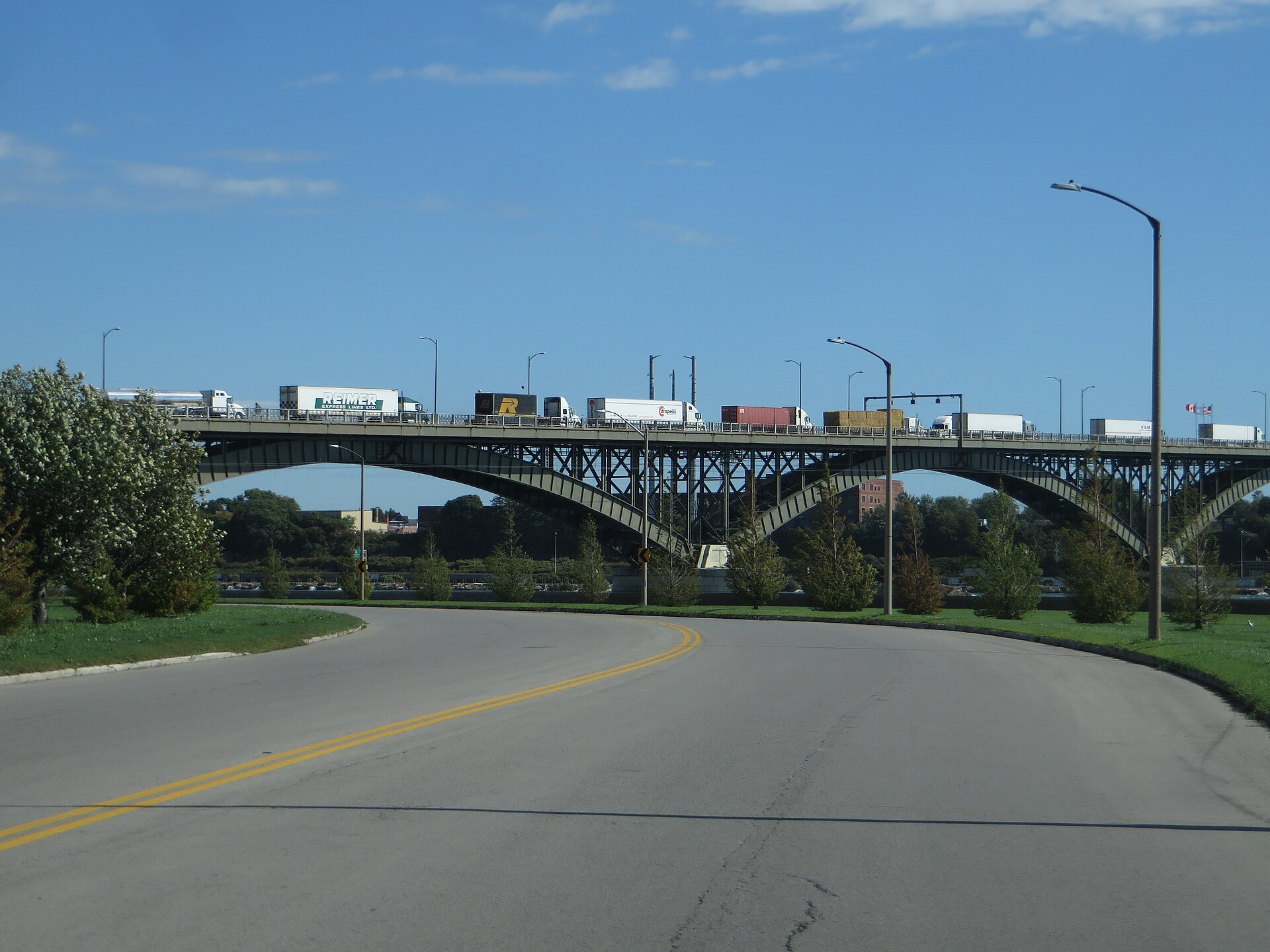
The Trump Canada tariff exemptions arrived the way tariff news so often does in this administration: first as a report, then as a senator’s announcement, and only then as a White House confirmation. The Wall Street Journal reported on Friday that the United States was expected to remove its 50 percent tariffs on some Canadian agricultural and forestry products, in a bid to help Maine Senator Susan Collins and other Republicans from northern states in the upcoming midterm elections, Reuters reported. Within hours, Collins herself announced that nine categories of products would be exempted, and the White House confirmed the change — an order signed Friday, with the exemptions taking effect on October 30 — saying it was made to “protect the economic prosperity and national security of the American people.” President Donald Trump, speaking to reporters the same day, said Canada was “working very hard” on a trade deal — though formal talks between the two countries have been frozen since they broke down in August.
What was exempted — and what was quietly taxed instead
Collins said the exemptions cover nine categories of products, including blueberry, potato, apple and seaweed producers — four signature Maine industries. The White House specified that certain processing and packaging materials would also come off the tariff list: plywood sheets, packing boxes, some paper products, certain machinery and refrigeration equipment. These are not consumer luxuries; they are the inputs Maine businesses buy from across the border because, as Collins put it, many Maine farmers and growers “rely on specialized equipment, packaging materials, and other products from Canada that are either unavailable from American suppliers or cannot be replaced without incurring significant expense.”

The relief, however, is narrower than the headline. The Journal reported the reductions could be balanced out by raising levies on other Canadian goods, and the administration’s own fact sheet confirms the relief is offset by adding other products to the tariff list, including certain valves, carpets and waste and residual products, keeping the measure’s overall value at roughly $20 billion. In other words, the tariff wall did not come down on Friday; a gate was cut into it, sized roughly to Maine, while other sections were raised. Collins, for her part, presented the exemptions as a first instalment rather than a settlement: “In my repeated conversations with Ambassador Greer, Secretary Lutnick, and other senior administration officials, I have asked for tariff relief for these important products, and I will continue working directly with administration officials to seek additional relief and encourage a broader trade agreement with Canada, our neighbor, ally, and largest trading partner,” she wrote.
Why Maine, why now: the electoral arithmetic
The timing is not subtle, and neither is the geography. The midterms fall on November 3, eleven days from Friday, and control of the US Senate may hinge on exactly the northern border states where the Canada tariffs bite hardest. Collins is seeking a sixth term in Democratic-leaning Maine against Troy Jackson, a Democrat, former Maine state senator and former logger, in a race analysts rate as highly competitive — close enough that Democratic strategists count it among their best routes to the majority. Maine’s economy is intertwined with Canada’s at every level: logging, lobstering, fishing, farming and the cross-border supply chains that feed them. When the administration imposed the 50 percent tariffs on certain Canadian goods in August, Canada retaliated with duties of 15 to 50 percent on some $20 billion of American goods — though Ottawa later withdrew its tariffs on American seafood, a direct relief to Maine’s fishing sector.
Collins is not the only northern Republican distancing himself or herself from the trade war. In Michigan, Republican Mike Rogers has run advertisements urging Trump to end the standoff after months of supporting it, and former New Hampshire senator John Sununu has criticised the retaliatory tariffs as well. The economies of Michigan and Maine have long been intertwined with Canada’s, covering everything from auto parts to lumber to fruit-picking equipment — which is why, as Reuters noted, those are two states Republicans will likely need to win on November 3 if they are to hold the Senate. The White House’s own framing acknowledged the calibration: the president, it said, was “further refining the scope of the July 20 and September 8 actions to better serve the public interest, and to ensure these measures continue to effectively offset the burden or disadvantage to US commerce from Canada’s discriminatory measures.”
Why this matters
Friday’s move is the clearest admission yet — from the White House itself — that the Canada tariffs carry domestic political costs the administration cannot ignore. For eight months the tariffs were defended as leverage: pain Canada would eventually pay to avoid. The exemptions tell a different story about who was actually paying. A 50 percent tariff on Canadian plywood, packing boxes, machinery parts and farm inputs is not paid in Ottawa; it is paid by the Maine blueberry grower, the Aroostook County potato operation and the border-town manufacturer whose cost base is built on both sides of the line. When the bill for a trade policy arrives in the mailbox of voters in a toss-up Senate race eleven days before an election, the policy gets “refined.”

There is a second signal in the fine print. A government confident in its tariff strategy does not usually exempt the politically sensitive products while quietly raising levies on valves and carpets to keep the headline rate intact. That is the behaviour of an administration trying to hold two ideas at once: that the tariffs are working, and that they must stop hurting the voters the president’s party needs. Both can be argued; Friday’s proclamation is evidence the second argument won the week. And the episode sets a precedent every other state delegation can read: the tariff schedule is negotiable, product by product, and the currency of negotiation is electoral exposure. Expect delegations from other border and farm states to arrive with their own lists.
The view from Ottawa: a pause, not a peace
Nothing about Friday changes the underlying standoff. Formal trade talks collapsed in August, and both capitals have spent the autumn blaming each other. Trump told reporters on Friday that Canada is “working very hard to make a deal with us, and I hate to say this, but we have all the cards.” Prime Minister Mark Carney, speaking the same day, sounded in no hurry at all: Canada could sign a deal “this afternoon if the US were there,” he said, while noting the United States is “a little hard to predict” — and, for the first time, suggesting Ottawa might simply wait, even until another administration, before a proper deal is in place. Carney has spent the year urging a structural shift away from reliance on the American market, a project underlined this week by Canada’s own internal politics — including Alberta’s vote to stay, covered in our report on the Alberta referendum results — and by the diplomatic chill on display when Carney dismissed Washington’s accusations of Canadian election interference, the subject of our earlier report on the US embassy’s interference claims.
The exemptions therefore land in a relationship that is simultaneously thawing at the edges and frozen at the centre. For Maine’s growers and processors, the practical effect is immediate and real: inputs that were taxed at 50 percent on Thursday come off the tariff list when the exemptions take effect on October 30, in the middle of the autumn harvest and packaging season. For the broader trade war, Friday is better read as an election-season ceasefire line drawn around one state’s shopping list. What happens after November 3 — whether the exemptions are the first tiles of a wider deal, as Collins hopes, or a one-off that lapses once the Senate arithmetic is settled — is the question the next round of talks, whenever they resume, will answer. Readers following the administration’s broader tariff recalibration can compare Friday’s move with the talks-first approach in our coverage of Trump’s wind turbine tariff pause.
What happens next
Three things to watch. First, the proclamation’s fine print: whether the offsetting levies on other Canadian goods grow, and whether other states’ delegations win exemptions of their own before November 3. Second, Ottawa’s response: Carney has framed patience as strategy, and a US concession extracted without Canadian concessions strengthens his hand domestically. Third, the Maine race itself: Collins will campaign on the exemptions as proof she can deliver relief from a president of her own party, while Jackson’s campaign will answer that the relief was needed only because of tariffs Collins’s party imposed. Both arguments are now running in the same state, with the same voters, for eleven days.
Sources: Reuters (the Wall Street Journal report, Collins’ statement and the midterm stakes); Reuters (Trump’s remarks and the August breakdown of talks); the Guardian’s report of the White House announcement and the text of the White House news release; Senator Susan Collins’ statement on X; CTV News reporting of Prime Minister Mark Carney’s remarks, October 23, 2026.